

Your drone’s battery life typically ranges from 15 to 30 minutes per charge, influenced by factors like battery chemistry, drone model, and weather conditions. Cold temperatures and strong winds drain power faster, while efficient designs and proper battery care can extend flight time. Maintaining charge between 20-80% and using recommended chargers also protect battery health. Understanding these elements helps you optimize performance—keep exploring to uncover tips and insights that boost your drone’s endurance and reliability.
Factors Influencing Drone Battery Life
Although drone battery life is often marketed as a fixed duration, several factors can greatly influence how long your drone actually stays airborne. The core element is battery chemistry; lithium-polymer (LiPo) batteries dominate due to their high energy density and lightweight properties, essential for maximizing flight time. However, the efficiency of these batteries depends on their charge cycles and temperature conditions. Additionally, drone design markedly impacts battery performance. Aerodynamic efficiency, weight distribution, and motor power consumption all determine how much energy is required to keep your drone aloft. You’ll find that streamlined frames and optimized propeller sizes reduce power draw, extending flight duration. Understanding these technical variables lets you make informed choices to access greater freedom in the sky without being tethered to unrealistic battery life claims.
Typical Flight Times for Popular Drone Models
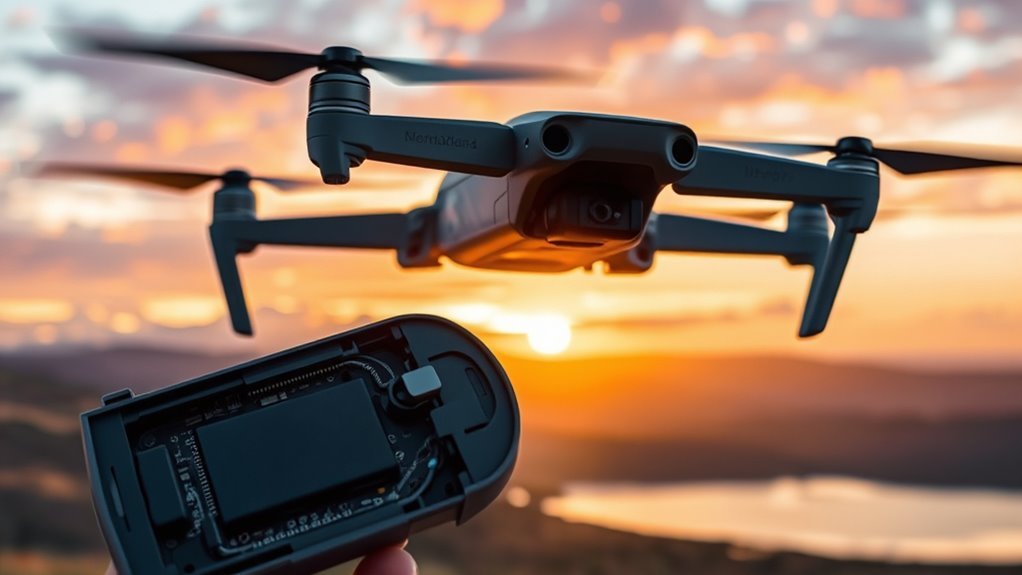
When selecting a drone, understanding the typical flight times of popular models is essential for matching your usage needs. Flight duration directly impacts your freedom to explore and capture without frequent interruptions.
- DJI Mavic: Offers around 30 minutes of flight, balancing power and efficiency.
- Parrot Anafi: Provides approximately 25 minutes, ideal for lightweight portability.
- Autel Evo: Delivers close to 30 minutes, suitable for extended aerial work.
- Skydio 2: Flies about 23 minutes, optimized for autonomous navigation.
- Holy Stone: Generally supports 15-20 minutes, perfect for beginners and casual use.
Knowing these benchmarks helps you anticipate operational limits and plan missions accordingly, enhancing your aerial experience with precision.
How Weather Conditions Affect Battery Performance
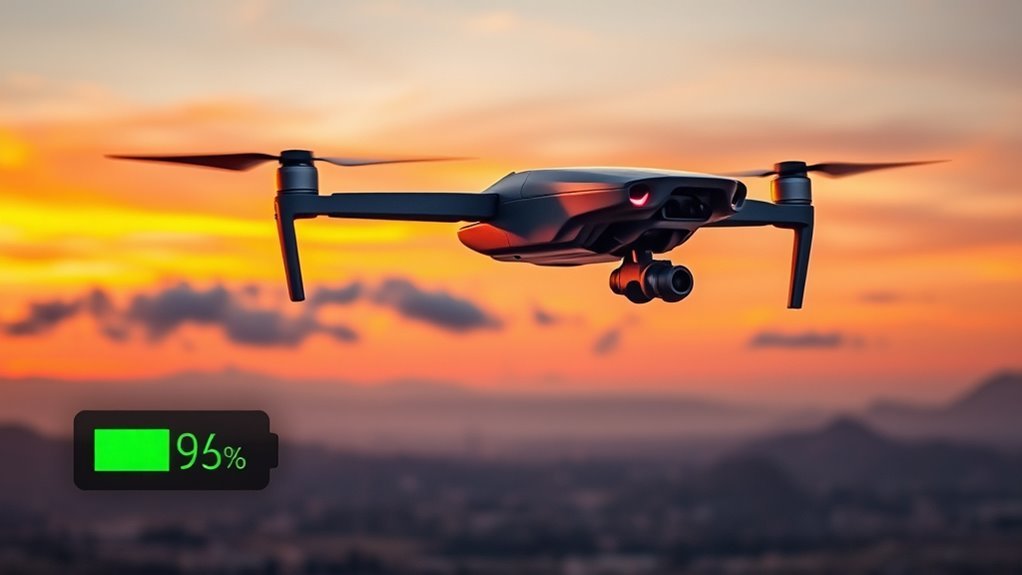
You’ll notice that battery capacity decreases considerably in cold temperatures, reducing your drone’s flight time. Strong winds force the motors to work harder, which increases power consumption and drains the battery faster. Additionally, high humidity can accelerate battery discharge by affecting internal chemical reactions.
Temperature Impact on Capacity
Since drone batteries rely on chemical reactions to generate power, temperature plays a critical role in determining their capacity and overall performance. You’ll notice that cold weather slows these reactions, reducing available capacity and shortening flight times. Conversely, heat effects can accelerate chemical processes but also risk overheating, which degrades battery health.
To maximize your battery’s efficiency, keep in mind:
- Cold weather lowers voltage output, limiting endurance
- Heat causes faster chemical degradation, reducing lifespan
- Ideal operating temperature typically ranges between 20–25°C (68–77°F)
- Extreme cold may require pre-warming batteries before use
- Prolonged exposure to heat can trigger thermal runaway hazards
Understanding these factors helps you maintain battery freedom, ensuring reliable and consistent drone flights regardless of temperature fluctuations.
Wind Effects on Flight
Although wind is a natural element, its impact on drone flight efficiency is significant and directly affects battery performance. When you fly in gusty conditions, your drone must constantly adjust to changing wind resistance, demanding more power from the motors. This increased energy draw shortens your battery life, limiting flight duration. Strong headwinds force your drone to work harder to maintain speed and stability, while crosswinds challenge its control systems, both scenarios raising power consumption. Even moderate winds can cause your drone to expend extra energy compensating for shifts in airflow. To maximize freedom in flight, you should monitor wind conditions closely and plan flights during calmer periods. Understanding how wind resistance influences battery drain helps you optimize flight time without risking unexpected power loss.
Humidity and Battery Drain
When humidity levels rise, the moisture in the air can impact your drone’s battery performance by increasing internal resistance and reducing overall efficiency. These humidity effects cause the battery to drain faster, limiting your flight time and freedom to explore. Understanding how humidity influences battery efficiency helps you optimize flight conditions. Keep these points in mind:
- High humidity elevates internal battery resistance.
- Excess moisture accelerates chemical degradation.
- Battery voltage output can drop unexpectedly.
- Charging efficiency declines in humid environments.
- Prolonged exposure may shorten battery lifespan.
Tips for Maximizing Flight Duration
If you want to extend your drone’s flight time, maximizing battery usage and flight conditions is vital. Start by applying flight tips such as reducing aggressive maneuvers and maintaining a steady, moderate speed to conserve energy. Flying in calm weather minimizes power drain caused by wind resistance. Prioritize battery efficiency by selecting lightweight payloads and minimizing additional accessories that increase power consumption. Pre-cool or pre-warm batteries within recommended temperature ranges before flight to guarantee peak chemical performance. Planning your flight path to avoid unnecessary altitude changes also reduces energy expenditure. Utilize your drone’s power-saving modes if available, as they intelligently manage motor output and sensor use. By combining these techniques, you’ll free up longer flights, giving you more freedom to explore without worrying about rapid battery depletion.
Understanding Battery Maintenance and Care
Maximizing flight duration relies heavily on how well you maintain and care for your drone’s battery. Proper battery charging and storage are critical to preserving capacity and performance. You should adopt precise habits to extend your battery’s life and guarantee reliable flights. Consider these key maintenance tips:
Proper battery care is essential to ensure longer flight times and consistent drone performance.
- Avoid fully depleting the battery before charging; keep it between 20%-80% charge for longevity.
- Use the manufacturer’s recommended charger to prevent overcharging and overheating.
- Store batteries in a cool, dry place at around 50% charge to minimize degradation.
- Regularly inspect batteries for swelling or damage and discontinue use if issues arise.
- Balance charge multiple cells to maintain uniform voltage and optimize battery health.
The Future of Drone Battery Technology
Although current drone batteries offer impressive performance, emerging technologies promise significant advancements in energy density, charging speed, and lifespan. Solid state batteries, for instance, replace liquid electrolytes with solid materials, enhancing safety and allowing higher energy storage in a compact form. This means you’ll enjoy longer flight times and quicker recharges without compromising reliability. Meanwhile, hydrogen fuel cells present an innovative alternative by converting hydrogen into electricity, providing extended endurance and rapid refueling. These advancements will revolutionize drone autonomy, freeing you from frequent battery swaps and grounding. As these technologies mature, expect drones to achieve greater operational range and efficiency, empowering you to explore further and stay airborne longer with less downtime. Staying informed about these developments guarantees you harness the future of drone battery technology effectively.
