

Police use drones without a warrant under specific exceptions, like exigent circumstances, which allow for immediate deployment during critical situations such as hostage crises or ongoing crimes. Current laws treat drones as surveillance tools, balancing the need for effective law enforcement against privacy rights. Local regulations vary, creating a patchwork of rules. This complex interplay raises important questions about civil liberties and community trust. There’s much more to reflect upon regarding drone regulations and their implications.
The Rise of Drone Technology in Law Enforcement
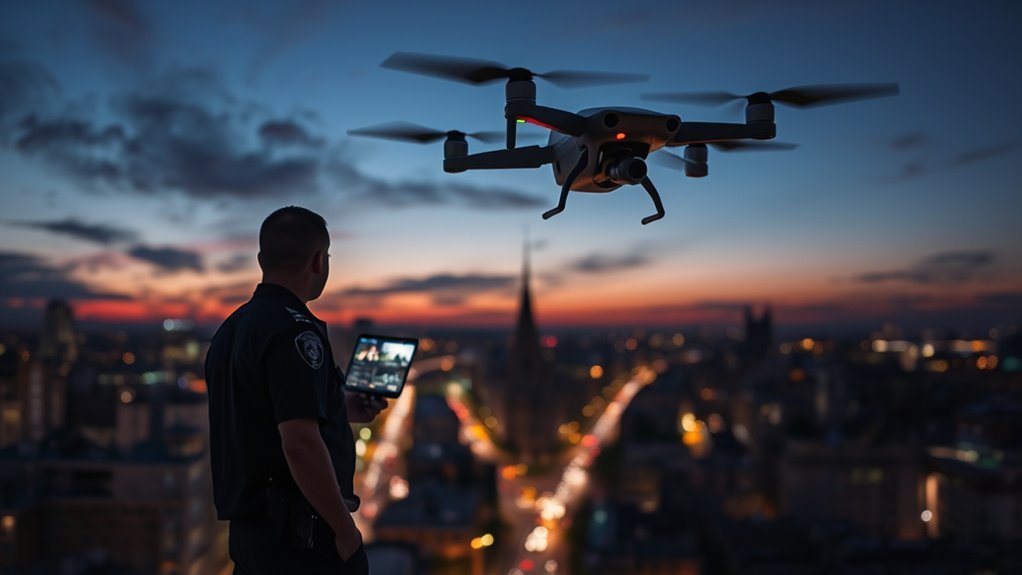
As drone technology continues to evolve, law enforcement agencies are increasingly integrating these tools into their operations. The rise of drone capabilities has transformed how policing is conducted, enabling real-time data collection and enhanced situational awareness. With advancements in surveillance, drones can now provide high-resolution imagery and thermal imaging, making it easier for officers to monitor large areas and respond to incidents swiftly. This integration raises important questions about privacy and accountability, as you may wonder how these tools are used without warrants. While the potential for improved public safety exists, it’s essential to scrutinize the implications of deploying such technology in a manner that respects individual freedoms and civil rights. Balancing efficiency with privacy remains a complex challenge for society.
Legal Framework Governing Drone Use by Police
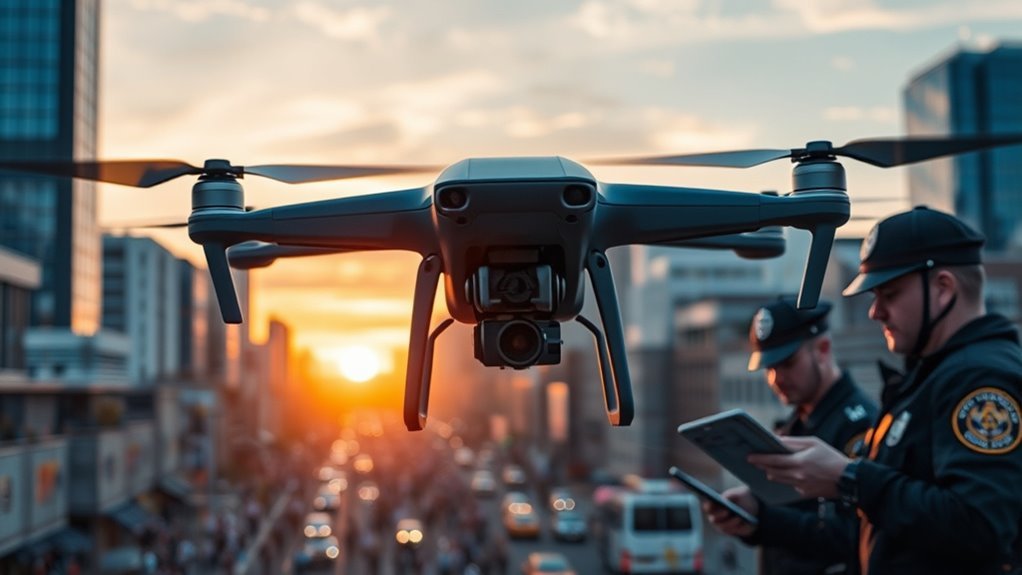
The increasing use of drones in law enforcement has raised significant legal questions regarding their deployment without warrants. Understanding the legal framework is vital for maintaining civil liberties while addressing public safety concerns. Here are some key considerations:
- Current drone legislation often lacks thorough guidelines.
- Courts have treated drones as surveillance technology under the Fourth Amendment.
- The balance between privacy rights and law enforcement needs remains contentious.
- Local jurisdictions may have differing regulations regarding drone use.
- Ongoing debates about accountability and transparency in police operations.
Navigating these complexities is essential for ensuring that the deployment of drones does not infringe on individual freedoms while still allowing police to utilize advanced tools in their operations.
Exceptions to Warrant Requirements

While warrant requirements are a cornerstone of protecting civil liberties, several exceptions exist that allow law enforcement to deploy drones without prior authorization. One key exception involves exigent circumstances, where immediate action is necessary to prevent harm, such as in hostage situations or natural disasters. Here, officers might use drones to assess the scene and guarantee public safety without waiting for a warrant. Additionally, if a crime is in progress or evidence is at risk of destruction, drones may be employed to gather critical information swiftly. These exceptions highlight a tension between the need for immediate response in urgent situations and the broader principles of individual rights, prompting ongoing discussions about the balance of safety and freedom in a democratic society.
Implications for Privacy and Civil Liberties
Although law enforcement’s use of drones without a warrant can improve public safety, it raises significant concerns regarding privacy and civil liberties. You might find yourself questioning the ethics of such surveillance practices and how they shape public perception.
- Erosion of trust between communities and law enforcement
- Increased potential for racial and socioeconomic profiling
- Lack of transparency in drone operations
- Chilling effects on free speech and assembly
- Risks of data misuse and unauthorized access
These implications highlight the need for a dialogue on surveillance ethics. As drones become more ubiquitous, understanding their impact on civil liberties is crucial for maintaining a balance between security and individual rights. It’s essential to guarantee that public safety measures don’t compromise your fundamental freedoms.
Future Considerations for Drone Surveillance Regulations
As the use of drones in law enforcement becomes more prevalent, it’s crucial to contemplate how regulations can evolve to address both public safety and civil liberties. You should consider the necessity for enhanced drone accountability, ensuring that law enforcement agencies operate within clear legal frameworks. This could involve mandatory reporting requirements and oversight mechanisms to track drone usage. Additionally, surveillance ethics must guide policy development, balancing the effectiveness of drone technology against potential invasions of privacy. As public concern grows, it’s vital to engage citizens in discussions about acceptable uses of drones, fostering transparency and trust in law enforcement. Ultimately, effective regulations will reflect a commitment to safeguarding freedoms while ensuring community safety.
Frequently Asked Questions
What Types of Drones Do Police Typically Use for Surveillance?
Police typically use commercial drones equipped with thermal imaging for surveillance. These drones can capture heat signatures, allowing law enforcement to monitor activities discreetly, raising concerns about privacy and individual freedoms in public spaces.
How Often Do Police Agencies Conduct Drone Training Sessions?
Did you know over 70% of police agencies conduct drone training sessions monthly? This drone training frequency reflects evolving police agency practices, emphasizing the importance of staying updated on technology’s role in modern law enforcement.
Can Drones Be Armed or Equipped With Non-Lethal Weapons?
Drones can be equipped with non-lethal capabilities, like tasers or rubber bullets. However, the use of armed drones raises significant ethical and legal concerns, challenging your understanding of privacy and governmental power in modern society.
What Are the Costs Associated With Police Drone Programs?
“There’s no such thing as a free lunch.” Police drone programs incur significant costs, including drone maintenance costs and ongoing funding sources. Balancing budgetary constraints with operational efficiency is essential for sustainable program implementation.
How Do Police Drones Handle Data Storage and Security?
Police drones typically utilize data encryption to secure collected information, addressing privacy concerns. However, the effectiveness of these measures often depends on the protocols in place, which can vary considerably across different jurisdictions and departments.
