
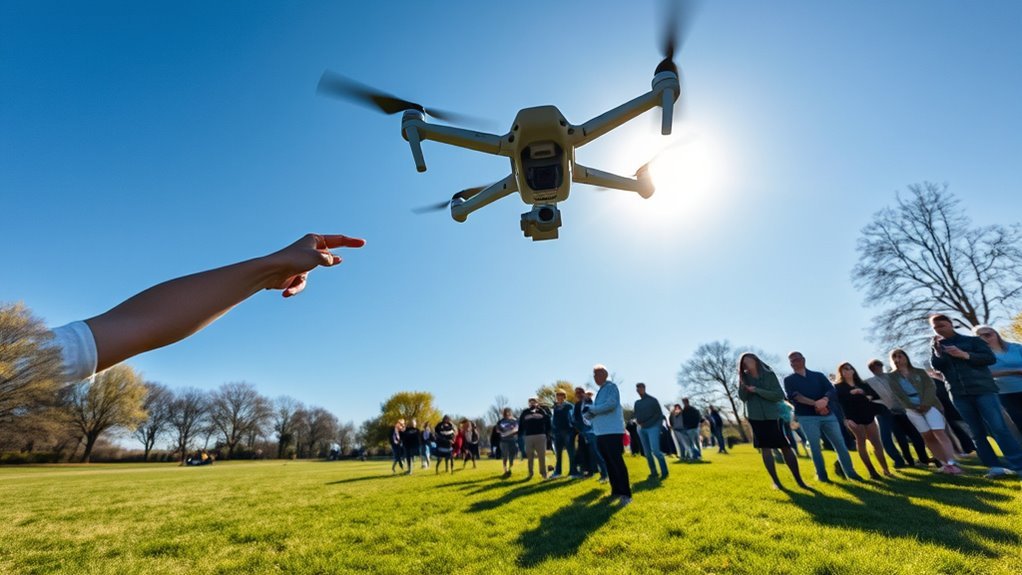
To safely bring down a drone, first, assess the situation by identifying its type and behavior. Legal considerations are essential, so familiarize yourself with FAA regulations and local laws. You can use signal jammers to disrupt communication, drone-catching nets to capture it safely, or bright lasers to disorient its camera. Once grounded, secure the area, inspect the drone, and document the incident meticulously. If you want to explore additional techniques and safety protocols, continue on for more insights.
Understanding the Risks of Drones
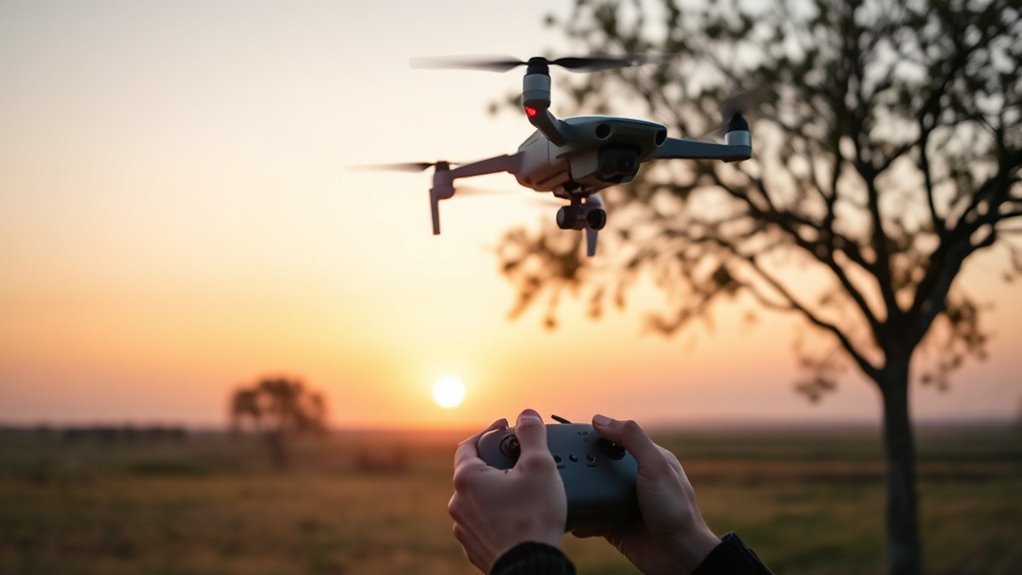
As you navigate the complexities of drone technology, it’s crucial to understand the inherent risks associated with their use. Drone safety is paramount; understanding operational limitations and airspace regulations can mitigate accidents. Uncontrolled drones pose hazards not just to their operators but to the public as well. Additionally, privacy concerns arise with drone surveillance capabilities, potentially infringing on individual rights. As you consider your freedom in utilizing drones, weigh these risks carefully. Implementing best practices in drone operation, such as maintaining line-of-sight and adhering to local laws, can enhance safety and protect privacy. By acknowledging these risks, you empower yourself to make responsible decisions, ensuring both your freedom and the safety of others in your environment. Furthermore, having drone insurance coverage can provide valuable protection against unexpected financial burdens from damages. Moreover, understanding payload management techniques is essential for maintaining stability and safety during operations.
Identifying the Type of Drone
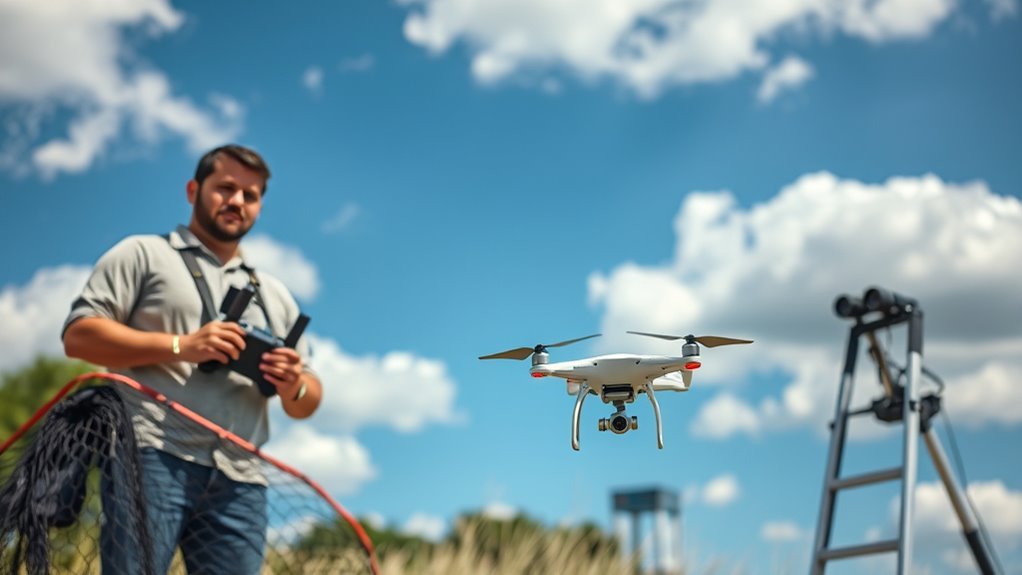
How can you effectively identify the type of drone you’re dealing with? Start by observing the drone features. Pay attention to its size, shape, and number of rotors; these factors can help distinguish between common drone types, such as quadcopters, hexacopters, or fixed-wing models. Additionally, note the drone’s intended use—recreational, commercial, or military—as this can influence its design and capabilities. Look for distinguishing elements like camera mounts, sensors, or unique lighting configurations. If you can, gather information on its flight behavior and noise level, as these aspects can further refine your identification process. By methodically evaluating these characteristics, you’ll gain a clearer understanding of the drone type, which is essential for planning your next steps.
Assessing the Situation
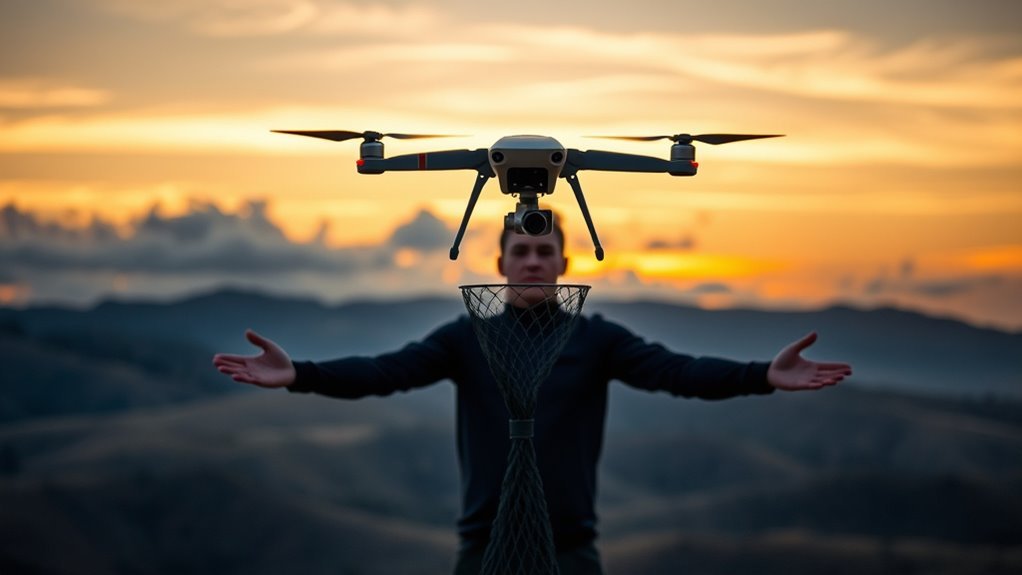
When evaluating the situation, you must first identify the type of drone in question, as its specifications will dictate your approach. Next, evaluate the surrounding environment to determine potential hazards and opportunities for intervention. This systematic analysis will inform your subsequent actions and enhance your effectiveness in neutralizing the threat.
Identify Drone Type
What type of drone is flying overhead? Identifying the drone’s classification is essential for your next steps. Drones can be categorized by their features such as size, capability, and purpose. Here’s a quick reference table to help you identify the type:
| Classification | Features | Use Cases |
|---|---|---|
| Mini Drone | Small, lightweight | Recreational flying |
| Hobby Drone | Moderate range | Aerial photography |
| Commercial Drone | Advanced sensors | Delivery services |
Evaluate Surrounding Environment
Before taking any action against a drone, it’s crucial to evaluate your surrounding environment to guarantee both safety and effectiveness. Start by examining environmental factors like nearby buildings, trees, and power lines, as these can obstruct your approach or cause unintended damage. Identify any people or pets in the vicinity; their safety should be your top priority. Additionally, consider local laws and regulations regarding drone interference, as these dictate your legal boundaries. Implement safety measures such as wearing protective gear and ensuring you have a clear escape route. By thoroughly analyzing these elements, you can make informed decisions, minimizing risks while pursuing your objective with precision and care.
Legal Considerations
When considering how to bring down a drone, understanding the legal landscape is essential. You’ll need to navigate federal regulations, as they establish baseline restrictions, while also being aware of variations in state laws that could affect your actions. Additionally, property rights implications can considerably influence what you can legally do if a drone encroaches upon your airspace.
Federal Regulations Overview
While understanding the legal landscape is essential, many individuals underestimate the complexities surrounding federal regulations regarding drone interference. Federal laws governed by the FAA outline strict guidelines for drone operation, and any attempt to bring a drone down must adhere to these regulations. Engaging in actions that compromise regulatory compliance can result in severe penalties, including fines and criminal charges. It’s important to recognize that these laws exist to protect airspace integrity and public safety. Before considering any interference methods, confirm you’ve thoroughly reviewed applicable federal regulations. Understanding your rights and the limitations imposed by these laws is critical for maintaining your freedom while maneuvering through the intricate legal framework surrounding drone operations.
State Laws Variations
As states enact their own laws governing drone usage, it is crucial to understand that these regulations can markedly differ from federal guidelines. Ignoring state regulations can lead to serious legal consequences. Consequently, familiarize yourself with your local laws and their enforcement mechanisms.
- Some states permit drone takedown only under specific circumstances.
- Others may classify drone interference as a criminal offense.
- Local enforcement agencies often have varying degrees of authority.
- Penalties for violating state laws can be severe, including fines and imprisonment.
- Always consult legal experts to navigate complex regulations.
Property Rights Implications
Understanding property rights implications is essential, especially since your legal authority over aerial space can be ambiguous. Drones can easily infringe on your property rights, leading to potential property invasion claims. If a drone flies over your land without permission, you might feel your privacy is compromised, raising legal and ethical concerns.
In many jurisdictions, the airspace above your property is subject to varying interpretations of ownership and control. Before taking action against a drone, consider the laws applicable in your area. Weigh the risks of potential legal repercussions against your desire to protect your privacy. Always prioritize a methodical approach to guarantee your actions align with local regulations and respect others’ rights while safeguarding your own.
Techniques for Safely Bringing Down a Drone
How can you effectively and safely bring down a drone? Prioritizing drone safety and adhering to emergency protocols is essential. Here are some techniques to take into account:
- Signal Disruption: Use a signal jammer to interrupt communication between the drone and its controller.
- Net Deployment: Employ a drone-catching net to physically capture the drone without causing damage.
- Laser Pointer: Utilize a laser pointer to temporarily blind the drone’s camera, making navigation difficult.
- Sound Emission: Generate loud noises or alarms to disorient the drone’s operator, causing them to land it.
- Balloon Method: Attach a small balloon to a long string; the drone may become entangled, forcing a controlled descent.
Always assess the situation carefully before acting to guarantee compliance with local regulations.
Using Technology to Disable a Drone
While various techniques can safely bring down a drone, leveraging technology offers a more targeted approach to disabling its functionality without direct confrontation. One effective method is drone jamming, which involves emitting radio frequency signals that interfere with the drone’s communication with its controller. By deploying a jamming device, you can create signal interference that disrupts the drone’s operational commands, forcing it to land or return to its point of origin. Ascertain you’re aware of the legal implications in your area, as jamming can be considered illegal in many jurisdictions. Always prioritize safety and responsibility when employing these methods, as they allow you to neutralize a potential threat without causing harm or escalating conflict.
Aftermath: What to Do Once the Drone Is Grounded
Once the drone is grounded, it’s essential to assess the situation methodically to guarantee safety and compliance with local laws. Begin by ensuring the area is secure, then proceed with drone recovery and inspection. Document the incident thoroughly, as this will be vital for incident reporting.
- Check for any damage to the drone or surroundings.
- Collect evidence, including photos and videos.
- Note the time, location, and circumstances of the incident.
- Report findings to relevant authorities if necessary.
- Consider the implications of your actions on personal freedom and privacy rights. Additionally, evaluate the drone’s advanced battery technology to determine if it can be safely recharged for future use. Incorporating real-time aerial data processing can enhance the efficiency of your recovery efforts and ensure a thorough inspection of the drone’s condition.
Frequently Asked Questions
Can I Use a Slingshot to Bring Down a Drone?
Using a slingshot to bring down a drone can be risky. While it might demonstrate slingshot effectiveness, consider drone safety regulations. Weighing risks versus benefits is essential before attempting any action against a flying device.
What Should I Do if a Drone Is Spying on Me?
Isn’t your privacy worth protecting? If a drone’s spying on you, document its behavior, consider legal implications, and report it to authorities. Understanding privacy concerns can empower you to take action without overstepping boundaries.
Are There Specific Drones That Are Easier to Disable?
When considering consumer drone types, those lacking advanced drone security features are generally easier to disable. Focus on models with minimal encryption and basic remote controls; they often present vulnerabilities you can exploit more effectively.
Can Wildlife Interfere With Drones and Help Bring Them Down?
Yes, wildlife can indeed interfere with drones. Bird behavior, such as swooping or attacking, and animal interference can disrupt drone flight paths, potentially causing malfunctions or crashes, depending on the situation and the drone’s design.
What Are the Risks of Using Homemade Devices to Disable Drones?
Using homemade devices to disable drones poses significant risks. You must consider safety precautions to prevent injury and the legal implications of interfering with airspace, which could lead to serious consequences. Always prioritize lawful actions when addressing drones.
