
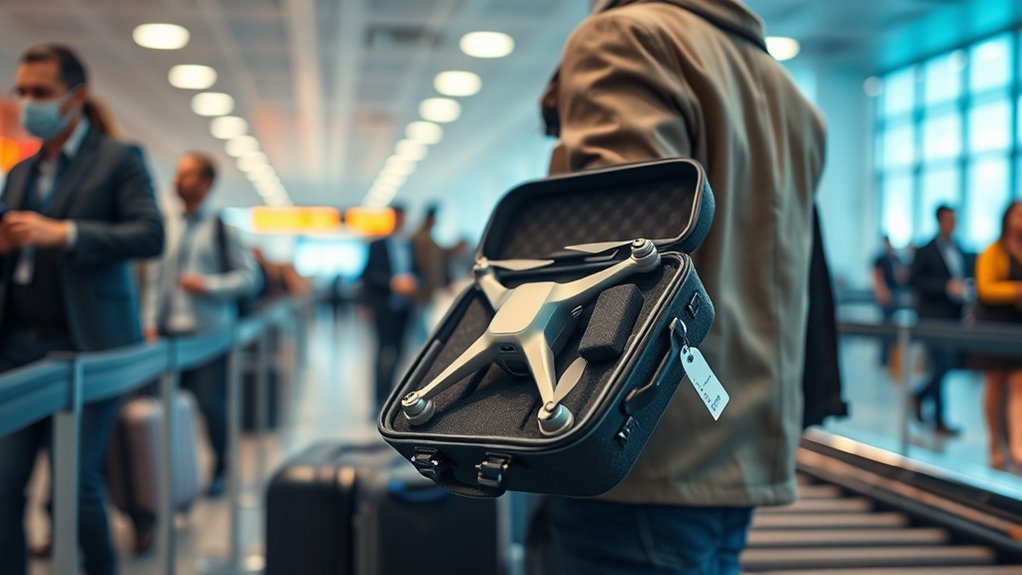
To bring your drone on a plane, start by checking your airline’s regulations and pack your drone carefully. Make sure your drone is well-maintained and remove batteries for separate transport. Use a snug protective case and disassemble it for easy packing. Carry it in your carry-on luggage for quick access during security checks. Stay organized and communicate clearly with security staff. Want to know more about using your drone at your destination? Keep going and explore additional tips!
Understanding Airline Regulations
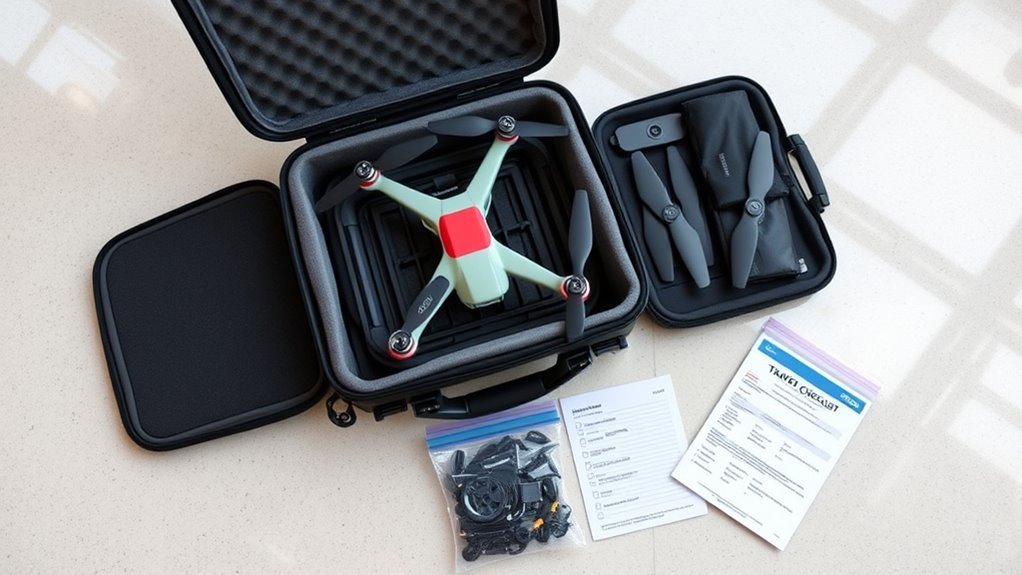
When you’re planning to take your drone on a plane, it’s essential to understand the airline regulations that apply. Each airline has its own policies regarding drone travel, so you’ll want to check their specific guidelines before packing your gear. Most importantly, be aware of drone restrictions, especially concerning battery types and sizes. Lithium batteries often have strict limits, so make certain your drone’s batteries comply with these rules. Additionally, some airlines may require you to carry your drone in your carry-on luggage rather than checked baggage. Familiarizing yourself with these airline policies can save you a lot of hassle and guarantee a smooth journey. Embrace your freedom to fly by staying informed and prepared!
Preparing Your Drone for Travel
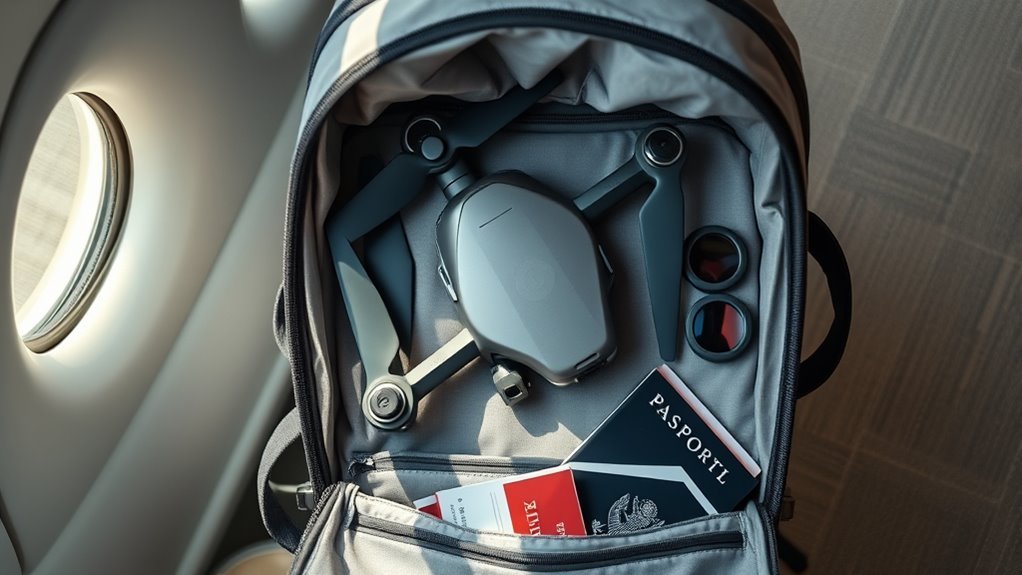
After checking the airline regulations, it’s time to get your drone ready for travel. To guarantee a smooth journey, follow these essential steps:
- Perform Drone Maintenance: Check battery levels, propellers, and firmware to guarantee everything’s in top shape.
- Secure Travel Insurance: Protect your investment in case of loss or damage during your trip.
- Remove Batteries: Airlines often require drone batteries to be transported separately; make sure to comply with this rule.
- Document Your Equipment: Keep a list of your drone and accessories, including serial numbers, in case you need to file a claim.
Packing Your Drone Safely
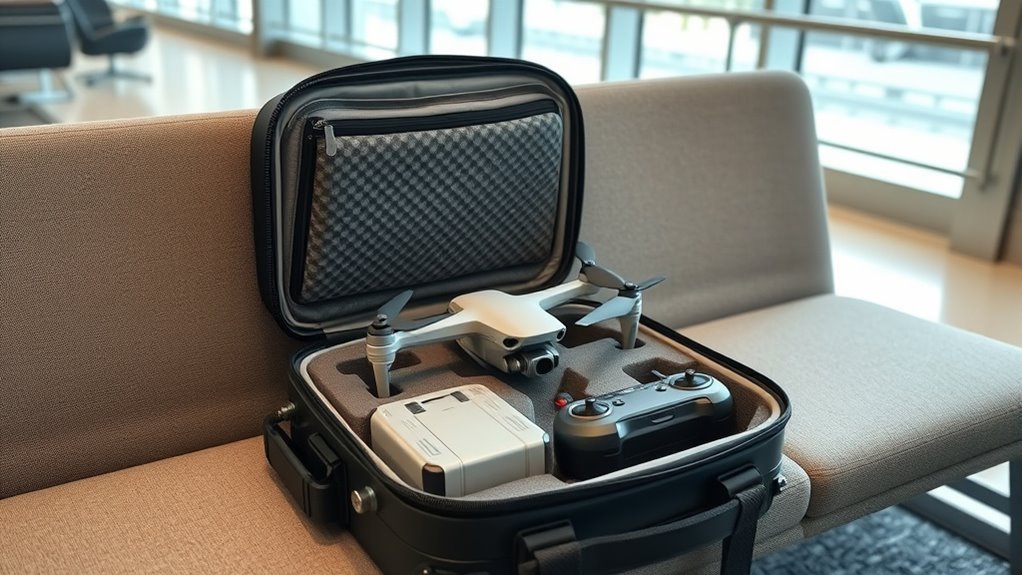
When packing your drone for a flight, it’s crucial to disassemble it for compactness. This not only saves space but also minimizes the risk of damage during transit. Be sure to use a protective case to keep all components safe and secure. Additionally, understanding signal attenuation can help you choose the best storage position within your luggage to avoid interference with your drone’s components.
Disassemble for Compactness
Disassembling your drone can make a significant difference in packing it safely for your flight. By using effective disassembly techniques, you can achieve compact storage that protects your equipment and saves space. Here are four essential steps to take into account:
- Remove the propellers – They can easily get damaged or cause damage in transit.
- Detach the camera – This keeps it safe and minimizes bulk.
- Fold or collapse the drone arms – This reduces its overall size.
- Pack the battery separately – It’s often subject to airline regulations and should be stored securely.
Use Protective Case
Packing your drone safely is just as important as disassembling it for travel. To guarantee peak drone protection, using a high-quality protective case is essential. When it comes to case selection, look for one that fits your drone snugly, with custom compartments for accessories. This will prevent movement and reduce the risk of damage during transit. Hard-shell cases offer the best defense against impacts, while soft-shell cases are lighter but may provide less protection. Don’t forget to check the airline’s regulations for size and weight restrictions. A well-chosen case not only keeps your gear safe but also gives you peace of mind, allowing you to focus on your adventures. Prepare for takeoff with confidence!
Carrying Your Drone on the Plane
When you’re carrying your drone on a plane, it’s important to check the airline’s regulations first to avoid any surprises at the gate. Make sure to pack for security screening, as your drone may need to be taken out of its case. Additionally, following battery safety guidelines will guarantee a smooth journey for both you and your equipment.
Check Airline Regulations
Before you head to the airport with your drone, it’s essential to check the airline regulations, as each carrier has its own rules regarding the transport of drones. Not being in the know could lead to hassles at security or even worse, confiscation. Here’s what to look for:
- Size and Weight Limits: Verify if your drone meets the airline’s restrictions.
- Battery Regulations: Check how many lithium batteries you can carry and their watt-hour rating.
- Drone Insurance: Some airlines may require proof of drone insurance.
- Travel Permits: Make certain you have any necessary permits for your destination.
Doing your homework guarantees you can enjoy your travels with peace of mind, ready to capture stunning aerial footage!
Pack for Security
Once you’ve checked the airline regulations, it’s time to focus on how to pack your drone for security screening. Start by disassembling any removable parts, like propellers, and placing them in a separate compartment. This makes it easier for security personnel to inspect your gear. Use a sturdy, padded case to protect your drone during transport, which is also a good way to comply with security measures. Keep your drone accessible in your carry-on, as you’ll likely need to take it out for screening. Finally, familiarize yourself with packing tips specific to airport security, such as avoiding excessive accessories to speed up the process. With the right preparation, you can breeze through security and be ready for your adventure.
Battery Safety Guidelines
While maneuvering through airline regulations, it’s essential to pay special attention to battery safety guidelines when carrying your drone on a plane. Different battery types have specific airline restrictions, and knowing these can save you from last-minute hassles. Here are key points to remember:
- Check Watt-Hour Ratings: Most airlines allow lithium batteries under 100Wh in carry-on luggage.
- Keep Batteries Charged: Confirm your batteries are between 30% to 50% charged for safety.
- Use Proper Packaging: Store batteries in protective cases to prevent short-circuiting.
- Declare Excess Batteries: If you’re carrying more than two spare batteries, notify security to avoid issues.
Following these guidelines helps you enjoy your flying experience without any unwanted surprises!
Checking Your Drone as Baggage
If you decide to check your drone as baggage, it’s important to follow specific guidelines to guarantee its safe transport. First, verify your drone’s weight complies with your airline’s restrictions, as exceeding limits can lead to hefty baggage fees. Remove any removable batteries and carry them in your carry-on, as they can pose safety risks when checked. Use a sturdy case to protect your drone from damage during handling. Consider labeling your case with your contact information for added security. Finally, familiarize yourself with your airline’s policies regarding drones, as these can vary widely. With these steps, you can travel with your drone confidently, ready to capture stunning aerial shots at your destination.
Navigating Security Checks
As you prepare for your journey, maneuvering security checks with your drone can seem intimidating, but it doesn’t have to be. Follow these steps to breeze through the process:
- Check airline policies: Familiarize yourself with specific security procedures related to drones.
- Pack wisely: Keep your drone accessible in your carry-on for easy baggage screening.
- Remove your drone from the bag: During screening, be prepared to take your drone out for separate inspection.
- Stay calm and clear: Communicate with security personnel if you encounter any issues or need assistance.
Tips for Using Your Drone at Your Destination
Once you’ve arrived at your destination, making the most of your drone experience can enhance your trip considerably. Start by doing your homework on local drone laws; some areas have strict regulations that could lead to fines or confiscation. Check if you need permits for flying in specific locations. Additionally, be aware that federal laws govern drone operation and can impact where you can fly. Next, consider drone photography tips to capture stunning landscapes and unique perspectives. Always scout your surroundings for obstacles and potential hazards before launching. Be respectful of privacy and avoid crowded places where you might disturb others. Finally, remember to keep your drone within sight and maintain a safe altitude. With these considerations in mind, you’ll be ready to enjoy the freedom your drone offers while creating unforgettable memories. Additionally, keep in mind that understanding payload management algorithms can significantly enhance your drone’s performance in diverse environments.
Frequently Asked Questions
Can I Use My Drone During the Flight?
You can’t use your drone during the flight, as in-flight usage is restricted for safety reasons. Keep your drone safe in your luggage, so you can enjoy flying it once you land.
What Should I Do if My Drone Is Damaged During Travel?
If your drone’s damaged during travel, first assess the damage. If you have drone insurance, contact your provider to file a claim. Document everything to guarantee you get the support you need for repairs.
Are There Any Age Restrictions for Carrying a Drone on a Plane?
You might’ve heard about drone ownership laws and airline policies, but age restrictions for carrying a drone vary by airline. It’s smart to check specific guidelines before traveling to guarantee a hassle-free journey.
Can I Fly My Drone at the Airport?
You can’t fly your drone at the airport. Airport policies and drone regulations typically restrict flying near such areas to guarantee safety. Always check local rules before attempting to fly your drone nearby.
What Happens if My Drone Is Flagged by Security?
Oh, the thrill of freedom! But if your drone’s flagged by security, you’ll face the consequences of drone regulations. Security protocols will likely lead to confiscation or delays, so always check guidelines before flying.
