
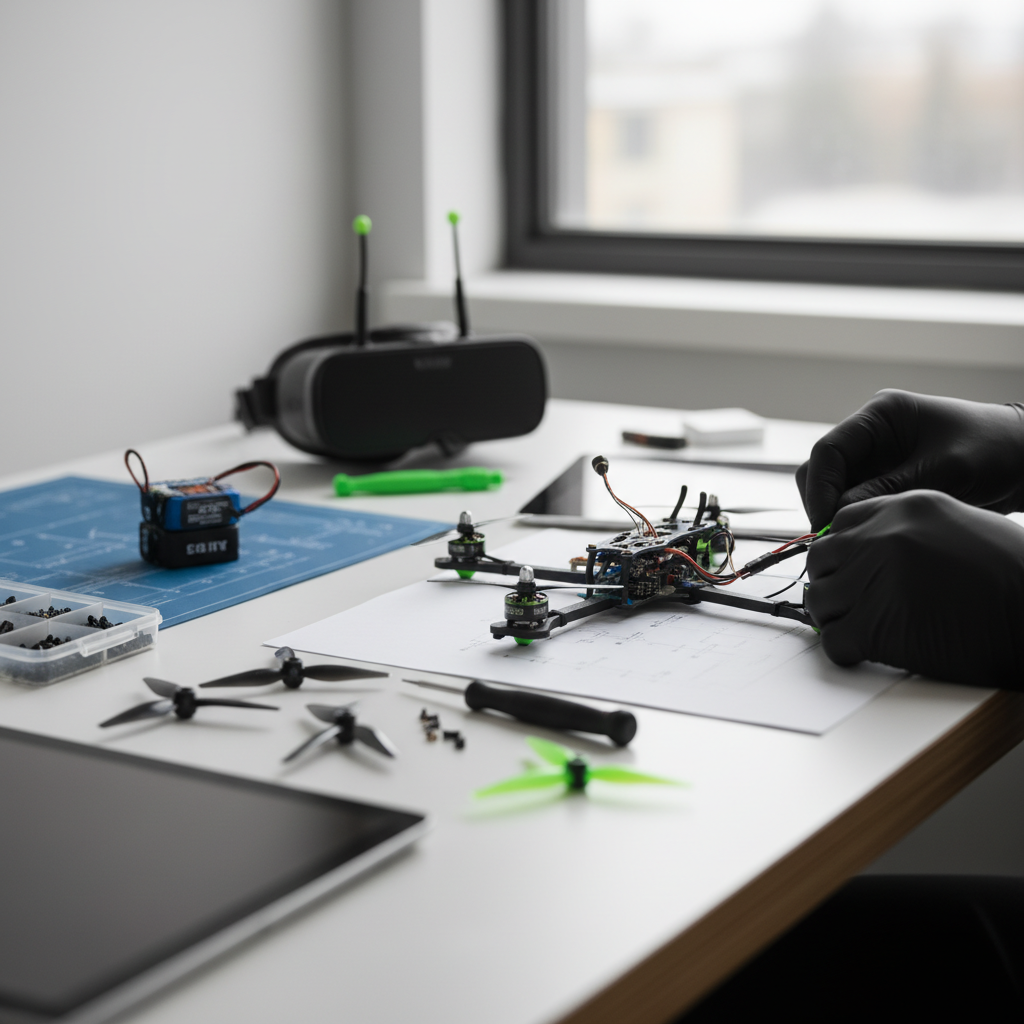
To build an FPV racing drone, you will need to gather the right components, assemble them carefully, and configure the settings for optimal performance. This guide will walk you through the essential steps to create your own FPV racing drone, whether you’re a beginner or looking to improve your skills. FPV (First-Person View) racing drones offer an exhilarating experience, allowing pilots to immerse themselves in high-speed aerial maneuvers. By following this comprehensive guide, you will gain the knowledge necessary to construct a drone tailored to your racing needs.
Gather the Essential Components
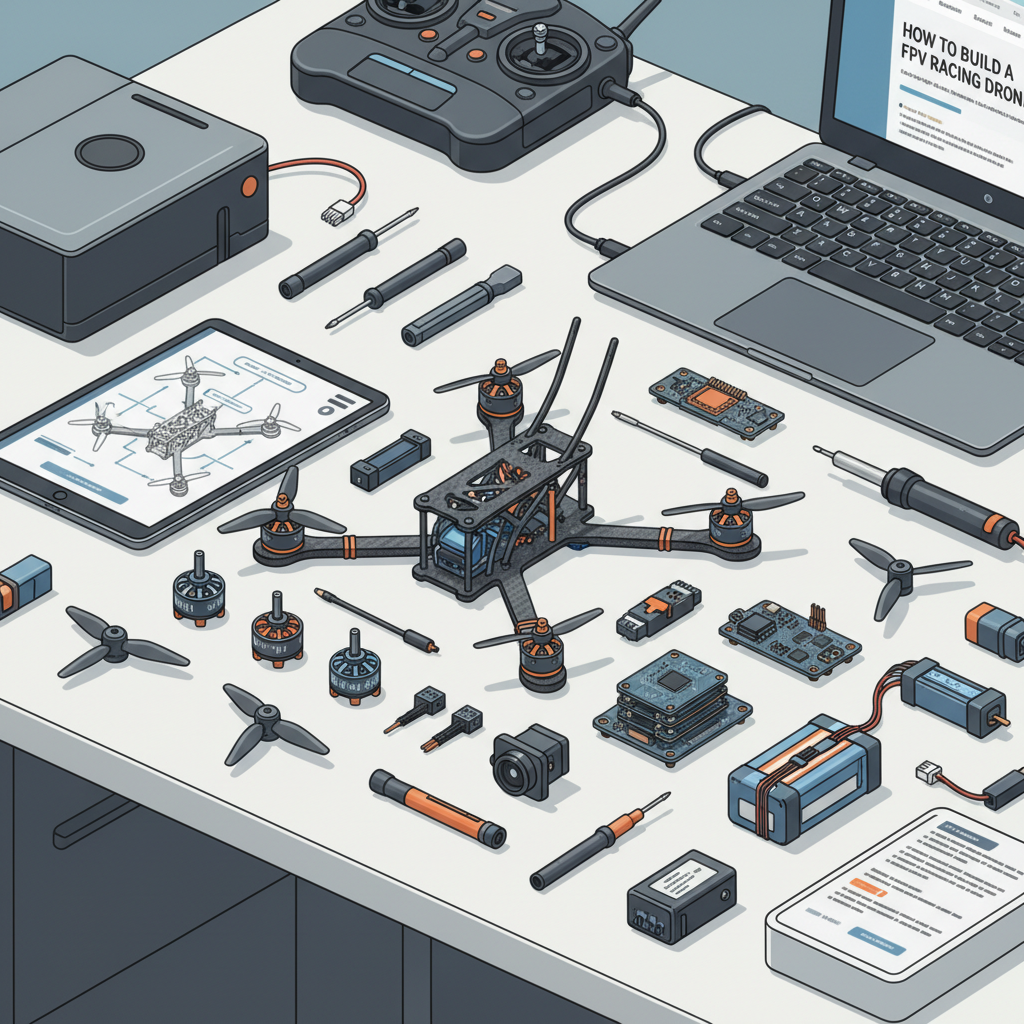
The first step in building an FPV racing drone is gathering the right components. Start by researching and choosing the appropriate frame size for your racing style. Common frame sizes range from 200mm to 600mm, with smaller frames typically offering greater agility and speed, while larger frames provide stability and can carry heavier equipment.
Next, select motors and Electronic Speed Controllers (ESCs) that align with your drone’s weight and performance requirements. Brushless motors are the most common choice for FPV drones, as they offer a good balance of power and efficiency. For instance, if you’re aiming for a lightweight build, consider 2205 or 2306 motors, which are popular among racers. The ESCs should match the motor specifications; choosing a 30A ESC for a 4S battery setup can provide the necessary power while maintaining safety margins.
Finally, acquire a compatible flight controller that ensures stability and control during flight. Popular models like the Betaflight F4 or the Kakute F7 are equipped with advanced features that enhance performance, such as gyroscopic stabilization and various tuning options for experienced pilots.
Assemble the Drone Frame
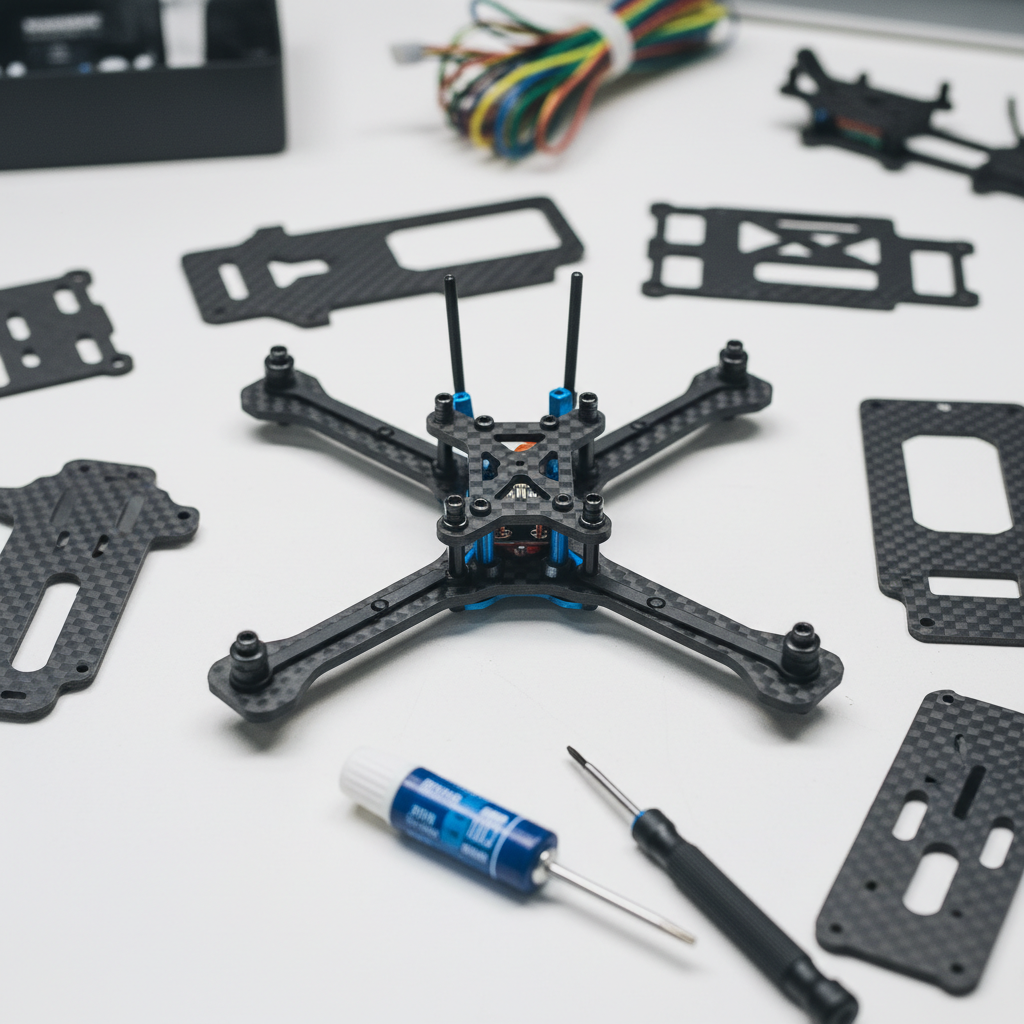
Once you have all your components, it’s time to assemble the drone frame. Follow the manufacturer’s instructions meticulously to securely assemble the frame, ensuring that all parts fit together snugly. Many frames come with pre-drilled holes and mounting points specifically designed for motors and other components, which simplifies the assembly process.
After constructing the frame, attach the motors securely, ensuring they are aligned correctly for optimal thrust. This alignment is crucial as it affects the drone’s flight characteristics. Use lock nuts to fasten the motors and avoid any vibrations that could lead to detachment during flight.
Next, install the ESCs in close proximity to the motors. This proximity minimizes wiring complexity and reduces resistance, which can enhance overall performance. Use zip ties or double-sided tape to secure the ESCs in place, ensuring they are out of the way of any moving parts.
Install the Flight Controller
With the drone frame assembled, it’s time to install the flight controller. Begin by connecting the flight controller to the ESCs, motors, and battery. Make sure to follow the wiring diagram specific to your flight controller model; incorrect connections can lead to malfunctioning or damaged components.
Securely mount the flight controller in a vibration-dampening manner. This can be achieved using rubber grommets or foam pads, which help absorb any vibrations produced during flight, ensuring the controller receives accurate readings from its sensors.
Next, calibrate the flight controller settings for optimal response. Use software like Betaflight or INAV to configure the settings, including PID tuning, which adjusts the drone’s stability and responsiveness. A well-tuned flight controller can make a significant difference in flight performance, particularly in competitive racing environments.
Set Up the FPV System
The FPV system is a critical component of your racing drone, allowing you to see what the drone sees in real-time. Start by choosing an FPV camera and video transmitter that meet your preferences for resolution and latency. Popular cameras include the RunCam Swift 2 and the Foxeer Predator, both known for their high-quality video output.
Connect the camera to the flight controller and the video transmitter (VTx). Ensure that the VTx is compatible with your camera and has the necessary power output for your race environment. Many racers prefer 25mW for casual flying, while 200mW or higher may be necessary in competitive settings.
Adjust the camera angle for the best field of view during racing. A typical angle is around 30-40 degrees, which provides a good balance between speed perception and ground visibility. Make sure to securely mount the camera to avoid vibrations that could distort the video feed.
Configure the Remote Controller
Next, configure your remote controller to ensure seamless communication with the flight controller. Begin by binding the remote controller to the flight controller, which typically involves pressing a button on the receiver while powering on the remote.
Set up the control channels for throttle, pitch, roll, and yaw according to your preferences. This step is crucial for establishing intuitive control during flight. Many pilots opt for custom mixes to enhance their racing experience, such as adjusting rates to improve responsiveness.
After binding, test the controls to ensure responsiveness and accuracy. A well-configured remote controller can drastically affect your ability to maneuver the drone during high-speed races.
Perform Pre-Flight Checks
Before taking to the skies, perform a series of pre-flight checks to ensure everything is in order. Inspect all connections and components for stability and security. Loose connections can lead to in-flight failures, so take the time to double-check the wiring and soldered joints.
Conduct a range test of the FPV system to ensure a strong signal. Walk away from the drone while monitoring the video feed and control response. A good range allows for more freedom during races, so confirm that you have a reliable connection before your first flight.
Lastly, perform a thorough battery check to confirm sufficient power for flight. Ensure that the battery is properly charged and securely connected. A well-maintained battery will provide better performance and longevity for your drone.
Test Flight and Adjustments
With everything in place, conduct an initial test flight in a safe, open area. This flight will help you assess the drone’s performance and make any necessary adjustments. Pay attention to how the drone responds to control inputs and whether it maintains stable flight.
Monitor the flight performance closely. If you notice any issues, such as drifting or instability, revisit the PID settings on your flight controller to make adjustments. Tuning these settings can significantly improve your drone’s speed and maneuverability, crucial aspects of competitive racing.
After making adjustments, conduct further test flights to refine the drone’s configuration. Each flight will provide insights into how to optimize performance, ensuring you are well-prepared for competitive races.
Building an FPV racing drone requires careful planning and assembly of various components. By following these steps, you can create a high-performance drone that meets your racing needs. Don’t hesitate to experiment and make adjustments to optimize your flying experience! Embrace the process, and enjoy the thrill of racing as you take to the skies with your custom-built drone.
Frequently Asked Questions
What components do I need to build an FPV racing drone?
To build an FPV (First Person View) racing drone, you will need several essential components including a frame, flight controller, motors, electronic speed controllers (ESCs), propellers, a battery, an FPV camera, a video transmitter (VTx), and a receiver. Additionally, you will require a transmitter for control, and optional items like a GPS module, OSD (On-Screen Display), and various connectors and wiring for assembly. Researching each component’s specifications and compatibility is crucial for optimal performance.
How do I choose the right frame for my FPV racing drone?
Choosing the right frame for your FPV racing drone involves considering several factors such as size, weight, material, and design. A typical racing drone frame is usually between 210mm to 250mm in size, which determines the distance between the motors. Materials like carbon fiber are preferred for their strength and lightweight properties. Additionally, evaluating the frame’s design, such as whether it has a low profile for better aerodynamics, can enhance your drone’s racing capabilities.
Why is the flight controller important in an FPV racing drone?
The flight controller is a critical component of an FPV racing drone as it acts as the brain of the aircraft, managing all flight dynamics and controls. It processes data from various sensors, stabilizes the drone during flight, and allows for responsive maneuvering, which is essential for racing. A high-quality flight controller can also support advanced features like tuning options, telemetry, and integration with other components, significantly impacting your racing performance.
What is the best battery type for FPV racing drones?
The best battery type for FPV racing drones is typically a LiPo (Lithium Polymer) battery, known for its high energy density and discharge rates. A common choice is a 4S (four cells in series) battery, which provides a good balance of power and weight for racing. It’s important to select a battery with a suitable C-rating that matches your drone’s power requirements to ensure optimal performance and prevent overheating during intense races.
Which software should I use for tuning my FPV racing drone?
For tuning your FPV racing drone, popular software options include Betaflight, Cleanflight, and INAV, each offering unique features suited for different flying styles. Betaflight is widely favored for its user-friendly interface and extensive community support, making it ideal for racers looking to optimize performance. These software platforms allow you to adjust various settings such as PID (Proportional, Integral, Derivative) values, rates, and filters, enabling you to fine-tune your drone’s responsiveness and stability during races.
References
- https://en.wikipedia.org/wiki/FPV_racing
- https://www.nerdwallet.com/article/investing/drone-racing
- https://www.droneflyers.com/what-is-fpv-drone-racing/
- https://www.faa.gov/uas/getting_started/learn_to_fly/
- https://www.uw.edu/engineering/undergraduate/robotics-and-drones/
- https://www.rcgroups.com/forums/showthread.php?2711315-How-to-Build-a-Racing-Drone-Guide
- https://www.smithsonianmag.com/innovation/racing-drones-180970172/
- https://www.adafruit.com/category/1027
- https://www.techrepublic.com/article/how-to-build-a-drone/
