
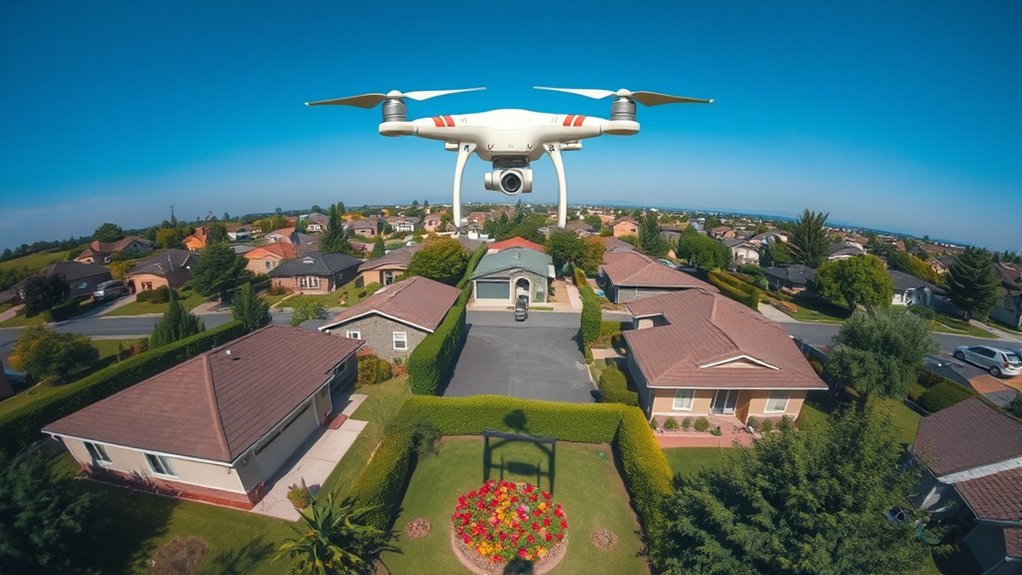
To determine if it’s legal to fly a drone over someone’s property, you must consider federal regulations, state laws, and local ordinances. The FAA requires registration for drones over 0.55 pounds and knowledge of airspace classifications. State laws vary; some may require notification to property owners. Respect privacy rights, as unauthorized flights can lead to aerial trespass claims. Familiarizing yourself with these factors guarantees compliance, setting the stage for responsible flying. There’s more to explore on this topic.
Understanding Federal Regulations on Drone Flight
When you’re flying a drone, understanding federal regulations is essential to guarantee compliance and safety. One key aspect is drone registration. If your drone weighs more than 0.55 pounds, you must register it with the FAA, securing accountability and traceability. Additionally, familiarize yourself with airspace classification. Different classes dictate where you can legally operate your drone. For example, flying in controlled airspace, like near airports, requires specific permissions. Moreover, knowing the designated no-fly zones helps you avoid fines and guarantees you’re respecting others’ rights. By adhering to these regulations, you not only protect yourself but also contribute to the responsible use of drones, enhancing the freedom we all enjoy in the skies. Understanding local drone regulations is crucial for flying responsibly and safely. Stay informed, and enjoy flying responsibly!
State Laws Impacting Drone Usage
Understanding federal regulations is just the start; state laws also play a significant role in how you can legally operate your drone. Each state has its own set of regulations that may affect your ability to fly over private property. Knowing these laws is essential to avoid trespassing and respecting property boundaries.
Here’s a quick reference table of state regulations:
| State | Drone Regulations | Property Boundary Laws |
|---|---|---|
| California | Must notify property owners | Strong privacy protections |
| Texas | No specific drone laws | Limited restrictions |
| Florida | Registration required for commercial | Privacy invasion considerations |
| New York | Must adhere to FAA guidelines | Height restrictions apply |
| Colorado | Local laws may vary | Airspace rights enforced |
Stay informed to enjoy your freedom responsibly!
Local Ordinances and Their Role

While federal and state regulations set the framework for drone usage, local ordinances can impose additional restrictions that you must navigate. These local drone regulations vary greatly from one area to another, so it’s vital to research your specific community guidelines. Some municipalities may limit where you can fly, require permits, or even ban drone usage altogether in certain zones. Ignoring these local rules could lead to fines or other legal repercussions. Always check with your local government or planning department to guarantee you’re compliant. By understanding and respecting these regulations, you can enjoy the freedom of flying your drone while minimizing the risk of legal issues in your community.
Privacy Concerns and Property Rights
Local ordinances aren’t the only factors to contemplate when flying drones; privacy concerns and property rights also play a significant role in determining what’s permissible. You need to understand that individuals have reasonable privacy expectations on their property. Flying a drone over someone’s home can lead to claims of aerial trespass, especially if you’re capturing images or videos without permission. Courts are increasingly recognizing that invading someone’s privacy, even from above, can breach property rights. Always consider the intent behind your flight and the potential for unwanted surveillance. Respect for others’ privacy not only fosters goodwill but also helps you avoid legal repercussions. Stay informed about local laws and be mindful of where you’re flying to guarantee you’re acting within your rights.
Best Practices for Responsible Drone Flying
To guarantee a positive experience for yourself and others, practicing responsible drone flying is essential. Start by familiarizing yourself with local regulations and airspace restrictions. Respect drone etiquette—avoid flying over private property without permission and maintain a safe distance from people and animals. Always prioritize safe flying by keeping your drone within your line of sight and avoiding densely populated areas. Be mindful of weather conditions, as strong winds or rain can compromise control. Informing those nearby about your flight can also enhance safety and reduce concerns. Furthermore, it is important to understand drone registration requirements to ensure compliance with local laws. Finally, regularly check your equipment before flying to verify everything functions properly. Adhering to these best practices not only protects your freedom to fly but also fosters a respectful relationship with the community. Furthermore, understanding line of sight requirements is crucial for safe navigation and immediate response to emergencies.
Frequently Asked Questions
Can I Fly a Drone for Commercial Purposes Over Private Property?
Isn’t it essential to know the rules before you fly? When conducting commercial operations, you must comply with drone regulations, respecting property airspace rights. Always check local laws to guarantee you’re operating legally and ethically.
What Should I Do if Someone Complains About My Drone Flying?
If someone complains about your drone flying, review drone regulations and understand your user responsibility. Address the concerns politely, ensuring you’re compliant. Open communication can help maintain your freedom while respecting others’ rights.
Are There Restrictions for Flying Drones Near Schools or Hospitals?
Yes, there’re restrictions for flying drones near school zones and hospitals. You’ll need to familiarize yourself with local regulations, as many areas impose specific rules to guarantee safety and privacy for those in these locations.
Do I Need Insurance to Fly a Drone Over Someone’S Property?
You don’t necessarily need insurance to fly a drone, but having liability coverage is highly recommended. It protects you against potential damages or legal claims, ensuring peace of mind while you enjoy your aerial freedom.
How Can I Obtain Permission to Fly Over Private Land?
To obtain permission to fly over private land, you should contact the landowner directly. Respect their rights and practice drone etiquette by clearly explaining your intentions and ensuring you have their consent before flying.
