

Know the Rules in Your Neighborhood Before You Take Off
To fly a drone legally in your neighborhood, you must follow FAA rules, any state requirements, and local restrictions that can change street by street. The quickest way to stay compliant is to check airspace limits, known “no-fly” areas, and any property- or community-specific rules before each flight.
Drone regulation is not one-size-fits-all. The Federal Aviation Administration (FAA) sets baseline national rules for recreational and commercial operations, but local governments, airports, and landowners may impose additional limits. The key difference is that FAA rules govern the airspace and flight safety, while local rules often govern where and when you can operate on the ground.
Use the Right Sources for Current Airspace Limits
Airspace restrictions can be temporary or evolving, so verify your intended flight location each time you fly. Many violations happen when pilots rely on old information instead of current airspace data.
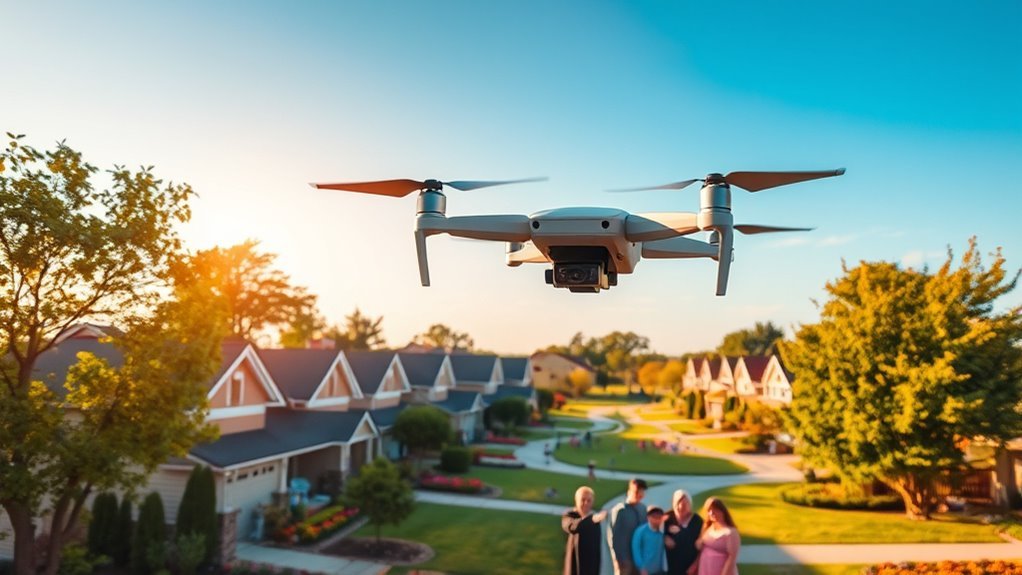
Start with FAA-supported resources such as the FAA DroneZone and the FAA UAS Data at a Glance materials for operational context. For practical airspace checking, many operators also use the FAA’s guidance on airspace authorization concepts, including LAANC (Low Altitude Authorization and Notification Capability) where available.
- Check for controlled airspace near airports, heliports, and approach paths.
- Look for temporary flight restrictions (often used for emergencies, special events, or public safety operations).
- Confirm altitude limits for the specific airspace classification and any authorizations.
- Review any local ordinances covering noise, launch/landing sites, or community safety rules.
Understand Common Neighborhood Constraints (Even if the FAA Allows Flight)
Even when the FAA permits drone flight, your neighborhood may still have restrictions on takeoff locations, flight times, or nuisance issues like noise. Following these rules reduces complaints and lowers the chance of enforcement or neighbor disputes.
In residential areas, common constraints include curfews for quiet hours, limits on flying over schools or public gatherings, and rules about operating near emergency response locations. Because enforcement authority may come from local law or property management, it helps to check city or county websites, homeowner association (HOA) policies, and park regulations.
If you plan to fly near prominent community landmarks such as a school district, sports fields, or a public park, treat those locations as higher risk for both safety and privacy complaints. The key difference is that safety and legality are FAA-driven, but community impact is often a local governance issue.
Quick Q&A: What If I Only Fly a Few Blocks?
Q: Do I still need to check airspace if I’m flying only a few blocks?
A: Yes. Airspace boundaries do not follow neighborhood borders. A “few blocks” flight can still intersect controlled airspace, a temporary restriction, or a nearby heliport flight path.
Q: Can I fly over any street if I avoid people?
A: You still must remain within FAA operational rules, keep your aircraft within the required altitude limits, and avoid restricted or unauthorized airspace. “Avoiding people” does not replace airspace compliance.
Register Your Drone When It Meets FAA Thresholds
In the United States, drone registration is required for most pilots flying drones above 250 grams (0.55 pounds). If your drone meets or exceeds that threshold, registration is a legal requirement, not an optional best practice.
FAA drone registration requirements apply to many recreational and hobby operations. The key definition used by regulators is based on weight: 250 grams is the widely cited threshold because it roughly aligns with how the FAA distinguishes small consumer drones from lighter aircraft.
Know the Exact FAA Registration Trigger
Registration is generally required when your drone weighs more than 0.55 pounds (250 grams). If your drone is below that threshold, registration may not be required, but you still must follow all other FAA safety and operational rules.
FAA registration is not only about “having a number.” It supports accountability and tracking in the event of incidents. That is why you should complete registration before your first flight and keep your registration details available.
FAA Registration Trigger by Drone Weight (U.S.)
| # | Drone Weight Range | Typical Registration Trigger | What to Check Next | Compliance Friction |
|---|---|---|---|---|
| 1 | 0–249 g | Not required (generally < 250 g) | Still follow all operational rules (VLOS, altitude, airspace) | ★★★★★ |
| 2 | 250–259 g | Generally required (≥ 250 g) | Confirm exact weight with battery/payload installed | ★★★★☆ |
| 3 | 260–349 g | Generally required | Display registration number on the aircraft | ★★★★☆ |
| 4 | 350–499 g | Generally required | Plan for Remote ID compliance where applicable | ★★★☆☆ |
| 5 | 500–999 g | Generally required | Verify airspace authorization needs (e.g., LAANC) | ★★★☆☆ |
| 6 | 1,000–24.9 lb (499–11,295 g) | Generally required for most typical flyers | Check part/category and any additional requirements for your operation | ★★☆☆☆ |
| 7 | 25 lb (11.34 kg) and up to 55 lb | Registration and authorization demands become more complex | Confirm you’re meeting applicable eligibility/operational rules before flight | ★☆☆☆☆ |
Complete Online Registration Correctly
You register online through official FAA channels and receive a registration number that you must display on your drone. Skipping or misplacing the registration number can create legal exposure during inspections or incident reports.
Typically, you will provide information such as:
- Your name
- Your address
- Your email
After registration, you receive a registration credential and number. The registration number must be clearly displayed according to FAA guidance. If you use multiple drones above the weight threshold, you should also understand how FAA registration applies to each aircraft in your control.
Quick Q&A: What If My Drone Is Just Under 250 Grams?
Q: My drone weighs 240 grams. Do I still need to register it?
A: Registration is generally tied to the 250-gram threshold. If your drone is truly below 250 grams, it may not require FAA registration, but you still must comply with all flight rules, including altitude limits and airspace restrictions.
Q: Does adding accessories change the weight?
A: Yes. If your payload or battery setup changes the effective weight above 250 grams, registration may become required. When in doubt, use the manufacturer specifications and your own measurements.
Fly Safely Under FAA Altitude and Distance Limits
To remain legal and safe, you must keep your drone within the FAA’s operational limits, including maximum altitude and safe separation from people and hazards. The FAA’s commonly enforced rule for recreational operations is to fly at or below 400 feet above ground level (AGL).
Altitude rules are designed to reduce the risk of collision with manned aircraft. A key definition used in enforcement is AGL (Above Ground Level), which means altitude is measured relative to the terrain below you rather than relative to sea level.
Maintain Visual Line of Sight (VLOS) and Avoid Hazards
Most recreational and many routine operations require that you keep the drone within visual line of sight (VLOS) while flying. That helps you detect obstacles, birds, and unexpected changes in wind or GPS performance.
Safety also includes planning for takeoff and landing. A legal flight still fails if you fly into trees, cross power lines, or lose control due to poor visibility or weak link performance.
- Don’t fly over groups of people or events unless you have the correct authorization and risk controls.
- Keep away from emergency response activities where manned aircraft may be operating.
- Avoid power lines, towers, and tall obstacles that can create flyaway or crash risks.
- Plan for wind and battery performance so you can return safely.
Follow Operational Boundaries Around Airports and Restricted Airspace
Airports and nearby approach paths can be tightly regulated, and unauthorized flights can violate FAA airspace rules even if you remain under 400 feet. If you want to fly near controlled airspace, check authorization methods such as LAANC where applicable.
The key difference is that altitude compliance alone does not equal legal compliance. You must also check the airspace class and whether authorization is required for your specific location and time.
Quick Q&A: Is 400 Feet Always the Limit?
Q: If I stay under 400 feet, am I always legal?
A: Not necessarily. You must also comply with airspace authorization requirements, keep within operational rules for your category, and avoid restricted areas. Altitude is only one element of compliance.
Q: What counts as “ground level” for altitude?
A: AGL means the altitude above the terrain beneath you. If you fly over a hill or building, the “400 feet” determination is relative to that ground surface.
Protect Privacy and Reduce Neighbor Conflict
To fly legally and responsibly in your neighborhood, you must respect privacy by avoiding unnecessary surveillance and by keeping your drone out of sensitive areas. Privacy is not only a “courtesy” issue; it can also trigger legal complaints and community enforcement.
The key definition is that privacy-respecting operation means you avoid focusing cameras on private property in a way that could be considered unreasonable surveillance. Even where drone rules focus on airspace and safety, privacy concerns can still lead to complaints to local authorities, HOAs, or property managers.
Use Camera and Flight Practices That Minimize Intrusion
Even if your drone is technically in the air legally, you can create risk by capturing footage of private backyards, windows, or personal activities. Many neighborhood disputes start with perceived intrusion rather than direct rule violations.
- Avoid hovering near private residences for prolonged periods.
- Don’t record audio unless your region and intended use clearly allow it and you have a defensible purpose.
- Limit camera zoom and focus on private property.
- Fly for the mission (for example, surveying your own property or filming public scenery), not for observation of neighbors.
Practices that reduce conflict include setting your flight route to avoid direct overflight of backyards and choosing vantage points that capture public streets, parks, or landscapes without centering on individual homes.
Noise Management Is a Safety and Compliance Factor
Drone noise is more than annoyance; it can affect community acceptance and lead to enforcement complaints. While the FAA primarily focuses on aviation safety, local ordinances often include quiet hours and nuisance rules.
If you notice complaints from neighbors, adjust flight schedules, use lower-noise props if your model supports it, and keep flights short. The key difference is that “quiet hours” and noise ordinances are often local law, meaning local enforcement can apply even when you followed FAA airspace rules.
Quick Q&A: Can I Fly Over My Own Property?
Q: Is flying over my property automatically legal?
A: You must still comply with FAA rules, including altitude limits and airspace authorization requirements. Privacy rules also still matter if your camera captures neighboring private spaces.
Q: What if a neighbor reports me?
A: If you registered correctly, operated within FAA limits, and avoided restricted airspace, you’ll be in a stronger position. Still, it’s wise to keep flight logs, authorization screenshots, and any proof of registration.
Handle Permits, Authorizations, and Waivers Where Required
Some flights require extra authorization beyond basic rules, especially near controlled airspace or for operations that deviate from standard limits. If your plan is more complex than a straightforward recreational flight, check whether you need authorization or a waiver.
The key definition is that authorization is permission issued for a specific flight in specific airspace at specific times, while a waiver is permission to deviate from certain FAA rules when you meet eligibility requirements.
Know When You Might Need Additional Permission
Most everyday backyard operations follow standard rules, but the risk increases near airports, stadiums, and public events. You may also need additional steps if you intend to fly in a way that is not consistent with standard operational limitations.
- Flying near controlled airspace (airports, heliports, major approach corridors)
- Operating at locations with temporary restrictions
- Planning flights over people or in high-density environments
- Conducting operations beyond typical VLOS expectations (which generally requires special authorization)
Use Documented Planning for Better Compliance
Good documentation helps you demonstrate you planned responsibly and complied with requirements. When you check authorization systems like LAANC, save confirmation information and keep it accessible.
Many pilots keep a simple compliance record: the date, location coordinates or neighborhood name, intended max altitude, flight purpose, and proof of authorization if applicable. This is especially helpful if you’re asked to explain your flight to an airport representative, property manager, or neighbor.
Quick Q&A: Do I Need a Permit for Every Flight?
Q: Is there a permit for each drone flight in my neighborhood?
A: Not always. Many flights are legal under standard FAA rules without special permits. However, flights near controlled airspace or with non-standard operations may require authorization or additional approvals.
Set Up a Simple Legal Flight Checklist for Your Next Neighborhood Session
A practical checklist is the best way to turn drone rules into consistent, repeatable legal behavior. Before you launch, verify registration, airspace status, operational limits, and privacy considerations.
Use this pre-flight checklist to reduce mistakes and keep your drone operations aligned with FAA expectations and neighborhood realities.
- Verify registration if your drone is over 250 grams (0.55 pounds).
- Check airspace and restrictions for your exact location and current date/time.
- Confirm altitude planning to stay at or below 400 feet AGL unless authorized otherwise.
- Maintain VLOS and plan a safe takeoff and landing path.
- Avoid privacy intrusions by not centering camera activity on private properties.
- Be mindful of noise and local quiet hours where they apply.
- Save authorization details if your area requires LAANC or another approval mechanism.
Fast Reference: The Most Cited Legal Requirements
If you only remember a few legal anchors, focus on these widely referenced rules. They are the foundation of safe, defensible drone operation in most U.S. neighborhoods.
- Register when the drone is over 250 grams (0.55 pounds).
- Fly at or below 400 feet AGL for standard operations.
- Follow airspace rules and obtain authorization where required.
- Respect privacy and avoid unnecessary surveillance over private property.
📋 About This Article
This article helps you fly your drone legally in your own neighborhood by showing you which rules apply before you take off. It’s for drone owners who want to stay compliant with FAA requirements and any extra state, local, or community limits. You’ll learn how to check current airspace limits, spot nearby no-fly areas, and confirm any ground rules tied to where you’re launching and flying.
Frequently Asked Questions
Do I need to register my drone to fly in my neighborhood?
In many countries (including the United States), you generally need to register your drone if it weighs between 0.55 lb (250 g) and 55 lb (25 kg) and you fly it for recreational or certain non-commercial purposes. Registration helps regulators identify the owner if there’s an incident. In the U.S., you must also follow Remote ID rules when applicable.
Because requirements vary by location and drone weight/category, check the aviation authority in your country (e.g., FAA in the U.S.) and confirm: (1) whether registration applies to your exact drone weight, (2) whether Remote ID is required where you’ll fly, and (3) whether there are any special rules for your model (some drones may be exempt or have different thresholds).
Where am I allowed to fly a drone near my house—are there places I must avoid?
You typically must avoid flying in restricted or controlled airspace and anywhere that could create safety or security risks.
- Airports and flight paths: Near airports, heliports, and approach/departure corridors, even if they’re over “public” areas.
- No-fly zones and temporary restrictions: Areas may be restricted due to events, emergencies, or government operations.
- Protected areas: Some parks, wildlife sanctuaries, and critical infrastructure areas have additional restrictions.
- Private property considerations: While you may be able to fly over public land, you should not interfere with someone else’s privacy or operations.
Practical step: Use an official airspace/LAANC-type tool (where available) or your country’s equivalent to check whether you need authorization. If your area requires approval, obtain it before taking off. When in doubt, choose another location.
What rules do I need to follow for safe and legal flights in a neighborhood?
Neighborhood drone flights are mainly about safety, operating responsibly, and complying with altitude/aircraft-separation requirements.
- Keep your drone within permitted altitude limits: Many jurisdictions limit drones to a maximum height (e.g., 400 ft/120 m in the U.S.) unless you have authorization.
- Stay clear of other aircraft: Do not fly near helicopters, airplanes, or areas used by manned aircraft. Keep a careful visual lookout.
- Maintain visual line of sight (VLOS): Many regulations require you to keep the drone in sight while operating.
- Yield to manned aircraft: If there’s any conflict, you must give way and land as needed.
- Avoid crowds, stadiums, and gatherings: Flying over people can be restricted or prohibited unless you meet specific conditions.
- Respect privacy: Don’t use your drone to record where it would be reasonable to expect privacy without consent (especially toward backyards/windows), and follow local privacy laws.
- Don’t fly under the influence of drugs or alcohol: Impaired operation is illegal and dangerous.
Also consider local ordinances (city/county/state) that may add height limits, time-of-day restrictions, or bans in certain locations.
Can I fly over people or property if it’s my neighborhood and I’m not doing anything dangerous?
Even if your intentions are safe, many rules restrict flights over people and certain kinds of property. The legality typically depends on where you launch/land, what area your drone flies over, your drone’s weight/category, and whether you’re operating for recreational or commercial purposes.
Common legal constraints include:
- Flying over people: Many jurisdictions restrict drones from operating over crowds or gatherings, and some have stricter limits for general people on the ground.
- People who are not part of the activity: “People over whom you can legally fly” may require them to be at a controlled location and/or under specific conditions.
- Operational limits: In many places, you must ensure the drone cannot reasonably harm people if something goes wrong.
If you want to avoid legal risk, choose an open area with no bystanders, fly at a safe altitude within allowed limits, and keep extra distance from homes, streets, and walkways. When a rule’s wording is unclear for your scenario, consult the official guidance for your country or seek authorization.
What should I do if my neighborhood flight seems illegal or I get reported by someone?
If you receive a complaint or think you may be violating airspace or local rules, the safest and most responsible steps are to stop flying immediately and take corrective action.
Recommended steps:
- Land your drone safely: Don’t continue the flight while you investigate.
- Verify airspace status: Re-check your location using official tools or maps. A temporary restriction can be added unexpectedly.
- Review your authorization and limits: Confirm registration, Remote ID requirements (if applicable), altitude cap, and any needed permissions.
- Check local laws: City or county ordinances may add restrictions beyond national rules.
- Document responsibly: If you believe you acted legally, keep records of your checks (screenshots of airspace status, date/time) and your drone details.
- Communicate calmly: If someone reports you, remain respectful and avoid arguments. Explain your compliance and offer to show registration if appropriate.
If you consistently operate in areas with restrictions or confusion, consider switching locations, updating your flight planning habits, or obtaining additional permissions where required. When in doubt, consult official guidance or a knowledgeable aviation authority.
References
- UAV photogrammetry implementation to enhance land surveying, comparisons and possibilities Google Scholar
https://isprs-archives.copernicus.org/articles/XLII-2-W2/107/2016/isprs-archives-XLII-2-W2-107-2016.html - Drone zoning Google Scholar
https://papers.ssrn.com/sol3/papers.cfm?abstract_id=2743945 - The rise of drones and the erosion of privacy and trespass laws Google Scholar
https://papers.ssrn.com/sol3/papers.cfm?abstract_id=4262940 - Drones–the third generation source of remote sensing data Google Scholar
https://www.tandfonline.com/doi/full/10.1080/01431161.2018.1523832 - Keep Out! The Efficacy of Trespass, Nuisance and Privacy Torts as Applied to Drones Google Scholar
https://readingroom.law.gsu.edu/gsulr/vol33/iss2/3/
📅 Last Updated: July 03, 2026 | Topic: How to Legally Fly My Drone in My Neighborhood | Content verified for accuracy and freshness.
