

To legally fly drones in New Jersey, you need to register your drone with the FAA if it weighs over 0.55 pounds. Familiarize yourself with both federal and state laws, paying attention to no-fly zones, particularly around airports and military bases. If you’re flying commercially, you’ll need a valid FAA license. It’s essential to respect privacy and property rights while operating your drone. There’s much more to learn about regulations and best practices for responsible flying.
Understanding Drone Regulations in New Jersey
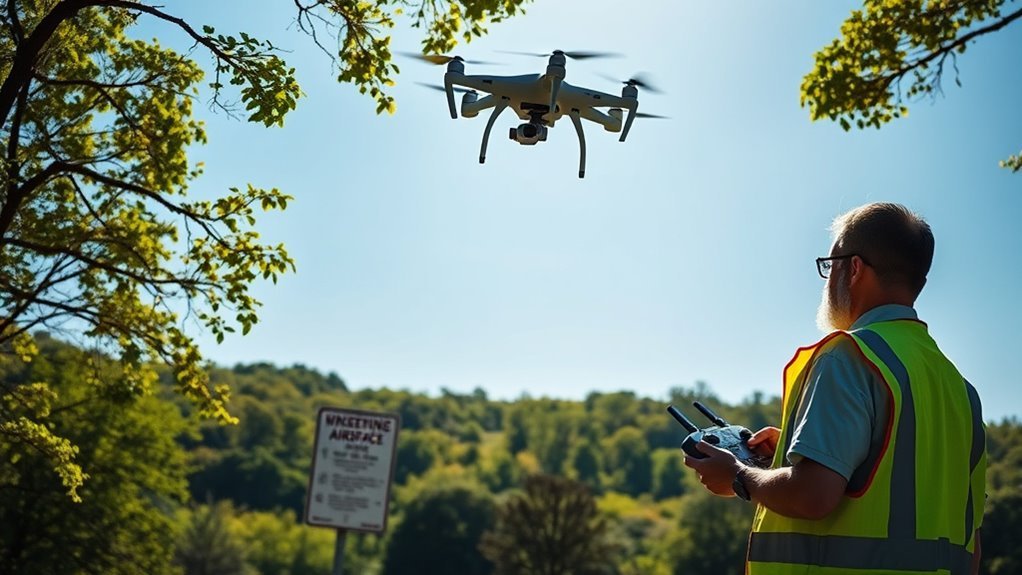
When you’re planning to fly drones in New Jersey, it’s essential to grasp the regulations that govern their use. Understanding these rules guarantees drone safety and allows you to enjoy the freedom that drone technology offers. Always register your drone with the FAA, especially if it weighs more than 0.55 pounds. Familiarize yourself with local laws, as they can vary by municipality. Avoid flying near airports, schools, and crowded areas to maintain safety and compliance. Additionally, keep your drone within visual line of sight and under 400 feet. By adhering to these regulations, you not only protect yourself but also promote responsible flying for everyone. Stay informed about updates in drone regulations to fully enjoy your aerial adventures.
Federal vs. State Drone Laws
While steering through the world of drone operation, it’s vital to understand the distinction between federal and state laws. The Federal Aviation Administration (FAA) governs airspace and drone usage nationwide, enforcing regulations that every pilot must follow. However, state preemption can complicate things. In New Jersey, state laws can override local ordinances regarding drone use, but municipalities may still impose restrictions, like no-fly zones in parks or near schools. It’s important to check both federal guidelines and any state-specific regulations to guarantee compliance. By being aware of these legal frameworks, you can exercise your freedom to fly while respecting the boundaries set forth by governmental authorities. Stay informed and fly responsibly!
Registering Your Drone: What You Need to Know
Before you take to the skies in New Jersey, it’s essential to understand the registration requirements for your drone. You’ll need to register your drone with the FAA, and this process is straightforward but vital for legal compliance. In the following sections, we’ll cover the specifics of how to register and what you need to keep in mind.
Registration Requirements Overview
To legally operate a drone in New Jersey, you must navigate the registration process established by the Federal Aviation Administration (FAA). This process is essential for ensuring drone safety and responsible flying. If your drone weighs over 0.55 pounds, you’re required to register it before you can take to the skies. Registration provides a unique identifier, enhancing accountability and aiding in flight planning. You’ll need to provide basic personal information and pay a small fee, which allows you to fly for recreational or commercial purposes. Remember, proper registration not only keeps you compliant with the law but also fosters a safer environment for all airspace users. So, make sure you complete this step before commencing on your aerial adventures.
How to Register
Registering your drone is a straightforward process that guarantees you comply with FAA regulations. To start the drone registration process, visit the online registration portal. You’ll need to provide basic information, including your name, address, and the drone’s make and model. Here’s a quick overview:
| Step | Details |
|---|---|
| 1. Access Portal | Go to the FAA’s online portal |
| 2. Fill Out Info | Enter your personal details |
| 3. Pay Fee | Complete the registration fee |
Once you’ve completed these steps, you’ll receive a registration number. This number must be displayed on your drone, ensuring you’re free to fly legally in New Jersey. Enjoy the skies responsibly!
Drone Pilot Certification Requirements
While flying drones in New Jersey can be an exciting venture, understanding the certification requirements is vital for compliance and safety. To operate a drone commercially, you’ll need to pass the FAA’s Part 107 exam, which covers airspace rules, weather, and drone operation. Enrolling in pilot training programs will enhance your knowledge and skills, making the certification processes smoother. Remember, recreational pilots must still register their drones, but formal certification is mainly for commercial use. It’s important to stay up-to-date with regulations and renew your certification when needed. By following these steps, you’ll not only guarantee legal compliance but also gain confidence in your ability as a drone pilot, allowing you to explore the skies freely.
Know the No-Fly Zones
Understanding no-fly zones is essential for any drone pilot in New Jersey, especially since flying in restricted areas can lead to serious penalties. You need to be aware that various airspace restrictions apply throughout the state, including near airports, military bases, and other sensitive locations. Before you launch your drone, check resources like the FAA’s B4UFLY app or your local regulations to identify these no-fly zones. Ignoring these areas can not only put your freedom to fly at risk but also endanger others. Always stay updated on airspace changes, as these restrictions can evolve. By respecting no-fly zones, you guarantee a safe and responsible flying experience while enjoying the liberty that drone piloting offers.
Guidelines for Recreational Drone Use
When flying drones recreationally in New Jersey, you need to understand the registration requirements and flight restrictions that apply. It’s essential to guarantee your drone is registered with the FAA if it weighs more than 0.55 pounds. Additionally, you must follow specific guidelines regarding where and how high you can fly to stay compliant with local regulations.
Registration Requirements
In New Jersey, all recreational drone operators must adhere to specific registration requirements to guarantee safe and responsible flying. First, you’ll need to complete the drone registration process through the FAA, which is essential for all drones weighing more than 0.55 pounds. The registration fee is a nominal $5, and this covers a three-year period. Make certain to have your drone’s serial number handy when filling out the online form. After registration, you’ll receive a unique identification number to display on your drone. Remember, adhering to these requirements not only keeps you compliant with the law but also secures the safety of everyone enjoying the skies. So, take the time to register your drone properly!
Flight Restrictions
To guarantee safe and responsible flying, you’ll need to be aware of the flight restrictions that apply to recreational drone use in New Jersey. Compliance with local regulations and airspace classifications is essential. Here’s a quick overview:
| Airspace Classification | Restrictions | Key Considerations |
|---|---|---|
| Class G | No specific restrictions | Fly below 400 feet |
| Class E | Must notify nearby airports | No flights over crowds |
| Class B, C, D | Requires permission | Stay clear of controlled airspace |
Always check for any temporary flight restrictions (TFRs) that might affect your area. Respecting these boundaries not only keeps you within the law but also guarantees the safety of all airspace users.
Commercial Drone Operations: Additional Requirements
Although flying drones for commercial purposes can open up numerous opportunities, it also comes with additional requirements that operators must adhere to in New Jersey. To operate legally, you need to guarantee compliance with the following:
- Obtain a valid commercial drone licensing from the FAA.
- Acquire necessary drone operation permits specific to your intended use.
- Register your drone with the FAA and guarantee it’s marked with the registration number.
- Conduct pre-flight inspections to guarantee safety and compliance.
- Follow all local and state regulations regarding airspace and privacy.
- Ensure that you maintain the visual line of sight during your flights to comply with safety regulations.
Insurance Considerations for Drone Pilots
As you navigate the complexities of drone operations in New Jersey, understanding insurance considerations becomes essential for protecting yourself and your business. One of the most important types of coverage you should consider is liability insurance. This safeguards you against claims of property damage or personal injury caused by your drone. Depending on your operations, you may also want to explore additional coverage options, such as hull insurance, which protects your drone from physical damage. Always evaluate your specific needs and consult with an insurance professional to tailor a policy that fits your operations. By securing the right insurance, you can focus on flying your drone with confidence, knowing you’re protected from unforeseen circumstances.
Respecting Privacy and Property Rights
Maneuvering the skies with your drone requires a keen awareness of privacy and property rights. To guarantee you’re flying responsibly, keep these essential points in mind regarding drone privacy and property boundaries:
- Always respect the privacy of individuals; avoid filming or photographing without consent.
- Familiarize yourself with local laws regarding aerial photography and privacy.
- Maintain a safe distance from private property to avoid intruding on someone’s personal space.
- If you’re unsure about property lines, consult a map or use GPS tools to confirm boundaries.
- Be prepared to communicate with property owners if your drone unintentionally crosses into their airspace.
Staying Updated on Drone Legislation
Being aware of privacy and property rights is just the beginning; staying informed about drone legislation is equally important for responsible flying in New Jersey. To guarantee you’re flying legally, regularly check reputable sources for drone news and legislation updates. The Federal Aviation Administration (FAA) and New Jersey’s state government frequently update regulations that can affect your flying experience. Follow relevant social media accounts, subscribe to newsletters, and join local drone clubs to stay in the loop. Engaging with these communities not only keeps you informed but also connects you with fellow enthusiasts who share your passion for freedom in the skies. Remember, staying updated empowers you to enjoy your hobby responsibly and avoid potential legal issues. The evolving landscape of drone industry regulations could influence your flying practices, making it essential to remain vigilant about changes that may arise.
Frequently Asked Questions
Can I Fly My Drone at Night in New Jersey?
You can fly your drone at night in New Jersey, but you must follow night flight regulations. Always take safety precautions, including using appropriate lighting and ensuring you maintain visual line of sight during your flight.
What Are the Penalties for Violating Drone Laws in New Jersey?
In New Jersey, drone fines can reach up to $1,000 for violations. Ignoring regulations could lead to serious legal consequences, including civil penalties and potential criminal charges. Stay informed to avoid hefty repercussions while enjoying your freedom.
Are There Any Age Restrictions for Drone Pilots in New Jersey?
In New Jersey, you must be at least 16 years old to obtain a drone pilot license. While younger pilots can fly under adult supervision, understanding age requirements is essential for safe, legal drone operation.
Can I Fly My Drone Over Private Property Without Permission?
Over 60% of drone-related complaints involve privacy violations. You can’t fly your drone over private property without permission, as it violates property rights and can lead to serious legal consequences regarding drone privacy issues.
Are There Special Rules for Flying Drones in State Parks?
Yes, there’re special rules for flying drones in state parks. You’ve gotta adhere to state park regulations, which often include drone usage restrictions. Always check local guidelines to guarantee a smooth flying experience.
