
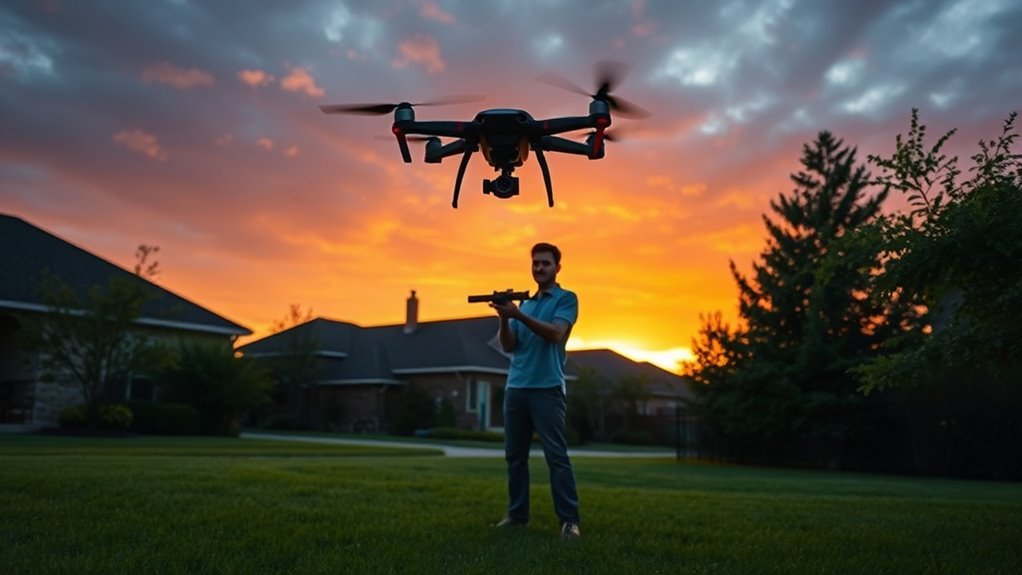
You can’t legally shoot down drones flying over your house because drones are considered aircraft under federal law, making their destruction a serious offense. Property rights don’t extend into navigable airspace, so shooting down a drone risks criminal charges and hefty fines. Instead, you should familiarize yourself with local drone regulations, document any privacy violations, and report unauthorized drone activity to authorities. Understanding legal methods to address drone intrusions helps protect your rights and property effectively.
Understanding Drone Regulations in Your Area
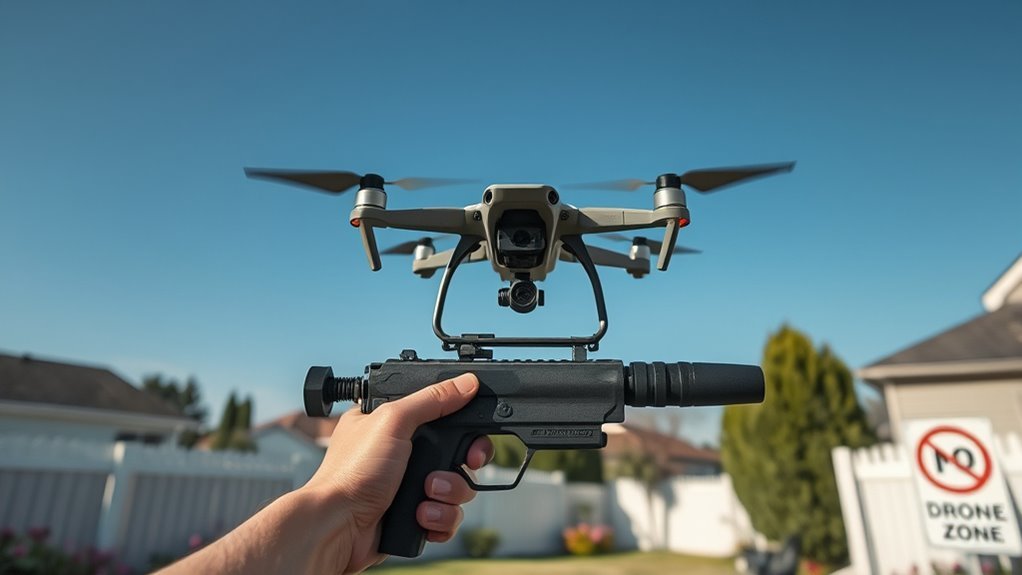
Before considering any action against drones, you need to familiarize yourself with the specific regulations governing their use in your jurisdiction. Drone laws vary widely, and understanding them is essential to protecting your privacy rights without infringing on legal boundaries. You must recognize that unauthorized interference with drones can result in severe penalties. These laws aim to balance the freedom of drone operators with the privacy and security of individuals. By thoroughly researching local statutes and federal guidelines, you equip yourself to act within legal limits. This knowledge forms the foundation for asserting your rights responsibly, ensuring that any measures taken against intrusive drones are justified and lawful. Your commitment to understanding these regulations empowers you to safeguard your privacy while respecting the freedoms of others.
Identifying When a Drone Is Violating Your Privacy
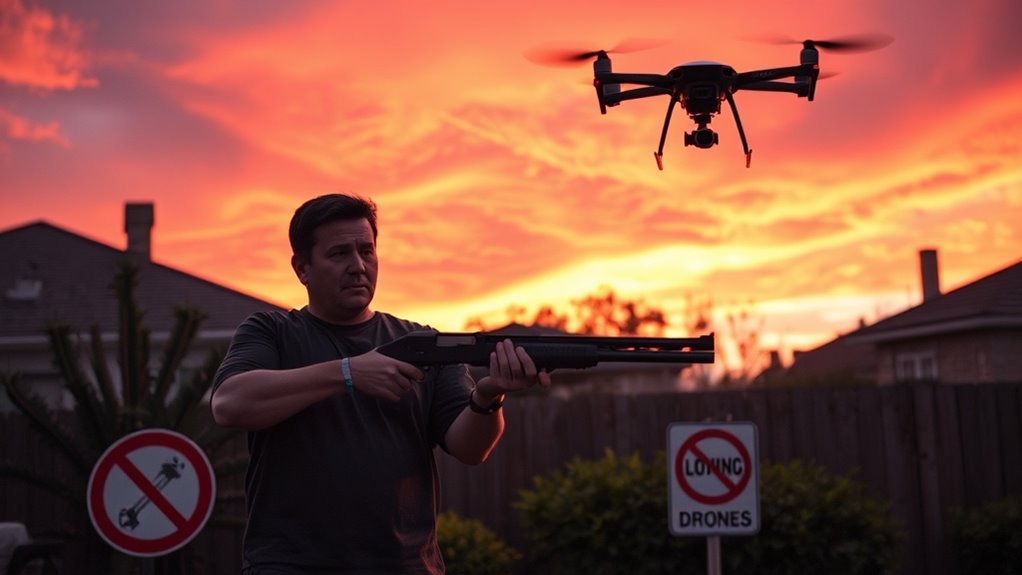
You need to clearly recognize the boundaries of your private property and personal space to determine when a drone crosses those lines. Pay close attention to any drone behavior that seems intrusive or persistent, as this may indicate a privacy violation. Additionally, understanding your local privacy laws will help you identify when a drone’s actions are legally unacceptable.
Recognizing Privacy Boundaries
Although drones have many legitimate uses, their ability to capture images and video can easily infringe on personal privacy when operated irresponsibly. You need to recognize when a drone crosses privacy boundaries by understanding established drone etiquette and respecting privacy expectations. Key indicators that a drone may be violating your privacy include:
- Flying persistently over private property without permission
- Hovering at low altitudes near windows or backyards
- Recording or photographing individuals without consent
- Ignoring requests to leave private areas
- Operating during times or locations where privacy is reasonably expected
Noticing Suspicious Drone Behavior
How can you determine if a drone’s behavior is suspicious and potentially invasive? First, observe its flight pattern—hovering persistently over your property or repeatedly circling specific areas indicates suspicious activity. Note if the drone operates at unusual hours, such as late at night, which may suggest intent to evade detection. Pay attention to the drone’s altitude and proximity; drones flying unusually low or close to windows or private spaces often signal privacy violations. Additionally, drones equipped with visible cameras or sensors warrant heightened scrutiny. Document these instances with timestamps and, if possible, video evidence. Recognizing these signs of suspicious drone behavior empowers you to protect your privacy rights proactively and prepares you to take appropriate measures within legal boundaries.
Understanding Local Privacy Laws
When determining if a drone is infringing on your privacy, understanding local privacy laws is essential. These laws clarify your rights and define the legal distinctions between permissible drone activity and unlawful surveillance. Your privacy expectations must align with what the law protects—public spaces generally have fewer protections than your private property. To identify violations, consider:
- Whether the drone captures images or data inside your home or fenced yard
- The intent behind the drone’s operation (recreational vs. surveillance)
- Applicable state and municipal privacy statutes
- Restrictions on audio or video recording without consent
- Any prior warnings or complaints filed about the drone
Knowing these factors empowers you to distinguish lawful drone use from privacy breaches, ensuring your freedom is defended within legal boundaries.
Legal Restrictions on Shooting Down Drones
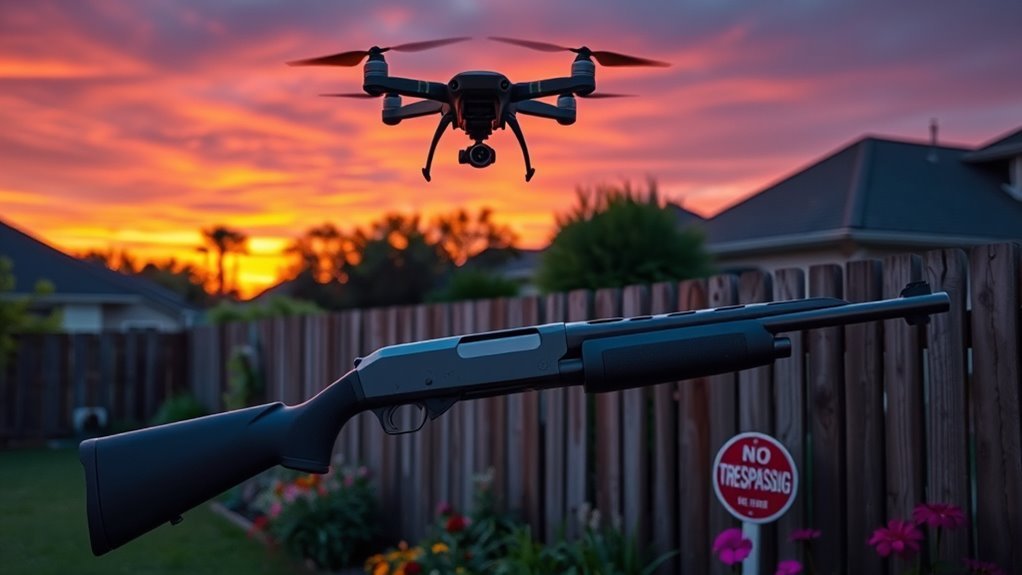
Because drones operate within regulated airspace, shooting them down is subject to strict legal limitations that you must understand before taking any action. While your property rights protect your land from trespass, drone ownership is federally regulated, and drones are considered aircraft under the Federal Aviation Administration (FAA). Destroying a drone could violate laws against damaging aircraft or interfering with aviation. Additionally, even if a drone invades your airspace, shooting it down may expose you to criminal charges or civil liabilities. To safeguard your freedom and rights, recognize that property rights do not extend unrestrictedly into navigable airspace. Confirm you consult local laws and federal regulations before responding to drone intrusions, as reckless actions could lead to serious legal consequences.
Alternatives to Shooting Down a Drone
Although the impulse to shoot down an unauthorized drone may be strong, you should consider safer and legally compliant alternatives that effectively address the issue without risking legal repercussions. Employing advanced drone detection systems allows you to monitor aerial activity while protecting your privacy. Additionally, privacy protection methods can deter drone incursions without physical confrontation.
Consider these alternatives:
- Installing drone detection systems for real-time alerts
- Using privacy protection methods such as physical barriers or signal jammers (where legal)
- Engaging with community watch groups to raise awareness
- Educating neighbors on drone regulations and privacy rights
- Documenting drone activity for potential legal action
These strategies uphold your freedom and security while respecting the law, ensuring you manage drone intrusions responsibly and effectively.
Reporting Unauthorized Drone Activity to Authorities
If you encounter unauthorized drone activity, reporting it promptly to the appropriate authorities is essential to secure legal enforcement and public safety. You should familiarize yourself with the established reporting procedures specific to your jurisdiction, as these vary. Contact local authorities immediately, providing detailed information such as the drone’s appearance, flight path, time, and any suspicious behavior observed. This precise reporting supports law enforcement in investigating and addressing potential threats while respecting your rights and freedom. Avoid taking direct action that could violate laws; instead, rely on official channels to handle the situation. By adhering to proper reporting procedures and cooperating with local authorities, you guarantee your response remains within legal boundaries, protecting both your property and civil liberties effectively and responsibly.
Using Technology to Monitor Drone Intrusions
When monitoring drone intrusions, leveraging advanced technology is essential to maintaining security and guaranteeing legal compliance. You can deploy drone detection systems combined with privacy monitoring tools to effectively track unauthorized aerial activity over your property. These technologies empower you to safeguard your personal freedom while respecting legal boundaries.
Consider integrating the following solutions:
- Radar-based drone detection to identify flying objects in restricted zones
- Radio frequency scanners to intercept drone communication signals
- Optical sensors with video analytics for real-time visual confirmation
- Automated alerts triggered by drone presence near your home
- Privacy monitoring tools to guarantee your data remains protected
How to Communicate With Drone Operators
Before taking any action, you’ll need to identify the drone operator accurately to establish communication. Utilize available communication channels, such as radio frequencies or registered contact information, to reach out promptly. Once connected, you can formally request adjustments to the drone’s flight path to resolve the situation without escalating it.
Identifying Drone Operators
Although drones often operate above your line of sight, identifying their operators is essential for addressing any concerns or potential violations. Employing effective drone identification techniques alongside operator behavior analysis allows you to assess intentions and maintain your property rights responsibly. Start by observing patterns and noting flight paths, times, and frequencies. Use available technology to capture video or metadata when possible. Key points to evaluate include:
- Visual identification through markings or lights on the drone
- Monitoring consistent flight patterns indicating routine operation
- Detecting hovering or close proximity to private property
- Recording audio or communication signals when feasible
- Noting operator reactions if spotted or challenged
These methods help you identify operators accurately, ensuring any necessary actions align with legal and ethical standards.
Using Communication Channels
Once you’ve identified the drone operator, the next step is to establish clear communication to address your concerns effectively. Engaging in direct drone communication guarantees transparency and demonstrates your willingness to resolve issues lawfully. Approach the operator calmly, explaining your perspective and emphasizing mutual respect for privacy and property. Effective operator engagement not only diffuses potential conflicts but also reinforces your rights without escalation. Utilize available communication channels—such as radio frequencies or mobile contact information—to facilitate dialogue. Remember, maintaining professionalism in your interactions strengthens your position and fosters a cooperative environment. By prioritizing open drone communication, you assert your freedoms responsibly while encouraging operators to respect your boundaries. This measured approach is essential before considering any legal actions regarding drone incursions.
Requesting Flight Adjustments
When you’ve established communication with a drone operator, requesting specific flight adjustments becomes a critical step in resolving concerns without conflict. By clearly communicating concerns, you assert your right to privacy and safety while respecting lawful drone use. When requesting adjustments, be direct and precise about your expectations to avoid misunderstandings. Consider these key points:
- Specify the exact flight behavior that’s problematic
- Request altitude changes or flight path rerouting
- Explain your reasons calmly and factually
- Offer to negotiate reasonable boundaries
- Set a timeline for compliance and follow-up
Effective communication reduces the need for drastic measures and protects your freedoms. Remember, requesting adjustments is about collaboration, not confrontation, ensuring your property rights are honored within legal boundaries.
Potential Consequences of Illegal Drone Interference
If you interfere with a drone without proper authorization, you could face severe legal repercussions. Federal laws protect drone operations, and unauthorized interference can lead to criminal charges, hefty fines, or imprisonment. These statutes aim to balance your privacy rights with the freedom to operate drones lawfully. Engaging in unauthorized drone interference may also expose you to civil liability, especially if your actions cause property damage or infringe on privacy violations. It’s essential to understand that while your desire for privacy is valid, responding illegally undermines your position and could escalate conflicts. To safeguard your freedoms and protect your property effectively, adhere strictly to legal channels rather than taking unauthorized actions that risk significant legal consequences.
Steps to Take if Your Property Is Damaged by a Drone
Understanding the legal risks of unauthorized drone interference highlights the importance of addressing any damage through proper channels. If your property suffers drone damage, protecting your property rights begins with a clear, documented approach. First, guarantee your safety and do not attempt to shoot down the drone, which can lead to legal consequences. Instead, follow these steps:
- Document the damage with photos and videos.
- Identify and record the drone’s make, model, and any identifying marks.
- Report the incident to local law enforcement promptly.
- Notify the Federal Aviation Administration (FAA) if applicable.
- Consult a legal professional to understand your rights and potential compensation.
