

To make a drone, start by understanding the basics, including types and flight principles. Choose compatible components like motors, ESCs, and a flight controller. Assemble the frame securely, ensuring a lightweight material. Next, wire and connect the electronics according to specific diagrams, then calibrate the drone using compass, gyroscope, and accelerometer checks. Finally, test and practice flight techniques to master control. By following these steps, you’re on your way to building a functional drone efficiently. More awaits you!
Understanding Drone Basics

Drones, often referred to as unmanned aerial vehicles (UAVs), are sophisticated machines that combine various technologies to achieve flight and perform tasks. Understanding drone types is essential; you’ll encounter multirotors, fixed-wing, and hybrid designs, each serving different purposes. For instance, multirotors are versatile and ideal for aerial photography, while fixed-wing drones excel in long-range flight. The flight principles behind these machines include lift, thrust, drag, and weight, which all interact to enable stable flight. By grasping these concepts, you’ll appreciate how drones maneuver and respond to environmental factors. Mastering these basics empowers you to explore the vast potential of drone technology, ensuring you harness its capabilities while enjoying the freedom and creativity it offers. Additionally, understanding swarm technology can enhance your ability to design coordinated drone displays and utilize multiple units effectively. The navigation system performance in drones can significantly affect mission outcomes, especially in complex environments.
Choosing the Right Components
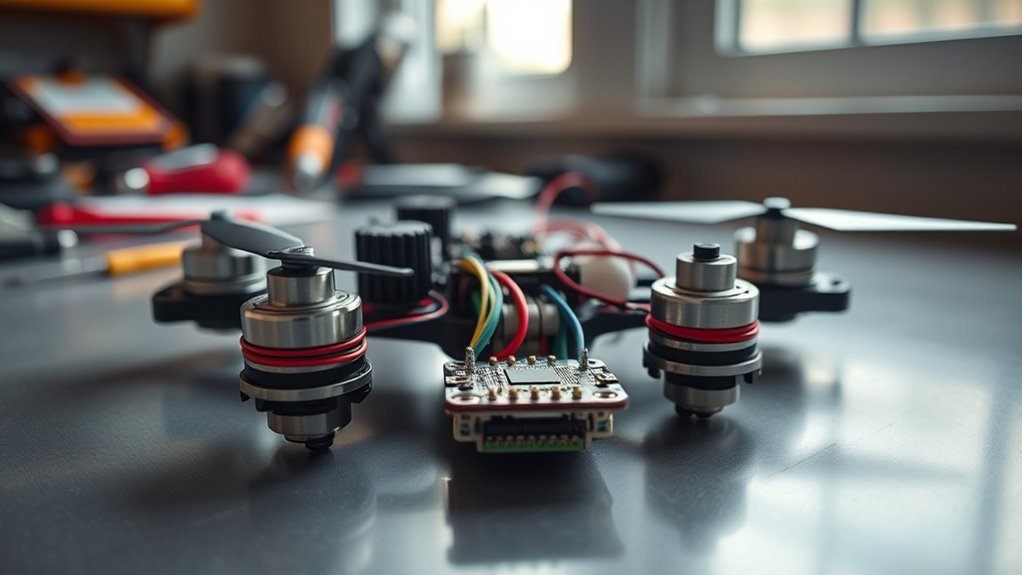
Selecting the right components is essential for building an effective drone tailored to your specific needs. You’ll want to ascertain component compatibility and consider your budget carefully. Each choice impacts performance, flight time, and overall functionality.

Here’s a quick reference table to help you choose:
| Component | Considerations |
|---|---|
| Motors | Size, thrust, and efficiency |
| ESCs | Current rating and compatibility |
| Flight Controller | Features and firmware support |
| Propellers | Size, pitch, and material |
| Battery | Voltage, capacity, and weight |
Assembling Your Drone Frame
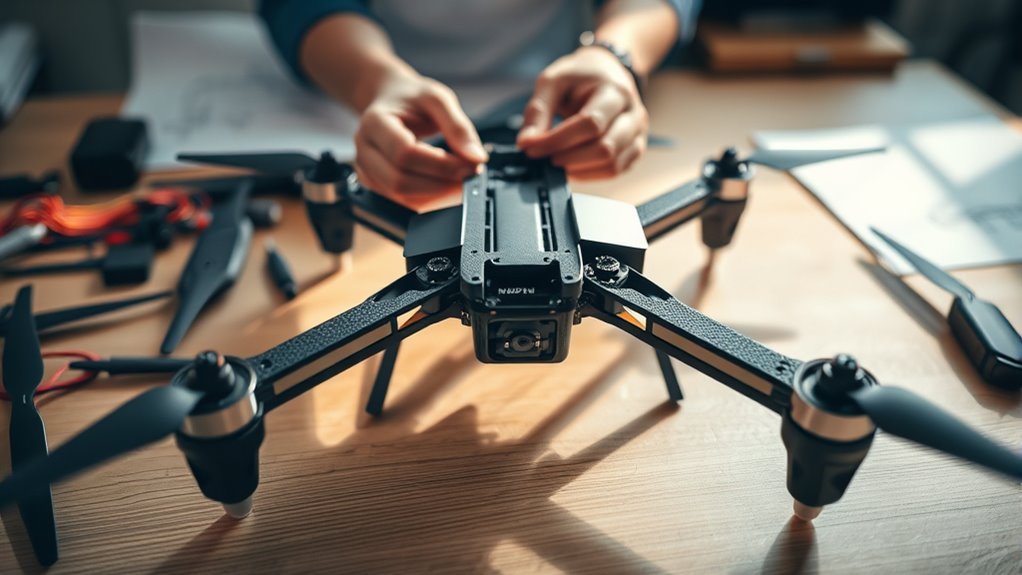
Assembling your drone frame is a critical step that directly influences its stability and overall performance. Choosing the right drone materials and frame design will guarantee your drone can endure the rigors of flight. Follow these steps:
- Select your frame: Use lightweight yet durable materials like carbon fiber or aluminum for ideal strength-to-weight ratio.
- Connect the arms: Securely attach the arms to the central body, making sure all screws are tightened to prevent any wobbling during flight.
- Add landing gear: Install landing gear that absorbs shock, providing stability during takeoffs and landings. Additionally, understanding maintenance practices will help extend the lifespan of your drone frame and components.
Wiring and Connecting Electronics
Once you’ve secured the frame, the next essential step involves wiring and connecting the electronics, which plays a critical role in ensuring your drone operates smoothly. You’ll need to refer to wiring diagrams specific to your components, as they provide a clear roadmap for connections. Use reliable soldering techniques to attach wires to the electronic speed controllers (ESCs) and the flight controller. Make sure to strip the wire ends properly and apply heat shrink tubing to prevent shorts. Double-check all connections before powering up; a single incorrect wire can lead to malfunction. Once everything’s connected correctly, you can proceed with confidence, knowing your drone’s electronic systems are in place and ready for the next phase.
Installing the Flight Controller
When installing the flight controller, you need to start by selecting the right controller for your drone’s specifications. Proper wiring connections are vital for guaranteeing effective communication between the flight controller and other components. Make sure you follow the manufacturer’s guidelines to avoid potential issues during operation.
Choosing the Right Controller
Choosing the right flight controller is essential for guaranteeing your drone operates efficiently and responds accurately to your commands. You’ll want to take into account various controller types and compatibility factors before making your selection. Here are three key considerations:
- Flight Modes: Verify the controller supports your desired flying style, whether it’s manual or autonomous.
- Sensor Integration: Check for compatibility with GPS, barometers, and gyroscopes to enhance your drone’s performance.
- Software Flexibility: Look for controllers that allow for firmware updates and customizable settings, giving you the freedom to adapt as your skills improve.
With careful examination of these factors, you can select a flight controller that meets your needs and elevates your drone experience.
Wiring Connections Properly
After selecting the right flight controller, the next step involves wiring connections properly to verify your drone functions as intended. Start by confirming you have the right soldering techniques; clean your soldering iron and use appropriate solder for electrical connections. Carefully solder each wire to its designated pad on the flight controller, making certain of solid connections that won’t fail during flight.
Effective wire management is essential; avoid excessive slack and make sure wires are secured to prevent interference with moving parts. Use zip ties or heat shrink tubing to keep everything organized. Double-check each connection against your wiring diagram to prevent short circuits. This meticulous approach not only enhances your drone’s performance but also provides the freedom to explore the skies with confidence.
Calibrating Your Drone
Calibrating your drone is essential for ideal performance and accurate flight. To guarantee your drone operates smoothly, you’ll need to use proper calibration tools and make necessary sensor adjustments. Follow these steps:
Calibrating your drone is crucial for optimal performance and accurate flight, ensuring smooth operation with proper sensor adjustments.
- Compass Calibration: Rotate your drone in all directions to align its compass accurately with the Earth’s magnetic field.
- Gyroscope Calibration: Place your drone on a flat surface and initiate the gyroscope calibration to guarantee stability during flight.
- Accelerometer Calibration: Perform this adjustment by keeping the drone still and level; this helps in maintaining proper orientation and responsiveness.
Testing and Flying Your Drone
Before taking to the skies, it’s vital to conduct thorough pre-flight safety checks to guarantee your drone’s functionality. Familiarizing yourself with basic flight techniques will enhance your handling and control during your test flights. This preparation is essential for a successful and safe flying experience. Additionally, be sure to understand Florida’s Drone Laws to ensure compliance and avoid penalties. Moreover, being aware of your drone’s flight time performance can significantly impact your planning and mission success.
Pre-Flight Safety Checks
Although it may seem straightforward, conducting thorough pre-flight safety checks is essential for guaranteeing both your drone’s performance and your safety during operation. Before you take to the skies, make sure to perform these critical inspections:
- Battery Inspection: Check for any signs of damage or swelling. Confirm the battery is securely connected and fully charged.
- Propeller Check: Inspect each propeller for cracks or deformities. Make sure they are securely attached and free from debris.
- Firmware Update: Verify that your drone’s firmware is up-to-date, as this can enhance functionality and safety.
Basic Flight Techniques
Once you’ve completed your pre-flight safety checks, it’s time to familiarize yourself with basic flight techniques. Start by practicing hover stability; maintain a steady altitude while adjusting the throttle gently. This will help you understand your drone’s responsiveness and balance.
Next, focus on altitude control—gradually increase and decrease your height to gain confidence in your controls. Use small, deliberate adjustments to avoid abrupt movements that could compromise stability.
Make sure to practice in open areas, free from obstacles, allowing you to focus solely on mastering your maneuvers. By honing these skills, you’ll reveal the true potential of your drone, giving you the freedom to explore and capture stunning aerial footage. Remember, practice makes perfect!
Frequently Asked Questions
What Is the Average Cost of Building a Drone?
When considering the average cost of building a drone, you’ll need to factor in drone components like motors, frames, and batteries. Budget considerations can range from a few hundred to several thousand dollars, depending on specifications.
Can I Use Recycled Materials for My Drone Frame?
Did you know that nearly 90% of plastic waste can be repurposed? You can definitely use recycled materials for your drone frame; it’s a sustainable choice that enhances your project’s creativity while minimizing environmental impact.
How Do I Maintain My Drone After Assembly?
To maintain your drone after assembly, regularly clean the components to prevent debris buildup. Additionally, guarantee proper battery care by charging it correctly and storing it in a cool, dry place to maximize performance and lifespan.
Are There Legal Regulations for Flying Drones?
Yes, there are drone regulations you need to follow. Depending on where you fly, you might require flying permits. Always check local laws to guarantee you’re complying and can enjoy your freedom responsibly.
What Are Common Troubleshooting Tips for Beginners?
When troubleshooting, check for battery issues first; verify it’s fully charged and connected properly. For flight stability, examine propeller alignment and calibrate the drone. These steps can enhance performance and give you more freedom in the skies.
