

To safely take your drone on a plane, follow TSA regulations and check airline-specific rules. Pack it in your carry-on to avoid damage, and guarantee you remove and securely store lithium batteries. Conduct maintenance on your drone and gather essential accessories. Research destination laws for flying to avoid legal issues. Familiarize yourself with security protocols to guarantee a smooth experience. Keep going to find tips for flying your drone once you arrive at your destination.
Understanding TSA Regulations for Drones
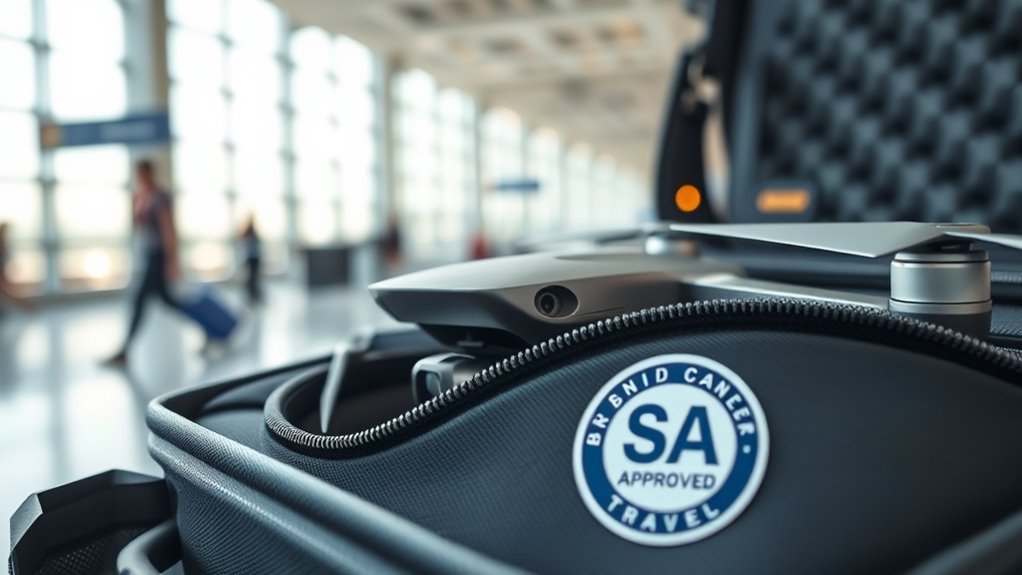
When planning to travel with your drone, it’s essential to understand the TSA regulations that apply, since failing to comply can lead to delays or even confiscation. Start by checking the airline’s specific drone regulations, as they may vary. Generally, your drone should be packed in your carry-on luggage, guaranteeing easy access for security screening. Remove the drone’s batteries and store them separately, as lithium batteries often have restrictions. Be aware that some locations may have additional regulations; always research your destination. Finally, respect local laws regarding drone usage, as freedom to fly varies by region. By following these guidelines, you’ll help guarantee a smooth journey, allowing you to focus on capturing incredible aerial shots at your destination.
Preparing Your Drone for Travel
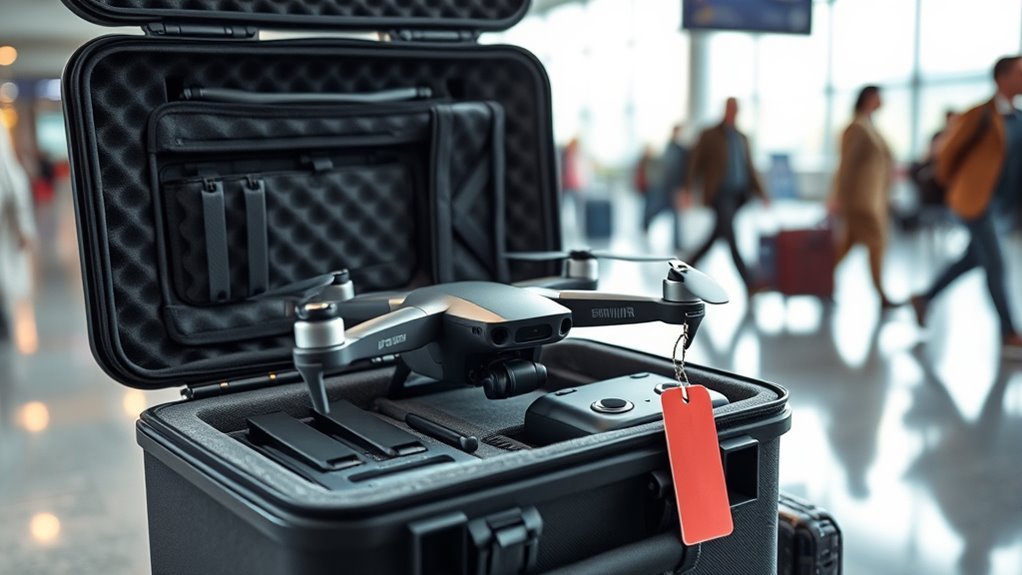
Preparing your drone for travel involves several key steps to guarantee it arrives safely and ready for use. First, conduct thorough drone maintenance; check the battery, propellers, and camera for any issues. Confirm everything’s functioning properly before you pack it up. Next, gather essential travel accessories such as a sturdy carrying case, extra batteries, and propeller guards to protect your equipment during transit. You’ll also want to remove any loose components and secure your drone with padding to prevent damage. Additionally, it’s crucial to understand local regulations regarding drone flights, as this knowledge will help ensure you operate legally at your destination. Finally, make sure to familiarize yourself with airline regulations regarding drones; this’ll save you time and hassle at the airport. With these preparations, you can feel confident your drone will be ready for your next adventure. Additionally, consider the flight time capabilities of your drone to ensure it meets your travel needs.
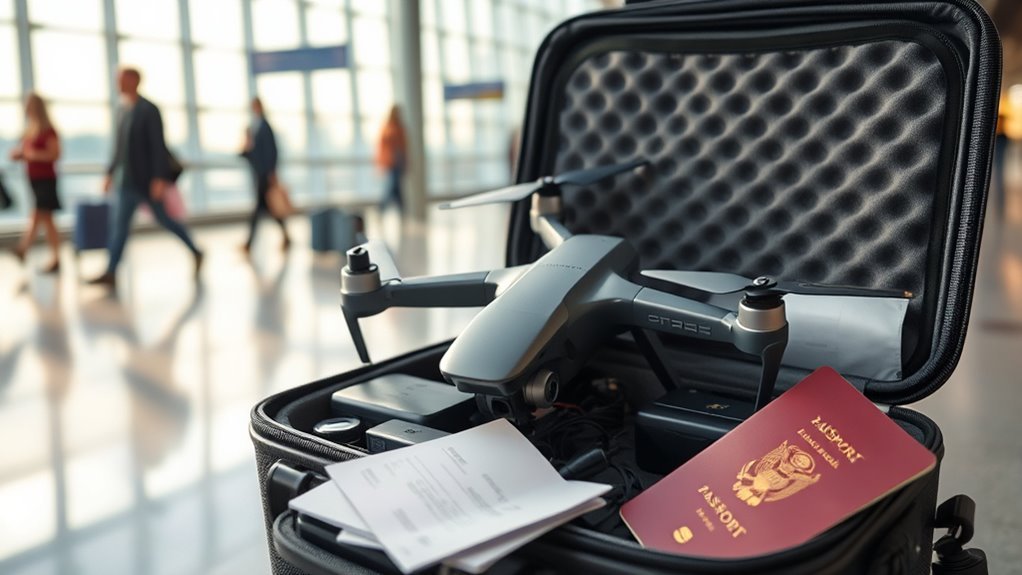
Packing Your Drone: Carry-On vs. Checked Luggage
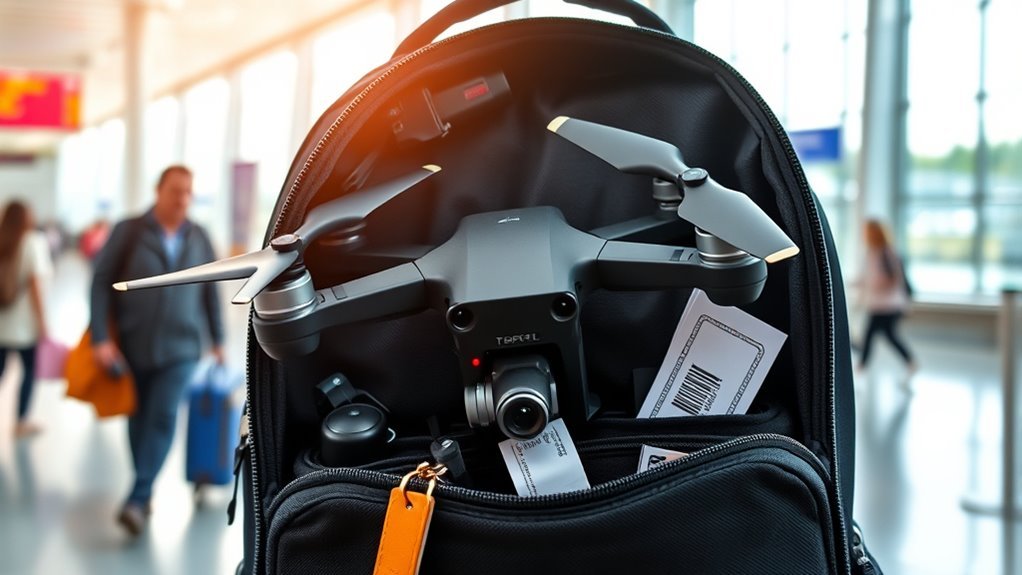
Whether you choose to pack your drone in carry-on or checked luggage can greatly impact its safety during travel. If you opt for carry-on, you’ll have direct control over your drone storage, minimizing the risk of damage. Choose a sturdy backpack specifically designed for drones; this will provide ample padding and protection. On the other hand, checked luggage can be tempting due to space, but it exposes your drone to rough handling and potential loss. If you must check it, make certain it’s securely packed in a hard case with adequate cushioning. Remember, your luggage selection plays a significant role in your drone’s well-being, so prioritize protection to keep your gear safe and ready for your next adventure.
Battery Safety Guidelines
Although you might be enthusiastic to take your drone on your next flight, it’s crucial to follow battery safety guidelines to prevent any incidents. Start by checking the specific lithium battery precautions your airline has in place. Most airlines allow lithium batteries under 100 watt-hours in your carry-on, but anything above may require special permissions. Always keep your batteries in their original packaging or use protective cases to prevent short circuits. Remember to adhere to charging regulations; never charge your batteries while in transit. Before heading to the airport, verify your batteries are fully charged but not overcharged, as this can pose a risk. Following these guidelines will help you enjoy your drone adventure safely and freely.
Researching Destination Drone Laws
Before you pack your drone for travel, it’s essential to understand the laws and regulations governing drone use at your destination. Research international drone regulations that apply to your travel country; these can differ greatly from your home country. Check for any local drone restrictions, such as no-fly zones, altitude limits, and required permits. Websites of aviation authorities and local drone clubs can provide updated information. If you plan to fly in urban areas, be especially mindful of privacy laws and restrictions on commercial use. Understanding these rules not only keeps you compliant but enhances your flying experience, allowing you to capture stunning aerial views without the worry of legal repercussions. Be aware that strict regulations exist to prioritize safety and manage airspace effectively. Stay informed, and fly freely!
Tips for Smooth Airport Security Checks
To guarantee a hassle-free experience at airport security, start by properly preparing your drone for travel. Make sure to remove any batteries and pack them in your carry-on, as per TSA guidelines. Familiarizing yourself with these regulations can save you time and stress during your journey.
Prepare Your Drone Properly
When you’re gearing up to travel with your drone, ensuring it’s prepared for airport security checks can save you time and hassle. Here are some key steps to reflect on:
- Remove batteries: Keep lithium batteries in your carry-on, as they’re subject to travel restrictions.
- Check drone insurance: Confirm your policy covers travel, protecting you against potential mishaps.
- Pack securely: Use a dedicated drone case to prevent damage and facilitate easier inspections.
Follow TSA Guidelines
While traversing airport security can be intimidating, following TSA guidelines can make the process much smoother for you and your drone. First, familiarize yourself with TSA procedures regarding drones. Confirm your drone’s batteries are under the allowed watt-hour limit, as exceeding this can lead to confiscation. Keep your drone in a carry-on bag; checked luggage may not be suitable due to drone restrictions. When you reach the security checkpoint, remove your drone and its batteries from the bag for separate screening. Be prepared for additional questions; having your drone’s registration handy can expedite the process. Finally, stay calm and respectful with TSA agents, as this can help guarantee a smoother experience. Enjoy your travels and capture amazing aerial shots!
Best Practices for Flying Your Drone Upon Arrival
Before you take your drone out for its inaugural flight in a new location, it’s crucial to familiarize yourself with local regulations and airspace restrictions. Ignoring these can lead to fines or worse. Here are some best practices to contemplate:
- Research local flying regulations: Know where you can and can’t fly.
- Check for no-fly zones: Airports, parks, and other sensitive areas often have restrictions, including prohibited drone flights in many public spaces.
- Conduct a pre-flight checklist: Verify your drone is in good condition.
Additionally, be aware that advanced systems are required to prevent collisions and ensure safe operations in shared airspace.
After your flight, always perform post flight procedures. This includes checking for any damage and properly storing your drone. Following these steps will guarantee a smooth, enjoyable flying experience while respecting the freedom of your new surroundings.
Frequently Asked Questions
Can I Take Extra Drone Batteries on the Plane?
Did you know that over 80% of airlines restrict lithium batteries? You can take extra drone batteries, but check each airline’s policies on battery storage to guarantee compliance and avoid any travel hassles.
Are There Size Limits for Drones in Carry-On Luggage?
Yes, there’re size limits for drones in carry-on luggage. Typically, drone dimensions shouldn’t exceed airline carry-on regulations. Always check your airline’s specific guidelines to verify your drone fits within their requirements for a hassle-free journey.
What Should I Do if My Drone Gets Damaged During Travel?
If your drone’s been damaged during travel, first, document the damage with photos. Contact your travel insurance for potential coverage, then explore drone repair options to restore your trusty device to its former glory.
Can I Use My Drone During Layovers?
You can’t fly your drone during layovers due to strict drone restrictions at airports. Instead, consider other layover activities like exploring the terminal or nearby areas, ensuring you follow local regulations and guidelines.
Do International Flights Have Different Drone Regulations?
Yes, international drone regulations vary considerably. You’ll need to research each country’s specific rules and customs procedures to guarantee compliance before traveling, as restrictions can impact your flying experience and the ability to carry your drone.
