

To take your drone on an airplane, first check the airline’s policies on carry-on and checked luggage, including any restrictions on lithium batteries. Pack your drone securely in a padded case to prevent damage. Be prepared for security checks, as drones and batteries will go through an x-ray scanner. If you’re traveling internationally, research local drone regulations and permits at your destination. Staying informed guarantees an easier experience, and there’s more to explore on this topic.
Understanding Airline Policies for Drones
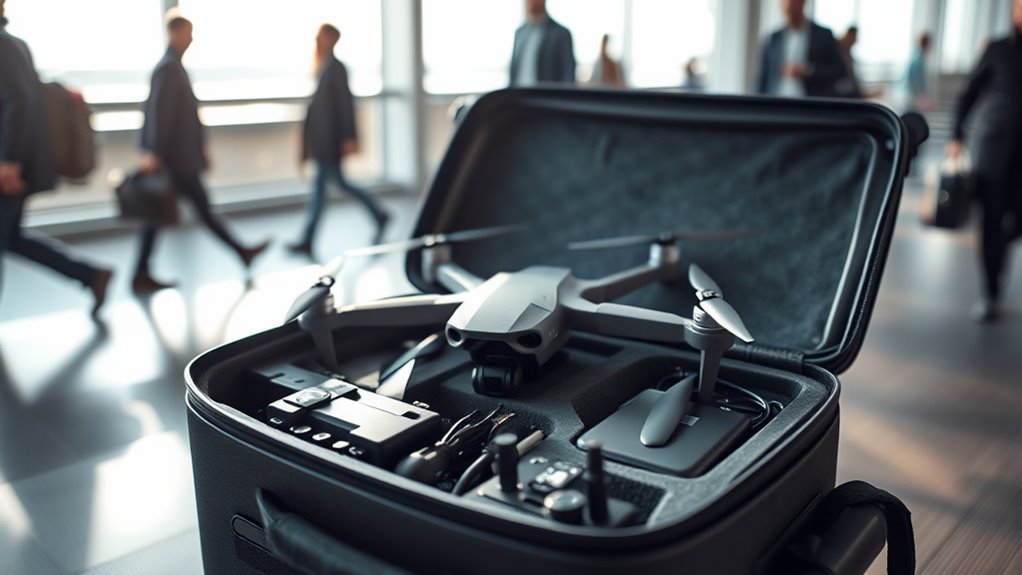
When planning to take your drone on an airplane, how well do you understand the airline’s policies? Each airline has specific restrictions regarding drone classification, which can vary greatly. Some airlines allow personal drones in carry-on luggage, while others may require you to check them. Familiarize yourself with the size and weight limits imposed by the airline, as well as any battery restrictions—lithium batteries, for example, often have strict regulations. Ignoring these airline restrictions may lead to confiscation or fines. Researching your airline’s guidelines ahead of time will guarantee a smoother travel experience. Remember, knowledge empowers your freedom to explore the skies with your drone while keeping your journey hassle-free.
Preparing Your Drone for Travel
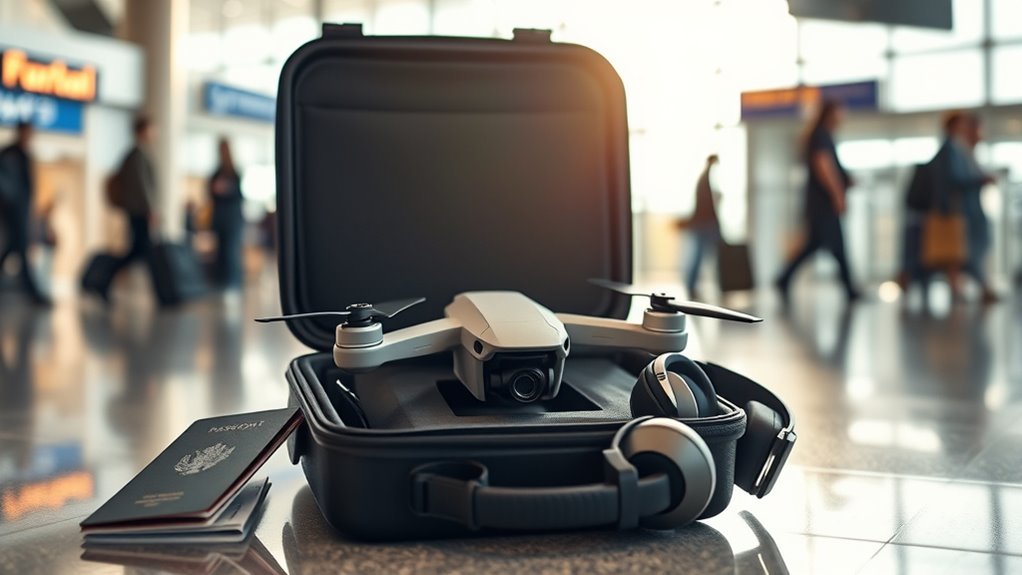
Before you head to the airport, make certain you’ve checked the airline’s regulations regarding drones. It’s essential to pack your drone properly and securely to prevent any damage during transit. Taking these steps will guarantee a smoother journey for both you and your equipment. Additionally, be aware that proper storage methods significantly affect component longevity and performance, so ensure your drone is well-protected during travel. Understanding battery capacity is crucial, as it directly impacts your drone’s flight range and overall operational efficiency.
Check Airline Regulations
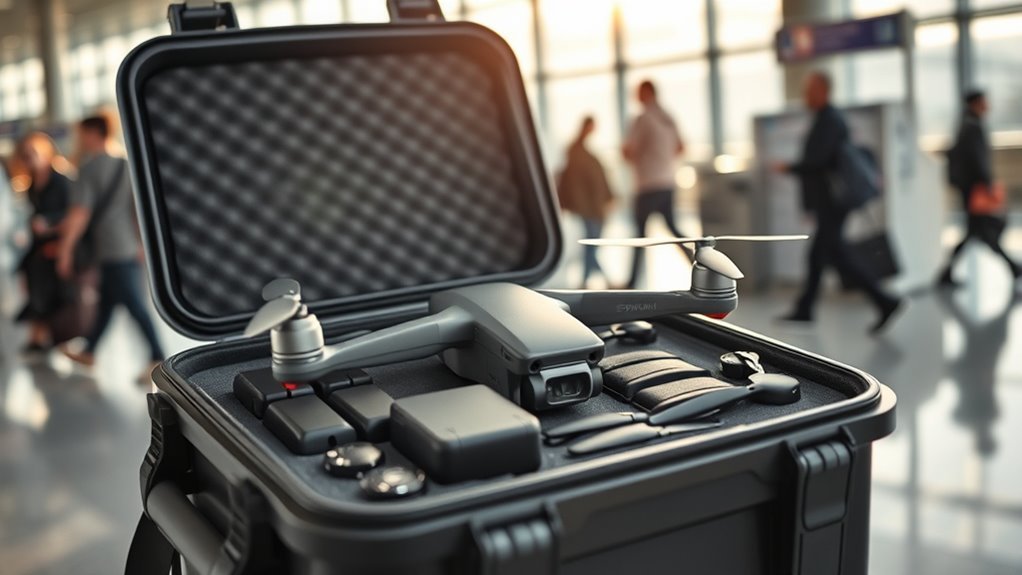
As you prepare to travel with your drone, it’s important to check the specific airline regulations that apply to carrying such devices. Different airlines have varying policies, and staying informed will save you hassle at the airport. Here are key regulations to take into account:
- Drone registration: Verify your drone is registered, as some airlines may require proof.
- Battery restrictions: Check the limits on battery size and type, especially for lithium batteries.
- Carry-on vs. checked baggage: Know whether your drone can go in the cabin or must be checked.
- Weight limits: Be aware of weight restrictions for both your drone and its components.
- Local laws: Research laws at your destination to avoid legal issues.
Stay informed, and enjoy your aerial adventures!
Pack Properly and Securely
To guarantee your drone arrives safely at your destination, packing it properly and securely is essential. Start by removing the propellers and storing them in a protective case. Use a hard-shell case or padded backpack specifically designed for drones, making sure it meets airline carry-on size requirements. Secure your drone with foam inserts or dividers to prevent movement during transit. Don’t forget to pack your travel essentials, like extra batteries, remote controls, and chargers, in easily accessible compartments. Remember, drone safety is paramount; label your case with your contact information. By taking these precautions, you’ll minimize the risk of damage and guarantee a smooth travel experience, allowing you the freedom to explore new aerial perspectives upon arrival.
Packing Your Drone and Accessories
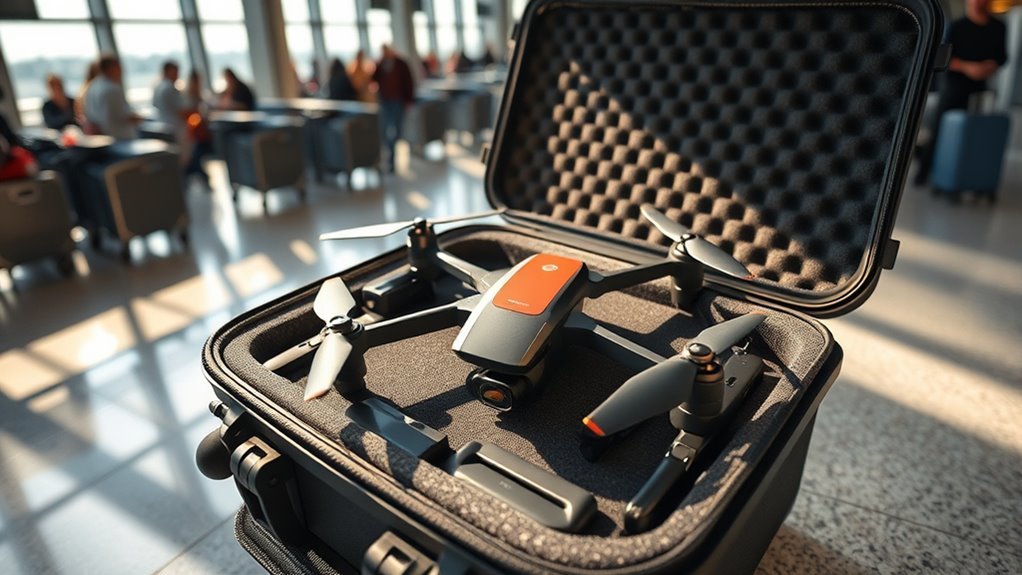
How can you guarantee your drone and accessories arrive safely at your destination? Proper packing is essential. Start by checking your drone dimensions to confirm it fits your carry-on. Use a sturdy case that provides ample protection. For accessory organization, consider these tips:
- Use padded dividers: Separate your drone from fragile parts.
- Label cables: Prevent tangles and confusion.
- Pack batteries smartly: Follow airline regulations for lithium batteries.
- Include a maintenance kit: Keep your drone in top shape.
- Double-check: Verify you’ve packed all necessary components before you leave. Additionally, ensure your packing complies with local drone regulations to avoid any issues at the airport.
With careful packing, you’ll be ready to take off and capture stunning aerial views wherever your adventures take you.
Navigating Security Checks at the Airport
After guaranteeing your drone and accessories are securely packed, the next step is traversing security checks at the airport. Familiarize yourself with the security procedures, as these vary by airport. Typically, your drone will need to go through an x-ray scanner, while you may face additional checks if you’re carrying batteries.
Here’s a quick overview of common scanner types:
| Scanner Type | Function | Security Procedure |
|---|---|---|
| X-ray Scanner | Visualizes contents | Place drone in bin |
| Walk-Through Metal Detector | Detects metal objects | Walk through with drone |
| Handheld Metal Detector | Spot checks | May be used for additional checks |
Stay calm and be ready to answer questions about your equipment to facilitate a smooth passage through security.
Carry-On vs. Checked Baggage: Where to Store Your Drone
When it comes to storing your drone during a flight, you’ll need to weigh the pros and cons of carry-on versus checked baggage. Keeping your drone in your carry-on allows for better security and easier access, while checked baggage might save you space but poses risks of damage. Understanding these considerations will help you make the best choice for your travel needs.
Carry-On Benefits
While you might be tempted to check your drone with your luggage, opting for carry-on storage offers several advantages. Choosing to carry your drone not only enhances convenience but also guarantees your gear remains safe. Here are some key carry-on advantages:
- Easy Access: You can quickly grab your drone for inspections or adjustments.
- Enhanced Security: Keep your drone safe from potential damage or loss.
- Avoid Delays: No waiting at baggage claim means you’re ready to go.
- Flexibility: You can change your plans without worrying about checked baggage restrictions.
- Peace of Mind: Knowing your drone’s right beside you reduces stress during travel.
Embracing these drone conveniences can make your travel experience more enjoyable and worry-free.
Checked Baggage Considerations
Deciding between carrying your drone on board or checking it as baggage can greatly impact your travel experience. If you choose checked baggage, be mindful of baggage weight limits, as exceeding them may result in extra fees. Additionally, drones can be delicate; storing it in checked baggage increases the risk of damage. Consider purchasing drone insurance to cover potential losses or damages during transit. Carrying your drone in your carry-on allows for better protection, but you’ll need to guarantee it meets size restrictions. Ultimately, weigh the convenience of access against the risk of damage and fees. Choose wisely to guarantee your drone is ready for flight when you reach your destination.
International Travel and Drone Regulations
As you prepare for international travel with your drone, understanding the regulations governing its use in various countries is essential. Each nation has its own set of rules, and ignorance can lead to serious complications. Here are some key points to keep in mind:
Understanding drone regulations in each country is crucial for a smooth international travel experience.
- Research the specific international regulations for drone use in your destination country.
- Check if you need to obtain any drone licenses before arrival. Additionally, be mindful that some countries may require you to submit proof of registration with local authorities before allowing drone operations.
- Familiarize yourself with no-fly zones and local laws regarding drone photography.
- Be aware of import restrictions on drones and spare batteries.
- Register your drone if required by the local authorities.
- Ensure you comply with Indian Drone Laws to avoid penalties while operating your drone.
Staying informed will help you navigate the complexities of flying your drone abroad, allowing you to enjoy the freedom of capturing stunning aerial shots.
Tips for Flying Drones at Your Destination
Before you launch your drone at your travel destination, it is crucial to familiarize yourself with the local flying conditions and regulations. Start by researching any restrictions on drone photography in the area; some places have strict no-fly zones, especially near airports or sensitive landmarks. Always check if you need a permit or if there are specific rules about altitude limits. Regulatory compliance ensures you avoid fines and penalties for flying in restricted areas. Respect local wildlife and privacy concerns, as flying your drone too close could lead to fines or worse. Make sure to observe the weather conditions, as strong winds or rain can affect your drone’s performance. By staying informed and compliant, you can enjoy the freedom of capturing stunning aerial shots without running into legal trouble. Additionally, be aware of local regulations specific to the area, as these can vary significantly.
Insurance and Liability Considerations for Drone Travel
While you might be excited to take your drone on your travels, understanding insurance and liability considerations is essential for a worry-free experience. Before you fly, consider these key points:
- Drone Insurance: Check if your policy covers travel and international laws. Additionally, ensure that your insurance accounts for potential battery capacity effects related to drone performance during your trip.
- Liability Coverage: Make sure you’re protected against potential damages or injuries caused by your drone.
- Local Regulations: Research the drone laws of your destination for compliance.
- Rental Options: If you don’t own insurance, look for rental companies offering coverage.
- Travel Insurance: Verify if your travel insurance includes drone-related incidents.
Additionally, ensure your drone complies with drone registration requirements to avoid legal issues during your travels. Being informed about these aspects not only safeguards your investment but also enhances your freedom to explore the skies responsibly.
Frequently Asked Questions
Can I Fly My Drone at the Airport?
You can’t fly your drone at the airport due to strict airport regulations. Security checkpoints restrict drone operations. Always check local laws and airport guidelines to avoid penalties and guarantee a hassle-free experience.
What Should I Do if My Drone Gets Damaged During Travel?
When life throws you a curveball, you’ve gotta adapt. If your drone’s damaged during travel, explore insurance options and follow repair tips. Don’t let setbacks ground your adventures; keep soaring towards new experiences.
Are There Specific Drone Weight Limits for Airlines?
Yes, there’re specific weight limits for drones set by airline policies. It’s essential to check drone regulations for each airline before traveling, as they can vary greatly and impact your ability to bring your drone aboard.
How Do I Register My Drone for International Travel?
To register your drone for international travel, check the drone regulations specific to your destination. Familiarize yourself with international guidelines to guarantee compliance, avoiding fines or confiscation while enjoying your aerial adventures abroad.
Can I Use My Drone While In-Flight?
You can’t use your drone for in-flight photography due to strict drone regulations. Operating it while airborne poses safety risks and legal issues. Always check local laws before considering any drone activities during travel.
