
Drones are classified as aircraft under aviation regulations, meaning they share the same legal framework as traditional aircraft. This classification includes compliance with airspace regulations, safety standards, and operational guidelines. Depending on their use—be it recreational or commercial—drones may face different regulatory requirements. Understanding these distinctions is essential for responsible operation and legal adherence. Stick around to uncover further insights on their impact and the evolving regulatory landscape.
The Definition of Aircraft in Aviation Regulations
In aviation regulations, the term “aircraft” encompasses a variety of flying machines, including drones, which are increasingly prevalent in both commercial and recreational contexts. Understanding this definition is essential for anyone traversing the field of aviation terminology. When you operate a drone, you must adhere to regulatory compliance to avoid legal complications. The FAA categorizes aircraft into several classes, and drones fall under these classifications, requiring operators to understand specific rules governing their use. This recognition of drones as aircraft means they’re subject to airspace regulations, safety standards, and operational guidelines. By grasping these definitions, you empower yourself to exercise your freedom in using drones while ensuring you’re aligned with the necessary legal frameworks.
Types of Drones and Their Functionalities
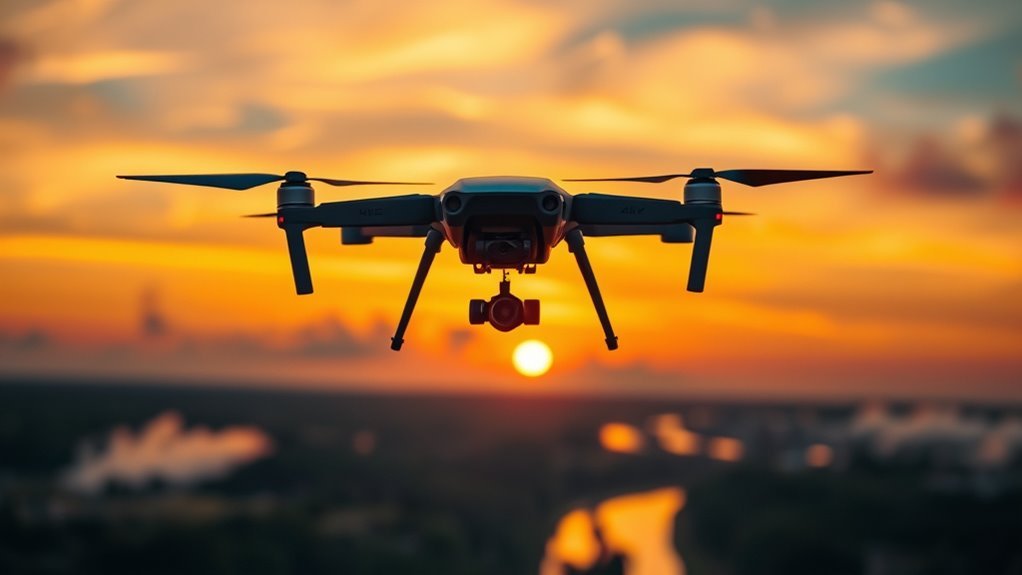
While you may think of drones simply as flying gadgets, they actually come in various types, each designed for specific functionalities that cater to different industries and applications. Consumer drones are often used for photography, providing enthusiasts a chance to capture stunning aerial views. Commercial drones serve industries like real estate and construction, offering surveying capabilities. Military drones, equipped with advanced surveillance systems, are employed for reconnaissance and tactical operations. Racing drones, designed for speed and agility, compete in high-stakes events. Agricultural drones enhance farming by monitoring crops and optimizing resources, utilizing multispectral sensors to detect subtle plant stresses for early interventions. These drones can also leverage advanced sensor technology to ensure precise data collection and accurate mapping. Ultimately, delivery drones are revolutionizing logistics, enabling swift transportation of goods. Each type of drone plays a unique role, reflecting the diverse potential of this technology.
Legal Classifications: Drones vs. Traditional Aircraft
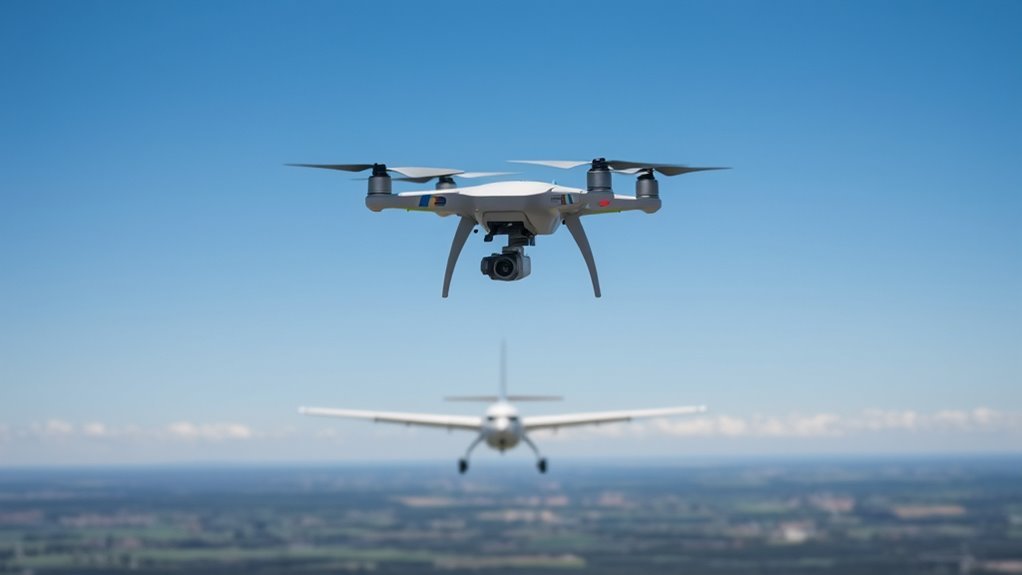
As the use of drones expands across various sectors, understanding their legal classifications becomes essential, particularly when compared to traditional aircraft. Drones, often categorized under specific drone classifications, face different regulatory frameworks than conventional aircraft. The legal implications of this distinction are significant. While traditional aircraft are subject to rigorous FAA regulations, drones typically operate under more flexible guidelines, though this is rapidly changing. You need to recognize that the classification can affect operational freedom, liability, and compliance. For instance, commercial drones may require certifications similar to traditional aircraft, while recreational drones often enjoy more lenient rules. This disparity in legal treatment highlights the evolving nature of drone legislation and its implications for your operational choices. Additionally, strict regulations in regions like Dubai prioritize safety and compliance, which underscores the importance of understanding these distinctions. Furthermore, as advanced AI integration becomes more prevalent in drone operations, it will likely influence future regulatory developments and operational standards.
Impact of Regulations on Drone Operations
The regulatory landscape greatly influences how drones are operated across different sectors. You’ll encounter various regulatory challenges that can impose operational limits, shaping your drone use appreciably. Here’s a concise overview of some key aspects:
| Regulation Type | Key Challenges | Operational Limits |
|---|---|---|
| Airspace Access | Restrictions on altitude | Limited flight zones |
| Certification | Lengthy approval process | Delayed deployment |
| Remote Identification | Privacy concerns | Tracking requirements |
| Payload Restrictions | Weight limits | Reduced functionality |
| Geofencing | No-fly zones | Inability to operate freely |
Understanding these regulations is essential for traversing the drone landscape effectively. Legal regulations significantly dictate the extent to which you can explore and utilize drone technology, so staying informed is vital. Additionally, complying with drone registration requirements is crucial for legal operation and safety.
Future Trends: The Evolving Landscape of Drones as Aircraft
Five key trends are shaping the future of drones as aircraft, indicating a significant evolution within this technology. First, advancements in drone technology are enhancing capabilities, enabling longer flights and greater payloads. Second, as these devices become more integrated into airspace, regulatory challenges will intensify, necessitating adaptive governance. Third, the rise of urban air mobility will push for regulations that accommodate drones as legitimate aircraft. Fourth, public acceptance is growing, driven by successful applications in delivery and surveillance. Additionally, the incorporation of AI-enhanced obstacle avoidance features is significantly improving flight safety, allowing drones to navigate complex environments with minimal risk. Finally, collaboration among industry stakeholders will foster innovation, addressing safety and operational efficiencies. As you explore these trends, consider how they redefine the perception of drones, positioning them not just as tools but as integral components of the aviation landscape. Additionally, the integration of AI and autonomous systems into drone operations enhances their efficiency and effectiveness across various enterprise applications.
Frequently Asked Questions
Can Drones Be Used for Commercial Purposes Without Certification?
When it comes to commercial usage, you can’t cut corners. Without proper drone certification, using drones for business purposes might land you in hot water. Always guarantee compliance to avoid potential legal complications.
What Are the Weight Limits for Drones to Be Classified as Aircraft?
To determine a drone’s classification, you need to evaluate the weight threshold regulations. Generally, drones exceeding specific weight limits must comply with drone classification criteria, impacting operational freedom and regulatory obligations for commercial use.
Are There Different Regulations for Recreational and Commercial Drone Use?
Yes, there’re distinct regulations for drone use. Recreational restrictions often limit altitude and operational areas, while commercial guidelines require certifications and adherence to stricter safety protocols. Understanding these differences is essential for compliant operation.
How Do Drone Maintenance Requirements Differ From Traditional Aircraft?
Drone maintenance requirements often involve less rigorous inspections compared to traditional aircraft. You’ll need to follow specific maintenance schedules, ensuring timely drone inspections to maintain performance and safety, but they’re generally less demanding than those for conventional aircraft.
Can Drones Operate in Controlled Airspace Like Traditional Aircraft?
While traditional aircraft navigate freely, drones face stringent airspace restrictions and specific drone regulations. You can operate them in controlled airspace, but you must comply with those regulations to guarantee safety and avoid penalties.
