
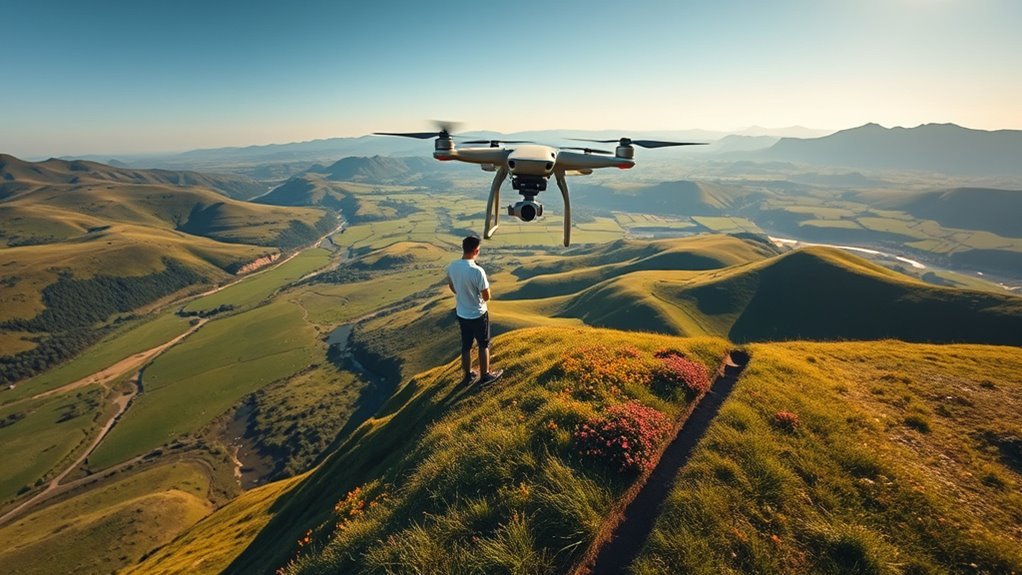
To use a drone camera as a beginner, start by understanding the basics of drone technology and selecting a drone suited to your needs. Familiarize yourself with the controls and practice essential flight techniques. Enhance your aerial photography by applying composition tips and optimizing camera settings for various lighting conditions. Remember to follow legal regulations and safety guidelines. With these foundations, you can capture stunning visuals that elevate your photography skills and inspire new creative possibilities.
Understanding the Basics of Drone Technology

When you immerse yourself in the world of drone technology, it is essential to grasp the fundamental components that make these flying devices tick. Understanding drone components like the frame, motors, propellers, and flight controller is key for anyone looking to harness the freedom of aerial photography. The frame provides structure, while motors and propellers work together to lift the drone off the ground. The flight controller is the brain, ensuring proper flight stability by balancing inputs from various sensors. This stability is important for capturing smooth, high-quality images. By familiarizing yourself with these basics, you’ll be better equipped to navigate the skies and make the most of your drone camera experience, releasing your creative potential. Additionally, many modern drones, such as the XG Neith, come equipped with advanced camera capabilities that enhance your aerial photography even further. Moreover, understanding the intelligent flight modes available in drones allows you to automate complex maneuvers and improve your shooting efficiency.
Choosing the Right Drone for Your Needs
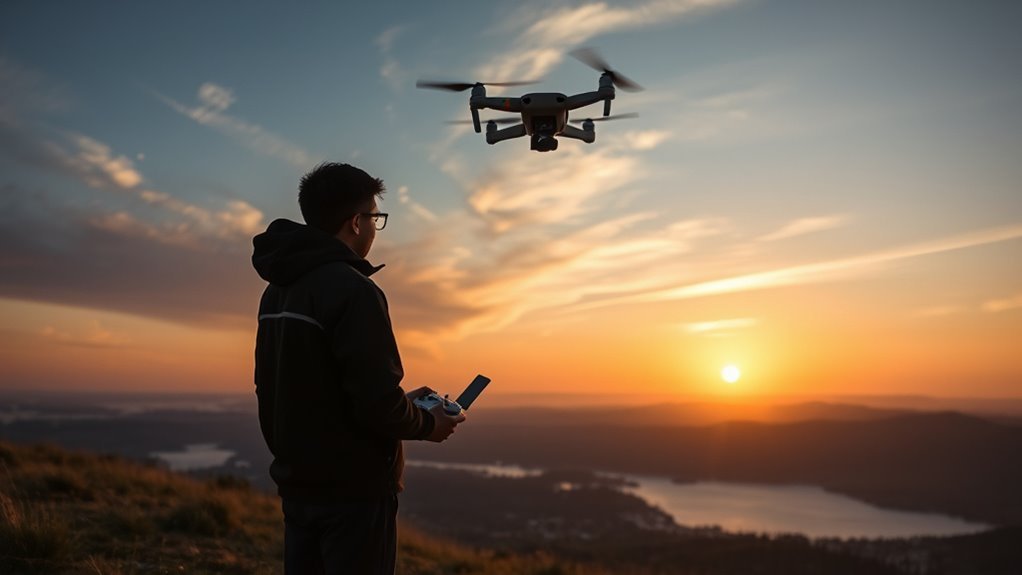
When it comes to choosing the right drone, your purpose for use is key. Whether you’re capturing stunning landscapes or filming events, knowing what you need will help narrow down your options. Plus, it’s essential to take into account your budget to guarantee you find a drone that fits both your goals and your wallet. Additionally, considering the flight range and duration of the drone can significantly enhance your aerial photography experience. For instance, drones like the DJI Air 3S offer a remarkable 20km transmission range, allowing for extensive exploration during your shoots.
Purpose of Drone Use
Choosing the right drone for your needs starts with understanding your purpose for using it. Are you looking to capture stunning landscapes, or do you have a specific project in mind? The applications of drones are vast, from real estate photography to agricultural monitoring. Knowing your goal helps narrow down your options. If you’re after the benefits of aerial photography, consider a drone with a high-quality camera and stability features. This’ll enhance the clarity of your shots and allow you to explore unique perspectives. Whether you’re chasing adventure or documenting memories, selecting the right drone tailored to your ambitions is key. Embrace the freedom that aerial views can provide, and let your creativity soar!
Budget Considerations for Drones
While it’s tempting to go for the latest high-end drone, understanding your budget is essential for making the right choice. Start by doing a drone price comparison to see what’s available within your range. You don’t need to break the bank to capture stunning aerial footage. There are plenty of budget-friendly options that still offer great features. Think about what you’ll primarily use the drone for—whether it’s photography, racing, or casual flying. This can help narrow down your choices. Don’t forget to take into account additional costs, like accessories and maintenance. By being mindful of your budget and focusing on your needs, you can enjoy the freedom of drone flying without overspending.
Mastering Drone Controls and Flight Techniques

Mastering drone controls and flight techniques is essential for anyone looking to capture stunning aerial footage or navigate complex environments. Start by familiarizing yourself with the drone’s controls—practice makes perfect. Experiment with drone maneuverability techniques like yaw, pitch, and roll to gain confidence. Once you’re comfortable, explore advanced flight patterns such as figure eights and orbiting, which can add dynamic movement to your shots. Always maintain awareness of your surroundings and avoid obstacles. Using GPS and follow-me modes can enhance your flying experience, giving you the freedom to focus on capturing the moment. Remember, the key to becoming a skilled pilot is consistent practice, so fly often and enjoy the exhilaration of soaring through the skies! Additionally, understanding flight stability in various conditions is crucial for successful drone operation. Incorporating features like AI-driven obstacle avoidance can significantly improve your safety and efficiency while flying.
Essential Photography Tips for Aerial Shots
When capturing aerial shots, understanding composition techniques can elevate your images considerably. You’ll also need to take into account lighting and optimize your camera settings to make the most of your drone’s capabilities. Let’s explore these essential tips to help you take stunning aerial photographs. Additionally, consider the camera quality and features of your drone, as this can significantly influence the final outcome of your images. For instance, the DJI Mini 3 Pro offers a high-resolution 4K camera which enhances your ability to capture stunning visuals.
Composition Techniques for Aerial
To capture stunning aerial shots, understanding composition techniques is essential, as they can transform an ordinary image into a fascinating visual story. Start with aerial framing; think about how you position elements within your shot. Use the rule of thirds to create balance and draw the viewer’s eye. Experiment with perspective variation; changing your altitude or angle can reveal unique landscapes that might go unnoticed at ground level. Look for leading lines, like roads or rivers, that guide the viewer’s gaze through the image. Don’t forget to incorporate foreground elements to add depth and interest. Finally, keep your compositions simple—less is often more when it comes to aerial photography, allowing the beauty of the scene to shine through.
Lighting Considerations for Drones
Understanding how lighting affects your aerial shots can greatly enhance the quality of your images. To capture stunning drone photography, consider these essential lighting tips:
- Natural Lighting: Utilize sunlight to create vibrant colors and depth in your images.
- Golden Hour: Shoot during the golden hour—shortly after sunrise or before sunset—for softer, warmer light.
- Shadow Management: Be aware of shadows cast by your drone. Adjust your angle to minimize harsh shadows on your subjects.
- Artificial Lighting: Experiment with artificial lighting for nighttime shoots, but guarantee proper exposure settings to maintain color balance and avoid unwanted light reflection.
Camera Settings Optimization Tips
Optimizing your camera settings is essential for capturing stunning aerial shots with your drone. Start by selecting the right camera modes based on your environment. For dynamic scenes, use shutter priority to freeze motion, while aperture priority works well for landscapes. Don’t forget to adjust your exposure settings; a lower ISO will reduce noise, and using a neutral density filter can help manage bright daylight conditions. Experiment with white balance to guarantee colors pop, especially during golden hour. Finally, always shoot in RAW format for greater editing flexibility. With these tips, you’ll release your drone’s full potential and create breathtaking visuals that convey a sense of freedom and adventure. Enjoy the skies and capture your unique perspective!
Navigating Legal Regulations and Safety Guidelines
As you prepare to take to the skies with your drone camera, it is crucial to grasp the legal regulations and safety guidelines that govern their use. Understanding these will guarantee you fly responsibly while enjoying your freedom. Here are key points to reflect on:
As you embark on your drone flying adventures, understanding legal and safety guidelines is essential for responsible operation.
- Drone Registration: Register your drone if it weighs over 0.55 lbs to comply with FAA regulations.
- No Fly Zones: Always check for restricted areas to avoid legal issues and guarantee safety.
- Aerial Permits: Depending on your location, you may need permits for commercial flying.
- Safety Equipment: Equip your drone with safety features like propeller guards and return-to-home functions. Additionally, make sure to secure appropriate permits from the U.S. Forest Service if you plan to operate in national forests.
Editing and Sharing Your Drone Footage
Editing and sharing your drone footage can turn stunning aerial shots into enchanting visual stories. Start by choosing the right editing software that suits your skill level—options like Adobe Premiere Pro or iMovie can help you craft your masterpiece. Trim unnecessary clips, adjust colors, and add music to enhance the emotional impact of your footage. Once you’ve polished your video, it’s time to share it with the world. Use popular sharing platforms like YouTube or Vimeo to showcase your work and connect with fellow drone enthusiasts. Don’t forget to engage with your audience by responding to comments and sharing behind-the-scenes content. This way, you’ll inspire others and celebrate the freedom that drone photography brings to your creative journey. Additionally, consider using a drone with advanced image stabilization systems to ensure your footage is smooth and professional-looking. The use of a Hasselblad camera can elevate your imaging quality, resulting in professional-grade visuals that captivate viewers.
Frequently Asked Questions
How Much Does a Beginner Drone Typically Cost?
You might be surprised to find that beginner drones can vary in price. Generally, you’ll discover budget options starting around $100, while more advanced models can reach several hundred. Drone pricing really depends on features and quality!
Can I Fly a Drone Indoors Effectively?
You can fly a drone indoors effectively, but drone safety’s essential. Make certain there’s ample space, avoid obstacles, and keep it under control. Practice makes perfect, so enjoy the freedom of indoor flying while staying safe!
What Should I Do if My Drone Loses Signal?
If your drone suddenly loses signal, it’s like a bird caught in a storm. Stay calm, initiate signal recovery procedures, and prepare for an emergency landing to guarantee your drone touches down safely.
How Can I Improve My Drone’S Battery Life?
To improve your drone’s battery life, focus on battery maintenance by keeping them charged properly and avoiding extreme temperatures. Energy conservation techniques, like reducing flight time and minimizing payload, can also greatly enhance performance.
What Accessories Are Essential for Drone Photography?
Did you know that over 70% of stunning drone shots use lens filters? For enchanting imagery, invest in quality lens filters and ample storage cards. These essentials enhance your photography experience and guarantee you capture every breathtaking moment.
