
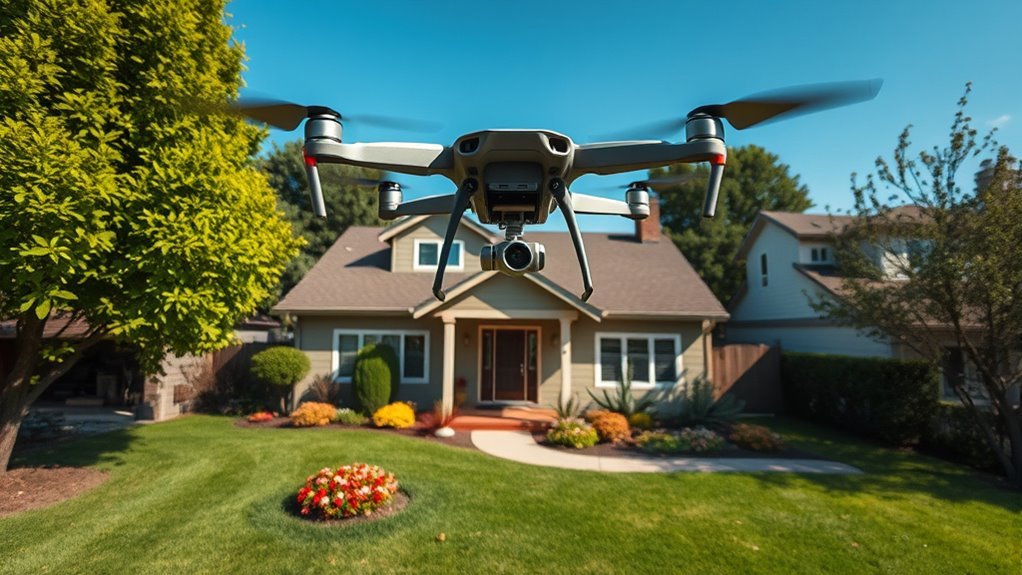
Flying a drone over someone’s house isn’t outright illegal, but it raises complex legal issues involving privacy and airspace rights. Federal laws typically permit drone flights in navigable airspace, but state regulations may impose additional restrictions. People have a reasonable expectation of privacy in their homes, and your intent can influence legality. It’s essential to know the laws in your area to avoid potential legal troubles. Discover more about the intricacies of these regulations as you explore further.
Overview of Drone Regulations
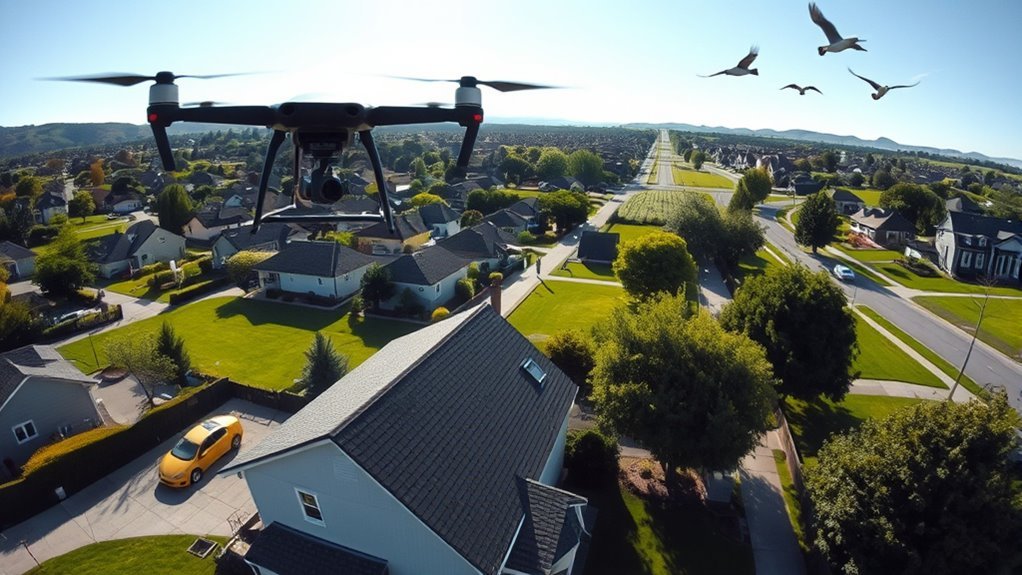
Although drone technology has advanced rapidly, understanding the regulations surrounding their use can be complex. As a drone operator, you must recognize that laws vary considerably by jurisdiction. In many areas, flying a drone for aerial photography requires adherence to specific guidelines to guarantee safety and privacy. You’ll need to check local laws regarding altitude limits, no-fly zones, and the necessity of permits. Additionally, be aware of privacy concerns; capturing images over private property without consent can lead to legal repercussions. Ultimately, while drone technology provides incredible opportunities for creativity and exploration, maneuvering the regulatory landscape is vital to maintaining your freedom to operate without infringing on others’ rights. Be informed, stay compliant, and enjoy the skies responsibly. Furthermore, ensure you are aware of registration requirements to avoid potential penalties for non-compliance. Failing to register your drone can result in significant legal penalties that may include fines and confiscation.
Federal Laws Governing Drone Usage
While steering through the complexities of drone usage, it is vital to understand the federal laws that govern these devices. The Federal Aviation Administration (FAA) oversees federal drone policies, ensuring safe integration into national airspace regulations. Here are key aspects you should consider:
Understanding federal drone laws is crucial for safe operation and compliance within national airspace regulations.
- Drones must be registered with the FAA if they weigh over 0.55 pounds.
- Pilots must adhere to visual line-of-sight requirements during operation.
- Commercial drone flights require specific waivers or certifications.
- Flying over people or moving vehicles is generally prohibited without permissions.
Understanding these regulations is essential for maintaining your freedom while operating a drone. Compliance not only safeguards your rights but also fosters safe coexistence in shared airspace.
State-Specific Drone Legislation
Federal regulations provide a foundational framework for drone operation, but state-specific legislation can impose additional restrictions or guidelines that vary considerably across jurisdictions. These state laws often dictate where and how you can fly your drone, including altitude limits, no-fly zones, and requirements for registration. Understanding the nuances of local drone enforcement is vital for compliance and to avoid potential fines. Some states may even have laws addressing privacy concerns, while others focus on safety. It’s important to research and stay updated on your state’s drone regulations to guarantee you’re operating within legal boundaries. By doing so, you can enjoy the freedom of flying your drone while respecting others’ rights and adhering to local laws. Additionally, considering the drone’s flight performance can be crucial in ensuring you remain compliant with regulations while flying.
Privacy Concerns and Implications
When you consider flying a drone over someone’s house, it is crucial to recognize the legal privacy protections that may apply. The risks of drone surveillance can lead to significant implications for personal privacy, raising questions about what constitutes acceptable boundaries. Understanding these factors will help you navigate the complexities of drone operation and privacy rights.
Legal Privacy Protections
As drone technology becomes more accessible, understanding the legal privacy protections surrounding their use is essential. The intersection of drone operation and privacy expectations raises questions about legal boundaries. Here are some key considerations:
- Expectation of Privacy: Individuals have a reasonable expectation of privacy in their homes.
- Airspace Regulations: Federal regulations define navigable airspace, impacting drone flight legality.
- State Laws: Various states have enacted laws specifically addressing drone privacy concerns.
- Reasonable Surveillance: Courts may evaluate whether drone use constitutes reasonable surveillance or intrusion.
Understanding these factors helps you navigate the complex landscape of drone use while respecting others’ privacy. Balancing innovation with legal boundaries is vital for maintaining freedom in drone operation.
Drone Surveillance Risks
While drone technology offers many benefits, it also raises significant privacy concerns that can have serious implications for individuals. The ease of aerial surveillance allows drones to capture footage without consent, infringing on what many consider personal space. You might not realize that drone privacy isn’t just a legal issue; it’s a matter of ethical responsibility. With the potential for misuse, drones can be used to stalk, harass, or gather sensitive information about you and your family. This invasive capability creates an environment where the line between public and private life blurs. As you consider the implications of drone use, it’s essential to advocate for clear regulations that protect your right to privacy in an increasingly surveilled world.
Case Studies and Legal Precedents
When examining case studies and legal precedents, you’ll find a variety of notable legal cases that highlight the tension between privacy rights and airspace regulations. Different states have enacted specific laws that influence how drone use is regulated, making it essential to understand local nuances. Analyzing these factors can clarify the legal landscape surrounding drone flights over private properties.
Notable Legal Cases
Examining notable legal cases surrounding drone use over private property reveals a complex interplay between privacy rights and technological advancements. Courts are increasingly addressing issues of drone trespassing and aerial privacy. Here are some key cases to evaluate:
- California v. Ciraolo (1986): Established limitations on aerial surveillance and privacy expectations.
- Florida v. Riley (1989): Examined the legality of aerial surveillance over private property without consent.
- Harris v. Quinn (2014): A drone was used to capture images, raising questions about reasonable expectations of privacy.
- Snyder v. Phelps (2011): Discussed balancing free speech and privacy rights in the context of drone use.
These cases illustrate the ongoing legal challenges and evolving interpretations of privacy in the age of drones.
State-Specific Regulations
As states grapple with the implications of drone technology, their regulations often reflect a blend of privacy concerns and public safety needs. You’re likely to find significant variations in state laws and local ordinances, which can create confusion for drone operators. For instance, California imposes strict privacy protections, where flying over private property without consent can lead to legal repercussions. In contrast, Texas has more lenient regulations, emphasizing airspace rights over privacy. These differences underscore the significance of understanding the specific legal landscape in your state and municipality. Familiarizing yourself with local ordinances is vital, as they can dictate where and how you can operate a drone, ensuring you respect both your freedom and others’ rights.
Privacy vs. Airspace Rights
While the rapid evolution of drone technology has prompted numerous legal debates, the conflict between privacy rights and airspace rights remains particularly contentious. Courts often grapple with balancing these two interests. Here are a few key points to reflect upon:
- Airspace Ownership: Property owners typically have rights to the airspace above their land, but this isn’t absolute.
- Privacy Expectations: Many individuals expect a reasonable degree of privacy in their homes.
- Legal Precedents: Cases like *California v. Ciraolo* highlight the complexities in defining aerial privacy.
- Drone Usage: The intent behind drone flights—whether for recreation or surveillance—can greatly impact legal outcomes.
Ultimately, traversing these rights requires careful evaluation of both airspace ownership and privacy expectations to maintain individual freedoms.
Best Practices for Responsible Drone Flying
When flying a drone, adhering to best practices is vital not only for safety but also for maintaining respect for privacy and property. Always familiarize yourself with local regulations and no-fly zones to guarantee safe flying. Practicing drone etiquette is essential; avoid flying over densely populated areas and respect the airspace above private properties. Additionally, consider the time of day and weather conditions, as these factors can affect your flight’s safety and impact others. It’s wise to inform nearby residents about your drone activities, fostering a sense of community and trust. Finally, maintaining line-of-sight with your drone enhances safety and control, allowing you to respond to unexpected situations effectively. Following these guidelines contributes to responsible drone use and promotes freedom for everyone. Understanding local drone regulations is crucial for ensuring compliance and safety during your flights.
Frequently Asked Questions
Can I Fly a Drone Over My Own Property?
You can fly a drone over your own property, provided you respect local regulations. Understanding drone ownership and property rights is essential; guarantee you’re abiding by any applicable laws to maintain your freedom and rights.
What Are the Penalties for Illegal Drone Flights?
Did you know that nearly 1,000 drone fines were issued in 2022 alone? Engaging in illegal drone flights can lead to significant penalties, including hefty drone fines and legal consequences that might restrict your flying freedom.
Do I Need Permission to Fly Near Private Property?
You don’t always need permission to fly near private property, but drone privacy laws and airspace regulations vary by location. It’s essential to research local rules to avoid potential legal issues while enjoying your flying freedom.
Are There Specific Height Limits for Drone Flying?
Imagine zooming through the skies like a bird! You’ve gotta follow drone regulations, which typically set height limits around 400 feet for flight safety. Knowing these rules guarantees you enjoy your freedom without trouble.
How Can I Report a Drone Violation?
To report a drone violation, document the incident, noting time and location. Contact local authorities or aviation agencies, emphasizing privacy concerns. They’ll assess the situation and determine if further action regarding drone reporting is necessary.
