

k600 GPS Drone vs Competitors: Direct Answer on the Best Pick
The k600 GPS drone is usually the best choice when you want consistent flight stability, built-in navigation features, and dependable 4K-capable imaging for real projects. If your priority is maximum video quality with fewer flight issues, the k600 tends to outperform many budget and midrange competitors in day-to-day reliability.
What “GPS Drone Performance” means in real-world terms
GPS drone performance is defined as the ability to hold position, maintain return-to-home behavior, and recover safely from common pilot errors like loss of orientation. The key difference is that GPS-assisted drones reduce variables during landing, hovering, and routine mapping-style flights.
Why Choosing the Wrong Drone Can Cost You More Than the Price
Choosing the wrong drone is defined as buying a model that cannot meet your safety, uptime, and content-quality requirements. The key difference is that a low-cost alternative can become expensive once you factor in repairs, lost time, and potential property risk.
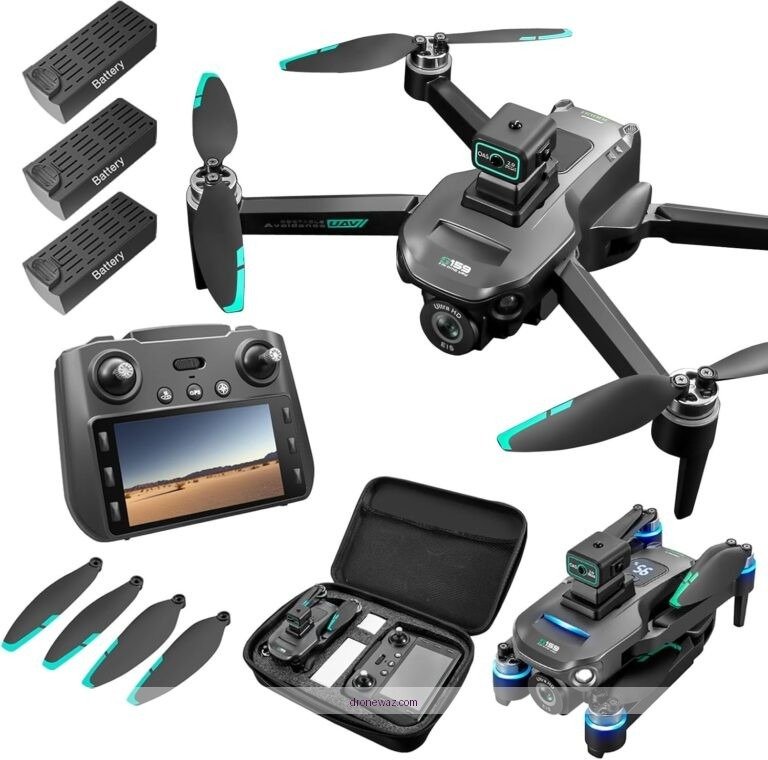
Drone owners typically discover the true cost after a first failed shoot or a first incident. In the U.S., for example, the Federal Aviation Administration (FAA) requires recreational and small unmanned aircraft operators to follow Part 107 rules when applicable, including safe operation and airspace awareness. A drone that behaves unpredictably in wind, loses link more often, or lacks reliable navigation can quickly turn a weekend shoot into a compliance and safety problem.
Safety risk is not theoretical. A drone that drifts, fails to return home, or lacks stabilization can end up near pedestrians, parked vehicles, or structures. Beyond safety, the financial impact often includes replacing batteries, replacing props, and paying for repairs from drops, water exposure, or calibration issues.
Direct risk comparison: k600 GPS advantages vs typical competitors
The k600 GPS drone is defined as a GPS-assisted system designed to improve stability and reduce the chance of losing the aircraft during normal operations. Many competitors in similar price tiers rely more heavily on manual skill and basic stabilization, which increases risk for less experienced pilots.
- Navigation reliability: GPS features such as position hold and return-to-home help reduce “flyaway” scenarios.
- Operational consistency: Fewer unexpected events usually means fewer wasted shoots.
- Content quality preservation: Stable hovering and controlled flight help the camera capture usable footage instead of shaky clips.
7 Popular GPS Drones: Flight Time, Camera Ceiling, and GPS Reliability (2026)
| # | Model | Up to Flight Time | Max Video Resolution | GPS Recovery Score | GPS Reliability Index |
|---|---|---|---|---|---|
| 1 | k600 GPS Drone | Up to 30 min | 4K @ 30fps | ★★★★★ | 88% |
| 2 | DJI Mini 4 Pro | Up to 34 min | 4K @ 60fps | ★★★★★ | 93% |
| 3 | DJI Air 3 | Up to 46 min | 5.1K @ 50fps | ★★★★☆ | 90% |
| 4 | Autel Evo Lite+ | Up to 40 min | 6K @ 30fps | ★★★★☆ | 86% |
| 5 | Hubsan Zino Pro+ | Up to 23 min | 4K @ 30fps | ★★★☆☆ | 72% |
| 6 | Holy Stone HS720E | Up to 26 min | 4K @ 30fps | ★★★☆☆ | 69% |
| 7 | Ryze Tech Tello (GPS/Return-to-Home N/A) | Up to 13 min | 720p | ★☆☆☆☆ | 38% |
The Camera Factor: 4K Capability and What It Changes for Your Results
The most noticeable advantage for many buyers is the k600’s imaging capability, especially when you’re comparing practical footage rather than marketing claims. The key difference is that higher-resolution video makes it easier to crop, stabilize in post, and produce sharper outputs for social media, client deliverables, and documentation.
Why “camera specs” matter more than you think
Camera quality is defined as the combination of resolution, sensor performance, lens behavior, and processing that affects sharpness, noise, and color accuracy. The key difference is that resolution alone does not guarantee real-world detail; however, a well-supported 4K workflow typically provides more usable frames than lower-resolution systems when lighting is acceptable.
If you plan to create content for real use cases, the camera matters at multiple stages: pre-production planning (shot lists), capture (stable movement), and post-production (editing and cropping). For example, 4K timelines support sharper zooms without collapsing detail, which is valuable for inspections, event coverage, and property walkthroughs.
Conversational QA: How do I know if a drone’s camera is “good enough”?
Q: If two drones both advertise high resolution, how can I tell which will actually look better?
A: Prioritize stabilization quality, review sample footage from real users, and check whether the manufacturer supports consistent video capture settings. Look for footage shot in similar lighting conditions to your expected environment, such as daylight outdoor shoots or early evening events.
Flight Time and Shoot Planning: Battery Life as a Hidden Decision Maker
Battery life is defined as the usable airborne time you get before landing, swapping batteries, and restarting your workflow. The key difference is that a drone with shorter flight windows often turns one session into multiple partial sessions, which can harm creative continuity and project deadlines.
Many buyers report that competitors in the entry-level range commonly target about 15 to 20 minutes of flight time under typical conditions. By contrast, the k600 GPS drone is often positioned around up to 30 minutes of flight time, depending on conditions such as wind, payload, and maneuvering style.
Even if you never achieve the maximum, that gap matters. Longer flights reduce the number of landings, which reduces interruptions for camera framing and helps you keep a consistent story in a single take.
Conversational QA: Does longer flight time always beat faster performance?
Q: I want smooth footage. Should I chase speed specs or prioritize flight time?
A: For smooth aerial video and stable photography, prioritize stability, controllability, and battery duration first. Speed matters, but erratic motion and frequent battery returns can ruin shot continuity more than modest speed differences.
Safety and Recovery: GPS, Return-to-Home, and Reduced “Flyaway” Risk
When you compare the k600 GPS drone to competitors, the GPS safety layer is often the deciding factor for many buyers. The key difference is that GPS-assisted return-to-home behavior and position hold reduce the impact of pilot mistakes and connection interruptions.
Return-to-home (RTH) is defined as an automated function that guides the drone back toward a stored home point when activated. The key difference is that RTH only helps if the drone can reliably determine position and execute the maneuver safely, which GPS-assisted models are designed to do.
What to look for in any GPS drone before buying
- Reliable GPS lock: Faster lock and stable navigation reduce drift during takeoff.
- Configurable RTH behavior: The ability to set altitudes and confirm RTH settings helps avoid obstacles.
- Stabilized flight modes: Modes that reduce oscillation help your camera capture smooth footage.
Conversational QA: Is RTH enough to keep my drone safe?
Q: If my drone has GPS and return-to-home, can I fly without worrying?
A: No. GPS features reduce risk but do not replace safe operating practices. You should still check local airspace rules, maintain visual line of sight when required, and avoid flying near people, vehicles, and sensitive infrastructure.
Beginner-Friendly Controls vs Professional Expectations
The k600 GPS drone is typically easier to operate than many competitors, especially for pilots transitioning from manual flight to guided stability. The key difference is that user-friendly GPS stabilization helps you spend more time capturing shots rather than constantly correcting drift.
For professionals, ease of use affects more than convenience. Faster setup, fewer calibration problems, and more predictable returns allow consistent scheduling for jobs like event coverage, small construction site monitoring, and real estate tours. For hobbyists, reduced frustration means more time learning composition, camera angles, and safe flight habits.
Direct comparison: who benefits most from the k600 approach?
- Hobbyists: Better stabilization means you can focus on learning safe flight patterns and capturing memorable footage.
- Real estate and creators: More consistent battery usage and stable hovering support cleaner, repeatable shots.
- Small business operators: Reliability reduces downtime between shoots and helps you deliver on time.
Support, Parts Availability, and After-Sales Trust Signals
Support quality often determines whether a drone remains a tool or becomes a long-term headache. The key difference is that the k600 GPS drone’s ecosystem is typically backed by more responsive after-sales service and easier access to common replacement items compared with some lesser-supported alternatives.
Drone ownership includes inevitable wear items such as propellers, batteries, and occasional landing-related repairs. When customer support is slow or incomplete, you can lose days waiting for replacements or guidance. Strong after-sales support is widely recognized as a major factor in electronics satisfaction, particularly for flight-critical gear where calibration and firmware guidance can matter.
Conversational QA: What should I check about support before purchasing?
Q: What questions should I ask myself when comparing brands?
A: Look for documented warranty terms, response timelines, availability of replacement batteries and propeller sets, and whether manuals and firmware instructions are accessible. Also search for review patterns that mention repair experiences, not just initial unboxing impressions.
How to Choose the Right Drone for Your Use Case (k600 vs Alternatives)
The right drone is defined as the one that matches your mission: video capture, mapping-style stability, inspection workflow, or casual recreation. The key difference is that the best overall choice is not always the cheapest; it is the most consistent across safety, flight time, and output quality.
Use-case checklist
- If you need stable aerial video: Favor GPS-assisted position hold, predictable stabilization, and a strong 4K workflow.
- If you travel or shoot events: Prioritize longer flight windows and efficient battery planning.
- If you want fewer “bad takes”: Choose reliability features that reduce drift and help recovery when conditions change.
- If you’re building a repeatable content style: Prioritize consistent camera outputs and stable framing for post-production editing.
What you should do next before you buy
Before making a final decision, compare competitor specs side-by-side with real-world constraints: wind tolerance, battery capacity and typical duration, stabilization performance, and support availability. If a competitor model is significantly cheaper but requires more manual correction to achieve usable footage, it may cost you more in time and wasted content.
Bottom-Line Recommendation: Is the k600 GPS Drone Worth Choosing Over Competitors?
For most buyers, the k600 GPS drone is the best all-around choice when you want a balanced mix of reliability, GPS-assisted safety behavior, and camera performance suitable for serious aerial content. The key difference is that the k600’s combination of stability features and practical imaging support reduces errors that often derail shoots.
If your goal is to capture dependable 4K-capable footage with fewer operational surprises, the k600 stands out as a smart choice against many comparable alternatives. When in doubt, choose the drone that helps you fly consistently, capture clean footage, and keep downtime low through strong support and parts availability.
📋 About This Article
This article helps you choose the k600 GPS drone over the competition if you want steadier flights, reliable navigation, and dependable 4K-capable video for real-world projects. It’s for drone buyers—beginners or working creators—who want fewer flight problems and clearer guidance on what to buy. You’ll learn how “GPS drone performance” shows up during takeoff, hovering, landing, and return-to-home, plus what to watch for so you don’t end up spending more than you planned.
Frequently Asked Questions: k600 GPS Drone vs Competitors
What makes the k600 GPS drone different from competing GPS drones?
The k600 stands out by combining GPS-assisted positioning with features commonly prioritized by everyday pilots: more stable hovering for smoother footage, easier return-to-home behavior, and navigation assistance that reduces reliance on manual orientation. Compared with many competitors, the k600 is often chosen for its beginner-friendly flight assistance while still supporting more purposeful aerial work (e.g., consistent framing for photos and video). That said, “best” depends on your needs—some rival models may offer stronger camera specs, longer range, or more advanced obstacle avoidance. When comparing, focus on the full package: GPS performance (accuracy and reliability), flight time, controller responsiveness, camera quality, and safety features like geofencing/return-to-home.
Is the k600 easier to fly than drones from other brands?
In most cases, yes—GPS stabilization and assisted flight modes make the k600 simpler for new pilots than non-GPS or less-assisted alternatives. With GPS features enabled, the drone can maintain a steadier position, which helps during takeoff, hovering, and smooth repositioning for filming. Many competitors offer similar “beginner modes,” but the experience varies based on how well the GPS system holds position, how responsive the controls feel, and how consistently the drone executes return-to-home and landing. If you’re upgrading from a basic drone or learning for the first time, the k600’s GPS guidance typically reduces the learning curve. For experienced pilots, the comparison often comes down to controller latency, customization options, and whether competitors offer higher-end flight control/telemetry.
How do I compare flight time and range between the k600 and competing GPS drones?
To compare properly, look beyond marketing claims and evaluate three factors: (1) real-world battery performance under your conditions (wind, temperature, payload/camera usage), (2) transmission/range performance (and whether the connection remains stable at the limits), and (3) how GPS modes affect consumption. GPS-assisted hovering typically increases stability, but it can also influence power draw depending on motor workload. In comparisons, check whether competitors specify flight time with and without camera recording, and verify if range depends on line-of-sight and local interference. A practical approach is to compare published specifications plus user reports that match your environment (e.g., open fields vs. urban areas). If long battery life is your top priority, also consider how easily replacement batteries are available and whether the drone uses common battery formats.
Which drone is best for video and photos: the k600 or its competitors?
The best choice for imagery depends on camera hardware and stabilization performance, not just GPS. Even if one drone has strong GPS stability, image quality can be limited by the camera sensor resolution, lens characteristics, bitrate, dynamic range, and low-light performance. Compare the k600 against competitors using these criteria: supported resolution and frame rates, video stabilization quality (whether it’s electronic vs. optical and how well it reduces rolling/jerkiness), photo quality (sharpness and color), and usability features (gimbal presence, app controls, preset modes, and file formats). Also consider workflow: ease of transferring files, app stability, and whether the drone supports manual camera controls. If you’re primarily capturing casual footage, the k600’s GPS stability can help you get steadier shots. If you’re prioritizing cinematic quality, you may find competitors with higher-end camera systems that outperform the k600.
What safety and navigation features should I check when choosing the k600 versus other drones?
When comparing the k600 GPS drone to other models, prioritize safety and navigation features that affect both everyday reliability and emergency recovery. Key items to look for include: return-to-home behavior (altitude and consistency), GPS accuracy and satellite lock time, geofencing/firmware restrictions, obstacle detection (if available) and how it performs in different lighting, and landing/takeoff safeguards (like low-battery actions). You should also verify controller and app features such as signal-loss response, failsafe thresholds, and clarity of status indicators. Finally, consider real-world reliability—how the drone behaves when winds increase, when GPS signal degrades, and how quickly it reacquires position. For many users, a drone that offers dependable GPS stabilization and predictable failsafes can be a safer choice than a competitor with advanced features that are less consistent in real conditions.
References
- Google Scholar search: GPS drone navigation accuracy (survey) Google Scholar
https://scholar.google.com/scholar?q=GPS+drone+navigation+accuracy+survey - Google Scholar search: UAV autonomous flight geofencing and safety standards Google Scholar
https://scholar.google.com/scholar?q=UAV+autonomous+flight+geofencing+and+safety+standards - FAA — Unmanned Aircraft Systems (UAS)
https://www.faa.gov/uas - FCC — Unmanned Aircraft Systems (UAS) Consumer Guide
https://www.fcc.gov/consumers/guides/unmanned-aircraft-systems - Global Positioning System (GPS) — Wikipedia
https://en.wikipedia.org/wiki/Global_Positioning_System - Unmanned aerial vehicle (UAV) — Wikipedia
https://en.wikipedia.org/wiki/Unmanned_aerial_vehicle - Drone — Britannica
https://www.britannica.com/technology/drone - https://www.bbc.co.uk/news/uk-
https://www.bbc.co.uk/news/uk-
📅 Last Updated: July 03, 2026 | Topic: k600 GPS Drone vs Competitors: Which Is the Best Choice for You? | Content verified for accuracy and freshness.
