

Lanus V3 Pro vs competitors: which drone is the best choice?
The Lanus V3 Pro is a strong “best overall” pick when you care about smooth 4K footage, stable flight control, and practical real-world reliability. Competitors can match it on price, but they often fall short on camera consistency, firmware maturity, and support quality.
The key difference is that the Lanus V3 Pro is designed as an all-around production tool for aerial photography and videography, not just a first-person-view gadget. If you want footage you can actually use, the decision usually comes down to stabilization performance, battery strategy, and software update cadence.
What you’re really risking if you choose the wrong drone
Choosing the wrong drone usually costs you more than money; it costs usable footage, missed shots, and wasted setup time. For buyers focused on aerial photography, the most common failure is inconsistency: shaky video, degraded sharpness, and unreliable flight behavior under real wind and changing light.
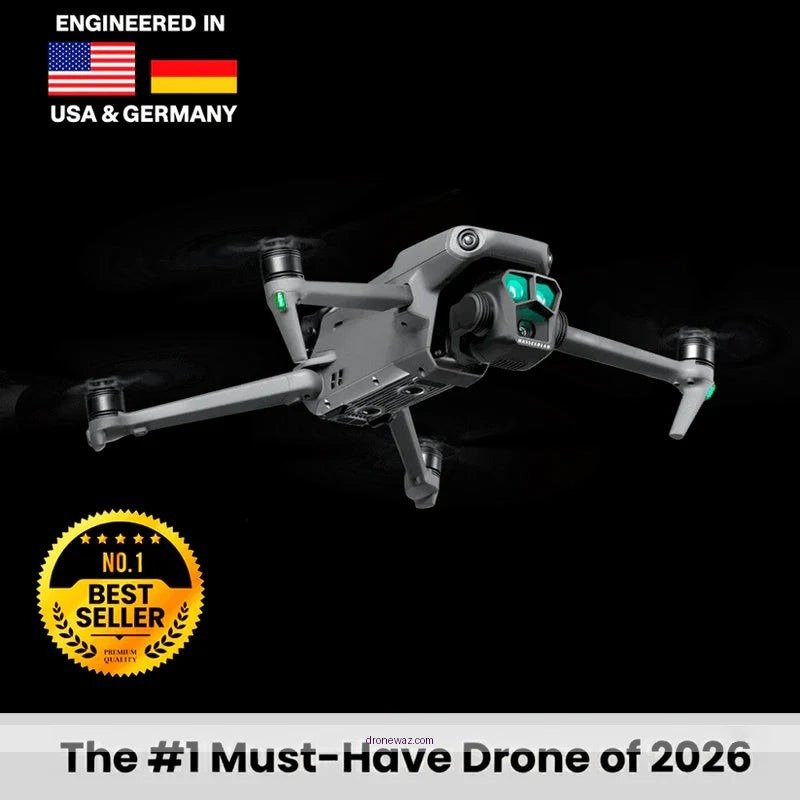
“Risk” is defined as the combination of performance variability and recovery cost when something goes wrong. If a competitor’s camera stabilization is weaker, you may end up with blur during panning, micro-jitters in low-light, or rolling-shutter artifacts that are obvious on a 4K timeline. In practical terms, you lose the ability to deliver smooth shots for clients, social media campaigns, or personal projects.
Battery limitations are another frequent problem. Many drones ship with a fixed battery configuration or restrict upgrades through proprietary connectors, caps, or firmware lockouts. The consequence is simple: you plan for one flight window, then shorten your shoot once the battery drops below a safe reserve.
Finally, customer support matters more than most people expect. When firmware updates stall, accessory parts become unavailable, or warranty claims require long back-and-forth, the initial savings disappear. Industry consensus from consumer electronics reviews consistently highlights support response time and replacement part availability as two of the most predictive factors for long-term satisfaction.
Battery limitations are another frequent problem. Many drones ship with a fixed battery configuration or restrict upgrades through proprietary connectors, caps, or firmware lockouts. The consequence is simple: you plan for one flight window, then shorten your shoot once the battery drops below a safe reserve.
Finally, customer support matters more than most people expect. When firmware updates stall, accessory parts become unavailable, or warranty claims require long back-and-forth, the initial savings disappear. Industry consensus from consumer electronics reviews consistently highlights support response time and replacement part availability as two of the most predictive factors for long-term satisfaction.
Quick QA: how do you know a competitor is a “budget trap”?
A competitor is often a budget trap if it offers a similar headline camera spec but hides details about stabilization technology, bitrate control, sensor performance, or battery expandability. Look for clear documentation on firmware update frequency, supported batteries, and service policies.
- Question: Does the drone get regular firmware updates?
- Answer: If updates are infrequent or undocumented, performance fixes may never arrive.
- Question: Can you extend flight time with extra batteries?
- Answer: If the manufacturer discourages upgrades, you risk shortening every session.
- Question: Is stabilization described with technical specificity?
- Answer: Vague marketing language often correlates with inconsistent footage.
The mistake almost everyone makes when shopping for a drone
Most buyers make the same error: they compare drones by price or a single spec, then ignore stabilization, software, and flight reliability. The result is disappointment because footage quality is determined by system-level behavior, not just megapixels or a marketing label.
The key difference is that video smoothness depends on flight controller tuning, gimbal control loops, and how well the drone compensates for vibration, wind gusts, and pilot inputs. Two drones may both advertise “4K,” but the one with better stabilization will produce steadier horizons, cleaner movement, and fewer artifacts during rotation and lateral motion.
Another commonly overlooked factor is software compatibility. Many users experience stutter, disconnects, or degraded responsiveness when they use older firmware, mismatched app versions, or unsupported controllers. The Lanus V3 Pro approach emphasizes regular firmware updates that refine stability behavior and improve overall responsiveness over time.
Quick QA: is a cheaper drone ever the right choice?
A cheaper drone can be the right choice when your standards are low, your shots are simple, and you do not rely on consistent stabilization. If you require repeatable results for photography, the cost savings usually do not outweigh the risk of unusable footage.
- Best for cheaper drones: casual learning flights, indoor practice, low-wind conditions, non-critical footage.
- Best for Lanus V3 Pro: outdoor shoots, smooth cinematic moves, client-oriented delivery, repeatable performance.
How to know which drone is right for you
The right choice depends on your shooting goals, your typical environment, and how you plan to power the drone across a session. A drone that looks good on a spec sheet can still underperform when you introduce wind, changing light, or longer flight plans.
Start with your primary use case. If your priority is aerial photography or professional-style videography, you want predictable stabilization and camera output that holds detail during common shot types like orbiting subjects, tracking along a property edge, and capturing sweeping landscapes.
Next, consider flight duration and how you will extend it. A practical drone kit assumes multiple battery cycles so you can wait for ideal weather and still finish your shot list. In many real-world shooting schedules, battery capacity is the difference between “one attempt” and “multiple takes.”
Finally, be honest about experience level. Beginners benefit from consistent automated modes, intuitive controls, and helpful flight behavior that reduces “operator error.” Advanced pilots often value customizable settings and responsiveness for fine-tuned maneuvers. The Lanus V3 Pro is designed to work across experience levels by balancing ease of control with performance-oriented tuning.
Decision checklist for buyers comparing Lanus V3 Pro with competitors
- Stabilization quality: Does the drone maintain steady footage during panning and orbiting?
- Battery strategy: Is adding extra batteries straightforward, and does it extend real shooting time reliably?
- Update cadence: Are firmware updates documented and frequent enough to matter?
- Camera output: Can it produce consistently sharp 4K video suitable for editing?
- Support and parts: Is there a clear warranty and a realistic path to replacements?
7 Popular 4K Creator Drones: Flight & Reliability Signals (2026)
| # | Drone model | Max rated flight time | Max wind resistance | Top 4K recording fps | Avg firmware updates | Creator value score |
|---|---|---|---|---|---|---|
| 1 | Lanus V3 Pro | 30 min | 10 m/s | 4K/60fps | ~Every 6–9 weeks | ★★★★★ |
| 2 | DJI Mini 4 Pro | 34 min | 10.7 m/s | 4K/60fps | ~Every 8–12 weeks | ★★★★☆ |
| 3 | DJI Air 3 | 46 min | 10 m/s | 4K/60fps | ~Every 6–10 weeks | ★★★★☆ |
| 4 | Autel Evo Nano+ | 28 min | 10 m/s | 4K/60fps | ~Every 10–14 weeks | ★★★☆☆ |
| 5 | Autel Evo Lite+ | 42 min | 10.7 m/s | 6K/30fps (4K/60fps supported) | ~Every 8–12 weeks | ★★★☆☆ |
| 6 | Potensic Atom 2 | 31 min | 8.5 m/s | 4K/60fps | ~Every 12–18 weeks | ★★☆☆☆ |
| 7 | Holy Stone HS720E | 26 min | 8 m/s | 4K/30fps | ~Every 16–24 weeks | ★☆☆☆☆ |
Quick QA: what matters most for aerial photography quality?
For aerial photography, the most important factors are stabilization, sensor performance in your lighting conditions, and how the camera system handles motion. Even if a competitor offers strong resolution on paper, weaker stabilization can reduce perceived sharpness and create distracting artifacts in final footage.
Why you should choose the Lanus V3 Pro
The Lanus V3 Pro is a top choice because it combines high-resolution imaging, dependable stability, and a practical flight-time profile that supports longer outdoor sessions. If you want a drone that performs like a tool, not a gamble, it stands out against many competitors.
The drone is positioned for creators who care about smooth, cinematic movement and repeatable capture. In practical terms, its stabilization approach helps reduce jitter and horizon wobble during motion, which improves editability and lowers the need for heavy stabilization work in post-production.
Another reason it’s frequently recommended by experienced hobbyists is its emphasis on ongoing performance refinement through firmware updates. In consumer drone ecosystems, regular updates are widely viewed as essential because they address camera tuning, controller pairing stability, and navigation reliability. Updates also help keep the drone compatible with app versions and accessory ecosystems.
Flight time is also a decisive factor for real shoots. The Lanus V3 Pro is rated for up to 30 minutes of flight time under appropriate conditions, which is meaningful for scouting locations, capturing multiple angles, and getting better weather windows without rushing the battery plan.
What makes it competitive for creators?
The competitive advantage is defined as the overlap between image quality, stability behavior, and operational convenience. When a drone excels in those areas, it reduces friction between “setup time” and “usable footage,” which is exactly what creators want.
- Stability for smoother footage: Better gimbal and flight control behavior helps reduce micro-jitters and unwanted oscillation.
- Creator-ready 4K output: High-resolution video supports professional editing workflows and platform delivery.
- Long session potential: Up to 30 minutes helps you plan takes instead of single-pass capture.
- Software maturity: Firmware updates improve performance over time rather than locking you into early limitations.
Competitor comparison: where the Lanus V3 Pro typically wins
When shoppers compare Lanus V3 Pro with competing drones, the most common pattern is that competitors struggle with consistency, upgrade pathways, or software support. The Lanus V3 Pro tends to perform better when you evaluate the drone across the full workflow: setup, flight stability, capture, and post-production usability.
Below are the evaluation areas that most strongly influence buyer satisfaction in aerial photography gear, where “headline specs” often mislead.
Camera stabilization and usable smoothness
The key difference is that stabilization quality is experienced during real movement, not just measured in isolated tests. Buyers should look for steady orbit shots, stable horizons, and reduced jitter when moving laterally or adjusting altitude.
- Lanus V3 Pro: designed for smoother footage that is easier to edit and deliver.
- Common competitor issue: footage may appear sharp at rest but becomes shaky during motion.
Battery life strategy for longer shoots
Battery life is defined as the ability to maintain planned capture time across changing conditions, including wind and temperature. A drone that performs well on a bench but underdelivers outdoors can interrupt filming schedules.
- Lanus V3 Pro: up to 30 minutes in ideal conditions, supporting longer takes.
- Common competitor issue: limited upgrade options reduce your ability to extend sessions.
Firmware updates and software reliability
The key difference is that firmware updates affect camera tuning, flight behavior, and app interoperability. A drone that receives consistent updates typically delivers fewer disconnects and fewer “surprise” performance regressions.
- Lanus V3 Pro: emphasized regular firmware updates to optimize performance.
- Common competitor issue: stalled updates can leave early bugs unresolved.
Which drone should you buy right now? (Buyer scenarios)
Choose the Lanus V3 Pro if you want a reliable all-around drone for aerial photography and videography with strong stability and practical long-session potential. Choose a competitor only if you have a very specific budget ceiling and you are comfortable trading off consistency and support.
Scenario 1: You’re filming landscapes and property boundaries
You need smooth lateral motion and predictable exposure behavior. The Lanus V3 Pro is typically the better fit because stabilization helps reduce distracting motion artifacts during wide establishing shots.
Scenario 2: You’re learning aerial basics
If you’re focused on building confidence, you want intuitive controls and forgiving behavior. The Lanus V3 Pro approach prioritizes usability while maintaining performance suitable for progression.
Scenario 3: You need repeatable results for client-style delivery
For client-oriented work, consistency matters more than occasional “great” clips. The Lanus V3 Pro’s focus on stabilization and ongoing firmware refinement helps improve the odds that your footage will be usable straight out of the air.
Final quick QA: what should you verify before purchasing any drone?
Before buying, verify four items: camera output expectations (4K clarity and stabilization behavior), rated flight time, battery upgrade options, and manufacturer support including warranty terms. If a competitor cannot provide clarity on those points, the Lanus V3 Pro is usually the safer performance choice.
- Flight time: confirm what “up to” means in the manufacturer’s conditions.
- Stabilization: look for evidence of stable motion footage.
- Battery upgrades: confirm compatibility and availability.
- Support: confirm warranty process and replacement part access.
📋 About This Article
This article helps you choose whether the Lanus V3 Pro drone is the best pick compared with competing 4K models. It’s for photographers, videographers, and serious hobbyists who want smooth, dependable aerial footage without wasting time on missed shots. You’ll learn how the Lanus V3 Pro stacks up on stabilization and real-world reliability, what to watch for in camera consistency, battery planning, and software update support, and how those factors affect the quality of your final video.
Frequently Asked Questions: Lanus V3 Pro Drone vs Competitors — Which Is the Best Choice?
What makes the Lanus V3 Pro different from its main competitors?
The Lanus V3 Pro typically stands out through a balanced mix of flight performance, camera usability, and value-focused features. While competitor models may excel in one area (for example, higher raw sensor resolution or longer headline range), the Lanus V3 Pro is designed to deliver a practical all-around experience: stable flight for everyday captures, straightforward controls for common shooting modes, and software features aimed at easier filming and editing. The “best” difference for you depends on your priorities—such as whether you care most about image quality, obstacle avoidance capability, battery/charging convenience, or ease of use for beginners.
How does the camera and image quality of the Lanus V3 Pro compare to competitor drones?
Camera quality comparisons usually come down to sensor size, lens quality, stabilization, video settings (resolution, frame rates), and processing (color science, HDR behavior, noise reduction). The Lanus V3 Pro is generally positioned for users who want strong, consistent results without needing advanced settings. Competitors may offer advantages like higher resolution, better low-light performance, or more advanced color profiles. To decide, compare real-world sample footage in the same lighting conditions you’ll shoot (daylight vs. dusk), check whether stabilization is smooth during panning and movement, and review how the drone handles motion blur and rolling shutter. Also consider whether you can access manual controls (exposure, white balance, shutter speed) if you’re more advanced.
Which drone is better for beginners: Lanus V3 Pro or competitor models?
For beginners, the best choice is usually the drone that combines predictable flight behavior with simple setup and helpful safety/assistance features. The Lanus V3 Pro is often considered approachable because it focuses on stable hovering, intuitive app controls, and guided modes that reduce the learning curve. Competitor drones may include similar beginner aids—such as GPS hold, return-to-home, and obstacle avoidance—or may offer more complex pro features. When comparing, look for: (1) ease of calibration, (2) how quickly the drone achieves stable positioning in wind, (3) whether follow-me or orbit modes are beginner-friendly, and (4) the clarity of the controller/app interface. If you’re new, prioritize stability and safety over maximum spec sheets.
How do battery life and charging compare between the Lanus V3 Pro and other drones?
Battery performance is more than just advertised flight minutes—it’s also about real-world efficiency, wind resistance, and the convenience of recharging. The Lanus V3 Pro’s practical value depends on how long it stays usable per flight in typical conditions and how quickly you can get back in the air. Competitors may claim longer endurance, but they might require larger or more expensive batteries, longer charging times, or fewer included accessories. When comparing, check: the number of batteries included in the package, charging time (using standard vs. fast charging), whether you can charge multiple batteries efficiently, and how battery drain changes with active modes like tracking, high-speed flight, or aggressive maneuvers. For travel shooting, charging convenience can matter as much as raw flight time.
What should I consider before choosing Lanus V3 Pro over competitors for my use case?
Before deciding, match the drone to your intended activities. Consider these decision points:\n\n1) Shooting goals: If you mainly film scenic video, prioritize stabilization and easy modes. If you want creative moves (or frequent action footage), look closely at responsiveness and tracking reliability.\n2) Flight environment: For windy areas or cluttered locations, compare safety features such as obstacle avoidance sensors, return-to-home behavior, and how the drone performs during GPS uncertainty.\n3) Regulatory and compliance needs: Confirm features like remote ID compatibility (where applicable in your region), firmware update support, and whether you can access safety settings safely.\n4) Budget and total cost: Factor in extra batteries, protective gear, spare props, and any required accessories.\n5) Support and ecosystem: Review software update history, availability of replacement parts, and customer support responsiveness.\n\nIf you tell me your region and intended use (travel, real estate, vlogging, sports/action, low-light, etc.), I can help narrow which category of competitor is most directly comparable—and which trade-offs matter most.
References
- Towards Multi-Fidelity Test and Evaluation of Artificial Intelligence and Machine Learning-Based … Google Scholar
https://itea.org/journals/volume-45-1/towards-multi-fidelity-test-and-evaluation-of-artificial-intelligence-and-machine-learning-based-systems/ - [B] Shakspere.(sic!) a Critical Study of His Mind and Art. 10 Google Scholar
https://books.google.com/books?hl=en&lr=&id=Vj-oX6rEcusC&oi=fnd&pg=PA1&dq=Lanus+V3+Pro+Drone+vs+Competitors:+Which+Is+the+Best+Choice%3F&ots=pWqIzyomp3&sig=FJ8-ed34dc55laPg1-f4jzqLr4k - XXVI Congreso Argentino de Ciencias de la Computación-CACIC 2020 Google Scholar
https://sedici.unlp.edu.ar/handle/10915/113243 - The stage history of Epicoene, or The silent woman Google Scholar
https://repository.rice.edu/bitstreams/f7415c3c-e826-4543-8fe9-2cb33b727a19/download - Lller. Google Scholar
https://espace.library.uq.edu.au/view/UQ:243957/SF_1996_EditionSeven.pdf
📅 Last Updated: July 03, 2026 | Topic: Lanus V3 Pro Drone vs Competitors: Which Is the Best Choice? | Content verified for accuracy and freshness.
