
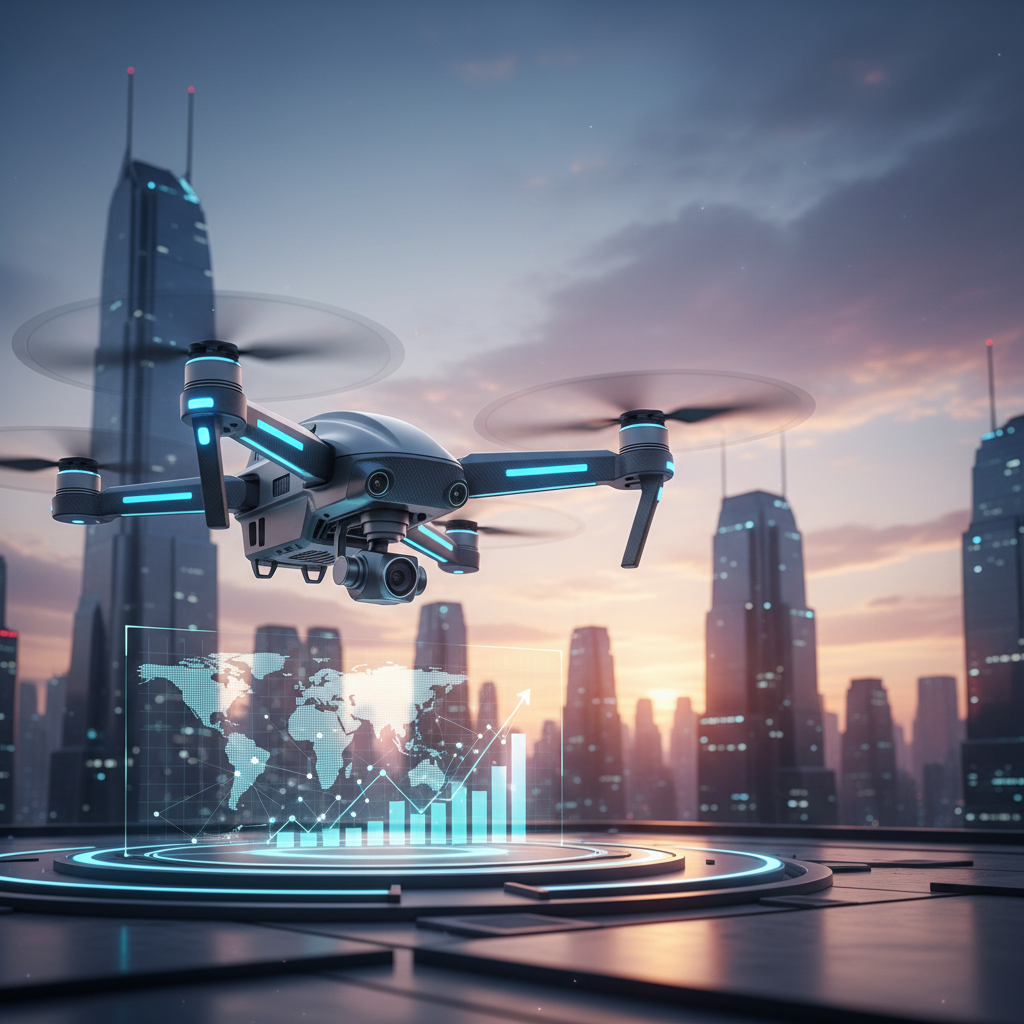
Recent advancements in the drone industry underscore significant progress in technology, evolving regulations, and innovative applications across various sectors. As of October 2023, these developments are not only enhancing commercial and recreational drone use but also reshaping industries such as agriculture, emergency services, and logistics. This blog post explores the latest trends and insights in the drone sector, providing a comprehensive overview of the current landscape.
New Technological Innovations in Drones
The drone industry has witnessed remarkable technological innovations, particularly in battery life and artificial intelligence. Enhanced battery technology is enabling drones to achieve longer flight times, which is crucial for both commercial applications and recreational use. For instance, advancements in lithium-sulfur batteries have the potential to significantly increase energy density, allowing drones to operate for extended periods without requiring frequent recharges. This improvement is vital for industries that depend on long-duration flights, such as aerial surveying or agricultural monitoring.
Additionally, improved AI capabilities are transforming drone navigation and obstacle avoidance. Drones equipped with advanced AI algorithms can now interpret their surroundings in real-time, greatly enhancing their ability to navigate complex environments. For example, companies like Skydio are leading the way in autonomous flight, where drones can intelligently avoid obstacles while executing programmed missions. This capability not only increases safety but also expands the possibilities for drone applications, from delivery services to infrastructure inspections.
Regulatory Changes Impacting Drone Use
The regulatory landscape for drones is evolving rapidly, with significant updates from the Federal Aviation Administration (FAA) affecting commercial drone operations. In October 2023, the FAA announced new rules aimed at streamlining the process for obtaining drone pilot licenses and operational approvals. The introduction of remote identification requirements has also made it easier for authorities to monitor drone flights, enhancing safety and compliance among operators.
Moreover, privacy laws are becoming increasingly relevant as drones are utilized for surveillance and data collection. Several states are enacting legislation that governs the use of drones for monitoring individuals or private property without consent. For example, California’s drone privacy law mandates that operators must obtain explicit permission before capturing images or videos in private spaces. These regulatory changes aim to balance the innovative potential of drone technology with the need for privacy and public safety.
Drones in Emergency Services
Drones are proving invaluable in emergency services, particularly for disaster response and recovery efforts. Their ability to quickly survey affected areas and gather real-time data has revolutionized how first responders operate. For instance, during the recent wildfires in California, drones were deployed to assess damage, monitor fire progression, and assist in search and rescue missions. The aerial perspective provided by drones enables emergency personnel to make informed decisions faster and coordinate more effectively.
Case studies highlight the successful application of drones in search and rescue missions. In 2023, a drone was instrumental in locating missing hikers in rugged terrain, significantly reducing the time required for ground teams to conduct searches. Equipped with thermal imaging cameras, drones can detect heat signatures, enabling them to locate individuals in challenging conditions. This technology not only enhances the effectiveness of rescue operations but also increases the safety of personnel involved.
Drones in Agriculture
The agriculture sector is experiencing a transformation with the integration of drones into precision farming practices. Drones equipped with multispectral cameras can monitor crop health by capturing data on plant vigor and identifying areas of stress. This technology allows farmers to apply resources more efficiently, optimizing inputs such as fertilizers and pesticides based on precise data rather than broad estimates.
Aerial imaging provided by drones is also paving the way for improved resource management. Farmers can utilize drone imagery to create detailed maps of their fields, identifying variations in soil health and moisture levels. For example, companies like PrecisionHawk offer comprehensive drone services that help farmers analyze crop conditions and make informed decisions. These innovations not only enhance productivity but also contribute to sustainable agricultural practices by minimizing waste and environmental impact.
Consumer Drones: Trends and Popular Models
The consumer drone market is witnessing a surge in popularity, driven by advancements in technology and increased accessibility. Recent releases from leading manufacturers, such as DJI and Autel, showcase cutting-edge features that appeal to hobbyists and professionals alike. For instance, the latest DJI Mavic 3 offers advanced obstacle avoidance, 4/3 CMOS sensors for superior imaging, and extended battery life, making it a top choice among enthusiasts.
Market trends indicate a growing interest in recreational drone use, with more individuals exploring aerial photography, racing, and exploration. According to industry reports, the consumer drone market is expected to grow significantly over the next few years, fueled by the rise of social media content creators and the increasing affordability of high-quality drones. As these trends continue, manufacturers are likely to prioritize user-friendly designs and enhanced features to attract a broader audience.
Drones in Delivery and Logistics
In the logistics sector, companies are increasingly implementing drone delivery services to enhance efficiency and reduce operational costs. Major players like Amazon and UPS are at the forefront of exploring drone technology for last-mile delivery solutions. For instance, Amazon’s Prime Air program aims to deliver packages to customers within 30 minutes using drones, a promise that could transform e-commerce logistics.
The benefits of using drones in delivery include reduced traffic congestion and lower carbon footprints compared to traditional delivery vehicles. However, challenges remain, such as regulatory hurdles and public acceptance of drone deliveries. Companies must navigate complex airspace regulations and address concerns related to noise and privacy to gain consumer trust. Nevertheless, the potential for drones to revolutionize the logistics industry is substantial, with ongoing pilot programs and collaborations indicating a promising future.
Future Outlook for Drone Technology
Looking ahead, the future of drone technology appears bright, with predictions suggesting further advancements in capabilities and applications. Experts anticipate that drones will become increasingly integrated into smart city initiatives, assisting with urban planning, infrastructure maintenance, and environmental monitoring. The rise of 5G technology will also enhance drone communications, enabling real-time data transmission and more sophisticated autonomous operations.
Additionally, the potential impacts of drone technology on various industries and everyday life are significant. In healthcare, drones may soon be used to deliver medical supplies to remote areas, improving access to care. In construction, drones could streamline project management by providing real-time aerial views of job sites. As drone technology continues to evolve, its influence will likely extend into new domains, fostering innovation and enhancing efficiency across multiple sectors.
In conclusion, the drone industry is rapidly advancing with new technologies and applications that are reshaping various sectors. From improved battery life and AI capabilities to regulatory changes and innovative uses in agriculture and emergency services, staying informed about these developments is essential for professionals and enthusiasts alike. As we move forward, the continued evolution of drone technology promises to deliver significant benefits across a wide range of industries, making it an exciting space to watch.
Frequently Asked Questions
What are the latest advancements in drone technology as of 2023?
As of 2023, key advancements in drone technology include increased battery life, enhanced AI capabilities for autonomous navigation, and improved obstacle avoidance systems. Manufacturers are also focusing on integrating 5G technology, which allows for real-time data transfer and remote control over greater distances. Additionally, drones are now being utilized in more sectors, such as agriculture for crop monitoring and delivery services for logistics.
How are drones being used in commercial industries today?
Drones are revolutionizing various commercial industries by providing innovative solutions for tasks such as aerial photography, surveying, and real estate marketing. In agriculture, drones are used for crop health monitoring and precision farming, while in logistics, companies like Amazon and UPS are testing drone delivery systems to enhance shipping efficiency. Furthermore, drones are being deployed in construction for site inspections and project monitoring, proving their versatility across sectors.
Why are regulatory changes impacting drone usage in 2023?
Regulatory changes are significantly impacting drone usage in 2023 as governments worldwide are adapting to the rapid growth of drone technology. New regulations are being implemented to ensure safety, privacy, and airspace management as more users enter the market. These changes often include mandatory registration of drones, restrictions on flying in certain areas, and requirements for pilot licenses, all aimed at minimizing risks associated with commercial and recreational drone operations.
What are the best drones for beginners in 2023?
The best drones for beginners in 2023 include models like the DJI Mini SE, which offers an easy-to-use interface, lightweight design, and impressive camera capabilities. The Holy Stone HS720 is another excellent option, providing GPS-assisted flight features and a user-friendly app. These drones are affordable, durable, and equipped with beginner-friendly features such as altitude hold and one-key takeoff, making them ideal for those new to flying drones.
Which drones are leading the market in terms of features and performance?
As of 2023, leading drones in the market include the DJI Mavic 3 and the Skydio 2, both renowned for their exceptional camera quality, flight time, and advanced autonomous flying capabilities. The DJI Mavic 3 boasts a dual-camera system with a 4/3 CMOS sensor, providing stunning aerial photography and videography. Meanwhile, the Skydio 2 is celebrated for its advanced obstacle avoidance technology, making it a favorite for those seeking reliable performance in complex environments. These drones set the standard for features and overall performance in the industry.
References
- https://www.bbc.com/news/technology-63131868
- https://www.reuters.com/technology/drones-use-donbas-ukraine-war-2023-10-02/
- https://www.theguardian.com/us-news/2023/oct/01/us-drone-strike-ukraine
- https://www.nytimes.com/2023/09/29/world/europe/ukraine-drone-attacks.html
- https://www.wired.com/story/2023-drone-technology-advancements/
- https://www.nasa.gov/mission_pages/drones/overview/index.html
- https://www.defense.gov/Explore/News/Article/Article/3192609/us-army-announces-new-drone-technology/
