

If you’re looking for a drone that blends durability with a modern, streamlined profile, the Limitless 5 is a strong contender. It’s designed to deliver crisp cinematic results with 4K video at 60 frames per second, while its controls feel approachable enough for beginners yet capable for experienced pilots. One of the standout physical advantages is the foldable carbon fiber frame, which makes it easier to pack and transport. That said, the overall flight experience includes a key limitation: battery life is rated at roughly 25 minutes, so extended, all-day missions may require spare batteries. With smart flight modes and stable handling in light wind, the Limitless 5 offers a well-rounded mix of performance and practicality.
Design and Build Quality
The overall design of the Limitless 5 drone reflects an intentional balance between rugged construction and real-world usability. Instead of prioritizing aesthetics alone, the engineering focuses on both functionality and airflow efficiency. The exterior shape is sleek and aerodynamically minded, helping minimize drag for more consistent flight behavior—especially when you’re trying to hold steady camera framing.
Material selection plays a major role in how confidently you can fly the Limitless 5. The frame uses lightweight carbon fiber composites, which provide a strong strength-to-weight ratio. This matters not only for durability, but also for agility, since a lighter airframe can respond more precisely to control inputs. Reinforced joints and quality plastics are also part of the build philosophy, improving resistance to minor impacts and everyday handling wear.
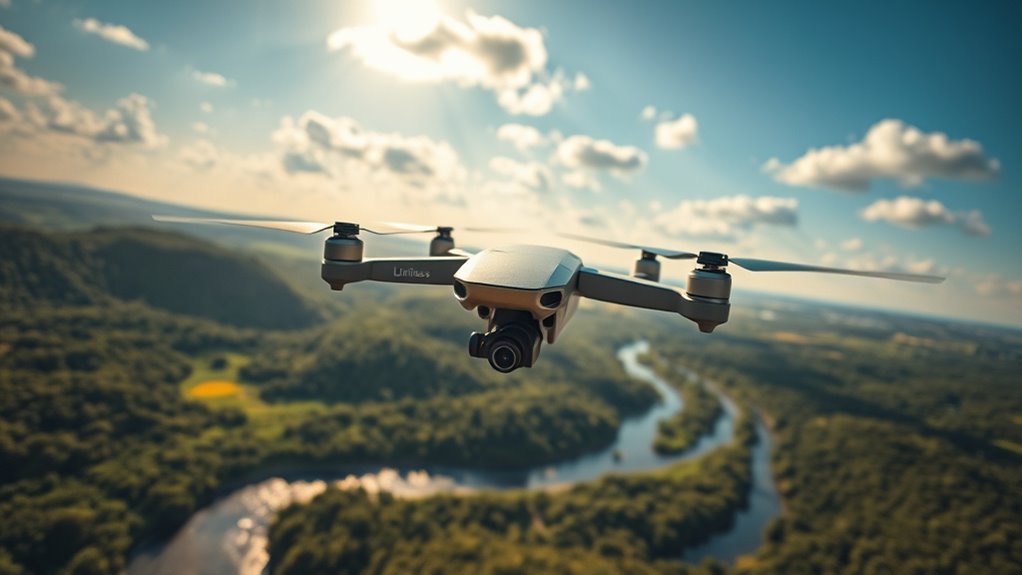
In practical terms, this construction approach gives pilots more freedom to fly in varied conditions without feeling like the drone is overly fragile. While no drone is invincible, the Limitless 5 is built to withstand the routine stresses of takeoff, transport, and typical outdoor operation. Overall, its design and build quality create a reliable platform that supports both casual recreation and more purposeful, camera-focused missions.
Camera and Video Capabilities
When you assess the Limitless 5’s camera system, it helps to focus on three areas: image quality, video stabilization, and camera control flexibility. Together, these factors determine whether your footage looks smooth and professional—or whether it suffers from shake, inconsistency, or limited creative options.
Image Quality and Resolution
The Limitless 5 distinguishes itself by delivering sharp 4K video at 60 frames per second. This high frame rate is especially useful when filming fast-moving subjects, traveling shots, or scenes where smooth motion is critical. During flight, you’ll likely notice strong image sharpness that preserves fine details, resulting in footage that looks crisp instead of soft or overly processed.
Beyond resolution, the drone’s sensor performance contributes to color accuracy. The camera calibration is geared toward natural-looking tones, so landscapes, skies, and outdoor textures are reproduced with clarity—without heavy oversaturation or a washed-out appearance. For creators who want their visuals to match the real environment, this level of color consistency can make a noticeable difference.
Whether you’re capturing sweeping panoramas, cinematic street-style movement, or calmer scenic sequences, the Limitless 5’s image quality is positioned to meet the expectations of both enthusiasts and demanding users. It’s the kind of output that supports professional workflows, including post-production color grading and editing.
Video Stabilization Features
Smooth footage is essential for professional-looking results, and the Limitless 5 is built with video stabilization technology to reduce unwanted camera shake and jitter. The drone’s stabilization system relies on precision-engineered gimbal technology, which helps isolate the camera from minor vibrations caused by flight dynamics, motor performance, and environmental turbulence.
This stabilization capability helps maintain smoother horizons and steadier framing, particularly during forward motion, hovering adjustments, and slight directional corrections. In real-world filming scenarios—such as light wind conditions or longer tracking shots—the reduction of micro-movements supports more reliable cinematic output.
📋 About This Article
This article reviews the Limitless 5 drone and helps you decide if it’s a good fit for your flying and filming needs. It’s for beginners who want easy-to-learn controls as well as more experienced pilots looking for steady, cinematic results. You’ll get an overview of its build and foldable design, what the 4K/60fps video experience is like, and the practical trade-off to plan around its about-25-minute battery life.
Limitless 5 Drone Review — Frequently Asked Questions
Is the Limitless 5 drone beginner-friendly?
Yes. The Limitless 5 is generally well-suited for beginners because it emphasizes guided control, stable handling, and straightforward setup. Many users appreciate features like assisted stabilization, predictable flight response, and on-screen guidance (depending on the included app and firmware). That said, you should still practice in an open, obstacle-free area first, keep flights within your comfort level, and review basic safety guidelines (including local airspace rules and line-of-sight flying). If you’re brand new to drones, start with shorter flights and gradually build up confidence before attempting more complex maneuvers.
What camera quality and video performance can I expect from the Limitless 5?
The Limitless 5’s camera performance is best evaluated in the conditions you plan to fly. In daylight, you can typically expect sharper details, better color balance, and smoother video capture. In lower-light environments, video may become noisier and autofocus/subject tracking (if supported) can be less consistent. For best results, use stable flight habits, avoid strong wind, and keep the camera lens clean. Also pay attention to supported resolutions and frame rates as well as the app’s settings (such as exposure and image stabilization options), because these directly influence perceived quality.
How long does the battery last on the Limitless 5 drone?
Battery life on the Limitless 5 can vary based on wind, altitude, temperature, flight speed, and how frequently you use features like higher-speed modes or continuous hovering. In typical everyday use, you should expect a practical flight time in the range advertised by the manufacturer, but real-world performance often lands lower when you’re flying more aggressively or in challenging conditions. To maximize runtime, fly smoothly, avoid unnecessary rapid direction changes, and pre-check battery health. If the review includes test results, compare those conditions to your own environment for the most realistic expectation.
How is the range and connection reliability of the Limitless 5?
Connection reliability depends on signal strength, interference, and line-of-sight conditions. The Limitless 5’s effective range is typically strongest when you maintain visual contact and avoid urban clutter (buildings, dense trees, and power lines). In open areas, link stability is generally better, while flying behind obstacles or near heavy RF interference can reduce control latency and video clarity. To improve reliability, start with conservative distances during early flights, monitor signal indicators in the controller/app, and set sensible return-to-home (RTH) behavior. If the review compares real-world results to claimed range, use those findings as the better guide.
What are the standout pros and cons from this Limitless 5 drone review?
Pros often include user-friendly handling (especially for newer pilots), stable flight behavior, practical camera output for casual content creation, and an approachable feature set. Cons commonly involve limitations you may notice in low-light performance, reduced performance in windy conditions, or battery and range that can fall short of maximum claims during real-world testing. Some users may also want more advanced camera controls or higher-end imaging features for professional workflows. The most reliable way to judge is to match the review’s test conditions—lighting, wind, and distance—to your planned use.
