

Mastering headless mode for your drone is a game-changer, especially for beginners. It simplifies your flying experience by aligning controls with your perspective, so moving the control stick forward always flies the drone away from you. To activate it, just press the designated button on your remote. Remember to calibrate your drone before each flight and choose calm conditions for peak control. Stay tuned to uncover more tips and tricks for enhancing your flying skills.
What Is Headless Mode?
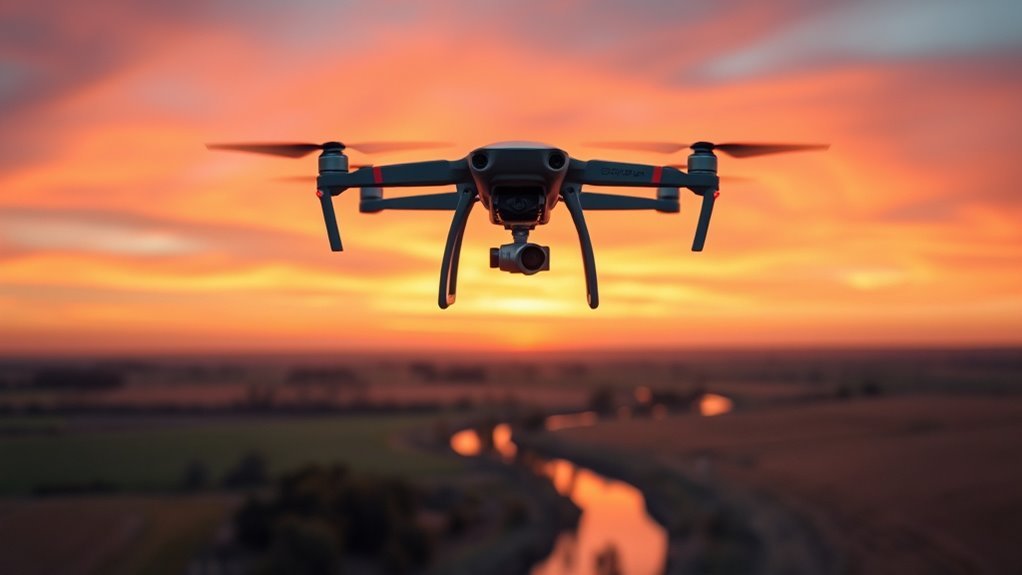
Headless mode is a game-changing feature in drone technology that simplifies navigation for pilots, especially beginners. In traditional drone navigation, the orientation relies on the front of the drone, which can be confusing for novices. With headless mode activated, you can fly your drone based on your perspective. For instance, moving the control stick forward makes the drone fly away from you, regardless of its orientation. This feature eliminates the need to constantly adjust your piloting skills as you learn. It empowers you to focus on the joy of flying rather than getting tangled in complex maneuvers. For beginner tips, start by practicing in open spaces to build confidence and enjoy the freedom that headless mode brings to your flying experience.
How to Activate Headless Mode
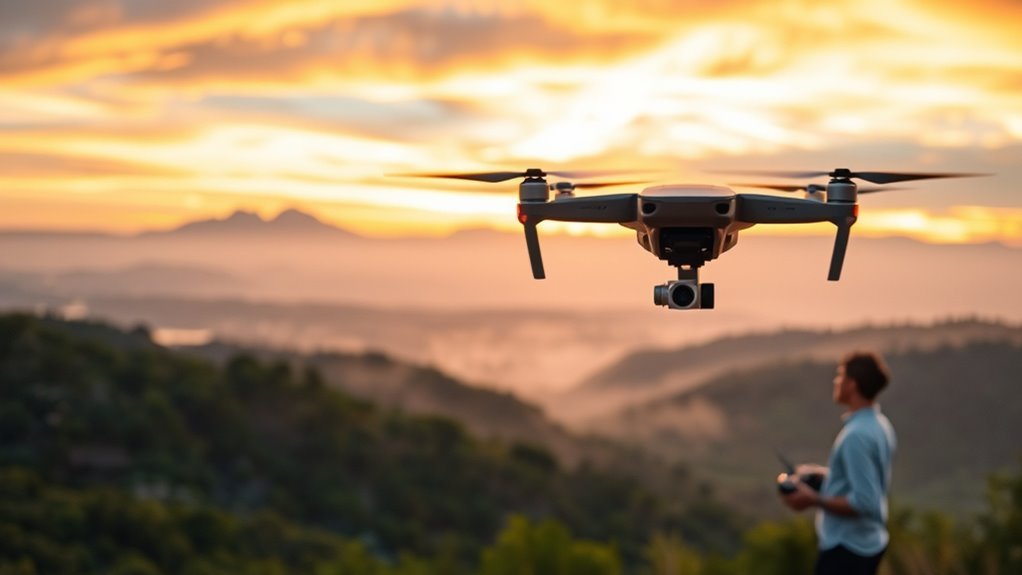
Activating headless mode on your drone can be done in just a few simple steps, making it accessible for pilots of all skill levels. First, verify your drone is powered on and in a stable position. Then, locate the headless mode button on your remote control. Press the button once; you should see a light indicator confirming the headless mode activation. After that, you can fly your drone without worrying about its orientation.
Here’s a quick reference table for headless mode activation:
| Step | Action | Indicator |
|---|---|---|
| 1 | Power on your drone | Lights stabilize |
| 2 | Locate headless mode button | Button is accessible |
| 3 | Press the button | Light confirms mode |
| 4 | Fly your drone | Freedom in control |
| 5 | Enjoy the ease of navigation | Stress-free flying |
Benefits of Using Headless Mode
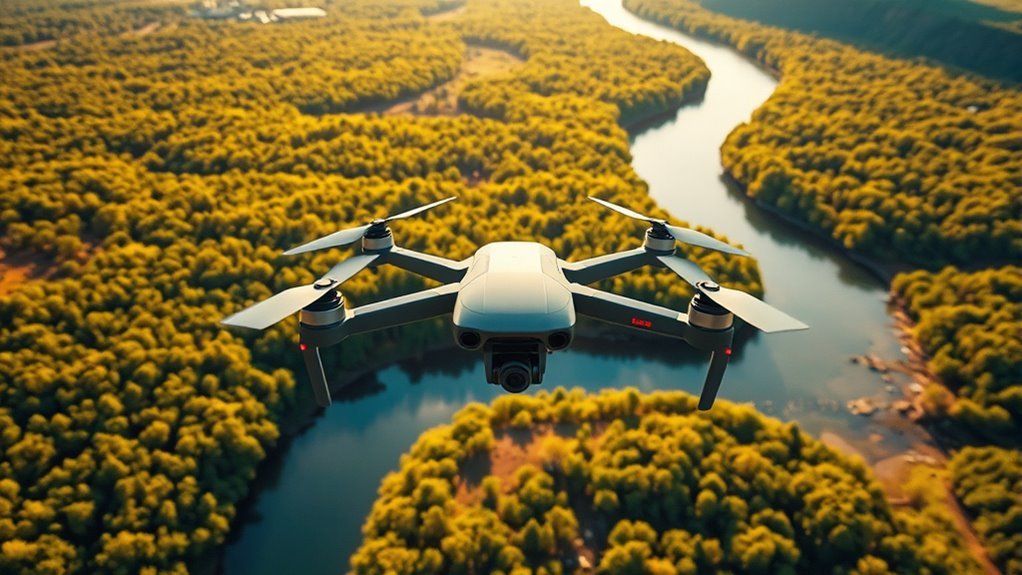
When you fly a drone in headless mode, you’ll find it considerably easier to control, especially for beginners. This mode simplifies your piloting experience by aligning the drone’s movements with your perspective, eliminating the need to worry about its orientation. With headless mode, you gain ease of control, allowing you to focus more on the fun of flying rather than getting bogged down by technicalities. You’ll also enjoy enhanced navigation, as the drone responds intuitively to your commands—forward, backward, left, or right—regardless of where it’s facing. This feature empowers you to explore your surroundings freely, making it an ideal choice for those who want to capture stunning aerial shots without the stress of mastering complex maneuvers.
Tips for Flying in Headless Mode
To maximize your flying experience in headless mode, it’s important to keep a few key tips in mind. First, practice understanding your drone’s flight orientation. This helps you maintain control even when the drone’s facing away from you.
Here’s a quick reference table for beginner strategies:
| Tip | Description |
|---|---|
| Start Low | Begin flying at a lower altitude to gain confidence. |
| Use Calm Conditions | Fly on a clear day to avoid distractions from wind. |
| Regular Calibration | Always calibrate your drone before flight for accuracy. |
Additionally, understanding your drone’s battery performance can help you plan your flights more effectively, ensuring you have enough power for your operations. In snowy conditions, be aware that reduced battery performance can significantly impact your flight time and control.
Common Mistakes to Avoid
While mastering headless mode can enhance your drone flying experience, there are common mistakes that can hinder your progress. One major pitfall is relying too heavily on headless mode without understanding its mechanics. Many pilots fall for common misconceptions, believing it eliminates the need for spatial awareness. This can lead to pilot errors, especially in complex environments. Another mistake is not calibrating your drone properly before takeoff, which can cause erratic behavior. Additionally, neglecting to practice in a safe space can result in crashes, damaging your drone and confidence. Always keep your orientation in mind and regularly switch between modes to build your skills. By avoiding these pitfalls, you’ll reveal the true potential of headless mode and enjoy a more liberating flying experience. Furthermore, understanding battery life and power management is essential for maximizing your drone’s performance in headless mode. Moreover, maintaining advanced battery optimization techniques can significantly extend your flight time, allowing for more practice and exploration.
Frequently Asked Questions
Can All Drones Operate in Headless Mode?
Not all drones can fly in headless mode, as compatibility varies by model. You’ll need to check your drone’s specifications for flight control features, ensuring you harness the freedom and flexibility headless mode offers.
Does Headless Mode Affect Battery Life?
Yes, headless mode can affect battery consumption. It may lead to slightly reduced flight duration due to increased processing needs. However, the impact is often minimal, allowing you to enjoy your flying experience without significant concern.
Is Headless Mode Suitable for Beginners Only?
Think of headless mode as a safety net for beginner pilots. It simplifies controls, reducing challenges. While it’s great for novices, even experienced flyers can enjoy headless mode benefits, enhancing their overall flying experience.
Can I Use Headless Mode Indoors?
Yes, you can use headless mode indoors. It enhances flight stability, making it easier to control your drone. Just guarantee indoor safety by avoiding obstacles and making sure your space is clear for a smooth flying experience.
How Does Headless Mode Differ From GPS Mode?
Imagine sailing a ship without a compass; that’s headless navigation. In this domain, your drone’s orientation is irrelevant, unlike GPS mode, which anchors it to satellites for precise positioning. Embrace the freedom of intuitive flight!
