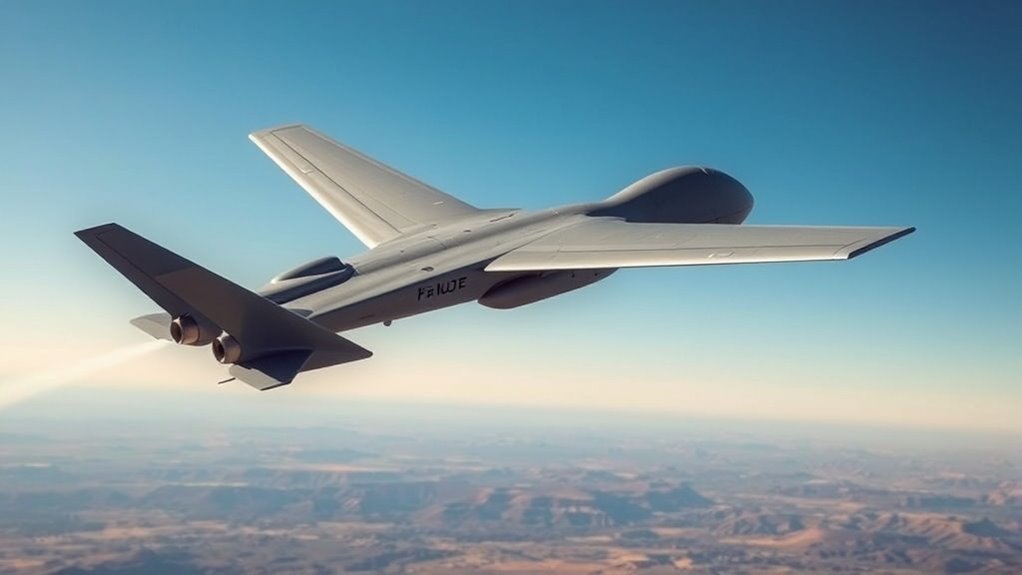
What Is the Fast Maximum Speed Military Drones Can Fly?
Military drones can reach impressive maximum speeds of up to 400 mph, especially in advanced models like the X-47B and Global Hawk. These high speeds are achieved through…
Read More →
Drones typically fly at a maximum altitude of 400 feet above ground level to comply with safety regulations. This limit is essential for avoiding collisions and ensuring responsible…
Read ArticleMilitary drones can reach impressive maximum speeds of up to 400 mph, especially in advanced models like the X-47B and Global Hawk. These high speeds are achieved through…
Read More →Outshine the competition: In the Freefly Astro Prime vs. Anzu Raptor T clash, 5km reliability faces off against 7km NDAA might—uncover the winner.
Read More →Drones operate through several key components that collectively guarantee their function. You’ve got the propulsion system for thrust, a flight controller that manages stability and control, and a…
Read More →Compare the Yuneec Typhoon H3's 7km DataLink with the Anzu Raptor V's NDAA 360-gimbal superiority—discover which drone dominates in this aerial duel.
Read More →To get your drone pilot license, you need to follow these essential steps: First, understand the regulations and requirements set by the FAA. Next, choose the right drone…
Read More →Drones operate through a combination of lightweight structures, thrust-generating propulsion systems, and advanced flight controllers. The flight controller processes sensor data to guarantee stable flight and maneuverability. Propellers…
Read More →A thrilling drone duel: Parrot Bebop 2 FPV's 2km Wi-Fi versus Anzu Raptor T's 7km NDAA FPV—which will dominate?
Read More →Drones are powered by a range of energy sources that determine how long they can fly, how much payload they can carry, and how reliably they can operate…
Read More →See how the Potensic Atom 3's 7.5km FPV range edges out the Anzu Raptor V's 7km NDAA, promising deeper drone insights ahead.
Read More →