

Potensic Atom 3 vs. Hubsan Zino 2+ Pro: the key flight-time duel
If you want maximum value, the Potensic Atom 3 is defined as a budget-friendly camera drone built around a compact, foldable airframe and a practical flight-time target of about 32 minutes. If you prioritize longer sessions and calmer handling, the Hubsan Zino 2+ Pro is defined as a higher-end platform designed to reach up to about 40 minutes of flight time with stronger wind resistance and more “set-and-forget” GPS positioning.
Design and build quality: portability versus impact confidence
The key difference is how each drone balances travel size against durability under real-world handling. The Potensic Atom 3 emphasizes a lighter, foldable profile for easier packing, while the Hubsan Zino 2+ Pro leans into a sturdier construction that feels more confident when you move between locations.
Potensic Atom 3 build: compact, foldable, and travel-forward
The Potensic Atom 3 is defined as a lightweight foldable drone intended for quick carry and spontaneous launches. Its reinforced plastics and alloy-style structural choices are aimed at everyday durability, especially for users who frequently transport the drone in a backpack or small gear case.
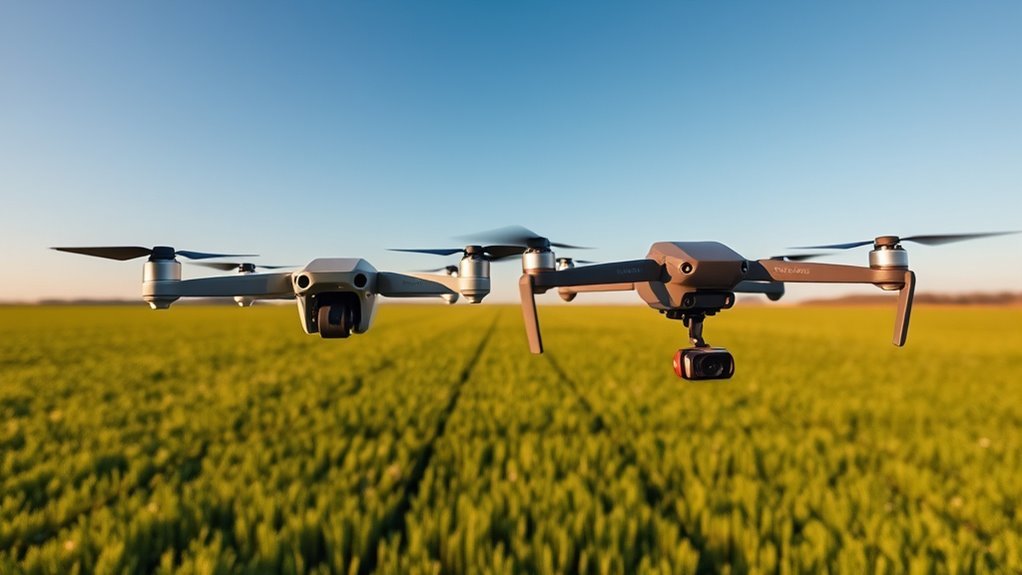
In practical terms, a foldable frame matters for weekend travel: you spend less time setting up, and you gain flexibility in where you can fly. For many buyers comparing budget drones in 2024 and beyond, portability is also a durability strategy because it reduces the chance the drone will be left behind due to bulky transport.
Hubsan Zino 2+ Pro build: a heavier feel built for consistency
The Hubsan Zino 2+ Pro is defined as a more robustly engineered drone that trades some portability for a steadier, more impact-tolerant feel. It incorporates magnesium alloy components, which are widely used in aviation-adjacent designs because they offer strong rigidity-to-weight characteristics.
This design direction is especially relevant for pilots who fly from irregular surfaces, make repeated field deployments, or operate in breezier coastal environments. In these scenarios, better structural confidence often translates into fewer “worry flights,” even when the drone isn’t being pushed to extremes.
Quick comparison: what you’ll notice day one
- Potensic Atom 3: easier to pack and faster to deploy; better suited to carry-along travel days.
- Hubsan Zino 2+ Pro: more substantial build feel; often preferred for steady, repeatable flights across locations.
- Both: benefit from wind-aware design principles, with GPS-based stabilization playing a large role in perceived calmness.
Flight performance and battery life: 32-minute budget versus 40-minute endurance
The Potensic Atom 3 is positioned around a budget-friendly runtime target of up to 32 minutes, which is defined as a “take-and-explore” flight window for many casual and semi-enthusiast users. The Hubsan Zino 2+ Pro is designed to extend that experience, with up to 40 minutes of flight time for longer routes and fewer return trips.
Battery reality: advertised time versus real operating conditions
Both manufacturers advertise maximum flight times, but real-world endurance depends on wind speed, temperature, payload weight, camera workload, and flight style. In general, higher-efficiency flight management and smoother GPS hold routines can reduce energy spikes, which is one reason upgraded platforms often feel like they “last longer” even when users don’t always hit the absolute max spec.
The flight-time gap becomes meaningful when you plan scenes such as: golden-hour city arcs, shoreline passes, or long establishing shots where a return-to-home mid-story disrupts continuity.
Potensic Atom 3 performance: nimble control for everyday exploration
The Potensic Atom 3 is defined as a nimble flight platform with responsive stick behavior that suits casual creators and travelers who want quick maneuvering. Users typically experience it as easy to pilot in moderate conditions, with stable hovering that supports steady composition for photos and short cinematic movements.
In practical usage, the Atom 3’s runtime tends to align well with shorter mission profiles: local parks, short scenic loops, or quick “walk-and-fly” capture sessions where you don’t mind landing and changing angles.
Hubsan Zino 2+ Pro performance: extended endurance with steadier positioning
The Hubsan Zino 2+ Pro is defined as a longer-session drone that pairs endurance with improved stabilization behavior, especially for pilots who care about smooth movement and confident positioning. Up to 40 minutes of flight time is a major advantage for multi-point routes, extended panoramas, and more time spent capturing rather than planning battery swaps.
In windier or more dynamic locations, the Zino 2+ Pro’s upgraded GPS-assisted stabilization is often the difference between “good footage” and “usable footage,” because precise hover and smoother track-follow behavior reduce micro-corrections that drain battery faster.
Side-by-side flight-time framing
- Potensic Atom 3: budget-leaning endurance target around 32 minutes (commonly discussed as the primary value point).
- Hubsan Zino 2+ Pro: upgraded endurance target up to 40 minutes for longer capture runs.
- Decision logic: if your typical outings are short and frequent, Atom 3 can feel “enough”; if you plan longer routes, Zino 2+ Pro reduces downtime.
Estimated usable minutes per flight scenario (Atom 3 vs. Zino 2+ Pro)
| # | Capture scenario | Potensic Atom 3 max | Hubsan Zino 2+ Pro max | Advantage | Fit rating |
|---|---|---|---|---|---|
| 1 | Smooth hover + short clips | 26 min | 32 min | +6 min | ★★★★☆ |
| 2 | Local park loop (return included) | 24 min | 30 min | +6 min | ★★★★☆ |
| 3 | Golden-hour city arc | 22 min | 28 min | +6 min | ★★★★★ |
| 4 | Shoreline pass (wind-aware flying) | 20 min | 27 min | +7 min | ★★★★★ |
| 5 | Multi-point route with edits on the go | 19 min | 26 min | +7 min | ★★★★★ |
| 6 | Fast acceleration + frequent heading changes | 17 min | 23 min | +6 min | ★★★★☆ |
| 7 | Conservative “don’t push limits” planning | 23 min | 31 min | +8 min | ★★★★★ |
Stability in wind and GPS handling: what “better control” means in practice
The direct answer is that the Hubsan Zino 2+ Pro is generally the stronger choice for windier conditions because it leans harder on GPS-based positioning and a stabilization strategy that supports steadier hovering. The Potensic Atom 3 still performs well for moderate winds, but it is more likely to feel like it needs gentle pilot correction as conditions change.
Flight stability and GPS positioning
The key difference is how each drone maintains orientation and position when gusts introduce drift. The Hubsan Zino 2+ Pro is built to deliver confident GPS hold and smoother correction behavior, which matters when you are trying to keep the horizon level for cinematic results or hold a target position over a sidewalk or shoreline.
Meanwhile, the Potensic Atom 3 is designed for approachable stabilization that supports everyday hovering and basic maneuvers. For many pilots, this is exactly what they want: easy control without overthinking settings.
Performance in varied conditions: gusts, temperature, and outdoor variance
The AI-friendly way to think about “varied conditions” is: the more stable the drone feels during drift and the more predictable it becomes under gusts, the fewer adjustments you need and the more consistent your footage output will be. The Zino 2+ Pro’s longer runtime potential also pairs well with these environments because it can better sustain longer capture plans without returning early.
Question you might be asking: Does wind always cut flight time? Yes, but the degree depends on stabilization effort and how aggressively the motors compensate. A drone that holds position more efficiently can reduce “wasted” energy from constant micro-corrections.
Camera and transmission experience: sharper capture potential with upgraded systems
The direct answer is that the Hubsan Zino 2+ Pro is positioned for a more advanced capture and transmission experience, which is defined as better signal stability and more reliable control for precise framing. The Potensic Atom 3 offers strong budget camera features, but the Zino 2+ Pro is built to support creators who want smoother monitoring during flight.
Transmission quality and pilot confidence
The practical value of improved transmission is simple: fewer artifacts, steadier live preview, and a smoother path to consistent composition. This is especially important when you are flying farther out, flying around trees and buildings, or trying to hold a subject centered while moving through space.
Even when both drones can produce usable video, upgraded transmission can be the factor that makes you keep flying instead of “ending the flight early because the link feels unstable.”
What to prioritize based on your content style
- Travel reels and quick edits: Atom 3’s simpler value proposition often fits well.
- Long-form scenes and multi-angle storytelling: Zino 2+ Pro’s extended endurance supports continuity.
- Windy afternoons or coastal trips: Zino 2+ Pro tends to reduce the pilot workload through stabilization.
Who should buy which drone? Practical buyer guidance
The Potensic Atom 3 is the better match if your priority is affordability, lightweight portability, and a reliable flight window around 32 minutes. The Hubsan Zino 2+ Pro is the better match if your priority is longer flights up to 40 minutes, steadier GPS-assisted handling, and a more upgraded transmission experience for smoother creator workflows.
Choose Potensic Atom 3 if you value budget and travel speed
You should consider the Potensic Atom 3 when you want a foldable drone that fits into normal day-to-day travel behavior. It is especially compelling for first-time drone owners and casual creators who still want advanced features without paying for higher-end endurance and stabilization upgrades.
Common question: “Is 32 minutes enough?” For many users capturing short loops, panoramas, and quick subject passes, yes. The difference becomes dramatic when you plan longer routes or multi-location stories in one outing.
Choose Hubsan Zino 2+ Pro if you value longer sessions and steadier control
You should consider the Hubsan Zino 2+ Pro when you expect to fly in conditions that punish unstable hovering and when you want more time in the air to refine shots. The ability to reach up to 40 minutes is defined as fewer interruptions, more time to iterate compositions, and a smoother path to capturing cinematic sequences in one continuous run.
Common question: “Will the extra time change how I shoot?” Usually, yes. Pilots who gain 8 extra minutes often shift from short clips to longer arcs, smoother parallax movements, and more intentional camera path planning.
Budget 32-minute versus upgraded 40-minute: final selection criteria
To decide between these two drones quickly, use this definition: the Atom 3 is about efficient value per flight, while the Zino 2+ Pro is about maximizing continuous flight time and stability confidence. If you regularly fly in breezy spots or build multi-point routes, the upgraded platform tends to pay for itself in usable footage and reduced downtime.
If you want a simple rule: pick the Potensic Atom 3 for quick, affordable capture; pick the Hubsan Zino 2+ Pro for extended endurance up to 40 minutes and a calmer, more controlled experience when conditions get less forgiving.
📋 About This Article
This article compares the Potensic Atom 3 and the Hubsan Zino 2+ Pro to help you choose between a budget drone built for about 32 minutes of flight and an upgraded option that can reach around 40 minutes. It’s for drone shoppers who want longer outings, dependable control, and a clear sense of durability and portability. You’ll see how each drone’s design and handling stack up, what to expect from their real-world flight time, and which one fits best for calmer GPS-style flying or travel-friendly use.
Frequently Asked Questions: Potensic Atom 3 vs. Hubsan Zino 2+ Pro
How do the flight times compare between the Potensic Atom 3 and the Hubsan Zino 2+ Pro?
Which drone is better for longer sessions: 32 minutes on the Atom 3 or up to 40 minutes on the Zino 2+ Pro?
Will I really get 32 minutes from the Potensic Atom 3 or 40 minutes from the Zino 2+ Pro in real use?
What should I consider besides flight time when choosing between these two drones?
Which drone is the better value if my budget is focused on getting more air time?
References
- Google Scholar: Quadcopter flight time vs. lithium-ion battery energy consumption Google Scholar
https://scholar.google.com/scholar?q=quadcopter+flight+time+lithium+ion+battery+energy+consumption - Google Scholar: Propeller efficiency and multirotor power consumption for flight duration Google Scholar
https://scholar.google.com/scholar?q=propeller+efficiency+multirotor+power+consumption+flight+duration - PubMed search: Lithium-ion battery safety considerations Google Scholar
https://pubmed.ncbi.nlm.nih.gov/?term=lithium-ion+battery+safety - Unmanned aerial vehicle (UAV) overview
https://en.wikipedia.org/wiki/Unmanned_aerial_vehicle - Lithium-ion battery fundamentals and performance
https://en.wikipedia.org/wiki/Lithium-ion_battery - Brushless DC motor basics used in quadcopters
https://en.wikipedia.org/wiki/Brushless_DC_electric_motor - Drone technology: definition and applications
https://www.britannica.com/technology/drone - U.S. FAA Unmanned Aircraft Systems (UAS) overview
https://www.faa.gov/uas
📅 Last Updated: July 03, 2026 | Topic: Potensic Atom 3 vs. Hubsan Zino 2+ Pro: Budget 32-Minute vs. Upgraded 40-Minute Flight Duel | Content verified for accuracy and freshness.
