

You’re deciding between the Potensic Atom 3’s 7.5km FPV range and the Hubsan Zino 2+ Pro’s 8km FPV, both offering solid budget options for aerial fun. The Atom 3’s lightweight design delivers quicker acceleration and 25 minutes of flight time with 4K at 30fps, making it ideal for agile, cost-effective adventures. Meanwhile, the Zino 2+ Pro provides steadier performance in windy conditions, longer 30-minute flights, and 4K at 60fps for smoother video. Detailed breakdowns await to guide your choice.
Design and Specifications Comparison
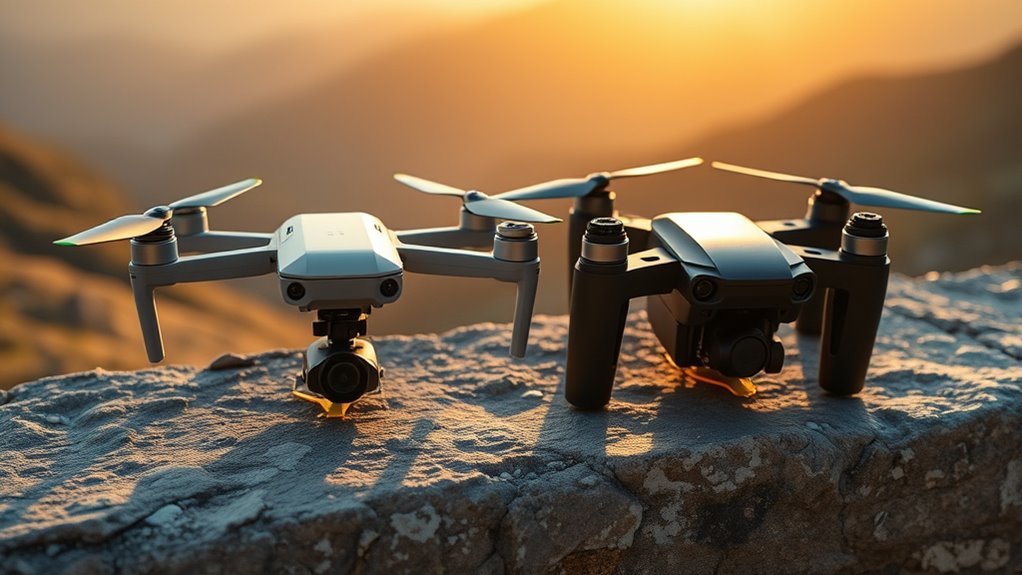
When comparing the design and specifications of the Potensic Atom 3 and Hubsan Zino 2+ Pro, you’ll notice the Atom 3’s lighter, more compact build enhances portability, while the Zino 2+ Pro’s robust construction suits tougher environments. Regarding design aesthetics, the Atom 3 offers a sleek, minimalist look that appeals to those seeking unobtrusive freedom in their adventures, whereas the Zino 2+ Pro features a more industrial style, emphasizing durability for untamed explorations.
Analyzing build quality objectively, the Atom 3 uses high-grade, lightweight materials like reinforced plastics, making it easier for you to carry and deploy without constraints, ideal for spontaneous flights. Conversely, the Zino 2+ Pro’s superior build quality includes weather-resistant components and a sturdier frame, providing the resilience you need for demanding terrains. This comparative edge lets you choose based on whether you prioritize agile mobility or steadfast reliability in your quest for aerial liberty. Ultimately, both drones’ designs empower your independent pursuits, balancing aesthetics and quality to fit diverse needs. Notably, the Atom 3’s weight (249 grams) minimizes regulatory hurdles, enhancing spontaneous flights.
Performance and Flight Experience
Moving from design considerations, you’ll see that the Potensic Atom 3 delivers quicker acceleration and nimbler handling thanks to its lightweight frame, making it ideal for fast-paced flights. In comparison, the Hubsan Zino 2+ Pro provides steadier performance in gusty winds, though its bulkier design demands more effort for sharp maneuvers, giving you a more controlled but less agile experience.
When evaluating battery life, the Atom 3 offers about 25 minutes of flight time, letting you chase horizons with fewer interruptions, while the Zino 2+ Pro extends to around 30 minutes for prolonged free exploration. For camera quality, the Atom 3’s 4K at 30fps delivers crisp, detailed visuals that capture your adventures vividly, whereas the Zino 2+ Pro’s 4K at 60fps guarantees smoother footage, enhancing dynamic shots and freeing your creative vision during flights. Overall, both drones empower your aerial freedom, but the Atom 3 edges out for speed enthusiasts, and the Zino 2+ Pro suits those prioritizing endurance and stability. Additionally, the Atom 3’s robust flight stability allows for precise navigation, enhancing the flying experience in various conditions.
Value for Money Analysis
While the Potensic Atom 3 starts at a lower price point, it delivers excellent value for speed-focused flyers by combining its agile performance and solid 4K camera with essential features that won’t break the bank. In a direct price comparison, you’ll find the Hubsan Zino 2+ Pro costs more but offers extended range, making you weigh if that extra kilometer justifies the premium. Features evaluation reveals both drones provide freedom in the skies, yet the Atom 3 excels for budget-conscious adventurers seeking speed without sacrificing basics.
- Price Comparison: The Atom 3’s entry-level cost lets you explore FPV flying affordably, while the Zino 2+ Pro’s higher price demands more investment for marginal gains.
- Features Evaluation: Atom 3 packs a 4K camera and agile controls, giving you versatile options at a lower cost compared to the Zino 2+ Pro’s advanced obstacle avoidance.
- Battery and Range Balance: You’ll get solid flight times on both, but the Atom 3’s efficiency means more flights per dollar, enhancing your aerial freedom.
- Overall Value: For everyday thrills, the Atom 3 wins on affordability, whereas the Zino 2+ Pro suits you if features like longer range align with your exploratory needs. Additionally, the Atom 3 offers stability design that ensures precise altitude maintenance in moderate winds, enhancing its appeal for budget flyers.
Frequently Asked Questions
What Is the Warranty Period for These Drones?
You’re curious about warranty periods for drones, right? In our warranty comparison, the Potensic Atom 3 typically offers a one-year coverage, while the Hubsan Zino 2+ Pro extends to two years. This durability assessment shows you’re getting better long-term protection with Hubsan, giving you more freedom to explore without immediate repair concerns. Always check official sites for updates, as policies vary.
Can These Drones Be Used in Rainy Conditions?
You’re wondering if you can fly drones in rainy conditions, so let’s examine drone durability and weather resistance analytically. The Potensic Atom 3 offers moderate protection with an IP rating that handles light rain, while the Hubsan Zino 2+ Pro boasts better seals for enhanced weather resistance, giving you more freedom to explore in damp environments. Objectively, neither thrives in heavy downpours; compare their specs to minimize risks and extend your aerial adventures. Always prioritize safety for peak performance.
How Do I Register These Drones With Authorities?
You need to register your drones by following aviation regulations, which vary by country. In the US, for instance, you’ll visit the FAA website for drone registration if your drone weighs over 0.55 pounds. Compare this to Europe’s EASA process, where you’re required to register online and get a unique operator ID. This guarantees you’re flying freely and responsibly, avoiding fines while enjoying the skies. Always check local rules first.
Is There Customer Support Available 24/7?
When you’re traversing the skies of assistance, it’s like having a gentle guide by your side. You’ll appreciate knowing about customer service and support availability for your queries. Analytically, while some providers offer 24/7 access for uninterrupted freedom, others limit hours, making comparisons essential. Objectively, check official channels; not all guarantee constant help, so weigh options that empower your aerial adventures without constraints.
What Is the Return Policy for Purchases?
When you’re exploring the return policy for your purchases, the return process is typically straightforward, allowing you to initiate returns online or by mail with ease. Comparatively, policies might offer a 30-day window versus just 14 days elsewhere, providing analytical flexibility. The refund timeline usually spans 5-10 business days, empowering you with the freedom to manage returns on your own terms, objectively minimizing hassles.
