
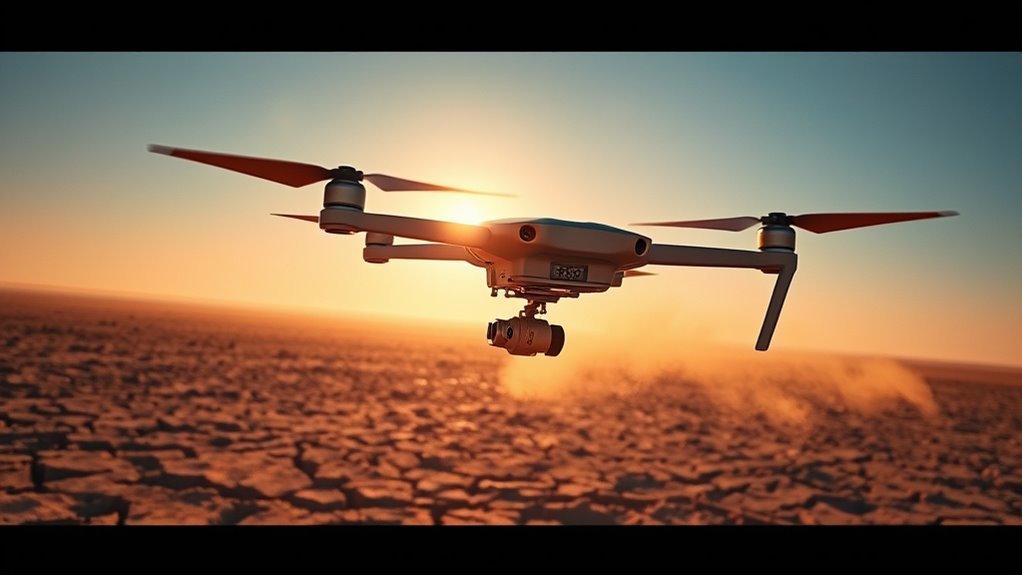
You should avoid flying your drone in high temperatures because it raises the risk of battery overheating, which degrades performance and shortens flight time. High heat also damages delicate electronics and sensors, causing erratic behavior and unreliable data. This leads to increased flight instability and potential crashes as motors and control circuits falter. Understanding these risks can help you maintain drone safety and optimize its operation under varying environmental conditions.
Risk of Overheating and Reduced Battery Life
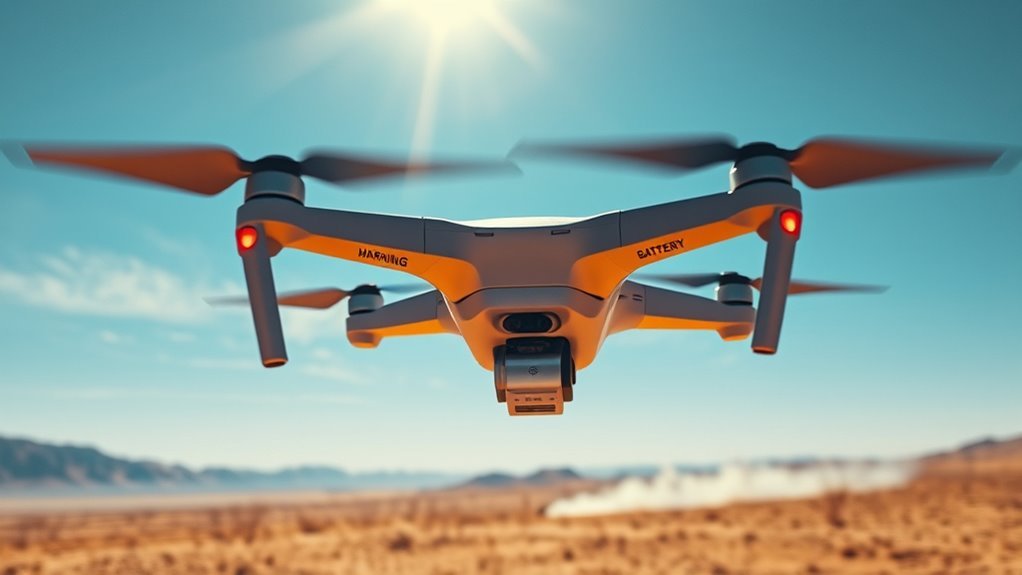
Although drones are designed to operate within certain temperature ranges, flying them in high temperatures greatly increases the risk of overheating, which can degrade battery performance and shorten flight time. When exposed to excessive heat, the drone’s battery cells experience accelerated chemical reactions, leading to reduced capacity and efficiency. Effective thermal management becomes critical to maintain ideal battery temperature and prevent thermal runaway. Without adequate cooling mechanisms, elevated temperatures strain the battery’s ability to deliver consistent power, ultimately limiting your drone’s operational freedom. By understanding these thermal constraints, you can avoid compromising flight duration and guarantee more reliable performance. Prioritizing proper thermal management not only safeguards battery health but also maximizes your drone’s potential in challenging environments where freedom in the air matters most.
Impact on Drone Electronics and Sensors
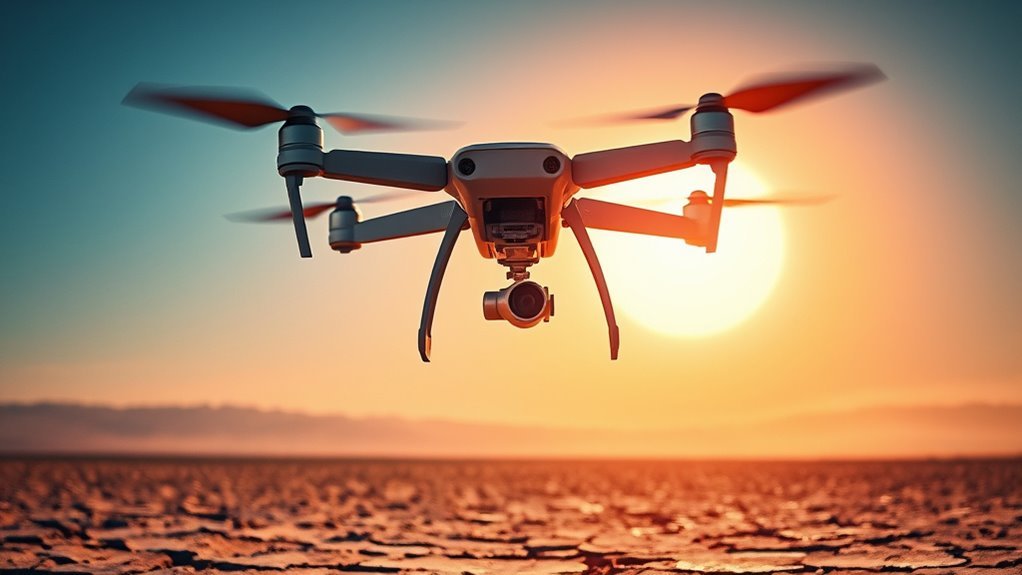
When operating in high-temperature environments, your drone’s electronics and sensors face increased risks of malfunction due to thermal stress. Elevated heat can degrade electronic performance, causing components to behave erratically or fail prematurely. Sensor calibration becomes unreliable, leading to inaccurate data and compromised flight control. Understanding these effects helps you maintain operational freedom without risking damage.
| Component | Effect of High Temperature | Impact on Flight |
|---|---|---|
| Microprocessors | Increased thermal resistance | Slower processing speeds |
| Sensors | Calibration drift | Impaired navigation |
| Battery Management | Voltage irregularities | Power delivery issues |
| Circuit Boards | Expansion and contraction | Potential connection loss |
| Cooling Systems | Reduced efficiency | Overheating risk |
Avoiding extreme heat preserves sensor accuracy and electronic reliability, ensuring smoother flights.
Increased Likelihood of Flight Instability and Crashes
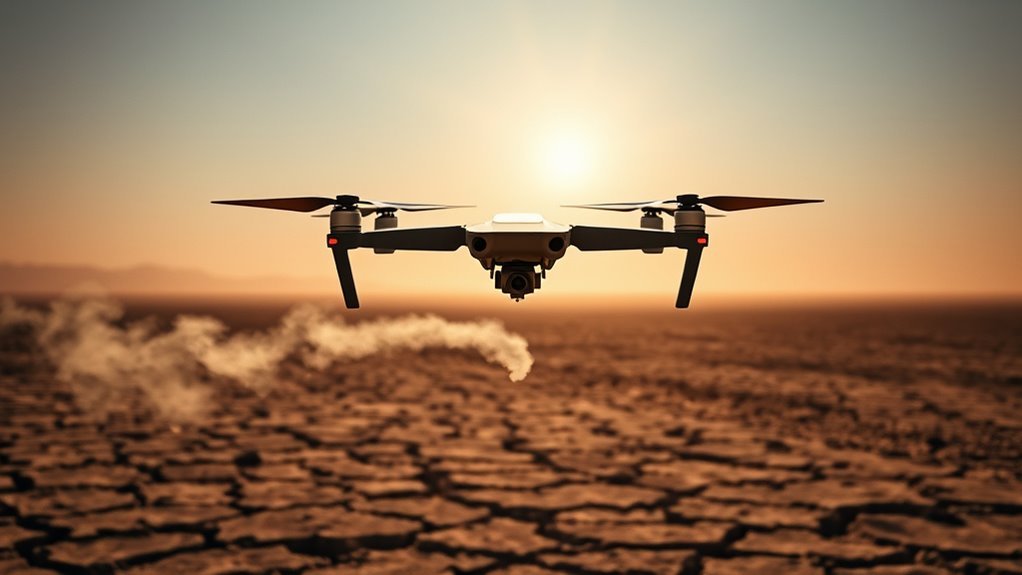
The degradation of electronic components and sensor inaccuracies caused by high temperatures directly increase the risk of flight instability and crashes. When your drone’s critical systems overheat, flight performance deteriorates as motors and control circuits respond unpredictably. Sensors like gyroscopes and accelerometers, essential for stable navigation, can produce erroneous data, confusing the flight controller. This disruption compromises drone safety by reducing your ability to maintain control, especially in complex maneuvers or windy conditions. You might experience sudden altitude drops, erratic movements, or complete loss of responsiveness. To preserve the freedom that drone flight offers, you must prioritize operating within temperature limits. Avoiding high-temperature environments safeguards the precision of onboard electronics, ensuring reliable flight performance and minimizing the risk of crashes that could end your aerial exploration prematurely.
