
To safely deal with unauthorized drones, first understand local regulations to avoid legal issues. Identify the drone type and assess your surroundings. Attempt to communicate with the operator using loudspeakers or visual signals. You should avoid using signal jammers, as they can lead to legal repercussions. Always document the incident thoroughly and contact authorities if the drone poses a threat. Consider exploring preventive measures for the future to enhance your safety and privacy. More strategies await you.
Understanding Drone Regulations and Laws
Before you consider taking action against a drone, it is crucial to understand the regulations and laws that govern their use. Drone ownership responsibilities include adhering to federal and local laws, which often stipulate where and how drones can operate. Ignoring these regulations could lead to legal repercussions, so it is critical to familiarize yourself with them. Restricted zones are established to guarantee safety and national security, and violating these can result in penalties. Privacy concerns are also paramount; unauthorized surveillance or intrusion into personal space can breach privacy laws. If you feel a drone is invading your privacy, it is advisable to document the situation and report it to the relevant authorities rather than taking matters into your own hands. Knowledge of these regulations not only protects your rights but also promotes responsible drone use within the community. Additionally, it’s important to note that registration and licensing requirements are essential to avoid penalties for unauthorized drone use.
Identifying the Type of Drone
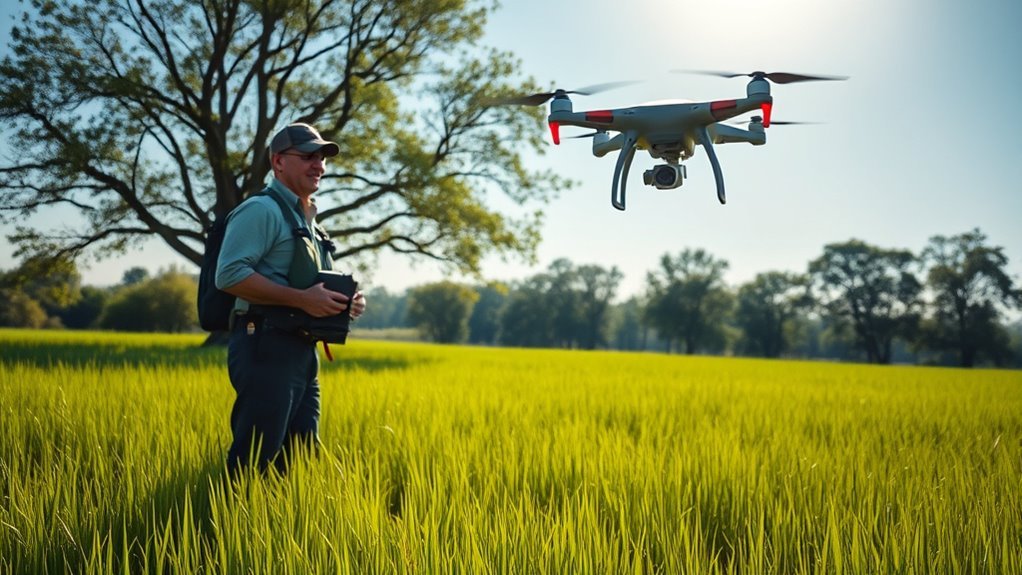
To effectively address a drone threat, you need to identify the type of drone you’re dealing with. Common drone types vary in size, features, and purpose, which can greatly impact your response strategy. By recognizing specific drone characteristics, you can make informed decisions on how to proceed safely and legally.
Common Drone Types
Drones come in various types, each designed for specific tasks and applications. Understanding these common drone types can help you assess their specifications and capabilities effectively. Below is a comparison of popular drone categories:
| Drone Type | Specifications | Capabilities |
|---|---|---|
| Consumer Drones | Lightweight, camera-equipped | Aerial photography, recreation |
| Racing Drones | High-speed, agile | Competitive racing, agility |
| Commercial Drones | Heavy-duty, long-range | Delivery, surveillance |
| Military Drones | Advanced tech, stealth | Reconnaissance, combat |
| Agricultural Drones | Specialized sensors, GPS | Crop monitoring, precision farming |
Recognizing these types allows you to stay vigilant and protect your freedom from unwanted intrusions.
Recognizing Drone Features
Identifying the features of a drone is essential for evaluating its purpose and potential risks. Start by examining the drone components, including rotors, camera systems, and body design. Different types of drones—like quadcopters or fixed-wing—offer distinct capabilities based on their technology. Note the size and weight; larger models may indicate commercial use, whereas smaller ones often serve recreational purposes. Additionally, check for visible sensors or antennae, which can enhance functionality but also raise privacy concerns. Understanding these features helps you assess the drone’s intentions and the associated risks. Remember, knowledge of drone technology not only empowers you but also guarantees you can respond appropriately in a situation where you might need to take action.
Purpose of Drones
Understanding the purpose of a drone is essential for evaluating its potential impact on your environment and safety. Drones serve various functions, and knowing their type can inform your response to them. Here are key classifications:
- Commercial applications: Used in industries like agriculture, real estate, and delivery.
- Recreational use: Popular among hobbyists for photography and racing.
- Surveillance: Employed for monitoring security and wildlife.
- Research: Utilized in scientific studies for data collection.
- Emergency services: Deployed in search and rescue operations.
Assessing the Situation
Before taking action against a drone, you need to identify its type to understand its capabilities and risks. Next, evaluate the surrounding environment, including potential hazards and bystanders. This assessment will inform your decision-making and guarantee a safer outcome.
Identify Drone Type
How can you effectively assess the type of drone you’re dealing with? Identifying the drone type is essential, especially when considering the implications of drone technology and aerial surveillance. Here are key factors to observe:
- Size: Is it a small recreational model or a larger commercial unit?
- Shape: Note the design—multirotor, fixed-wing, or hybrid.
- Noise Level: Listen for the sound; quieter drones may be stealthier.
- Camera Presence: Check for visible cameras indicating surveillance capabilities.
- Flight Behavior: Observe its movement patterns; erratic behavior may indicate a non-commercial use.
Evaluate Surrounding Environment
When evaluating the situation, it’s essential to take stock of your surroundings to guarantee safety and responsiveness. Begin by examining the immediate area for potential hazards, such as nearby buildings, trees, or people. Make sure there’s ample space for any debris or fallout from shooting down a drone. Maintain situational awareness; consider wind direction, as it can affect projectile trajectory and safety. Evaluate the environmental safety of your chosen location; verify you’re not near flammable materials or sensitive structures. Finally, keep an eye on bystanders, as unintended harm to others can lead to serious consequences. By understanding your environment, you can make informed decisions that prioritize both your freedom and the safety of those around you.
Attempting to Communicate
Although drones can pose significant safety concerns, attempting to communicate with the operator should be your first course of action. Before resorting to any drastic measures, try these drone communication methods and effective signaling techniques:
- Use a loudspeaker or megaphone to call out to the operator.
- Signal with a flashlight or reflective surfaces at night.
- Wave brightly colored flags or objects to draw attention.
- Utilize hand signals to indicate your concerns, like crossing your arms to signify a no-fly zone.
- If possible, document the drone’s behavior and location for clearer communication later.
Taking these steps helps guarantee your intent is understood and may encourage the operator to land the drone voluntarily, maintaining safety for everyone involved.
Using Signal Jammers
Have you considered the implications of using signal jammers to disrupt a drone’s operation? While signal interference techniques can effectively halt a drone’s communication with its operator, using them comes with significant legal and ethical risks. It’s essential to understand that jamming signals can affect not just the targeted drone but also other devices in the vicinity, potentially endangering public safety. If you decide to implement this drone disruption strategy, make certain you’re aware of local laws and regulations governing the use of signal jammers. In many areas, unauthorized use can lead to hefty fines or legal action. Always prioritize safety and consider alternative methods of drone management that align with legal frameworks and respect individual freedoms. Furthermore, understanding GPS spoofing techniques can provide additional options for enhancing your privacy protection strategies. Additionally, federal regulations prohibit the use of signal jammers in many contexts, highlighting the importance of adhering to legal standards.
Utilizing a Drone Defense System
As drone technology advances, utilizing a drone defense system becomes a viable option to mitigate potential threats. These systems employ various defense mechanisms tailored to your specific needs. Here are key components to take into account:
- Detection Sensors: Identify unauthorized drones in your airspace. Effective detection is crucial for maintaining mapping precision and ensuring safety during aerial operations.
- Interception Tools: Use nets or other methods to neutralize threats without causing collateral damage.
- Signal Disruption: Implement systems that jam communication between the drone and operator.
- Surveillance Integration: Combine with cameras for real-time monitoring of drone activities.
- User Training: Ascertain that operators are trained in system use and legal implications. Understanding signal attenuation is crucial for optimizing detection capabilities in various environments.
Contacting Authorities
When should you contact authorities regarding a drone threat? If the drone poses an immediate danger to your safety, privacy, or property, it’s vital to act swiftly. Familiarize yourself with local reporting procedures for drone incidents, as these can vary by jurisdiction. Always have emergency contacts readily available; this includes local law enforcement and relevant aviation authorities. If the drone displays suspicious behavior, such as flying over restricted areas or capturing sensitive information, don’t hesitate to notify authorities. Document details like the drone’s appearance, behavior, and location before making the call. Acting responsibly not only safeguards your rights but guarantees that proper measures are taken to address the threat effectively. Stay vigilant and informed.
Documenting the Incident
Documenting the incident is essential for a thorough assessment and potential legal action. It’s imperative to create an accurate incident report and guarantee proper evidence collection. Here’s what to focus on:
- Time and date of the incident
- Location where the drone was spotted
- Description of the drone’s appearance and behavior
- Any damage caused or threats posed
- Witness statements or contact information
Gathering this information not only strengthens your case but also provides clarity on the situation. Make certain to take photographs and video footage, as visual evidence can be compelling. Accurate documentation will help you navigate any necessary discussions with authorities or legal representatives, reinforcing your position in advocating for your rights and freedoms.
Exploring Legal Action
Before taking any action against a drone, it’s vital to understand the relevant drone laws in your area. Properly reporting the incident can also be significant in establishing a legal framework for your case. If necessary, seeking legal representation will help you navigate the complexities of these laws effectively.
Understanding Drone Laws
Although the desire to protect your property or privacy may be strong, understanding the legal framework surrounding drone operation is essential. Ignoring these laws can lead to serious consequences, including fines or criminal charges. Here are key points to take into account:
- Drone Privacy: Know your rights regarding surveillance and data collection.
- No-Fly Zones: Familiarize yourself with restricted areas, especially near airports or military bases.
- Local Regulations: Check state and local laws, as they can vary considerably.
- Liability: Be aware of liability issues if you damage a drone or interfere with its operation.
- Drone Safety: Understand safety protocols to protect yourself and others while addressing drone concerns.
Legally maneuvering through these aspects guarantees you can assert your rights without overstepping boundaries.
Reporting Incidents Properly
When you encounter a drone-related incident, it’s essential to report it properly to guarantee any potential legal action is effective. Begin with thorough incident documentation; note the time, location, and any witnesses. Capture photos or videos to support your claims, as visual evidence strengthens your case. When filing an incident report, provide detailed accounts of the drone’s behavior and your response. Make certain you submit your report to the appropriate authorities, like local law enforcement or aviation regulators, to facilitate an official investigation. Remember, accurate incident reporting not only aids in accountability but also protects your rights and freedoms. By meticulously documenting and reporting, you lay the groundwork for any necessary legal recourse regarding drone-related violations.
Seeking Legal Representation
After you’ve reported the incident, the next step may involve seeking legal representation if you believe the situation warrants legal action. Obtaining legal advice is vital to navigate the complexities of drone-related laws. An attorney consultation can help you understand your rights and options. Consider the following:
- Assess the nature of the drone’s intrusion.
- Document all evidence related to the incident.
- Research local laws regarding drone usage.
- Discuss potential liabilities or defenses with your attorney.
- Evaluate any emotional or physical damages incurred.
Taking these steps can empower you in your pursuit of justice and protect your freedoms. Always make sure you’re working with a legal professional who understands the nuances of drone law to guide you effectively.
Preventing Future Intrusions
To effectively prevent future intrusions by drones, implementing thorough security measures is crucial. Start by investing in advanced drone detection systems that can identify unauthorized UAVs entering your airspace. These systems can provide real-time alerts, allowing you to respond swiftly. Additionally, consider installing privacy screens or barriers to deter potential intruders from capturing sensitive information. Regularly conducting security assessments will help identify vulnerabilities and guarantee your defenses remain robust. Educating yourself and your community about drone regulations can also mitigate privacy concerns, fostering a proactive approach to airspace security. Remember, staying informed and prepared is your best defense against unwanted drone activities while preserving your freedom and privacy. Moreover, understanding the flight performance comparison of different drones can help you assess potential threats more accurately. Additionally, integrating advanced AI solutions can enhance your ability to monitor airspace effectively and respond to intrusions swiftly.
Frequently Asked Questions
What Should I Do if the Drone Is in My Neighbor’s Property?
If a drone’s darting over your neighbor’s property, don’t plunge into drama. Respect property rights and drone privacy. Consider calmly discussing concerns with your neighbor or contacting local authorities for appropriate action.
Can I Use a Slingshot to Take Down a Drone?
You shouldn’t use a slingshot to take down a drone. It poses safety risks and violates drone regulations. Instead, consider safer, legal alternatives to address your concerns without endangering yourself or others.
Are There Any Non-Destructive Methods to Disable a Drone?
Disabling a drone’s like trying to catch a butterfly—delicate yet effective. You can use signal jamming to disrupt communication or net capture to safely ensnare it, ensuring control without causing destruction or unnecessary damage.
What if the Drone Is Recording Me Without Consent?
If a drone’s recording you without consent, check local privacy laws and drone regulations. It’s essential to understand your rights and possible legal actions before taking any steps to address the situation effectively and safely.
How Can I Prevent Drones From Entering My Airspace?
To prevent drones from entering your airspace, consider utilizing drone detection technologies and familiarize yourself with airspace regulations. This approach guarantees you maintain your freedom while complying with legal standards, keeping your environment secure.
