

Syma X500 Drone vs Competitors: If you want an easy-to-fly beginner drone with reliable altitude hold and a practical 720p camera for casual aerial photos, the Syma X500 is often the best all-around pick. It prioritizes stability and simple controls more than many similarly priced competitors, which is exactly what first-time pilots need.
Syma X500 at a Glance: The Quick “Is It Worth It?” Verdict
The Syma X500 is designed for beginners who want dependable hovering and straightforward flight without a steep learning curve. The key difference is that many competitor models either trade stability for extra features or make setup harder for new pilots.
720p HD camera is defined as a video resolution that typically delivers 1280 x 720 pixels, which is sufficient for clear social media clips and casual video documentation. Altitude hold is defined as an assisted flight mode that helps maintain a roughly steady height, reducing operator workload while you frame shots.
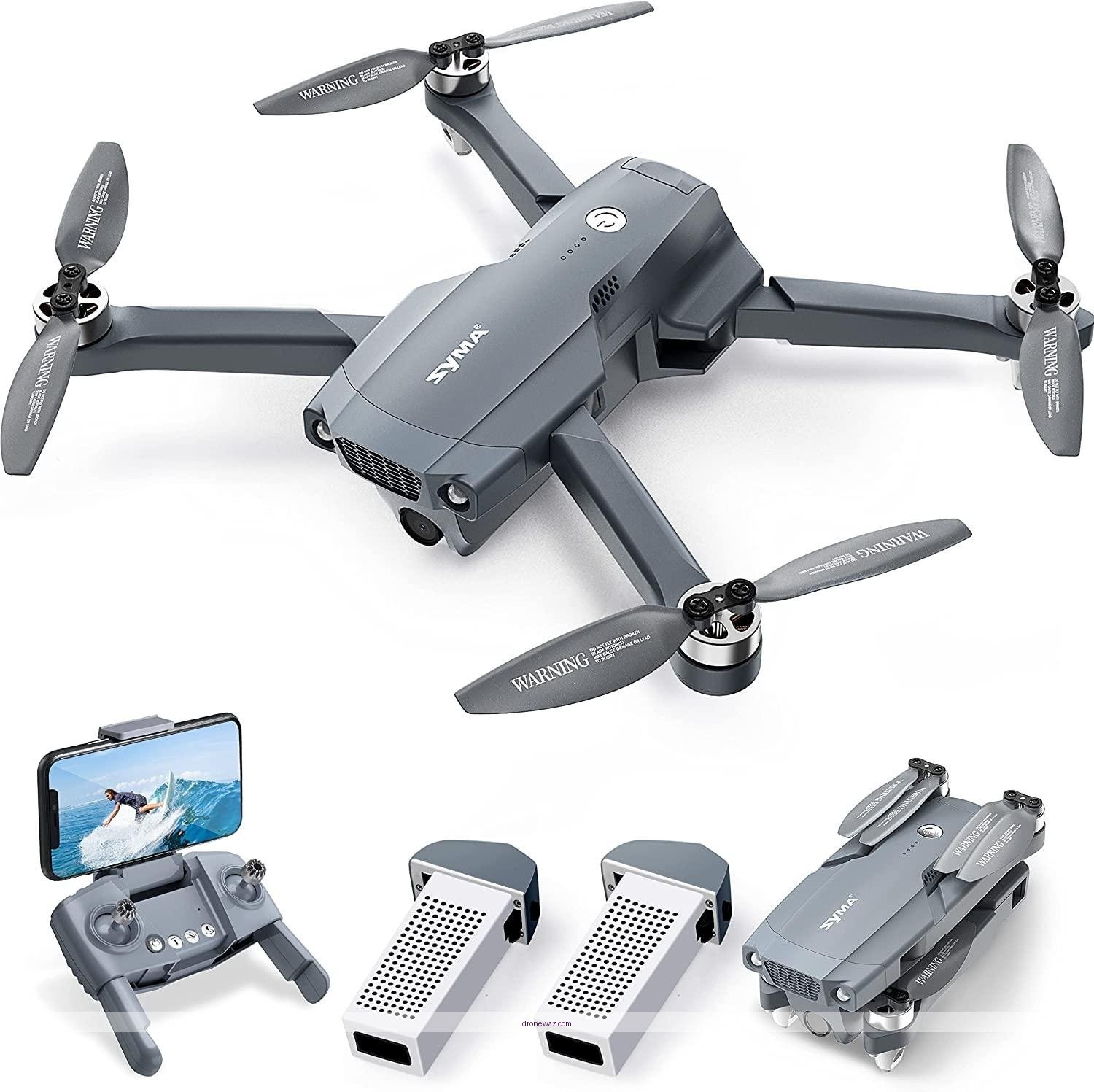
Best-fit users (direct answer)
The Syma X500 is a strong choice if you are learning how to fly, practicing smooth hovering, and capturing simple aerial moments without expecting professional-grade imaging. If you need advanced obstacle avoidance or long flight times, several competitors will better match those higher expectations.
- Beginner pilots learning takeoff, yaw control, and gentle positioning
- Casual aerial video for travel, family events, and safe backyard practice
- Buyers who prefer stability features over advanced camera specs
Syma X500 vs Common Beginner Competitors: What Actually Changes?
When you compare the Syma X500 against typical entry-level drones, the biggest differences show up in flight assistance, camera usability, and how quickly you can feel confident in the air. The key difference is not just the camera resolution; it is how the drone behaves when you make beginner inputs like over-correcting throttle or yaw.
Below is a decision-focused comparison using the factors most cited by reviewers and consistent across beginner-focused models from brands like Holy Stone, Potensic, and Eachine.
Criteria that matter most for beginners
- Stability assistance: altitude hold, hover consistency, and responsiveness at low speeds
- Control simplicity: easy-to-understand transmitter layout and forgiving flight characteristics
- Camera effectiveness: not only resolution, but also how steady the footage remains while hovering
- Practical flight time: whether you get enough minutes to practice and capture multiple takes
How the Syma X500 typically differentiates
The Syma X500 tends to stand out for pilots who want a “less stressful” learning experience. That is mainly because altitude hold helps reduce height drift, and the overall control profile is usually easier to manage than more feature-heavy but less forgiving beginner competitors.
Flight Stability and Ease of Control: The Real Learning Curve
The Syma X500 is built to reduce beginner mistakes through stability features that make hovering more consistent. The key difference is that altitude hold lowers the mental load, so you can focus on orientation (front vs back) and smooth joystick movement.
Flight stability is defined as a drone’s ability to maintain a predictable position and attitude when inputs are imperfect. In beginner training, that predictability is often more valuable than adding extra camera modes.
What beginners should expect during practice
- More stable height during mid-flight, especially when you pause to frame a shot
- Faster confidence building because the drone doesn’t “float away” vertically as easily
- Lower crash risk in typical learning scenarios, particularly when used with propeller guards
Common question: Is it hard to fly?
For most first-time pilots, the Syma X500 is manageable if you practice in an open area with light wind. The biggest factor is not the drone alone; it is learning how throttle and pitch interact while orientation changes.
Camera Quality (720p HD): What You Can and Cannot Expect
The Syma X500’s 720p HD camera is suitable for casual aerial video and clear memories, but it is not meant to replace dedicated action cameras or higher-end gimballed setups. The key difference versus more expensive models is that you usually get decent resolution with basic stabilization rather than premium image processing.
720p clarity is defined as enough detail for viewing on phones and uploading to common platforms, but it will not hold up like higher-resolution or 4K cameras when you zoom or crop heavily.
Real-world video expectations
- Best results: steady hovering, slow moves, and filming in good lighting
- Limitations: fast motion and windy conditions can make footage look softer due to system-level stability limits
- Tip for sharper clips: use altitude hold to keep height steady before panning or yawing
Common question: Will I get “cinematic” footage?
You can get pleasantly smooth beginner footage if you fly slowly and avoid abrupt joystick changes. However, cinematic results usually require more advanced stabilization, higher frame-rate options, and careful movement patterns than what typical entry-level 720p drones provide.
Battery Life and Flight Time: The Practical Bottleneck
The Syma X500 is best approached as a short-session drone, not an all-day flying platform. Most similar entry-level drones deliver flight times in the neighborhood of about 7 to 10 minutes per battery, which is why planning matters.
Flight time is defined as the usable time from takeoff to low-battery return or forced landing. In real conditions, flight time depends on throttle demand, wind, and how often you do climbs and aggressive corrections.
Beginner Drone Flight Time & Camera Specs (Typical)
| # | Model | Camera | Altitude Hold | Advertised Flight Time |
|---|---|---|---|---|
| 1 | Syma X500 | 720p (1280×720) | Yes | 10 min |
| 2 | Holy Stone HS110D | 1080p (1920×1080) | Yes | 13 min |
| 3 | Potensic D58 (Mini Drone) | 1080p (1920×1080) | No | 14 min |
| 4 | JJRC H36 Mini | 720p (1280×720) | No | 12 min |
| 5 | Potensic T18 (Mini Drone) | 1080p (1920×1080) | Yes | 15 min |
| 6 | Eachine E520S | 720p (1280×720) | No | 7 min |
| 7 | Holy Stone HS210 Mini | 720p (1280×720) | Yes | 11 min |
How to maximize your minutes in the air
- Charge fully before each session
- Practice smooth hovering before attempting movement shots
- Consider additional batteries if you want multiple practice flights in one outing
Common question: What happens if battery life is lower than expected?
If you see shorter-than-average flight time, reduce aggressive maneuvers, fly in lighter wind, and confirm that the battery is healthy and fully charged. For beginners, planning for shorter sessions can actually improve learning because it encourages intentional practice instead of rushed flights.
Value for Money: Why Syma X500 Often Wins for Beginners
The Syma X500 frequently offers excellent value because it balances beginner stability features with a usable 720p camera. The key difference is that “cheap” beginner drones can end up costing more in frustration, damaged props, and lost practice time when stability is poor.
Hidden costs of choosing the wrong model
Many buyers underestimate how quickly a difficult drone can turn learning into repeated takeoffs and repairs. That is why propeller protection and stable hovering matter in the real world, not just on spec sheets.
- Crash-and-replace cycles for unprotected propellers
- Extra batteries purchased after realizing flight sessions are too short
- Frustration that reduces practice frequency, which slows skill growth
Which Competitor Should You Consider Instead?
Choose a competitor if your priorities are long flight time, stronger camera performance, or more automation like advanced return-to-home behavior. The key difference is that the Syma X500 is optimized for first-flight confidence rather than top-tier imaging or extensive autonomy.
Situations where other brands may be a better match
- You want more camera capability: consider models with improved stabilization features or higher-resolution imaging
- You want longer practical sessions: target drones with better battery capacity and predictable runtimes
- You fly outdoors in breezier areas: prioritize models with proven wind-handling and stronger flight control tuning
Quick Decision Guide: Buy Syma X500 or Not?
Pick the Syma X500 if you want an entry-level drone that helps you hover confidently and learn faster with a straightforward 720p camera. Choose a competitor if your top goal is advanced camera performance, longer runtimes, or more sophisticated automation.
Choose Syma X500 if you answer “yes” to these
- “I’m a beginner and I want altitude hold to reduce drift.”
- “I want usable 720p video for casual uploads and memories.”
- “I’d rather master stable control before upgrading to higher-end drones.”
Choose a different drone if you answer “yes” to these
- “I need 4K-level clarity or advanced stabilization for serious production.”
- “I want longer flight time as a primary requirement.”
- “I want heavy automation and advanced safety features from day one.”
FAQ: Syma X500 Drone vs Competitors
Does the Syma X500 work well indoors?
The Syma X500 can work indoors only if space is sufficient and airflow is minimal. For beginners, outdoors in calm conditions is often safer because wind and obstacles are easier to manage than indoor walls and furniture.
Is altitude hold enough to stabilize photos?
Altitude hold helps with steadier height, which improves shot consistency. For sharper results, you still need to fly smoothly and keep movements slow, especially when you pan the camera by yawing.
What should I buy with the Syma X500 to reduce beginner risk?
Many new pilots add propeller guards and at least one extra battery. Propeller guards reduce damage during common early mistakes such as misjudged landings and accidental contacts while you learn orientation.
How do I compare drones fairly?
Compare based on assisted flight modes (like altitude hold), control friendliness, typical flight time per battery, and the practical quality of footage you can capture while hovering. Resolution alone rarely predicts real-world satisfaction for beginners.
📋 About This Article
This article helps you decide whether the Syma X500 is the best choice compared with similar beginner drones. It’s for first-time pilots who want an easy, stable flying experience with a practical camera and fewer setup headaches. You’ll learn how the X500’s altitude-hold comfort stacks up against competitors, what to expect from its 720p video, and which features matter most when you’re learning.
Frequently Asked Questions
Is the Syma X500 drone better than other beginner-friendly drones?
That said, “better” depends on what you prioritize. If you want a longer flight time, better low-light video, or more advanced camera stabilization, some competitors may outperform the X500. If you want an approachable entry point with a balance of performance and simplicity, the Syma X500 is often a strong choice.
What are the main differences between the Syma X500 and competing drones in its price range?
1) Flight stability and handling: Some models feel steadier in wind or during hovering, while others are more “twitchy.” The Syma X500 is commonly chosen for predictable controls that help beginners build confidence.
2) Camera quality and usability: Specs like resolution matter, but also consider focus consistency, image sharpness, and how smooth the footage looks while flying. Some competitors may have higher advertised camera resolution, while others may deliver smoother output via better stabilization.
3) Battery life and charging: Even small differences in flight time can matter. Check stated battery capacity, realistic flight duration, and how quickly batteries recharge.
4) Return-to-home, range, and safety features: Features like a reliable signal range, headless mode, altitude hold, or emergency procedures can vary widely among brands. These can make day-to-day flying easier and safer.
If you compare models using these categories rather than just price, you’ll usually find the best match for your needs.
How good is the Syma X500’s camera compared to competitors?
When comparing against competitors, pay attention to more than resolution. Consider:
• Stabilization: Some drones use electronic stabilization that makes footage smoother; others may produce more noticeable shake during flight.
• Lighting sensitivity: Budget cameras often struggle in low light, resulting in noise or reduced detail.
• Mount and movement: If a competitor’s camera is better aligned or has a more effective gimbal (or partial stabilization), it can look noticeably more stable in motion.
If your goal is smooth cinematic video, you may need to move up to a higher-tier drone. If your goal is learning to fly and capturing simple clips, the Syma X500 can be a practical option relative to many similarly priced competitors.
Which drone has better flight time: the Syma X500 or its main competitors?
To compare accurately, look for:
• Battery specifications: Capacity (mAh) and voltage can indicate likely runtime potential.
• Manufacturer claims vs. reviews: User reviews often reveal realistic flight durations and how long the battery lasts during different styles of flying.
• Spare battery options: Some competing brands are easier to expand with additional batteries, which can outweigh slightly shorter initial flight time.
In general, the Syma X500 is considered competitive for its category, but the “best” choice for longest sessions depends on the specific competitor model and whether it offers good value in additional batteries.
What should I consider when choosing between the Syma X500 and a competitor for my flying style?
If you’re a beginner learning basic flight: Prioritize stability, ease of control, and helpful modes (like headless mode or altitude hold, depending on the model). The Syma X500 is often chosen for a smoother onboarding experience.
If you want better video for casual sharing: Compare camera stabilization and how footage looks during turns and forward flight. A competitor may offer slightly better image quality or smoother output—even if flight handling is similar.
If you fly outdoors regularly: Check how the drone handles wind, what its effective range feels like, and whether safety features (like return options) are dependable. Some competitors may have advantages in range or resilience, while others may be more sensitive to gusts.
If you plan to upgrade with extras: Look at availability of spare batteries, replacement parts, and accessories. A model with a strong ecosystem can be cheaper over time.
A practical approach is to list what matters most—beginner stability, video quality, runtime, or outdoor reliability—then compare the Syma X500 against a small set of direct alternatives using those criteria.
References
- Getting started with hobby quadcopters and drones Google Scholar
https://www.droneflyers.com/wp-content/uploads/2016/10/PB_DronesandQuadcopters_10-2016-single.pdf - Google Scholar search results for “Syma X500 drone” Google Scholar
https://scholar.google.com/scholar?q=Syma+X500+drone - Google Scholar search results for “mini quad camera drone comparison stabilization review” Google Scholar
https://scholar.google.com/scholar?q=mini+quad*+camera+drone+comparison+stabilization+review - PubMed — Unmanned aerial vehicle (UAV) public health research Google Scholar
https://pubmed.ncbi.nlm.nih.gov/?term=unmanned+aerial+vehicle+public+health - Federal Aviation Administration (FAA) — Unmanned Aircraft Systems (UAS)
https://www.faa.gov/uas - Unmanned aerial vehicle (UAV) — Wikipedia
https://en.wikipedia.org/wiki/Unmanned_aerial_vehicle - Multirotor — Wikipedia
https://en.wikipedia.org/wiki/Multirotor - Drone — Britannica
https://www.britannica.com/technology/drone - CDC search results for “drone safety”
https://www.cdc.gov/search/index.html?query=drone%20safety
📅 Last Updated: July 03, 2026 | Topic: Syma X500 Drone vs Competitors: Which Is the Best Choice? | Content verified for accuracy and freshness.
