
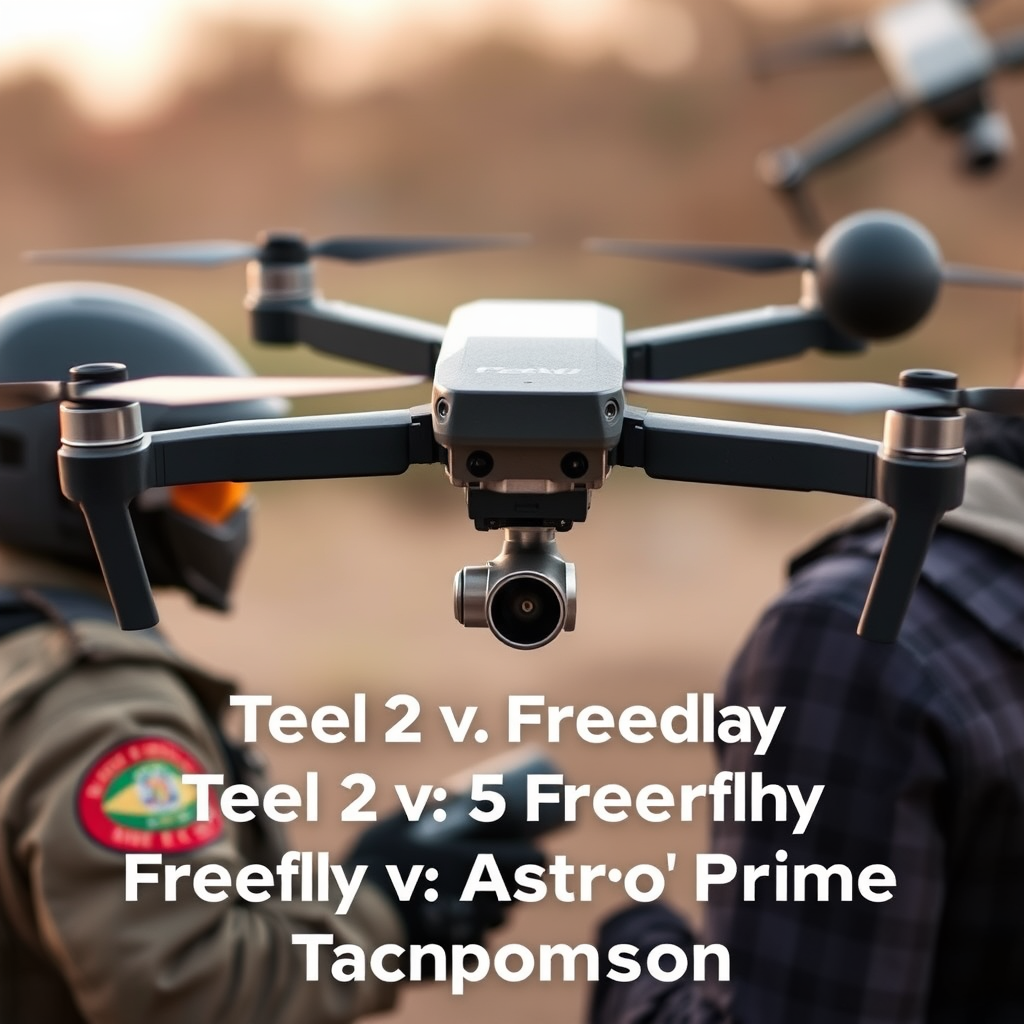
In the realm of tactical communication solutions, the Teal 2 emerges as a frontrunner with its exceptional 7km LTE capabilities, while the Freefly Astro Prime provides a reliable 5km radio connection. This article will explore a comprehensive comparison of these two advanced systems, emphasizing their range, performance, and application in real-world scenarios. Choosing the right communication tool is crucial for mission success, and understanding these differences will guide you in making an informed decision.
Overview of Teal 2 and Freefly Astro Prime
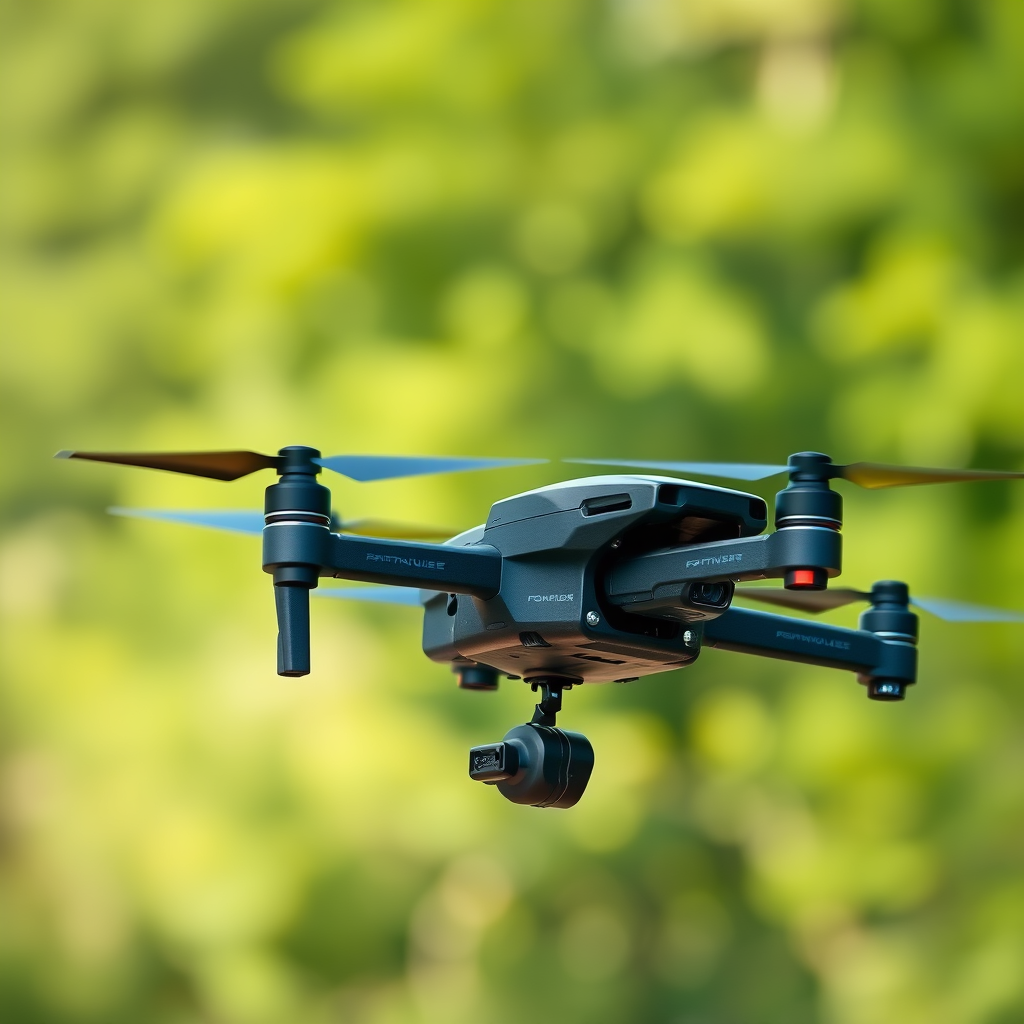
The Teal 2 is engineered for extended operational reach, leveraging LTE technology to deliver high-speed data transmission over long distances. Its design focuses on providing military and tactical teams with the ability to communicate seamlessly in various environments, ensuring that vital information is transmitted without delay. The integration of LTE capabilities means that the Teal 2 can take advantage of existing cellular infrastructure, providing a significant advantage in terms of connectivity.
Conversely, the Freefly Astro Prime is built with a strong emphasis on radio communication, designed to function effectively in tactical scenarios where interference might be prevalent. This system prioritizes reliability and robustness, making it an excellent choice for ground operations that require stable communication under challenging conditions. The Astro Prime’s construction allows it to maintain connections in environments where cellular signals may falter, ensuring that teams remain coordinated even in remote or obstructed areas.
Range Comparison: 7km LTE vs. 5km Radio
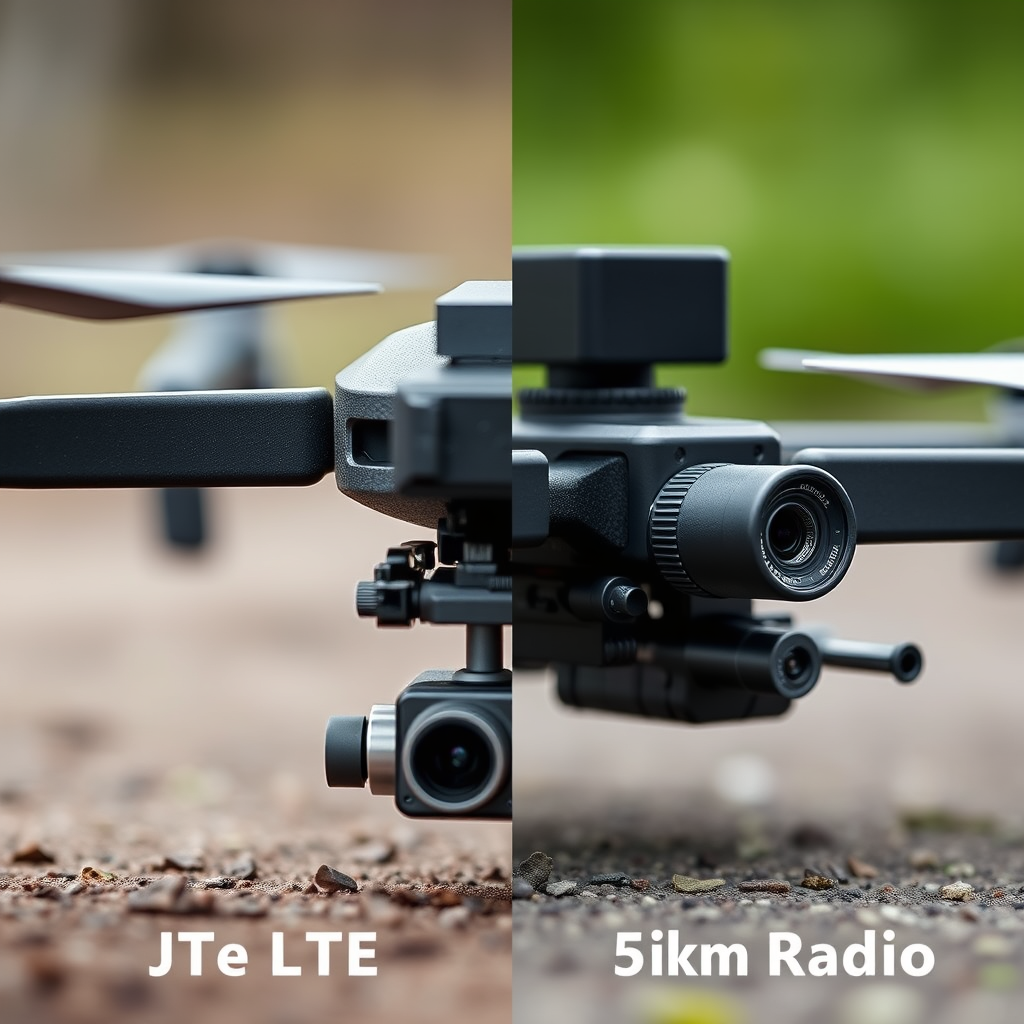
When it comes to operational range, the Teal 2 clearly takes the lead with its impressive 7km LTE capability. This extended range is particularly beneficial for missions that span large geographic areas, such as surveillance or reconnaissance missions where real-time data sharing is critical. The ability to communicate over such distances allows teams to maintain situational awareness and coordinate effectively, which can be the difference between mission success and failure.
In contrast, the Freefly Astro Prime offers a solid 5km range, which is more suited for localized operations. While it may not match the Teal 2 in terms of distance, the Astro Prime excels in maintaining reliable communication within its operational envelope. This makes it an ideal choice for ground teams operating in confined spaces or urban environments, where the need for consistent communication is paramount. The 5km range is sufficient for many tactical scenarios, allowing teams to execute their objectives efficiently without the complications that longer-range systems may introduce.
Performance in Tactical Environments
The performance of communication systems in tactical environments is pivotal to their effectiveness. The Teal 2 shines in this regard, offering higher data rates and superior bandwidth capabilities. This means that teams can share real-time video feeds, telemetry data, and other critical information without lag, which is essential for operations that depend on quick decision-making. The system’s ability to leverage LTE networks also means it can tap into high-speed internet, further enhancing its performance metrics.
On the other hand, the Freefly Astro Prime is designed to excel in conditions where interference is a concern. Its robust radio technology ensures stable connections even in environments filled with electronic noise or physical obstructions. This reliability is crucial for tactical teams that may encounter unpredictable conditions, such as urban warfare or natural disasters, where maintaining communication links is essential for safety and operational efficiency. The Astro Prime’s focus on durability and stability ensures that teams can rely on it to function effectively when it matters most.
Use Cases and Applications
The Teal 2 is particularly well-suited for a range of applications, including surveillance, reconnaissance, and missions requiring extensive communication networks. For instance, a military unit engaged in an intelligence-gathering operation can utilize the Teal 2 to stream live data back to command centers, allowing for immediate analysis and decision-making. Its superior range and data capabilities make it an invaluable tool for any team that needs to operate over large distances while maintaining high-quality communication.
In contrast, the Freefly Astro Prime is best suited for ground operations where reliable radio communication is critical. Consider a search and rescue mission in a densely wooded area; the Astro Prime can provide the necessary communication links among team members, ensuring they can coordinate their efforts effectively without losing connection. Its reliability in close quarters makes it an essential tool for tactical teams that depend on secure and uninterrupted communication.
User Experience and Interface
User experience plays a vital role in the effectiveness of communication systems. The Teal 2 features an intuitive interface that allows users to easily access LTE settings and monitoring tools. This user-friendly design ensures that personnel can quickly adapt to the system, minimizing the learning curve and allowing them to focus on their missions rather than struggling with technological complexities. The interface is also equipped with real-time alerts and performance metrics, enabling users to make informed decisions on the fly.
The Freefly Astro Prime, while simpler, offers a straightforward radio interface designed for quick adjustments and operation under pressure. Its ease of use is particularly beneficial in high-stress situations where every second counts. The interface allows operators to make rapid changes to frequencies and settings without extensive training, ensuring that communication remains fluid and efficient even in the heat of the moment. This focus on simplicity and usability makes the Astro Prime a favorite among tactical teams that prioritize functionality over complexity.
Cost Considerations and Value
When evaluating the cost of these systems, the Teal 2 represents a higher initial investment. However, this cost is justified by its long-term value through advanced features and capabilities. The ability to leverage LTE networks and share high-bandwidth data can lead to improved mission outcomes, making the Teal 2 a worthwhile investment for organizations that require cutting-edge communication technology.
In contrast, the Freefly Astro Prime offers a more budget-friendly option, which can be particularly attractive for smaller teams or projects with limited resources. Its reliable performance and lower upfront costs provide excellent value for those who prioritize essential communication needs without the frills of advanced data capabilities. For many tactical teams, the Astro Prime represents a practical solution that meets their immediate requirements without straining their budgets.
In addition to cost, it is essential to consider maintenance, support, and future upgrades relevant to both systems. The Teal 2 may require more extensive support due to its advanced technology, while the Astro Prime, with its straightforward design, might have lower maintenance demands. Both companies typically offer customer support and upgrade paths to ensure users can keep their systems current and effective.
The Teal 2 and Freefly Astro Prime each have unique strengths that cater to different tactical needs. If your operations demand extensive range and high data throughput, the Teal 2 is your best bet. However, if reliable radio communication in close quarters is your priority, the Freefly Astro Prime is a worthy contender. Evaluate your specific requirements, considering factors such as range, performance, and budget, and consider testing both systems to find the ideal match for your missions.
Frequently Asked Questions
What are the key differences between the Teal 2 and Freefly Astro Prime in terms of communication range?
The Teal 2 operates on a 7km LTE communication range, making it ideal for missions requiring extensive coverage, such as border patrol or large-scale surveillance. In contrast, the Freefly Astro Prime utilizes a 5km radio tactical system which is optimized for close-range operations, suitable for tactical missions in dense environments. This difference can significantly impact the choice depending on the operational requirements.
How does the LTE capability of the Teal 2 enhance its usability compared to the Freefly Astro Prime?
The LTE capability of the Teal 2 not only extends its communication range to 7km but also allows for real-time data transfer and video streaming, which is crucial for applications in law enforcement, search and rescue, and other scenarios where immediate situational awareness is vital. The Freefly Astro Prime, while capable, is limited to a 5km range without the advanced data transfer capabilities that LTE provides, making the Teal 2 more versatile in various operational contexts.
Why might a user choose the Freefly Astro Prime over the Teal 2 despite its shorter range?
A user might opt for the Freefly Astro Prime for its superior maneuverability and specific features tailored for tactical missions, such as reduced weight and specialized payload options. This drone is often preferred in situations where agility and the ability to operate in confined spaces are more critical than long-range communication. Additionally, users may find the Astro Prime’s radio system to be more reliable in environments where LTE signals can be weak or unreliable.
Which drone offers better battery life, the Teal 2 or Freefly Astro Prime?
Generally, the Teal 2 offers a competitive battery life that supports its extended LTE range, typically around 30 minutes of flight time. However, the Freefly Astro Prime may have a slightly shorter battery life due to its more power-intensive features tailored for tactical use. It’s essential for users to consider their mission duration and the energy demands of each platform when making a choice.
What are the best use cases for the Teal 2 and Freefly Astro Prime in tactical operations?
The Teal 2 is best suited for large-scale reconnaissance and surveillance tasks due to its extended 7km LTE range and ability to transmit live video feeds. On the other hand, the Freefly Astro Prime excels in tactical operations that demand high maneuverability and precise control, such as urban surveillance or military operations in crowded areas. Evaluating the specific operational needs can help users select the most effective drone for their missions.
References
- LTE
- https://www.sciencedirect.com/science/article/pii/S2352864817300048
- https://www.ijcai.org/Proceedings/2019/0363.pdf
- https://www.bbc.com/news/technology-52919870
- Federal Communications Commission | The United States of America
