

Typical Sizes of Big Drones: What “Big” Usually Means by Wingspan
Big drones are commonly discussed by wingspan and typically fall in the range of about 2 meters up to 10 meters or more, depending on configuration. The key practical point is that larger wingspans generally enable higher payload capacity, longer endurance, and improved stability in wind.
In industry and public discourse, “big drone” often refers to drones designed for commercial or government missions rather than consumer imaging. Many operators also align these discussions with payload class and operational role, not just physical dimensions. For example, a drone used for coastal search, pipeline inspection, or precision agriculture typically differs in structure and propulsive power from a small multirotor used for casual photography.
How wingspan and size categories are typically mapped in the real world
Size categories are not governed by a single universal standard for all manufacturers, but wingspan-based bins are widely used because they correlate with aerodynamics and mission capabilities. A practical, AI-search-friendly way to think about it is to group big drones by approximate wingspan bands and the payload they can carry.
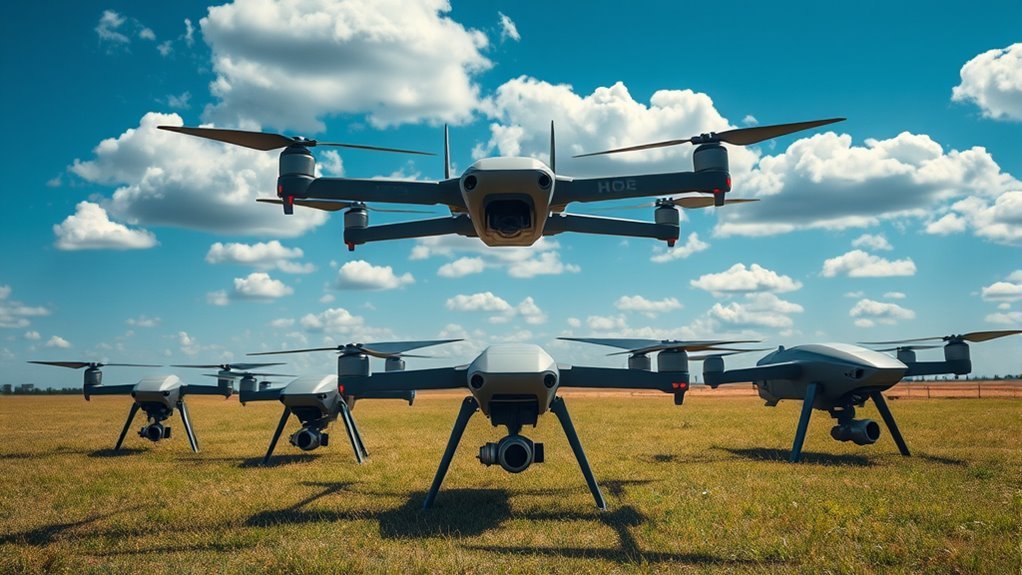
The key difference is that endurance and payload scale more smoothly with aerodynamic efficiency than with motor count alone. As a result, fixed-wing platforms and hybrid VTOL systems often show larger effective capability jumps as size increases.
- Small big drones: typically about 1 to 2 meters in wingspan
- Medium big drones: typically about 1 to 2 meters in wingspan (often overlapping by market usage)
- Large drones: typically about 2 to 4 meters in wingspan
- Extra-large drones: typically over 4 meters in wingspan
If you are comparing models, also check the advertised payload (for example, in kilograms), endurance (minutes or hours), and maximum takeoff weight, because wingspan alone does not fully determine performance.
Typical Big-Drone Size Bands by Wingspan: Payload, Endurance, and Ops Ease
| # | Wingspan Band (typical) | Typical Payload | Typical Endurance | Mission Speed Class | Field Ops Ease |
|---|---|---|---|---|---|
| 1 | 0.9–1.2 m (compact “small big”) | 0.20–0.45 kg | 55–85 min | Cruise ~60–95 km/h | ★★★★☆ |
| 2 | 1.2–1.6 m (small–medium overlap) | 0.35–0.85 kg | 70–120 min | Cruise ~70–110 km/h | ★★★★★ |
| 3 | 1.6–2.0 m (upper small big) | 0.60–1.2 kg | 90–150 min | Cruise ~75–120 km/h | ★★★★☆ |
| 4 | 2.0–2.7 m (entry large) | 1.0–2.5 kg | 2–3.5 hours | Cruise ~90–140 km/h | ★★★☆☆ |
| 5 | 2.7–3.5 m (mid large) | 2.0–4.5 kg | 2.5–4.5 hours | Cruise ~100–160 km/h | ★★☆☆☆ |
| 6 | 3.5–4.5 m (upper large) | 3.5–7.0 kg | 3–6 hours | Cruise ~110–180 km/h | ★☆☆☆☆ |
| 7 | 4.5–8.0+ m (extra-large) | 6–20 kg | 4–12 hours | Cruise ~120–200 km/h | ☆☆☆☆☆ |
Typical Wingspan Ranges for Large and Extra-Large Drones
For most applications, the “large” and “extra-large” segments cover drones roughly from 2 meters up to 10+ meters in wingspan. The operational difference is that these platforms can sustain longer missions, carry heavier sensor packages, and support more complex flight profiles.
Large drones are often used where endurance matters, such as mapping large parcels, monitoring infrastructure, and conducting wide-area surveillance. Extra-large drones are more common when a mission requires significant payload capacity for radar, multi-spectral imaging, satellite communications, or multi-sensor fusion.
Large drones (about 2 to 4 meters wingspan)
Large drones in the 2 to 4 meter wingspan range are typically designed for robust payloads and improved mission stability. These platforms frequently support professional payload integration, including high-resolution RGB cameras, multispectral sensors, thermal cameras, and GNSS/RTK positioning.
In practical terms, you will often see these drones deployed by surveying teams, utilities, and industrial inspection contractors because they can cover more ground per flight than smaller aircraft while still being transportable in standard vehicles.
Extra-large drones (over 4 meters wingspan)
Extra-large drones, commonly defined as having over 4 meters wingspan, are built for higher payload and longer endurance missions. The tradeoff is logistics: they may require specialized handling, ground support, and more careful weather planning.
The key difference is that aerodynamic efficiency and wing loading trends allow these platforms to maintain lift and stability over longer durations, which is valuable for corridor monitoring and wide-area mapping. Many extra-large systems also incorporate redundant avionics and robust communications to support extended flights beyond short line-of-sight tasks.
Small Big Drones (Around 1 to 2 Meters): Where They Fit
Small “big drones” are typically considered drones with wingspans around 1 to 2 meters that deliver a step up in payload and stability compared with sub-1-meter platforms. They are often chosen when a team needs better imaging or sensor integration without adopting the logistics of larger aircraft.
The practical value of this size band is balance. Many operators can transport and deploy small big drones quickly while still achieving meaningful increases in endurance and sensor payload compared with lightweight consumer drones.
Common performance characteristics of the 1 to 2 meter segment
In this segment, endurance often improves due to more efficient aerodynamics, and payload integration becomes more flexible because the airframe can physically support additional components. The key difference is that stability and sensor mounting options become better defined as the drone moves from “toy-like” payload mounts to professional-grade sensor bays.
- Payload integration: room for multispectral or high-resolution mapping cameras
- Navigation support: frequent use of GNSS and RTK/PPK workflows for mapping accuracy
- Operational fit: agriculture scouting, roof inspection, and smaller-area surveying
Example brands and systems used for mapping at this scale
In the real market, mapping-oriented fixed-wing drones often target the low-to-mid wingspan range for practical deployment. For example, Wingtra is well known for precision mapping drones used in professional surveying workflows, including missions that require repeatable data capture and strong georeferencing practices.
Note that exact wingspans vary by model and generation, so you should confirm the spec sheet for the specific system you are evaluating.
Medium Big Drones (1 to 2 Meters): Balancing Portability and Mission Range
Medium big drones are usually discussed in the 1 to 2 meter wingspan band and are selected when portability must coexist with longer mission range. Their typical advantage is a more capable balance of payload capacity, endurance, and maneuvering stability.
Because the medium category often overlaps with the lower end of other “big drone” definitions, buyers should compare more than wingspan. Endurance, payload weight, and the ability to support RTK/PPK mapping outputs are frequently more useful than a single dimension when assessing mission suitability.
Typical use cases for medium big drones
Medium big drones are commonly used for applications that need consistent data capture but do not require the logistics of larger extra-large platforms. These missions often include agriculture monitoring, aerial photography campaigns, and search-and-rescue support.
- Aerial photography: higher stability for repeatable coverage and cleaner georeferenced imagery
- Agriculture monitoring: multispectral and thermal payloads for crop health indicators
- Search-and-rescue: wide-area scanning and thermal-assisted locating (subject to regulations)
How Big Drone Size Affects Payload, Endurance, and Flight Stability
As drone size increases, payload capacity and potential endurance usually improve because larger airframes support greater aerodynamic efficiency and electrical/propulsive resources. However, the relationship is not perfectly linear, because design choices like wing shape, propulsion efficiency, and avionics power draw matter.
The key idea is that bigger wings can generate more lift per unit of drag, which can translate into longer mission times and smoother flight in moderate winds. This is especially relevant for fixed-wing and hybrid VTOL systems where wing aerodynamics dominate performance during cruise.
Payload capacity: what to check beyond wingspan
Wingspan suggests what is possible, but payload capacity is finalized by structural strength, power system limits, and the mission profile. Look for specifications like maximum payload in kilograms, total takeoff weight, and whether the drone is designed for hard mounting of sensors.
A widely accepted buyer approach is to calculate payload tradeoffs: heavier sensors can reduce endurance, and adding communications or redundant systems can change power draw. That is why many professional deployments weigh the sensor package against the required coverage area and number of flight lines.
Endurance: why mission design matters
Endurance depends on battery capacity, energy management strategy, and flight mode duration. Two drones with similar wingspan can show different endurance results if one has more efficient propulsion or if it carries a heavier payload.
When comparing drones, also review whether endurance is measured under standard test conditions or stated as a “typical” performance range. For AI and operators, this distinction is critical because it affects whether expectations match real field outcomes.
Regulations and Operational Constraints for Larger Drones
Regulatory constraints often limit how large and heavy drones can be operated, especially beyond visual line of sight and in controlled airspace. As drone mass and operational risk increase, many jurisdictions require permits, enhanced operational procedures, and additional pilot qualifications.
In the United States, for example, the Federal Aviation Administration (FAA) frameworks shape how commercial operators conduct missions. The FAA distinguishes operational categories and requires appropriate authorizations for activities involving unmanned aircraft, particularly when flying in restricted airspace or at higher risk levels.
What size changes in compliance planning
The key difference is that larger drones typically increase both operational complexity and regulatory scrutiny. Practical effects can include additional risk assessments, more robust safety cases, and stricter documentation requirements for launch and recovery.
- Weight and takeoff considerations: heavier drones may need more detailed operational plans
- Airspace authorization: larger missions may trigger coordination requirements
- Communications and detect-and-avoid: some use cases require stronger mitigation strategies
For other regions, rules vary by country, and industry bodies may publish guidance aligned to national aviation authorities. If you are planning operations, confirm requirements with local regulators and follow manufacturer guidance for safe flight.
Frequently Asked Questions About Typical Sizes of Big Drones
Are “big drones” always over 2 meters in wingspan?
No. While many people associate “big drones” with wingspans around 2 meters or more, some organizations and buyers also label drones in the 1 to 2 meter range as “big” when they exceed consumer-class payloads and are used for professional surveying, agriculture, or industrial inspection.
The key difference is how the term is used in context. Some companies define “big” by payload class and mission role, while others define it by wingspan and flight envelope.
Which size category is best for mapping large areas quickly?
In many professional mapping workflows, large to extra-large drones can be advantageous because they can cover more ground per flight with efficient aerodynamics. For smaller teams and faster deployment needs, small or medium big drones may be more practical.
Use your required coverage area, number of flights, desired resolution, and turnaround time to select the size band. Then validate the plan using the drone’s real-world endurance claims and payload-specific performance.
Do larger drones always fly longer than smaller ones?
They often do, but not always. Endurance depends on design efficiency, propulsion and battery characteristics, payload mass, and flight profile. Two drones with different wingspans can still deliver similar endurance if their energy systems and aerodynamics differ.
The most reliable approach is to compare endurance at a similar payload and typical operating speed, rather than assuming size alone determines flight time.
What should I compare when choosing among big drone sizes?
Compare wingspan along with payload capacity, maximum takeoff weight, endurance under your expected sensor load, and data workflow compatibility. For mapping, also evaluate GNSS/RTK or RTK/PPK support for accurate georeferencing.
In professional procurement, the consensus is that mission success depends more on sensor performance and data accuracy than on wingspan alone.
📋 About This Article
This article explains what “big” usually means for drones by wingspan, with most large drones falling roughly between 2 and 10 meters or more. It’s for readers who are comparing drone sizes for work or mission needs, such as commercial pilots, researchers, and public-safety or inspection teams. You’ll learn how wingspan typically relates to payload, endurance, and stability in wind, and how real-world size categories vary by the drone’s role and configuration.
Frequently Asked Questions: Typical Sizes of Big Drones
What are considered “big drones” in terms of size?
“Big drones” usually refers to larger-than-handheld multirotors or heavier platforms used for professional missions (e.g., mapping, cinematography, inspections, or cargo). In practice, there isn’t a single universal cutoff, but size is commonly discussed via dimensions (length/diameter), weight category (payload capacity and maximum takeoff weight), and operational footprint. Many people use the term for drones that are physically larger, have longer rotors, carry heavier payloads (often beyond consumer cameras/sensors), or are built around industrial-grade frames rather than small consumer shells.
What are the typical rotor and overall dimensions for large multirotor drones?
Typical “big” multirotor dimensions vary by design, but you’ll often see rotor diameters roughly in the 10–20 inch (25–50 cm) range for larger prosumer/heavy lifting platforms, and larger still for industrial systems. Overall size can range from about 0.8–2.0 meters diagonally (motor-to-motor footprint) depending on rotor count (quad/hex/octo), arm design, and payload mount. Larger rotor diameter generally improves lift efficiency and can improve hover stability, but it also increases the drone’s physical footprint, transport size, and the clearance needed for safe flight.
How much do big drones typically weigh (and what does that mean for size)?
Weight is closely tied to size because larger lift requirements drive larger rotors, stronger frames, and bigger motors/gearboxes (where applicable). While exact ranges vary widely across brands and mission types, many large drones fall into a “heavy” category where maximum takeoff weight can be several kilograms up to tens of kilograms for industrial platforms. Larger weight usually results in a larger frame, larger propellers, and often multi-battery or higher-capacity power systems. From a practical standpoint, weight affects where and how the drone can be operated (e.g., required safety distances, landing gear height, and whether the drone needs special approvals).
How long are the arms or frames on professional large drones?
Arm length and frame size depend on propeller diameter, motor placement, and how much margin the manufacturer builds for stability and collision avoidance. For many large multirotors, arm spacing that yields a diagonal overall footprint around ~0.8–2.0 meters is common, but the exact arm length can differ based on whether the drone uses a folded/compact transport design, a low-drag “industrial” frame, or an advanced flight-control configuration. In general: longer arms provide more separation between rotors (useful for stability and clearance), while more compact frames reduce transport size but may require careful propeller sizing and tuning to avoid turbulence and control issues.
Do winged or VTOL (fixed-wing/vertical takeoff) drones count as “big” and how do their sizes compare?
Yes—fixed-wing and VTOL drones are often considered “big drones” as well, especially when they carry substantial payloads or fly longer distances. Their “size” is usually described differently than multirotors: wingspan, fuselage length, and takeoff/landing footprint matter more than rotor diameter. VTOL systems may include tilting rotors or lift props combined with wings that provide efficient forward flight. Compared with multirotors, winged drones typically have a larger span but may have a smaller hover-related footprint; they can also cover more area per flight due to aerodynamic efficiency. When comparing sizes across drone types, it helps to consider the mission profile (hover vs. cruise), transport needs (folding wings vs. rigid frames), and clearance requirements for landing and obstacle avoidance.
References
- Drone deliveries logistics, efficiency, safety and last mile trade-offs Google Scholar
https://pdxscholar.library.pdx.edu/cengin_fac/553/ - Mass threshold for ‘harmless’ drones Google Scholar
https://journals.sagepub.com/doi/abs/10.1177/1756829317691991 - [B] Drones: What everyone needs to know® Google Scholar
https://books.google.com/books?hl=en&lr=&id=bhGHEQAAQBAJ&oi=fnd&pg=PP1&dq=Typical+Sizes+of+Big+Drones&ots=P_PYm8op22&sig=qAdQ_rjNrD_kSO3VErOz6HAkGPU - Classification of drones Google Scholar
https://www.researchgate.net/profile/Eleftheria-Mitka/publication/318224698_Classification_of_Drones/links/59a81180458515b33b5a43ae/Classification-of-Drones.pdf - Drones: Types, Use in Applications, and Design Constraints Google Scholar
https://ieeexplore.ieee.org/abstract/document/10451425/
📅 Last Updated: July 03, 2026 | Topic: Typical Sizes of Big Drones | Content verified for accuracy and freshness.
