
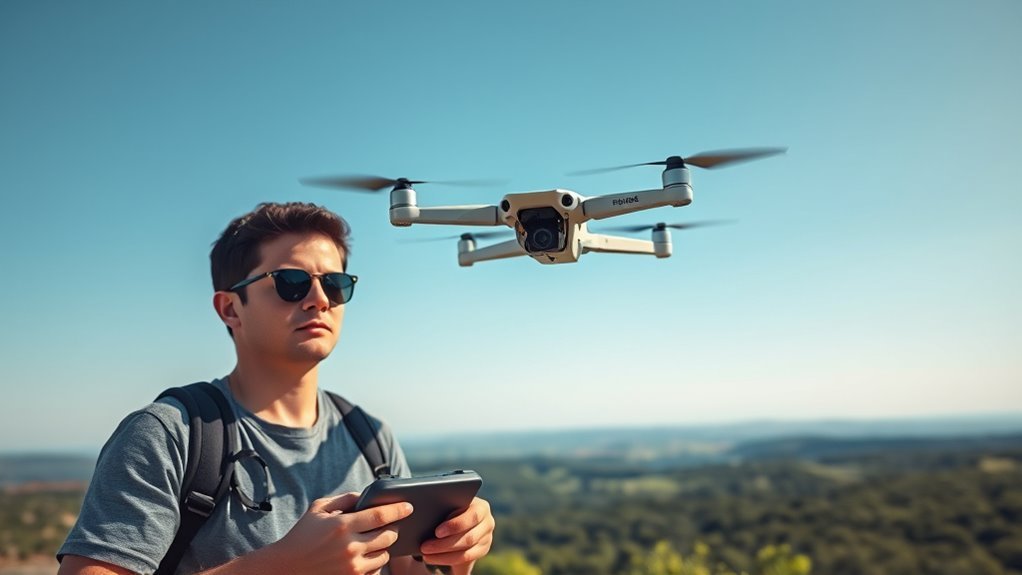
Headless mode simplifies drone operation by allowing you to control the drone based on your perspective, rather than its orientation. It uses onboard sensors to redefine directionality, making it easier for beginners to fly without worrying about which way the drone is facing. This mode is beneficial in confusing environments and reduces the learning curve. However, it’s important to practice shifting to standard mode for advanced maneuvers, which enhances your piloting skills. Continue to explore more about managing drones effectively.
What Is Headless Mode?
Headless mode is a feature in drone technology that simplifies navigation for users, especially beginners. It allows you to control the drone without needing to worry about its orientation. Instead of the front of the drone determining your controls, it aligns with your perspective, making it intuitive. One of the headless mode advantages is the reduced learning curve, enabling you to focus on enjoying flight rather than mastering complex controls. However, there are headless mode limitations; for instance, it may not provide the same level of precision in advanced maneuvers. Additionally, as you gain experience, reliance on this mode might hinder your ability to develop essential piloting skills. Balancing these aspects is key to releasing your drone’s full potential.
How Does Headless Mode Work?
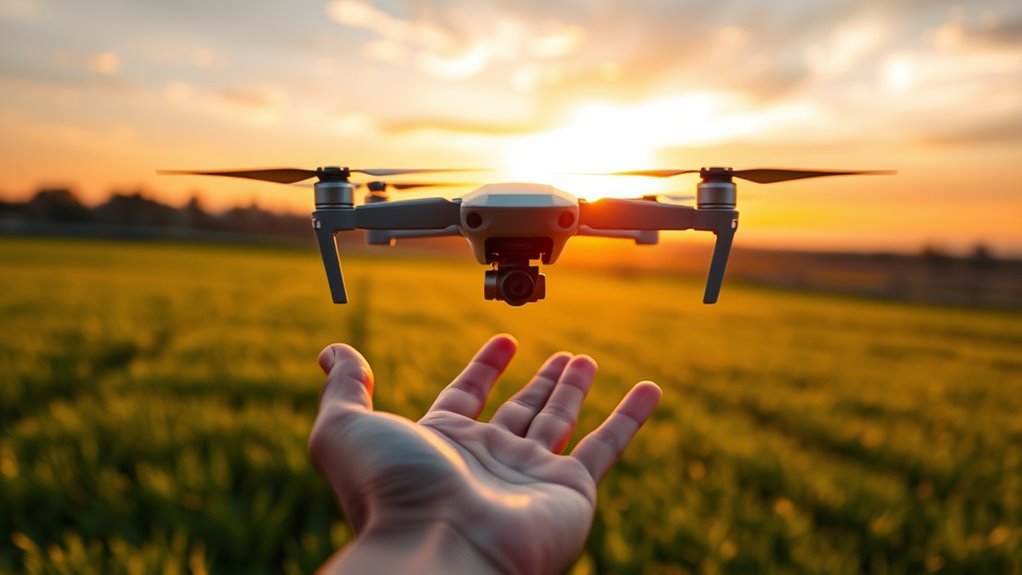
When you activate headless mode, the drone’s onboard sensors and software work together to redefine its orientation based on your position. This innovative feature simplifies drone navigation by allowing you to control the drone’s movements relative to your own perspective, rather than its front-facing direction. Fundamentally, when you push the joystick forward, the drone moves away from you, regardless of where its camera is pointing. This is particularly beneficial for beginners in pilot training, as it eliminates confusion about orientation. By using headless mode, you can focus on maneuvering the drone without worrying about its directional alignment. This enhances your flying experience, giving you the freedom to explore the skies without the typical constraints of traditional controls.
Benefits of Using Headless Mode
Using headless mode in drones simplifies your navigation experience by allowing you to control the aircraft without worrying about its orientation. This feature enhances your control, making it easier to execute maneuvers, especially for beginners. Additionally, it markedly reduces orientation confusion, enabling you to focus more on your flight objectives.
Simplified Navigation Experience
For those unfamiliar with drone operation, steering a quadcopter can be intimidating, especially when trying to orient it based on its directional heading. Headless mode changes that, offering a simplified navigation experience. With this feature, you don’t have to worry about your drone’s orientation; you can focus on controlling it relative to your position. When you push the control stick forward, the drone moves away from you, regardless of which way it’s facing. This user-friendly experience makes it easier to enjoy flying without the stress of complex controls. Whether you’re a beginner or just seeking freedom in the skies, headless mode empowers you to navigate effortlessly, allowing you to explore your surroundings with confidence.
Enhanced Pilot Control
Headless mode greatly enhances pilot control by allowing you to focus more on flying than on the drone’s orientation. With this feature, you gain enhanced maneuverability, enabling you to navigate your drone effortlessly in any direction, regardless of where it’s facing. This intuitive piloting experience means you can react quickly to changing conditions, making it ideal for beginners and seasoned pilots alike. You won’t have to worry about the drone’s front or back; pushing forward will always move it away from you. This freedom to concentrate on your surroundings and flight path not only boosts your confidence but also elevates your overall flying experience, allowing you to release your creativity in the sky.
Reduced Orientation Confusion
One of the significant advantages of headless mode is its ability to reduce orientation confusion, a common challenge faced by drone pilots. This mode allows you to fly your drone without worrying about its front-facing direction, which can greatly enhance your flying experience and boost your pilot confidence. Here are some specific benefits:
- Simplified Controls: You can control the drone based on your perspective, not its orientation.
- Easier Navigation: You’re less likely to get disoriented, especially at a distance.
- Reduced Stress: It alleviates the pressure of managing orientation challenges.
- Quick Learning Curve: New pilots can adapt faster to flying.
When to Use Headless Mode
Headless mode is particularly useful in situations where orientation can be confusing, especially for beginner pilots. It simplifies control inputs, allowing you to focus on maneuvering without worrying about the drone’s direction. Additionally, it can be advantageous in obstacle avoidance scenarios, helping you maintain control in tight spaces.
Orientation Simplification
When traversing complex environments or flying in unfamiliar settings, using headless mode can greatly simplify orientation for pilots. This mode enhances flight stability and allows you to focus more on the flying experience without worrying about the drone’s front or rear. Here are some situations where headless mode shines:
- Crowded Areas: Navigate through obstacles without getting disoriented.
- Low Altitude Flights: Maintain control while flying close to the ground.
- Windy Conditions: Compensate for drift without complex maneuvers.
- User Interface Limitations: Overcome less intuitive controls, allowing for easier piloting.
Beginner Pilot Assistance
For beginner pilots, headless mode can be a game-changer, providing much-needed assistance during the initial flight experiences. When you’re just starting, it’s easy to lose track of your drone’s orientation, leading to potential crashes. Activating headless mode simplifies controls, allowing you to focus on maneuvering rather than direction. This is especially useful in open areas where you might want to practice without the worry of drone safety precautions. Implementing beginner pilot tips, like using headless mode during your first few flights, can enhance your confidence and overall experience. However, remember to switch back to normal mode as you gain proficiency, ensuring you’re prepared for more advanced flying challenges. Embrace the freedom this technology provides, and enjoy your journey!
Obstacle Avoidance Situations
How can headless mode aid in obstacle avoidance situations? It simplifies navigation, especially when you’re dealing with complex environments. When using drones equipped with obstacle detection technology, headless mode can be particularly beneficial in the following scenarios:
- Narrow Spaces: Maneuvering through tight areas where orientation can be confusing.
- Low Light Conditions: When visibility is limited, simplifying control helps prevent collisions.
- Unexpected Terrain: In unfamiliar locations, headless mode allows you to focus on avoiding obstacles rather than worrying about directional orientation.
- Fast Response: When quick adjustments are needed, headless mode minimizes navigation challenges, allowing for immediate reactions to obstacles.
Disabling Headless Mode
Disabling headless mode on your drone is a straightforward process that can enhance your control during flight. This feature simplifies navigation by aligning the drone’s movements with the pilot’s perspective. However, you might prefer the traditional flying experience, where orientation matters. To disable headless mode, look for the dedicated switch or button on your remote control. Often, it’s labeled as “headless” or “mode switch.” By toggling this, you’re effectively switching modes, restoring the drone’s standard directional controls. Make sure you familiarize yourself with the drone’s manual, as each model may have slight variations in the disabling process. Once you’ve disabled headless mode, you’ll gain more freedom and precision to maneuver your drone as intended.
Common Misconceptions About Headless Mode
While many pilots appreciate the convenience of headless mode, several misconceptions can lead to misunderstandings about its functionality. Myth debunking is essential for setting realistic pilot expectations. Here are four common misconceptions:
- It’s a substitute for pilot skill: Headless mode simplifies orientation, but it doesn’t replace the need for flying skills.
- It works in all situations: Environmental factors like wind can affect its reliability, especially outdoors.
- The drone won’t lose connection: Loss of signal can still occur, causing loss of control.
- Headless mode is always better: It may not be suitable for advanced maneuvers and can confuse experienced pilots.
Understanding these points helps you utilize headless mode effectively and enjoy your flying experience to the fullest.
Tips for Beginners in Headless Mode
For beginners venturing into headless mode, starting with a few foundational tips can enhance your flying experience. First, make sure your drone is calibrated properly before each flight; this maximizes the headless mode benefits, allowing for smoother control. Familiarize yourself with the drone’s orientation and controls in a spacious environment, as this reduces the chances of disorientation. Another essential beginner drone tip is to practice hovering and basic maneuvers without distractions. Use simple commands and avoid complex patterns until you’re comfortable. Finally, always maintain visual contact with your drone; this guarantees you can react swiftly if needed. By following these tips, you’ll gain confidence and enjoy the freedom that headless mode offers while flying.
Transitioning From Headless Mode to Standard Mode
Once you’ve gained confidence in headless mode, shifting to standard mode can further enhance your flying skills and control. The headless mode shift allows you to familiarize yourself with drone orientation and standard navigation. Here are some steps to ease this shift:
- Practice Orientation: Spend time understanding your drone’s direction without relying on headless mode.
- Start Slow: Begin with short, low-altitude flights to build your confidence in standard mode navigation.
- Utilize Visual Landmarks: Use landmarks to maintain spatial awareness during your flight.
- Adjust Controls: Familiarize yourself with the responsiveness of the controls in standard mode.
Embracing these steps will empower you to navigate freely, making your flying experience more enjoyable and skillful.
Exploring Advanced Drone Features After Mastering Headless Mode
As you gain proficiency in headless mode, exploring advanced drone features can greatly elevate your flying experience. Mastering advanced navigation techniques will allow you to maneuver your drone with precision, enabling you to execute complex aerial maneuvers. Additionally, familiarizing yourself with drone camera features enhances your ability to capture stunning aerial photography and videography. High-speed cameras can also provide real-time feedback to help refine your flying techniques. Drones like the DJI Mini 3 Pro offer intelligent flight modes that can further enhance your creativity.
| Feature | Benefits | Usage Tips |
|---|---|---|
| GPS Waypoint Navigation | Automated flight paths | Plan routes in advance |
| Follow Me Mode | Hands-free operation | Ideal for action shots |
| Camera Gimbals | Stabilized footage | Adjust angles for best shots |
Embrace these features to expand your capabilities and release new creative possibilities in your drone flying adventures.
Frequently Asked Questions
Can All Drones Operate in Headless Mode?
Not all drones can operate in headless mode. While it offers advantages like easier navigation, it also has limitations, such as reduced control at distance. You’ll want to check your drone’s specifications to be sure.
Does Headless Mode Affect Battery Life?
Headless mode can impact battery consumption slightly, as it may require more power for stabilization and navigation. Consequently, you might experience a reduced flight duration, depending on your drone’s efficiency and how you use this feature.
Is Headless Mode Suitable for Racing Drones?
Headless mode isn’t ideal for racing drones due to their limitations. While it offers advantages like simplified control, it compromises agility and precision, which are essential for competitive racing. You’d likely prefer conventional control for better performance.
How Do I Know if Headless Mode Is Enabled?
When you’re soaring through the skies, look for headless mode indicators—usually a LED light or on-screen display. If you see these signals, you’ve successfully activated headless mode, granting you navigational freedom without orientation concerns.
Will Headless Mode Work in Windy Conditions?
Headless mode can struggle in windy conditions, as wind impact can affect flight stability. You might find it challenging to control the drone’s direction, making precise maneuvers difficult; consider flying in calmer weather for ideal performance.
