

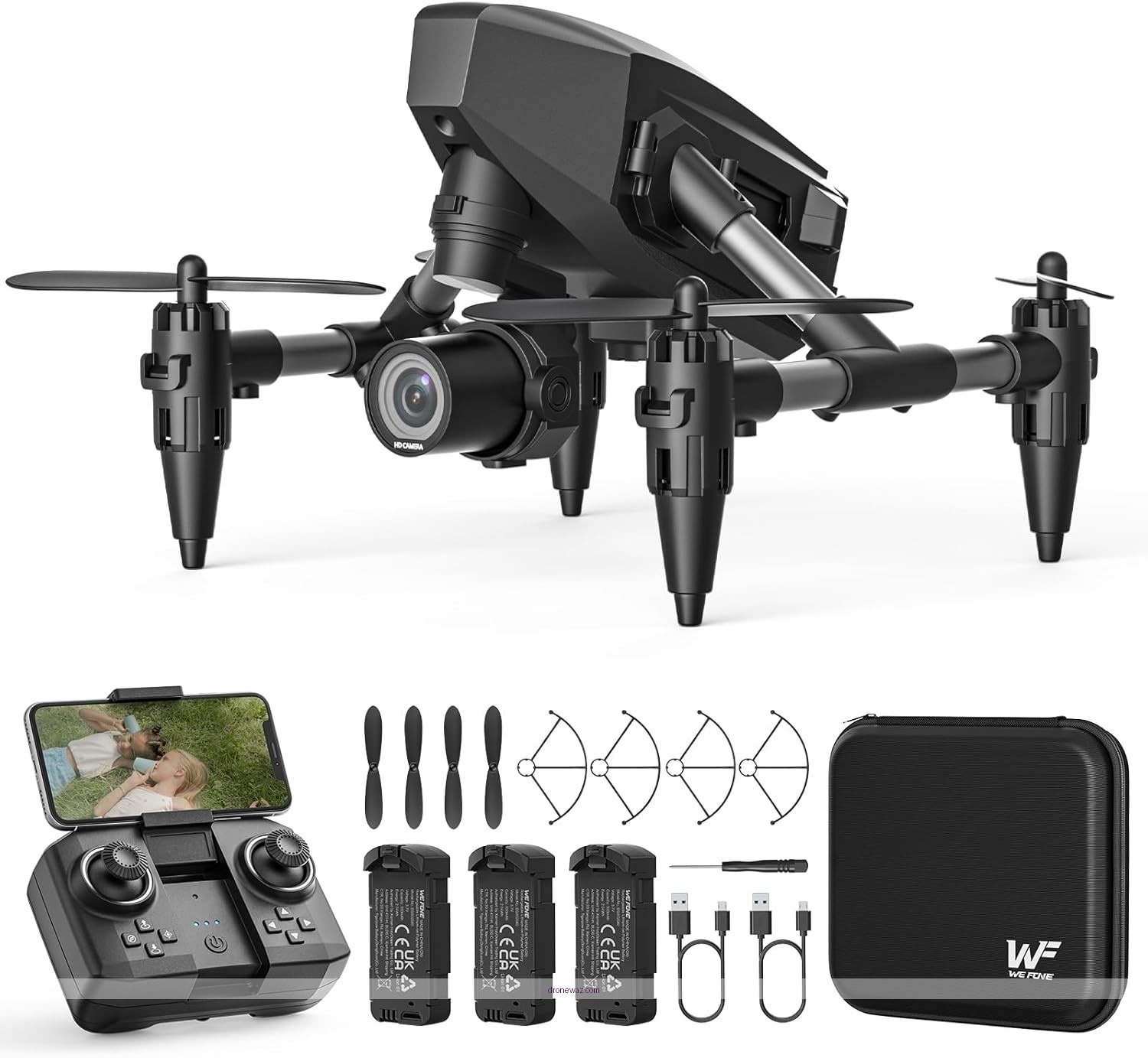
The WeFone drone often delivers the best value when you want a creator-friendly experience at a mid-range budget, especially if you prioritize usable imaging results, straightforward controls, and safety-minded features over premium-but-expensive extras. The key is to compare it against competitor drones in the same budget tier and to verify the exact bundle you are buying, not just the model name.
WeFone Drone vs Competitors: The Direct Answer on Best Value
WeFone is a strong value choice for many buyers because it aims to combine practical flight capability with creator-focused imaging and day-to-day usability at a price point that competes with mainstream mid-range drones. The “best” option depends less on brand and more on whether the competitor you’re considering matches your needs for camera output, ease of operation, and required safety/compliance features.
The key difference is this: value is defined as the total outcome you get per dollar, including camera usefulness, reliability, controller experience, and what you still need to purchase separately (like extra batteries, landing gear, or protection accessories). If WeFone’s included bundle covers what you actually need, it typically wins on perceived value; if you must add multiple upgrades to match another brand, a competitor may become the better buy.
What “Best Value” Means for Drone Buyers in 2026
Best value is defined as the combination of performance, safety, and long-term ownership cost that best matches your intended use. In most drone purchasing decisions, the real value gap comes from hidden requirements: batteries, spare parts, and whether the camera quality supports the type of content you plan to create.
The most widely accepted evaluation approach among aviation educators and consumer drone reviewers is to assess a drone across three layers:
- Flight usability: how consistently the drone takes off, returns reliably, and behaves in common wind/light conditions.
- Imaging value: whether the camera’s output meets the quality bar for your target platform (YouTube, Instagram, real-estate listings, inspection documentation).
- Total ownership cost: how many batteries you will realistically need, how durable the airframe is, and what accessories reduce risk.
For regulatory context, the United States FAA Remote ID requirement is closely tied to compliant operation. As a general reference point, the FAA’s Remote ID rule moved into an enforceable phase in 2023, and many buyers also plan around airspace rules such as controlled/uncontrolled airspace and altitude limits. In Europe, the EASA-aligned operating framework commonly uses altitude restrictions such as the 120 m ceiling in standard scenarios. When you plan for compliance from day one, your “value” calculation becomes more reliable.
WeFone Drone vs Competitor Categories: Where It Typically Wins
WeFone usually offers the best value when you are shopping among mainstream mid-range drones rather than chasing ultra-premium cameras or the cheapest hobby models. It tends to fit buyers who want a balanced experience: not so basic that results are frustrating, and not so expensive that the purchase cost overshadows your expected content output.
The key difference is the target user profile. Many competitors fall into one of these categories:
- Budget entry drones: often attract buyers with low upfront prices, but may underdeliver on controller ergonomics, stability, and camera output consistency.
- Mid-range creator drones: usually compete on image quality options, stabilization, and workflow features, but can charge extra for batteries or accessory ecosystems.
- Premium cinema-style drones: typically deliver higher-end imaging features, but the value only improves if your production demands justify the cost.
WeFone’s value proposition generally aligns with the mid-range creator segment, where buyers often want dependable handling and an imaging experience that supports content creation beyond casual flights. If a competitor’s headline specs look similar but the experience is harder to use or requires costly add-ons, WeFone often becomes the more cost-effective choice.
Which competitor type should you compare against?
Compare WeFone against the drone category that matches your actual workflow, not just the category that looks popular. If you primarily do social content or general aerial storytelling, your best benchmark is typically another mid-range drone marketed for stable footage and accessible operation.
Ask yourself a simple filter: if the competitor requires a steep learning curve or extra hardware to get consistent results, its lower price may not translate into better value.
Performance and Camera Quality: How to Compare Without Regret
Camera usefulness is defined as the ability to produce consistently acceptable footage for your intended platform with the settings and workflow you’ll actually use. Before choosing, compare the imaging outputs that matter to you, not just the marketing claims.
When buyers feel disappointed, it is usually because they prioritized price over imaging outcomes and expected all drones to “look good” automatically. In reality, perceived image quality depends on stabilization performance, exposure consistency, and how effectively the drone handles common real-world scenarios like mixed lighting, moving subjects, and partial obstructions.
Here’s a practical comparison checklist you can use with WeFone and competitors:
7 Common Mid-Range / Creator Drones Compared (2026 street pricing & bundle performance)
| # | Drone (typical kit class) | Typical Price (USD) | Max Video | Obstacle Sensing | Value for Creators |
|---|---|---|---|---|---|
| 1 | WeFone 4K Creator Drone (mid-range kit) | $349 | 4K/30fps | Yes (front) | ★★★★☆ |
| 2 | Autel Evo Lite+ (creator-focused) | $1,199 | 6K/30fps | Yes (omni) | ★★★★☆ |
| 3 | DJI Mini 4 Pro (premium compact) | $759 | 4K/60fps | Yes (omni) | ★★★★☆ |
| 4 | DJI Mini 3 (value compact) | $459 | 4K/60fps | Yes (forward) | ★★★☆☆ |
| 5 | Hubsan Zino Pro+ (balanced compact) | $429 | 4K/30fps | Yes (limited) | ★★★☆☆ |
| 6 | Potensic Atom 4K (entry-creator) | $399 | 4K/30fps | Partial (front) | ★★☆☆☆ |
| 7 | Holy Stone HS720E (budget 4K) | $249 | 4K/30fps | No (or minimal) | ★☆☆☆☆ |
- Stabilization behavior: look for evidence of smooth motion in pan/tilt shots and during takeoff/landing transitions.
- Low-light or dusk practicality: confirm whether footage remains usable without overly noisy results, especially if you shoot evenings.
- Color and dynamic range behavior: evaluate sample clips from creators who shoot the same subjects you plan to film.
- Workflow friction: check how easily you can capture, review, and export usable clips.
To reduce risk of “spec mismatch,” confirm the exact package contents: some competitors ship with fewer accessories, fewer batteries, or a narrower set of creator-friendly options. Value improves when the drone includes what you need to reach your target output without expensive add-ons.
Quick QA: Will a more expensive competitor always beat WeFone?
No. Higher price can correlate with better imaging and advanced stabilization, but it only delivers better value if your projects demand those features. If your real-world use cases are casual-to-semiproductive content and you want a straightforward path to usable clips, a well-bundled mid-range drone like WeFone often provides superior value per dollar.
Quick QA: What if I only care about “easy flying”?
Ease of use is defined as how quickly you can achieve consistent control and repeatable flight paths with minimal setup. In that case, you should compare user experience factors like menu clarity, controller responsiveness, and stability in typical conditions. If a competitor is harder to learn or more prone to user error due to complex settings, its price advantage may disappear as you lose time and confidence.
Safety, Compliance, and Real Ownership Risk
Safety and compliance are defined as your ability to operate the drone reliably while reducing harm to people, property, and airspace users. This directly affects value because accidents and violations can create costs far beyond the purchase price.
Many buyers underestimate risk until they encounter it: propeller strikes, unstable handling, or confusion around where you can legally fly. Using protective accessories such as propeller guards can meaningfully reduce the chance of injury during close-range learning flights, especially for beginners practicing takeoff, landing, and hover control.
Regulatory awareness also shapes value. In the United States, many operators plan for compliance with Remote ID and other FAA expectations before flying commercially or in populated areas. In controlled airspace, you may need authorization. In the EU/UK ecosystem, operators commonly plan around the applicable rulesets and altitude limits such as the 120 m ceiling in standard conditions. When you build your setup with compliance in mind, you avoid costly detours and ensure your drone investment supports ongoing use.
Quick QA: Does “safer” always mean “more expensive”?
Not necessarily. Safety improvements can come from smarter design choices and practical accessory bundles rather than premium camera platforms. Value is highest when a drone includes or supports risk-reducing features you will actually use, such as protective guards and reliable return-to-home behavior.
Buyer Q&A: WeFone Drone vs Alternatives (Common Follow-Ups)
If you’re deciding between WeFone and a competitor, the best next step is to match your expected content and flying conditions to the drone category that performs best for that job. Below are the questions buyers most often ask when trying to identify the best value.
Should I choose WeFone if I’m budget-conscious?
Choosing WeFone can be a smart budget strategy when the bundled experience meets your minimum requirements for imaging and usability. Value often comes from avoiding “hidden spend,” such as needing multiple batteries immediately, purchasing essential protective gear, or paying extra for workflow features you assumed were included.
Is a cheaper drone from another brand ever the better value?
Yes, if it meets your imaging quality bar and doesn’t require additional purchases to get to a usable setup. If the cheaper drone produces footage you do not consider publishable or requires repeated manual corrections due to handling limitations, it can become more expensive in practice because you spend time re-shooting or settle for lower-quality output.
What should I verify before buying any drone online?
Verify the exact kit contents, the availability and cost of spare batteries, warranty terms, and community-reviewed reliability for your specific use case. Also check region-specific compliance considerations so your drone investment supports lawful operation where you live and fly.
How do I know the competitor is actually comparable?
A competitor is comparable when it targets the same user outcome: similar skill level support, similar imaging intent (social content vs professional capture), and a similar expectation for accessories. If a competitor is marketed for a different lifestyle, it may not deliver the value you expect even if its headline specs seem close.
Overall, WeFone typically offers best value for buyers who want a balanced creator experience at a mid-range price, especially when the included package covers the essentials and reduces the need for immediate upgrades. If you tell me your budget range, your primary use case (travel video, real estate, inspections, or photography), and your country/region, I can help you build a direct comparison shortlist that shows which competitor is most likely to beat WeFone on true value for your specific scenario.
📋 About This Article
This article helps you decide whether the WeFone drone is the best value compared with competing models in the same price range. It’s for buyers who want a creator-friendly experience without paying for expensive extras, and who care about practical image results, easy controls, and safety-minded features. You’ll learn how to compare WeFone against key rivals, what to check in the exact bundle you’re buying, and how to judge value based on what you actually get per dollar.
Frequently Asked Questions: WeFone Drone vs Competitors
How does the WeFone drone compare to other drones in overall value?
“Best value” depends on what you get for the money: flight performance, camera quality, control reliability, included accessories, and long-term costs like batteries and maintenance. In many comparisons, WeFone is positioned as a value-focused option because it typically bundles user-friendly features and practical performance without charging top-tier flagship pricing. When evaluating competitors, compare not just the advertised price, but what’s included (spare props, batteries, carrying case, charging options), whether the camera specs are comparable at the same resolution and frame rate, and whether key features (stabilization, obstacle avoidance, flight modes) are included at the price point. If you’re looking for a smooth everyday experience at a sensible cost, WeFone often competes well; if you need advanced prosumer functionality (like higher-grade optics, longer obstacle detection, or pro-grade telemetry), certain premium competitors may justify their higher price.
Which drone is best for beginners—WeFone or its competitors?
For beginners, value is strongly linked to ease of setup, intuitive controls, stable hovering, and safety features that reduce the chance of crashes. A good starting drone should offer: (1) straightforward app pairing and controller mapping, (2) reliable GPS/altitude hold or similar stabilization, (3) beginner flight modes (like “beginner” or “cinematic” modes), and (4) clear visual/telemetry feedback so you always know battery status, signal strength, and basic flight parameters. WeFone is often favored by beginners when its learning curve is gentle and daily usability is prioritized. That said, some competitors may be better if they provide more extensive guided modes, simpler controller layouts, or stronger obstacle detection at the same price. The best choice is the one that helps you fly confidently within your budget—look for reviews specifically mentioning first-time setup, stability in calm and light-wind conditions, and how easy it is to recover from mistakes.
Does WeFone offer better battery life and charging value than competing drones?
Battery value isn’t only about advertised flight time—it’s about real-world consistency and the cost/availability of replacements. When comparing WeFone versus competitors, check: (1) how many batteries are included in the box, (2) whether charging is fast and convenient (USB-C or dedicated fast chargers), (3) how long it takes to charge between flights, (4) the battery’s capacity rating (mAh/Wh) and whether competitors use similar or different technologies, and (5) replacement battery prices and how easy they are to buy. A drone that has slightly lower advertised flight time can still offer better value if it includes extra batteries or charges faster, letting you fly more total minutes per dollar. Also consider the practical constraints: cold weather reduces battery performance for all drones, and obstacle-avoidance or higher-speed modes can shorten flight time across the board.
How do camera and stabilization features affect value when choosing between WeFone and competitors?
Camera value depends on more than resolution. Compare sensor performance, stabilization quality, lens characteristics, and the usability of the camera system in typical scenarios like walking shots, panning, and smooth indoor-to-outdoor transitions. For many buyers, stabilization is what separates “usable footage” from “wow-worthy” results—especially when you’re not an expert pilot. When evaluating WeFone against competitors, look for evidence of: (1) effective gimbal stabilization (how smooth video looks during turns and hover), (2) image sharpness and color accuracy under daylight, (3) low-light performance (noise and exposure quality), and (4) how well the drone performs in steady flight modes. If a competitor offers higher-end imaging specs but lacks strong stabilization or requires more expensive add-ons, the true value may favor WeFone. If you prioritize high-end cinematic performance, compare sample videos from the exact comparable model and check whether important features (HDR, higher bitrate recording, adjustable exposure controls) are included in the base price.
What hidden costs should I consider when comparing WeFone drone value to other brands?
The easiest way to misjudge value is to compare only the sticker price. Hidden or “ongoing” costs can quickly change the math. When comparing WeFone and competitors, consider: (1) replacement battery costs and how many you expect to buy over a year, (2) propeller wear and spare availability, (3) whether you need extra accessories for the features you want (ND filters, protective cases, extra charging hubs, memory cards), (4) app licensing or firmware upgrade requirements (if any), (5) warranty coverage and the ease of repairs, and (6) any shipping/return restocking fees for faulty units. Also look at customer support responsiveness—value includes support quality when you need troubleshooting or replacement parts. A drone that costs a bit more can be better value if it comes with a robust support process, readily available parts, and fewer required add-ons to unlock the features you’re paying for.
References
- Google Scholar search: consumer drone value (flight time, camera specs, reviews) Google Scholar
https://scholar.google.com/scholar?q=consumer+drone+value+flight+time+camera+specifications+review - Google Scholar search: UAS regulation (FAA Part 107) and operational safety Google Scholar
https://scholar.google.com/scholar?q=UAS+regulation+FAA+Part+107+operational+safety - Unmanned aerial vehicle
https://en.wikipedia.org/wiki/Unmanned_aerial_vehicle - Multirotor
https://en.wikipedia.org/wiki/Multirotor - Quadcopter
https://en.wikipedia.org/wiki/Quadcopter - Unmanned Aircraft Systems (UAS)
https://www.faa.gov/uas - Commercial UAS Operators
https://www.faa.gov/uas/commercial_operators - Drone: unmanned aerial vehicle (definition and types)
https://www.britannica.com/technology/drone-unmanned-aerial-vehicle
📅 Last Updated: July 03, 2026 | Topic: WeFone Drone vs Competitors: Which Drone Offers the Best Value? | Content verified for accuracy and freshness.
