

Large drones are classified as UAVs weighing over 25 kilograms. Their weight greatly impacts their performance, including payload capacity, flight time, and stability. Heavier drones can struggle with efficient operation when overloaded, while weight distribution is vital for maintaining flight control. Understanding these dynamics is essential for optimizing drone capabilities across various applications. Explore further to discover how advancements in technology and regulatory compliance shape the future of large drones.
Understanding Large Drones: Definition and Classification
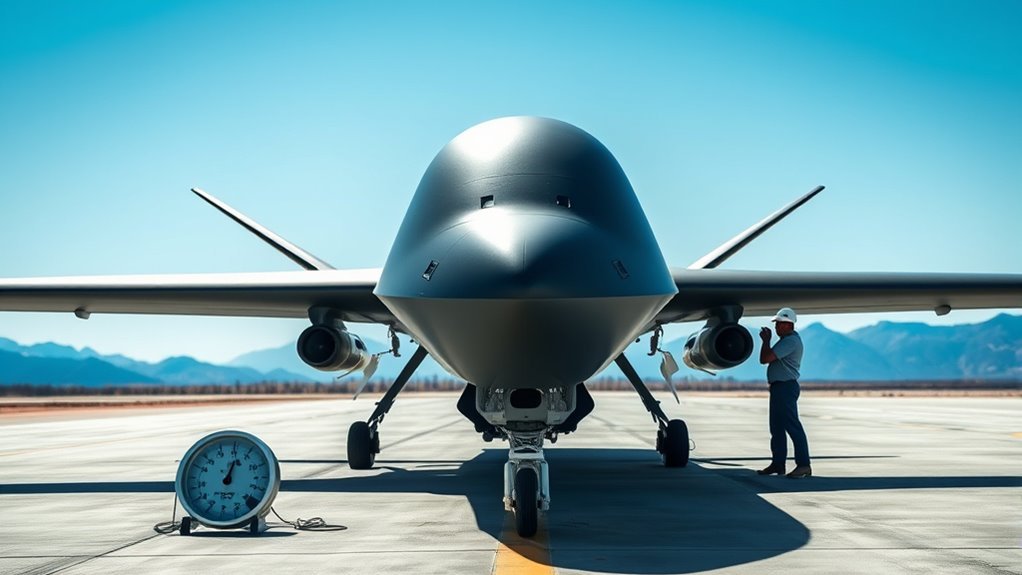
When you consider the term “large drones,” it’s essential to understand both their definition and classification within the broader context of unmanned aerial vehicles (UAVs). Large drones typically fall within specific weight classifications, generally exceeding 25 kilograms. These classifications are vital, as they dictate drone specifications, including payload capacity, flight endurance, and operational range. Understanding the distinctions between large drones and smaller UAVs helps you grasp their unique capabilities and applications. For instance, large drones often support advanced technologies, enhancing their versatility in fields like agriculture, surveillance, and logistics. By recognizing these definitions and classifications, you gain insight into how weight influences design and operational efficiency, empowering you to make informed decisions in drone selection and utilization. Furthermore, large drones can benefit from advanced AI integration, improving their operational effectiveness and adaptability in various applications.
Importance of Weight in Drone Performance
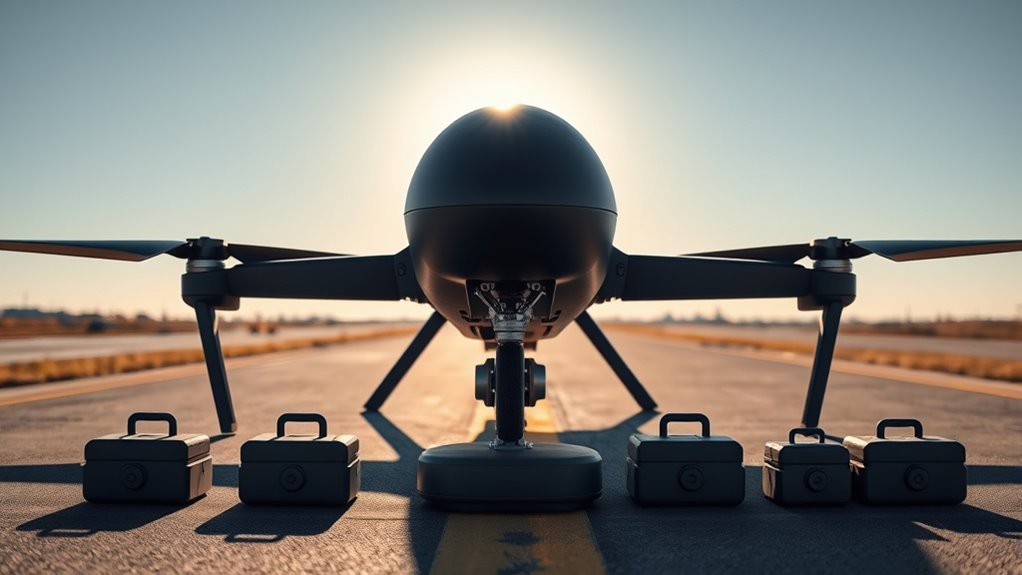
When evaluating drone performance, weight plays a vital role in determining payload capacity and flight time. A heavier drone may struggle to carry additional payloads without compromising its operational efficiency. Understanding these dynamics is essential for optimizing your drone’s capabilities and ensuring effective mission execution. Additionally, weight distribution is critical for maintaining flight stability and control, which can significantly influence overall performance. Drones with higher payload capacity often demonstrate better adaptability for specialized missions, allowing users to maximize their equipment’s potential.
Payload Capacity Considerations
Although many factors influence drone performance, payload capacity remains a critical consideration, as it directly impacts flight stability, battery life, and operational range. When you’re planning your drone’s mission, understanding payload enhancement is key. Overloading your drone can lead to instability, while underloading affects efficiency. Proper weight distribution is essential; distributing the payload evenly helps maintain balance and control during flight. You must also consider how various payloads affect the center of gravity, as this can influence maneuverability and responsiveness. By maximizing payload capacity without compromising performance, you can access the full potential of your drone. Always calculate and adjust for the specific conditions of your flight to guarantee peak performance and maneuverability.
Flight Time Impact
The weight of a drone markedly influences its flight time, with every extra gram affecting battery consumption and overall efficiency. When you’re optimizing for performance, consider how weight distribution plays an essential role. A well-distributed load enhances energy efficiency, allowing your drone to maintain stability and prolong its airborne duration. If the weight is concentrated in one area, it can lead to increased drag and reduced maneuverability, which, in turn, shortens flight time. By carefully managing weight and ensuring balanced distribution, you maximize the drone’s capabilities. Ultimately, understanding the interplay between weight and energy efficiency empowers you to make informed decisions, ensuring your drone can achieve its full potential while enjoying the freedom of flight.
Key Factors Influencing Drone Weight
While several factors contribute to the overall weight of large drones, the most significant include the materials used in their construction, battery capacity, and payload requirements. Your choice of material selection directly impacts not only the drone’s weight but also its durability and performance. Lightweight composites or aluminum can enhance the aerodynamic design, reducing drag and improving efficiency. Additionally, the drone lifting capacities of different models can influence material choices and overall design. Battery capacity is vital; higher capacity batteries increase weight, affecting flight time and maneuverability. Finally, payload requirements dictate the additional weight, as the drone must support various equipment or cargo. Balancing these factors is essential for ideal performance, ensuring that your drone achieves the desired range and functionality while maintaining agility and operational freedom. Additionally, battery chemistry plays a crucial role in determining the energy density and overall efficiency of the drone’s power system.
Regulatory Compliance for Large Drones
As you explore the world of large drones, understanding regulatory compliance becomes vital, since adhering to laws and guidelines guarantees safe and responsible operation. Maneuvering through the various regulatory frameworks can be complex, often presenting compliance challenges that demand your attention. You’ll need to familiarize yourself with local, national, and international regulations, which govern everything from airspace usage to drone specifications. Ignoring these requirements can lead to significant penalties and operational restrictions. Additionally, staying updated on evolving regulations is important, as the regulatory landscape for drones is in constant flux. By prioritizing compliance, you can make certain that you maximize your operational freedom while minimizing risks associated with legal infractions. Embrace the challenge; it’s a step toward responsible drone usage. Moreover, understanding common exclusions in drone insurance policies can further enhance your ability to operate within legal boundaries while protecting your investment.
Applications of Large Drones Across Industries
Steering regulatory compliance sets a solid foundation for exploring the diverse applications of large drones across various industries. In agriculture, you can utilize large drones for agricultural surveillance, enhancing crop management efficiency. For construction projects, they serve as essential tools for construction inspection and infrastructure mapping, ensuring adherence to safety standards. Aerial photography captures stunning visuals for marketing or documentation purposes. In emergencies, large drones enable rapid emergency delivery of supplies and assist in search and rescue operations. They also play a significant role in wildlife monitoring, tracking animal movements without disturbing habitats. Finally, large drones facilitate environmental assessments, providing critical data for conservation efforts. Each application underscores the transformative potential of large drones in various sectors. Additionally, their capacity for precision planting techniques enhances agricultural productivity by optimizing seed placement and resource management. Moreover, integrating multispectral cameras into large drones allows for real-time crop health analysis, further improving agricultural outcomes.
Battery Life and Payload Capacity Considerations
When evaluating large drones, understanding battery life and payload capacity is essential for optimizing performance in various applications. The efficiency of battery technology directly influences a drone’s operational time and the weight it can carry. Higher energy density batteries enable longer flights while supporting heavier payloads. However, a balance must be struck; overloading a drone can greatly reduce its energy efficiency, leading to quicker battery depletion. Consider the specific requirements of your mission—whether it’s surveillance, delivery, or agricultural monitoring—when determining the ideal payload. Keep in mind that advancements in battery technology continue to enhance energy efficiency, enabling drones to achieve greater distances and capabilities. This understanding empowers you to maximize your drone’s potential in the field, particularly as obstacle detection capabilities become more sophisticated in modern models. Drones like the Exo X7 demonstrate an optimal balance between battery life and performance, making them suitable for various tasks.
Future Trends in Large Drone Design
Battery advancements are just one aspect shaping the future of large drone design. You’ll see a shift towards innovative materials and aerodynamic designs, allowing drones to operate more efficiently and carry heavier payloads. These developments will not only enhance performance but will also reduce production costs.
| Aspect | Future Trends |
|---|---|
| Materials | Lightweight composites |
| Design | Streamlined, adaptive aerodynamics |
| Energy Efficiency | Enhanced battery tech |
| Payload Capacity | Increased due to structural integrity |
Incorporating these trends means you can expect drones to have longer flight times and improved stability. The freedom to explore new applications will expand as these technologies evolve, opening doors to numerous industries.
Safety and Operational Guidelines for Heavy Drones
As the use of heavy drones continues to expand across industries, understanding safety and operational guidelines becomes essential to ensuring both effective and secure operations. You need to implement robust safety measures to mitigate risks associated with heavy payloads and complex maneuvers. Regular maintenance checks and adherence to weight limits enhance operational efficiency, allowing for smoother flights and reduced accidents. Additionally, you should familiarize yourself with local regulations, ensuring compliance with airspace restrictions and certification requirements. The use of advanced motor and propulsion systems can significantly improve the stability and efficiency of heavy drones, making them safer to operate. Training operators thoroughly on emergency procedures enhances their ability to respond to unforeseen challenges. By prioritizing safety and operational efficiency, you not only protect assets and personnel but also support the sustainable growth of drone technology in various applications. Furthermore, integrating AI-driven obstacle avoidance technology can significantly enhance safety during complex maneuvers, reducing the risk of accidents.
Frequently Asked Questions
What Materials Are Commonly Used in Large Drone Construction?
In large drone construction, you’ll commonly find materials like carbon fiber, known for its strength-to-weight ratio, and aluminum alloy, which offers durability and lightweight properties. These choices enhance performance while ensuring efficient flight capabilities and operational freedom.
How Do Weather Conditions Affect Large Drone Performance?
Did you know that nearly 40% of drone accidents stem from adverse weather? Weather impacts flight stability considerably, affecting control and navigation, leading to potential crashes. Understanding these factors is essential for safe, unrestricted drone operation.
What Is the Typical Lifespan of a Large Drone?
The typical lifespan of a large drone varies, but with proper drone maintenance and attention to lifespan factors like usage frequency and environmental conditions, you can maximize its operational life considerably.
Are There Specific Insurance Requirements for Operating Large Drones?
Yes, there’re specific insurance requirements for operating large drones. You’ll need adequate insurance coverage that meets regulatory standards, including liability limits to protect against potential damages or accidents, ensuring your operations remain compliant and financially secure.
How Do Large Drones Compare in Cost to Smaller Drones?
It’s ironic how larger drones, often deemed more advanced, can lead to a surprisingly higher cost analysis compared to smaller ones. Size comparison reveals that efficiency doesn’t always equate to expense; you might be better off economically.
