
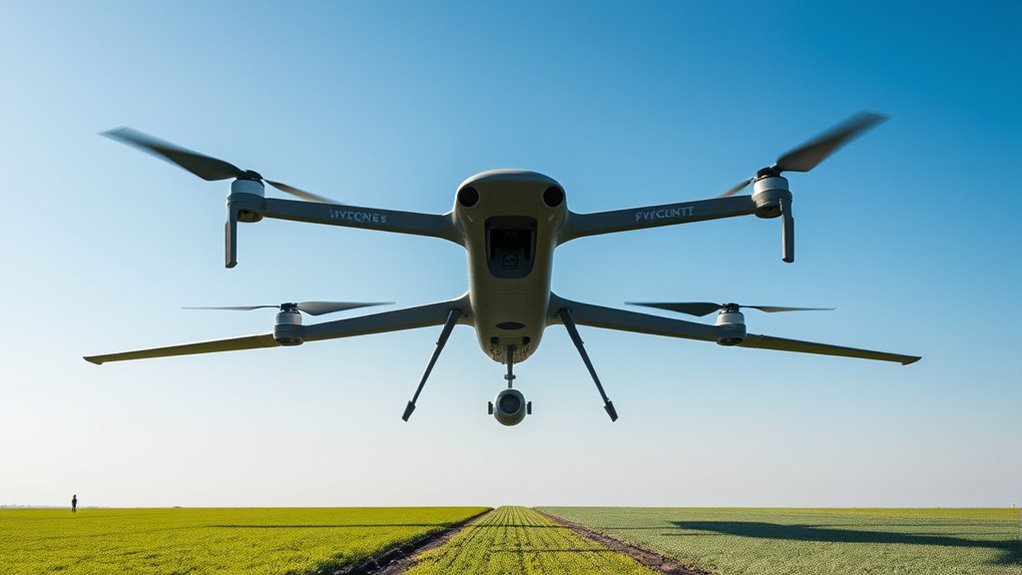
The largest drone currently in operation is the Northrop Grumman Global Hawk, boasting a wingspan of 130 feet. This size enhances its surveillance capabilities and operational efficiency. Additionally, other notable drones like the Boeing MQ-25 Stingray and the MQ-9 Reaper feature 68 feet and 66 feet wingspans, respectively. These dimensions directly influence payload capacity and range. For more insights into how size impacts functionality, you might find the following information beneficial.
The Largest Drones in the World: An Overview
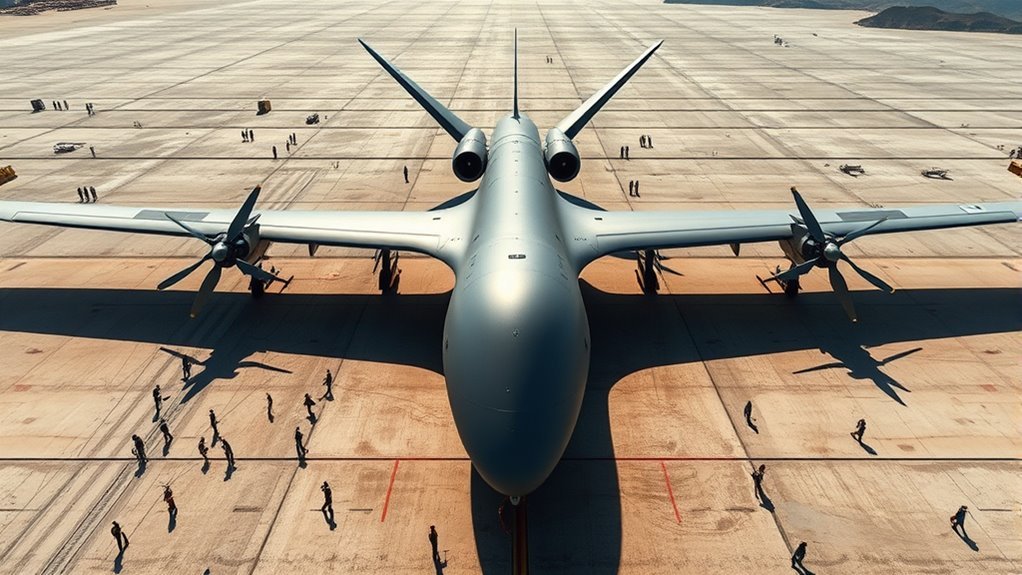
When you think about drones, you might picture small, nimble devices buzzing around, but the reality is that some of the largest drones in the world redefine the category entirely. These giant drones serve various purposes, from military applications to humanitarian efforts. When you make drone comparisons, you’ll notice that their dimensions greatly affect payload capacity, endurance, and operational range. For instance, the MQ-9 Reaper boasts a wingspan exceeding 66 feet, making it a formidable presence in the sky. Similarly, the Global Hawk offers unparalleled surveillance capabilities due to its expansive structure. By understanding these dimensions and their implications, you can appreciate how these giant drones push the boundaries of technology and expand our freedoms in aerial operations. Additionally, their advanced surveillance and reconnaissance capabilities provide real-time threat detection, enhancing mission effectiveness in complex environments.
Measuring Up: Dimensions of Notable Drones
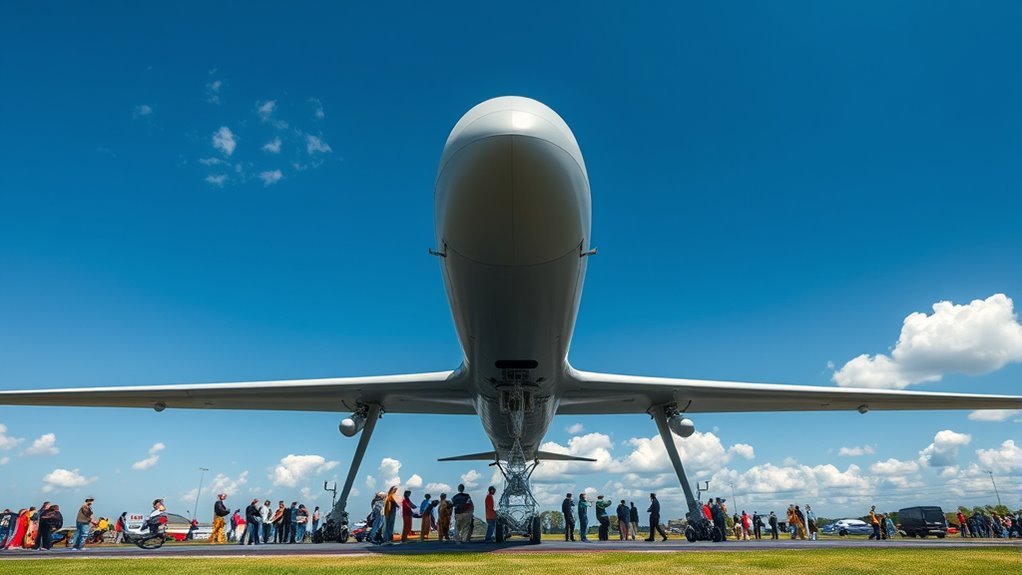
While many small drones are designed for agility, the dimensions of notable larger drones reveal their specific capabilities and applications. For instance, the Northrop Grumman Global Hawk boasts a wingspan of 130 feet, allowing it to cover vast areas for surveillance. In contrast, the Boeing MQ-25 Stingray’s wingspan of 68 feet highlights its role in aerial refueling. When you look at drone comparisons, size specifications often correlate with payload capacity and operational range. Consider the impressive 40-foot wingspan of the Lockheed Martin RQ-170 Sentinel, designed for stealth missions. These dimensions aren’t just numbers; they define each drone’s role in various sectors, from military operations to commercial applications, showing how size directly influences functionality and efficiency.
Purpose and Functionality of Massive Drones
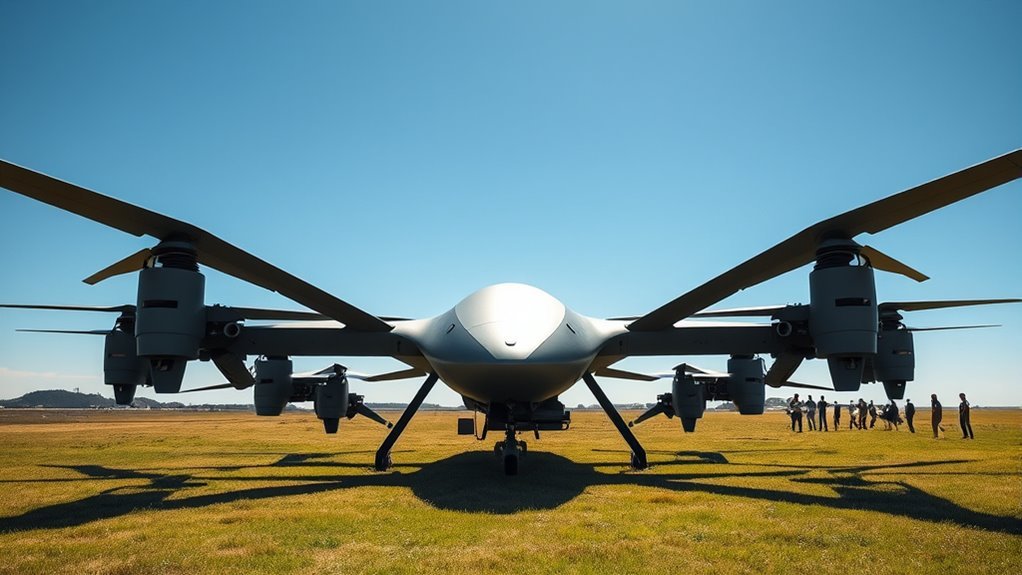
Although massive drones are often associated with military applications, their purpose and functionality extend far beyond defense. You’ll find these unmanned aerial vehicles (UAVs) increasingly useful in commercial uses, such as agriculture, surveillance, and logistics. In agriculture, they can monitor crop health and optimize yield by providing real-time data. For surveillance, massive drones enhance security by covering large areas efficiently, reducing manpower requirements. Additionally, in logistics, they deliver goods swiftly over long distances, revolutionizing supply chains. Their adaptability makes them invaluable across various sectors, enabling innovations that promote efficiency and cost-effectiveness. Consequently, while their military roots are significant, the broader applications of massive drones are reshaping industries, enhancing operational capabilities, and offering newfound freedoms in technology. Furthermore, the advancements in drone flight stability technology allow for improved performance even in challenging environments. The integration of advanced stabilization features ensures consistent performance, making massive drones reliable even in adverse conditions.
Technological Innovations Behind Giant Drones
As advancements in technology accelerate, the innovations driving giant drones are transforming their design and functionality. You’ll find that these developments enhance both performance and versatility, essential for maximizing their potential. Here are four key innovations:
- Autonomous Navigation: Advanced algorithms enable precise flight paths and obstacle avoidance, similar to how drones enhance rapid aid delivery during public health emergencies.
- Increased Payload Capacity: Engineering enhancements allow for greater cargo loads, expanding operational capabilities.
- Modular Design: Interchangeable components make maintenance and upgrades more straightforward and cost-effective.
- Enhanced Battery Technology: Improved energy efficiency and battery life extend operational range, empowering long-duration missions.
Additionally, giant drones can be equipped with real-time data collection capabilities that provide instant insights for various applications, including environmental monitoring and wildlife tracking. These innovations are not just about size; they redefine how giant drones operate, ensuring they meet the demands of various industries while offering the freedom to explore new applications.
The Future of Drone Design and Size
With the rapid pace of technological advancement, the future of drone design and size is set to evolve dramatically, driven by both market demands and innovative engineering solutions. You’ll notice emerging design trends focusing on modularity and adaptability, allowing drones to be reconfigured for various tasks without significant redesigns. Size evolution is also essential; smaller drones are becoming more capable, while larger models are being optimized for efficiency and payload capacity. This balance between size and functionality empowers users to engage in diverse applications, from agriculture to logistics. As regulatory landscapes shift, you’ll see an increase in hybrid designs that blend traditional fixed-wing and multirotor technologies, further expanding operational possibilities and enhancing user freedom. Additionally, integrating advanced AI automation will play a crucial role in optimizing drone operations and enhancing their effectiveness in various sectors. The focus on affordable options also drives innovation, making advanced drone technology accessible to a wider range of users and applications.
Frequently Asked Questions
How Much Do the Largest Drones Weigh?
When considering drone weight, the largest models can exceed several tons, often designed for heavy payloads. Their drone capacity directly correlates with weight, influencing operational efficiency and range for various applications in diverse environments.
What Materials Are Used in Constructing Giant Drones?
When constructing giant drones, engineers often mix carbon fiber with lightweight metals like aluminum and titanium. This combination provides strength and durability while ensuring peak performance, giving you the freedom to explore vast skies without limitations.
How Far Can the Largest Drones Fly?
The largest drones can achieve impressive drone endurance, reaching flight distances of over 3,000 miles, thanks to advanced flight technology. This capability allows you to explore vast areas, enhancing both efficiency and operational freedom.
What Are the Biggest Drones Used for Commercially?
When you consider commercial drone applications, large drone manufacturers focus on industries like agriculture, logistics, and surveillance. These drones enhance efficiency, reduce costs, and expand capabilities, giving you unprecedented freedom in operational possibilities.
Are There Regulations for Operating Large Drones?
Yes, there’re specific large drone regulations you must follow. Compliance with drone safety standards is essential for operational legality, ensuring safe integration into airspace while allowing you the freedom to explore commercial opportunities responsibly.
