

When people ask what the dimensions of the biggest drone are, they’re usually really asking what scale enables—how wingspan, overall size, and structural design translate into real operational capability. As of today, the largest drone fielded for long-range missions is widely recognized as the Northrop Grumman RQ-4 Global Hawk. It features a wingspan of about 130 feet, placing it among the biggest unmanned aerial systems ever built for persistent surveillance. That large airframe is not just impressive to look at; it supports high-altitude endurance, stable flight performance, and wide-area reconnaissance that would be difficult for smaller UAVs.
In the same category of large military and mission-focused drones, several other well-known platforms stand out for their size. The Boeing MQ-25 Stingray, designed primarily for aerial refueling, has an approximate wingspan of 68 feet. The General Atomics MQ-9 Reaper—frequently used for intelligence, surveillance, and reconnaissance (ISR) as well as armed missions—typically shows a wingspan of roughly 66 feet. These dimensions are tightly linked to the drone’s ability to carry payloads (such as sensors, cameras, radar, or communications equipment) and to maintain efficient flight profiles that support extended range and mission endurance.
Understanding drone dimensions also helps explain why “drone comparisons” are more than a numbers game. Bigger UAVs can often carry heavier sensor turds or additional fuel, which directly affects payload capacity, range, and time on station. If you’re trying to connect size to function, this is where the most meaningful technical relationship becomes clear: wing area and overall aircraft geometry influence lift, aerodynamic efficiency, and the practical trade-offs between speed, endurance, and payload.
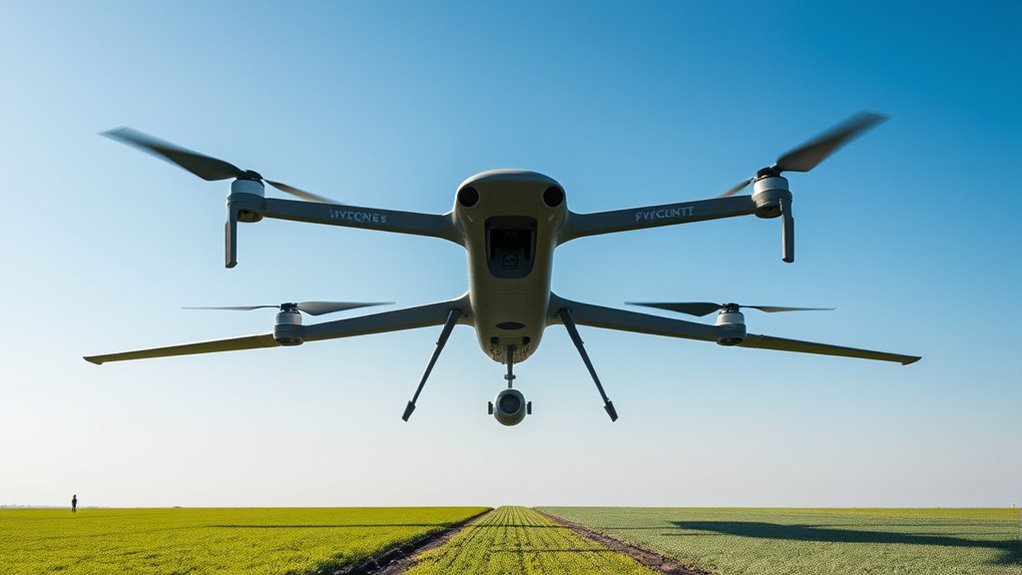
The Largest Drones in the World: An Overview
While many people associate drones with small, agile quadcopters, the largest drones in the world operate on a very different level. Giant UAVs are engineered for sustained flight, long-distance operations, and mission systems that require stable platforms and significant onboard capacity. Their size enables them to perform roles that range from military ISR to non-combat and humanitarian support tasks.
When you compare major UAVs by dimensions, you quickly see a pattern: larger wingspans generally support greater endurance and improved ability to remain on station over wide regions. For example, the MQ-9 Reaper’s wingspan—often cited as exceeding 66 feet—contributes to its capability to remain airborne long enough to support ongoing surveillance. Meanwhile, the Global Hawk’s expansive structure supports large-area monitoring and high-resolution reconnaissance, helping mission planners collect actionable intelligence across vast territories.
These platforms also illustrate how size supports advanced surveillance and reconnaissance. Real-time threat detection, continuous observation, and wide-area monitoring become more feasible when a drone can carry sophisticated sensor payloads and maintain efficient flight for hours at a time. In other words, scale directly supports aerial operational effectiveness—and expands what UAVs can realistically deliver in complex environments.
Measuring Up: Dimensions of Notable Drones
Most smaller drones are built for quick maneuvering and compact deployment, but the “big drone” segment is all about range, payload flexibility, and endurance. The dimensions of notable drones reveal their intended mission profiles and help explain why certain UAVs excel in specific roles.
Northrop Grumman Global Hawk
The Northrop Grumman RQ-4 Global Hawk is frequently cited as the largest drone currently in operation, with a wingspan of roughly 130 feet. This wide span enhances lift and aerodynamic efficiency, which supports long-range surveillance and persistent sensor operation. In practical terms, that means fewer gaps in coverage and the ability to monitor large geographic areas—one of the reasons it’s so highly valued for strategic ISR missions.
Boeing MQ-25 Stingray
The Boeing MQ-25 Stingray is another prominent example, with a wingspan of approximately 68 feet. Its size is closely tied to its primary role: aerial refueling. Large wing area supports stable flight and the fuel-related mission requirements that enable carrier-based aircraft to stay airborne longer, extending sortie duration and improving overall fleet effectiveness.
General Atomics MQ-9 Reaper
The MQ-9 Reaper is commonly reported to have a wingspan near 66 feet. This scale allows the platform to carry a meaningful mix of ISR payloads while still maintaining efficient mission endurance. In ISR and strike support contexts, that balance between payload and range is a key reason why the MQ-9 remains widely used.
Lockheed Martin RQ-170 Sentinel
In stealth-focused drone comparisons, the Lockheed Martin RQ-170 Sentinel is often referenced with an approximate 40-foot wingspan. While smaller than the largest surveillance giants, its dimension reflects a different design priority: stealth, mission concealment, and low-observable performance. Even in a stealth context, wingspan and airframe shaping still influence endurance, stability, and sensor placement.
Across these examples, dimensions aren’t arbitrary. They function as engineering constraints that shape lift capacity, payload volume, fuel fraction, and overall aerodynamic efficiency—each of which determines how the UAV performs in its assigned sector, including military operations and select commercial applications.
Purpose and Functionality of Massive Drones
Massive drones are often associated with defense, and many of the most visible large UAV platforms do support military ISR, reconnaissance, and strategic mission needs. However, their purpose and functionality increasingly extend beyond defense. Larger unmanned aerial vehicles (UAVs) are also gaining traction in commercial and civil operations—particularly where long-range coverage and payload-carrying ability matter.
Agriculture and real-time crop monitoring
In agriculture, large UAV platforms can support extensive overflight coverage and more capable sensor suites. They can provide real-time data for crop health assessment, helping farmers detect stress, evaluate growth patterns, and optimize yield. While the biggest drones are not always used directly on small farms, the same principles of endurance and payload capacity apply to scaling up agricultural monitoring.
Security and wide-area surveillance
For surveillance and security missions, larger drones can cover large areas efficiently, reducing the need for constant ground patrols. Their size supports stable flight and the ability to carry sensor systems that may include electro-optical cameras, infrared imaging, and communications relays.
Logistics and long-distance transport
In logistics, the ability to move payloads over longer distances is a major operational advantage. While the exact “biggest drone” designs vary by program, UAV size can influence how much cargo can be carried and how far that cargo can be delivered without refueling or recovery operations that slow down service.
Ultimately, the biggest drone dimensions—especially wingspan—are closely connected to mission performance. Larger UAVs tend to support greater payload capacity and longer operational range, which makes them well-suited for complex, sensor-heavy tasks. As UAV technology continues to evolve, these scale advantages will likely continue shaping how drones support surveillance, endurance-based services, and next-generation aerial operations.
📋 About This Article
This article explains the dimensions of the biggest long-range drones and what those measurements mean for real-world performance. It’s written for curious readers, aviation fans, and students who want quick, clear context on major unmanned aircraft. You’ll learn the approximate wingspans of standout models like the Northrop Grumman RQ-4 Global Hawk, plus other large mission drones such as the Boeing MQ-25 Stingray and the General Atomics MQ-9 Reaper.
Frequently Asked Questions: What Are the Dimensions of the Biggest Drone?
What is considered the “biggest” drone?
“Biggest” can mean different things depending on the context. Most commonly, people refer to the largest drone by either (1) wingspan (for fixed-wing or winged unmanned aircraft), (2) takeoff weight (for very heavy unmanned aircraft), or (3) overall size/volume (length, height, and rotor/propeller footprint). In addition, “biggest” can refer to civilian, commercial, or military platforms. Because categories vary, there isn’t one universal dimension that fits all definitions.
How large are the biggest drones by wingspan?
Many of the largest unmanned aircraft used for long-endurance missions are fixed-wing platforms, where wingspan is the most informative measurement. Published examples of top-tier long-range drones can span tens of meters—often in the approximate range of 20–40+ meters (roughly 65–130+ feet)—depending on model and configuration. For accurate numbers, you typically need to check the manufacturer’s specifications or credible defense/aerospace references, since wingspan can vary with control surfaces, transport mode, and upgrades.
What are the biggest drones’ overall length and height dimensions?
Overall length and height vary widely by design. Fixed-wing “large drone” platforms may measure roughly in the range of 10–30+ meters in length (about 33–98+ feet), with heights typically smaller than length because the fuselage sits lower and the landing gear adds only some additional vertical dimension. Rotor-based or hybrid designs can be taller due to propellers, landing gear, and the sweep of rotors, but they are less common among the largest wingspan aircraft. As a result, the best way to compare is to look at specific dimension sets—length, wingspan (if applicable), and max height/clearance.
How do payload and operating configuration affect a drone’s dimensions?
A drone’s listed dimensions may change based on configuration. Payloads (such as cameras, radar, communications equipment, or stores) can add length or height via external mounts. Folding wings or removable components can alter the “transport size” versus the “operational size.” Even landing gear position and sensor placement can change max height or clearance. If you’re trying to determine whether a hangar, trailer, or launch setup fits, look for both transport dimensions and fully deployed dimensions—then confirm clearances for accessories, antennas, and any ground-handling interfaces.
Where can I find reliable dimensions for the largest drones?
For the most reliable dimensions, use sources that publish technical specifications directly: manufacturer datasheets, official press kits, regulatory documents (when available), and reputable defense/aerospace publications. When dealing with very large or sensitive platforms, some measurements may be approximations in public reports, so treat exact numbers with caution. Also verify whether the source specifies wingspan in the deployed state, includes radomes/antennas, or provides both transport and operational dimensions. If you share the drone model name or manufacturer, I can help interpret which dimension set is most relevant for your use case (storage, transport, or operation).
