
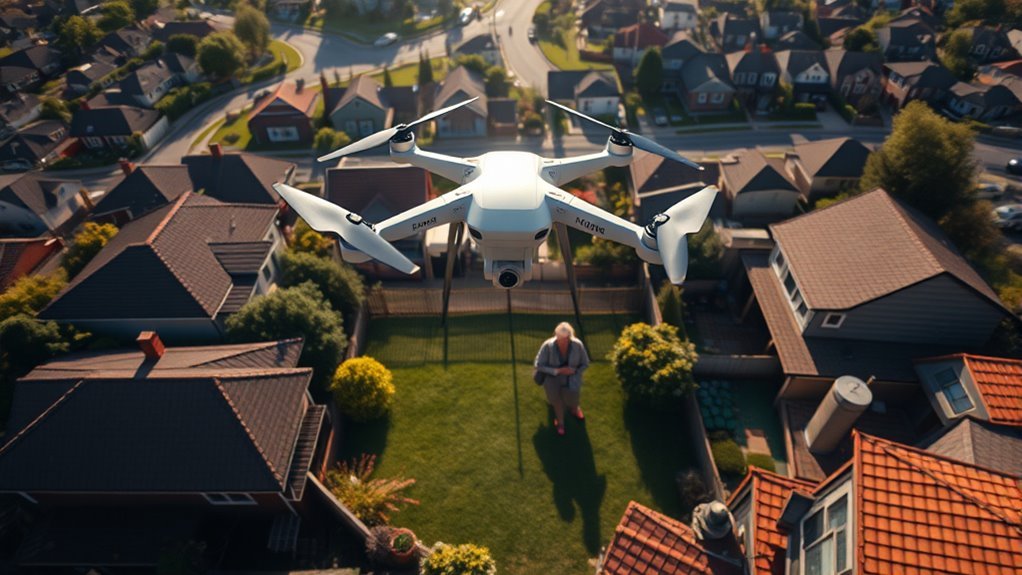
When flying drones over private property, you must respect property owners’ rights and aerial sovereignty. Unauthorized flights can lead to claims of aerial trespassing. The FAA guidelines mandate you maintain visual line-of-sight and comply with local laws, which may impose additional restrictions. Always obtain consent if possible to avoid privacy issues. Familiarizing yourself with both federal and state regulations is key to safe operation. Discover more about traversing these laws and best practices.
Understanding Airspace Regulations
When it comes to flying drones, understanding airspace regulations is essential for compliance and safety. Different airspace types—such as controlled, uncontrolled, and special use—dictate where you can operate your drone. Each classification of airspace has specific rules, and knowing these can prevent legal issues and enhance your flying experience. Drones are classified into different categories, including recreational and commercial, which further influences where and how you can fly. For instance, flying in controlled airspace typically requires authorization, while uncontrolled airspace offers more freedom. By familiarizing yourself with these regulations, you can maximize your drone operation while respecting the rights of others and ensuring safety in the skies. Always stay informed to enjoy your freedom responsibly. Additionally, make sure to check for temporary flight restrictions that may impact your intended flight area.
The Concept of Navigable Airspace
Navigable airspace refers to the portion of the atmosphere where aircraft, including drones, are permitted to operate safely. This space typically extends from ground level to a navigable altitude, which is determined by various regulations. Understanding navigable airspace is essential for drone operators who value their freedom to fly. It’s important to know that while you can enjoy the skies, you must respect aerial sovereignty, which grants property owners rights over the airspace directly above their land. This balance guarantees your ability to operate drones while acknowledging the rights of others. Being aware of the limits of navigable airspace helps you avoid conflicts and promotes responsible drone use, allowing for a harmonious coexistence in the skies.
Property Owners’ Rights
Understanding property owners’ rights is essential for anyone operating a drone. As a drone pilot, you need to recognize that property owners have the right to control access to their land, including the airspace above it. Aerial trespassing occurs when you fly your drone over someone else’s property without permission, which can lead to legal repercussions. While you might believe you’re enjoying your freedom, encroaching on someone else’s rights can quickly escalate into disputes. Always consider the boundaries established by the property owner. Getting permission before flying over private land not only respects their rights but also fosters goodwill and avoids potential conflicts. Remember, respecting property access is vital for responsible drone operation.
Federal Aviation Administration (FAA) Guidelines
The Federal Aviation Administration (FAA) provides essential guidelines for flying drones, primarily focusing on airspace regulations. As a drone operator, you’re responsible for adhering to these rules to guarantee safe and legal flights. Additionally, it’s vital to understand how privacy considerations intersect with these regulations to protect both your rights and those of property owners.
Airspace Regulations Overview
While flying drones can be an exciting way to capture aerial views, it is crucial to be aware of the Federal Aviation Administration (FAA) guidelines that govern airspace usage. Understanding airspace classifications helps you navigate safely and legally while using drone technology for aerial photography. Here’s a quick overview:
| Airspace Class | Description |
|---|---|
| Class G | Uncontrolled airspace |
| Class E | Controlled airspace |
| Class B | Busy terminal airspace |
Each airspace class has specific rules and altitude restrictions. As a drone pilot, knowing these regulations empowers you to enjoy your aerial adventures while respecting the rights of others. Stay informed and fly responsibly to maintain your freedom in the skies!
Drone Operator Responsibilities
As a drone operator, you’re responsible for adhering to the FAA guidelines that guarantee safety and compliance in the skies. This includes understanding airspace classifications, maintaining visual line-of-sight, and ensuring your drone is registered if it exceeds certain weight limits. Following drone operator ethics is essential; you should respect the rights of others while flying. Responsible flying means avoiding populated areas and private properties without permission. Always check for temporary flight restrictions and weather conditions before takeoff. Additionally, be mindful of your drone’s capabilities to prevent accidents. By prioritizing safety and ethics, you not only protect yourself but also promote a positive image of the drone community, allowing everyone to enjoy the freedom of the skies responsibly.
Privacy Considerations Explained
Understanding the responsibilities of drone operation naturally leads to the important topic of privacy considerations. The Federal Aviation Administration (FAA) emphasizes that while you have the freedom to fly drones, you also need to respect drone privacy. Flying over private property for aerial surveillance can invade someone’s personal space and lead to legal consequences.
It’s vital to be aware that capturing images or video of individuals without their consent may violate privacy laws. Always consider the implications of your drone usage on others’ rights. Maintaining a respectful distance and obtaining permission when necessary can help you enjoy your freedom while minimizing conflicts. Remember, balancing your rights with others’ privacy is essential for responsible drone operation.
State and Local Laws
When it comes to flying drones over private property, state and local laws can greatly influence your rights. Understanding airspace rights is essential, as different jurisdictions may have varying regulations and ordinances. You need to stay informed about these local rules to avoid potential legal issues.
Airspace Rights Explained
While many people assume that owning property grants them complete control over the airspace above it, the reality is more nuanced. Airspace boundaries are not as straightforward as property lines. The Federal Aviation Administration (FAA) regulates navigable airspace, meaning you can’t claim ownership up to the sky. Generally, you have rights to the airspace directly above your property, but only to a certain extent. Drones flying within this airspace can lead to legal implications, especially if they intrude on your privacy or safety. Understanding these boundaries can empower you to protect your rights while maneuvering through the complexities of drone laws. Always consider state and local regulations, as they can further define your airspace rights and responsibilities.
Local Ordinance Variations
Local ordinances can greatly impact how drones are operated over private property, so it’s vital to be aware of specific state and local laws. Ignoring these regulations can lead to fines or other penalties. Here are three key points to take into account:
- Local Drone Regulations: Each municipality can create its own rules governing drone use, which may restrict where you can fly.
- Height Restrictions: Some areas may impose limits on how high you can operate your drone, affecting your aerial photography or surveying.
- Municipal Enforcement Policies: Local authorities often enforce these regulations, so it’s important to understand how they monitor compliance and what penalties may arise.
Stay informed to guarantee your freedom to fly isn’t compromised by local laws.
Privacy Concerns and Legal Considerations
As drone technology becomes increasingly accessible, concerns over privacy and legal implications have surged. Many people worry about drone surveillance and how it can lead to property invasion. Understanding your rights as a drone operator is essential to avoid legal troubles. Anzu’s software provides tools for automated software auditing to help businesses ensure compliance with privacy regulations. Additionally, employing advanced AI integration can significantly enhance the efficiency of monitoring drone operations and ensuring adherence to legal standards.
| Privacy Concern | Legal Implication | Recommended Action |
|---|---|---|
| Unauthorized surveillance | Invasion of privacy claim | Obtain consent from property owners |
| Capturing personal data | Potential lawsuits | Limit data collection |
| Flying over restricted areas | Fines or penalties | Check local regulations |
Respecting others’ privacy isn’t just good practice; it’s important for maintaining the freedom to operate drones responsibly. Stay informed about the laws to navigate these complexities effectively.
Best Practices for Drone Operators
To operate drones responsibly, it’s essential to follow best practices that guarantee safety and compliance with regulations. Here are three key points to keep in mind:
- Know the Rules: Familiarize yourself with local regulations, including no-fly zones and altitude limits. This knowledge is vital for legal drone operation. Understanding national forest drone regulations can further enhance your compliance and safety.
- Practice Drone Etiquette: Respect others’ privacy and avoid flying over private property without permission. Always communicate your intentions when flying in public areas.
- Complete Operator Training: Invest in thorough training programs to improve your skills and understanding of drone technology. This not only enhances your flying abilities but also boosts safety.
Frequently Asked Questions
Can I Fly a Drone Over My Neighbor’s House?
You can fly a drone over your neighbor’s house, but it’s wise to contemplate drone privacy and seek your neighbor’s consent. Respecting boundaries fosters good relations and can help avoid potential legal issues.
What Happens if My Drone Crashes on Private Property?
If your drone crashes on private property, it’s like a car accident—property damage could lead to claims. Having drone insurance can protect you from financial liability if your drone causes harm to someone else’s property.
Are There Any Height Restrictions for Flying Drones?
Yes, there’re altitude limits for flying drones. Under drone regulations, you typically can’t exceed 400 feet above ground level. Always check local laws, as they might impose additional restrictions for specific areas or situations.
Do I Need Permission to Fly Over Agricultural Land?
When flying over agricultural land, you’ll generally need landowner permission due to agricultural regulations. Always check local laws to guarantee you’re compliant and respect property rights, balancing your freedom with others’ rights.
What Are the Penalties for Violating Drone Laws?
Daring drone enthusiasts, beware! Violating drone laws can lead to hefty drone fines and serious legal consequences. Knowledge of regulations is essential for maintaining your freedom and flying safely without facing unwanted penalties or repercussions.
