

Drones can be seen flying around at night for a variety of practical, public-safety, and commercial reasons. As unmanned aerial vehicles become more capable, they offer high-value capabilities that are especially useful after dark—such as real-time situational awareness, rapid area scanning, and thermal detection. From law enforcement and emergency response to agriculture, infrastructure inspections, and event security, night operations are often where drones deliver their biggest advantages.
One of the main drivers is that nighttime conditions can make traditional ground operations slower and more dangerous. With the right sensors—like thermal cameras, low-light navigation systems, and stabilized imaging—drones can support faster decisions and more efficient resource deployment. However, their increasing presence also raises important discussions around privacy, aviation rules, and responsible usage.
Law Enforcement Operations at Night
As law enforcement agencies adopt advanced technologies, drones have become an important tool for nighttime surveillance and incident management. These systems help officers monitor large areas without being limited by foot patrol coverage or the risks associated with entering unfamiliar locations in the dark.
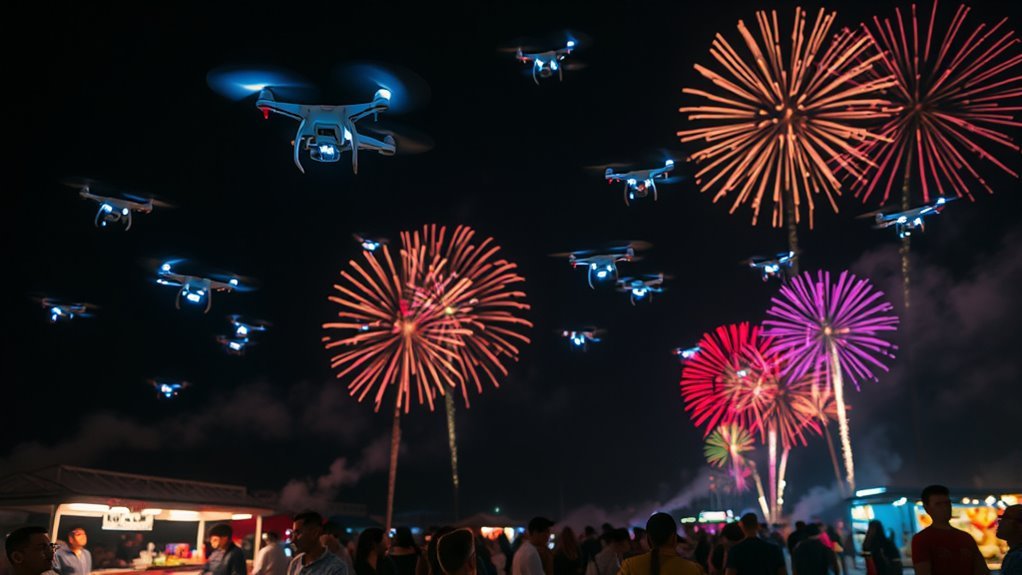
Drone technology provides real-time data that can be shared with dispatch and command teams, enabling faster responses to active incidents. During night operations, drones equipped with thermal imaging can detect heat signatures, which can assist in locating suspects, tracking individuals, or identifying missing persons when visibility is poor.
In many scenarios, nighttime drone support improves overall operational efficiency and helps reduce response time. It can also enhance public trust when agencies use drones transparently and communicate clearly about safety objectives. In addition, integrating advanced AI capabilities can improve how drone footage is analyzed—helping teams prioritize targets, detect anomalies, and streamline decision-making.
At the same time, responsible operation matters. Agencies must balance operational benefits with privacy concerns and civil liberties protections. Clear policies, proper oversight, and compliance with local regulations are essential for maintaining public confidence while improving safety.
Search and Rescue Missions in the Dark
Drones are also used extensively in search and rescue operations, where time is critical and visibility can be severely limited. When someone is lost in the wilderness, involved in an accident, or missing after a natural disaster, drone crews can rapidly survey large areas more quickly than ground teams alone.
Equipped with thermal imaging and night vision capabilities, drones can detect body heat and movement even in complete darkness. This thermal advantage allows responders to locate individuals faster, including in challenging environments such as dense forests, uneven terrain, or areas with smoke and low light.
By covering wide sections of land from above, drones reduce the time spent searching and can lower the risk exposure for rescue personnel. For agencies and volunteers on the ground, this can mean fewer hours of uncertainty—and faster reunification when the stakes are highest.
Agricultural Monitoring and Precision Farming
While drones are often associated with photography or entertainment, they increasingly play a meaningful role in agricultural monitoring. Farmers and agricultural service providers use drones to gather data that supports precision agriculture and helps reduce the cost and delay of manual field checks.
Drones outfitted with specialized sensors can assess crop health with notable accuracy. They can capture high-resolution imagery and other environmental measurements that help identify stress patterns—such as nutrient deficiencies, irrigation problems, or early pest infestation signals—before those issues become widespread.
This approach allows growers to monitor fields from above and prioritize where attention is needed most. The result is improved decision-making, better resource management, and less disruption to normal farming operations. Because many agricultural tasks continue after dusk during certain seasonal workflows, nighttime drone flights can also help collect valuable data during low-activity hours.
Infrastructure Inspections and Asset Management
Another reason drones are flying at night is the need for efficient infrastructure inspection. Drones can quickly assess areas that would otherwise require extensive manpower, specialized equipment, or road closures.
With advanced imaging systems—often combined with thermal sensors—drones can help inspect power lines, bridges, rooftops, and industrial facilities. They can also support condition monitoring by identifying potential issues such as heat anomalies, structural damage indicators, or abnormal equipment performance.
In urban environments, night inspections can be particularly practical. When traffic is lower and visibility is optimized through sensor technology, drones can capture data while minimizing interruptions to everyday life. This makes them a valuable asset for utilities, construction teams, and facility managers.
Monitoring Environmental Conditions and Pollution Levels
Drones are also used to track environmental conditions, including pollution-related monitoring. By gathering atmospheric or surface data from above, drones can support environmental assessments in ways that are faster and sometimes safer than traditional methods.
Depending on the equipment being used, drones may help collect information that supports analysis of air quality patterns, emissions indicators, or environmental changes across a wide area. This can be especially useful during night hours when certain conditions allow more consistent data capture, or when teams are working to support ongoing compliance and incident monitoring.
As sensor technology continues to advance, the ability to collect environmental intelligence at night is expanding—helping researchers, government agencies, and environmental contractors improve how they detect and respond to potential risks.
Security at Events and Nighttime Recreational Activities
Not all nighttime drone activity is linked to public safety or industrial work. Some drones appear around events and recreational settings where cameras and aerial monitoring may be used for security, coverage, or entertainment.
At large gatherings—such as festivals, concerts, and outdoor sports—event organizers may deploy drones for perimeter monitoring and crowd situational awareness. In recreational contexts, drones may also be used for activities like night racing or nighttime flight demonstrations, where lighting and navigation systems help pilots maintain control and visibility.
It’s important to note that the use of drones in any setting must follow local aviation regulations. Responsible operators typically use proper lighting, maintain safe distances, and ensure flights do not interfere with aircraft, emergency response efforts, or public safety initiatives.
Key Factors Behind Nighttime Drone Flights
While the specific use cases vary, many night drone operations rely on a shared set of capabilities:
- Thermal imaging for detecting heat signatures in low visibility conditions.
- Real-time data streaming to support fast decision-making and coordinated responses.
- Low-light sensors and night navigation systems to maintain flight stability after dark.
- Wide-area scanning to reduce search time in emergencies and improve monitoring efficiency.
- Advanced analytics and AI to assist with interpreting sensor data and prioritizing findings.
Privacy, Safety, and Responsible Drone Use
Because drones can capture images and gather location-relevant information, privacy considerations remain central to the ongoing conversation about why drones are flying at night. Responsible operators and agencies use defined flight protocols, data handling procedures, and regulatory compliance to prevent misuse.
Nighttime drone activity should always be conducted with safety in mind, including adherence to airspace rules, maintaining line-of-sight where required, avoiding restricted zones, and respecting nearby communities. When drones are used responsibly, they can provide meaningful benefits—enhancing safety, accelerating rescue efforts, and improving monitoring across critical sectors.
There’s much more to explore as drone capabilities continue to grow, including emerging sensor technologies, more advanced AI-driven analytics, and tighter regulatory frameworks designed to ensure drones support communities without undermining privacy or public trust.
📋 About This Article
This article explains why drones are often spotted flying at night and what purposes they serve. It’s for curious residents, event organizers, and professionals who want to understand the practical—and sometimes public-safety—reasons behind nighttime drone activity. You’ll learn how drones help with things like real-time awareness, faster area scanning, and thermal detection, plus the key rules and privacy concerns that come with their growing presence after dark.
Frequently Asked Questions: Reasons There Are Drones Flying Around at Night
