

When you fly a drone in rain, you risk water infiltrating sensitive electronics, causing short circuits and corrosion. Rain reduces visibility and disrupts sensors, complicating navigation and obstacle avoidance. Moisture also raises the chance of mechanical failure in motors and moving parts. Signal interference can degrade control responsiveness, increasing crash risk. Battery performance may decline, while slippery surfaces make landings unstable. Understanding these hazards and protective measures is essential for safe operation in wet conditions.
Impact of Water on Drone Electronics
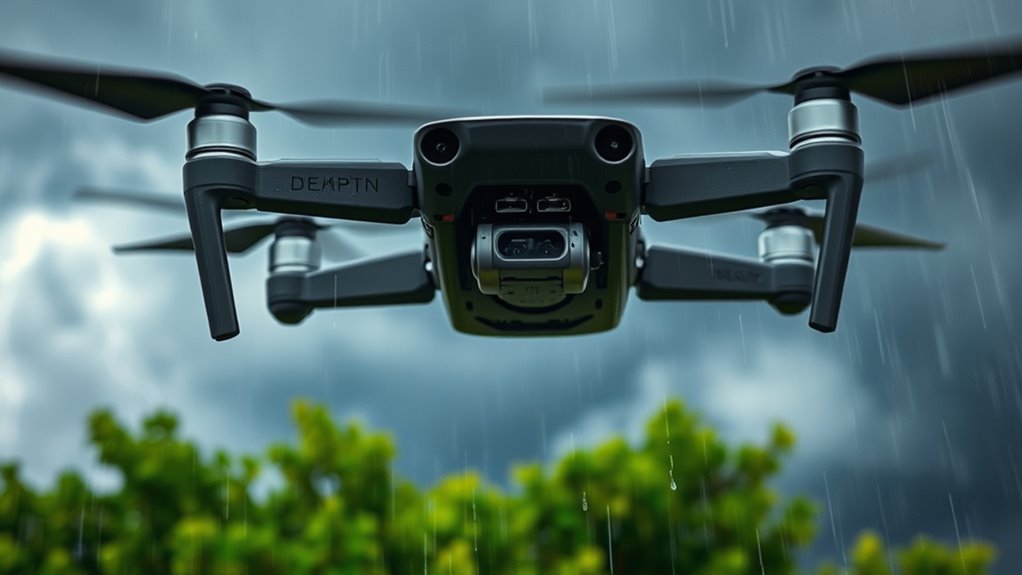
Although drones are built with some level of protection against moisture, exposure to rain can cause water to infiltrate sensitive electronic components. You should understand that even the most advanced waterproof coatings have limits; prolonged or heavy rain can breach these barriers. Once water penetrates, it can lead to short circuits or permanent damage to critical systems. Sensor corrosion is a particular concern because it degrades the accuracy of navigation and stabilization functions, directly impacting flight safety. While you seek freedom in the skies, you must also acknowledge these vulnerabilities and avoid rain exposure to preserve your drone’s integrity. Prioritizing maintenance and inspection after any moisture contact is essential to prevent latent failures caused by water ingress and corrosion in your drone’s delicate electronics.
Reduced Visibility and Navigation Challenges
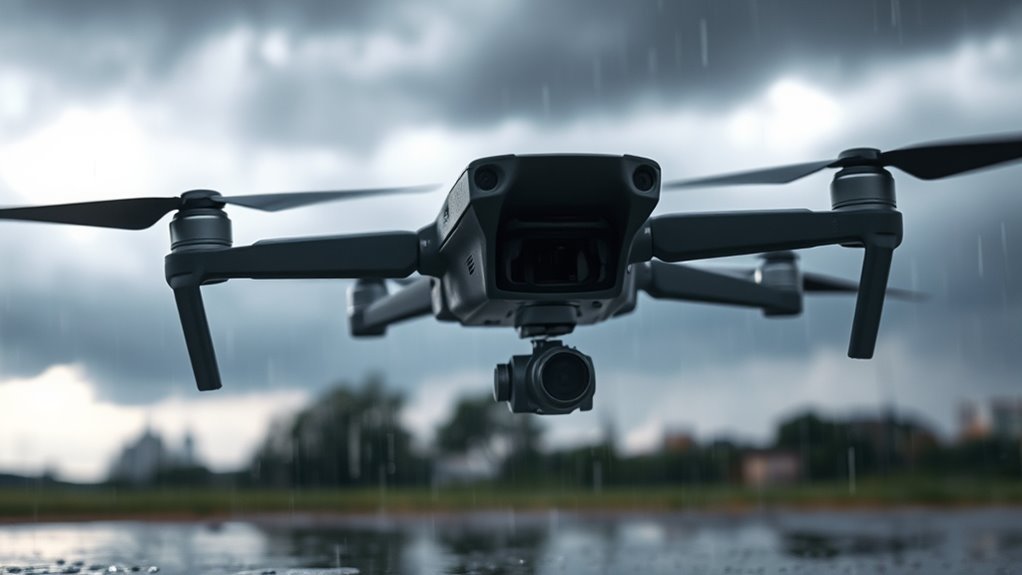
Beyond the risks water poses to your drone’s internal components, rain also considerably impairs visibility and navigation. Visibility reduction caused by raindrops and overcast skies limits your ability to maintain visual line-of-sight, a critical factor for safe flight. This diminished clarity increases the likelihood of losing orientation and complicates obstacle detection. Additionally, navigation difficulties arise as onboard sensors, such as optical flow cameras and GPS modules, can be disrupted by moisture and atmospheric interference. These factors collectively reduce your control precision and increase the potential for unintended deviations from planned flight paths. If you value the freedom to explore and capture aerial perspectives, you must acknowledge that flying in rain demands heightened caution and may limit operational effectiveness due to these visibility and navigation constraints.
Increased Risk of Mechanical Failure
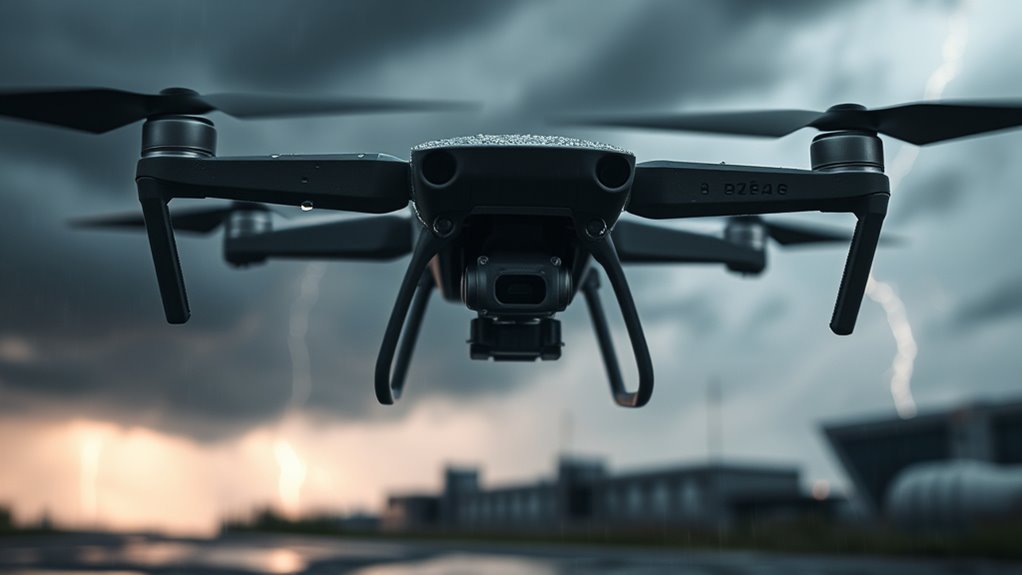
When you fly your drone in rain, water can seep into sensitive electronic components, increasing the chance of short circuits or corrosion. This moisture exposure compromises the mechanical integrity and can lead to unexpected failures. You need to understand how vulnerable your drone’s hardware is to these conditions before flying in wet environments.
Water Damage Effects
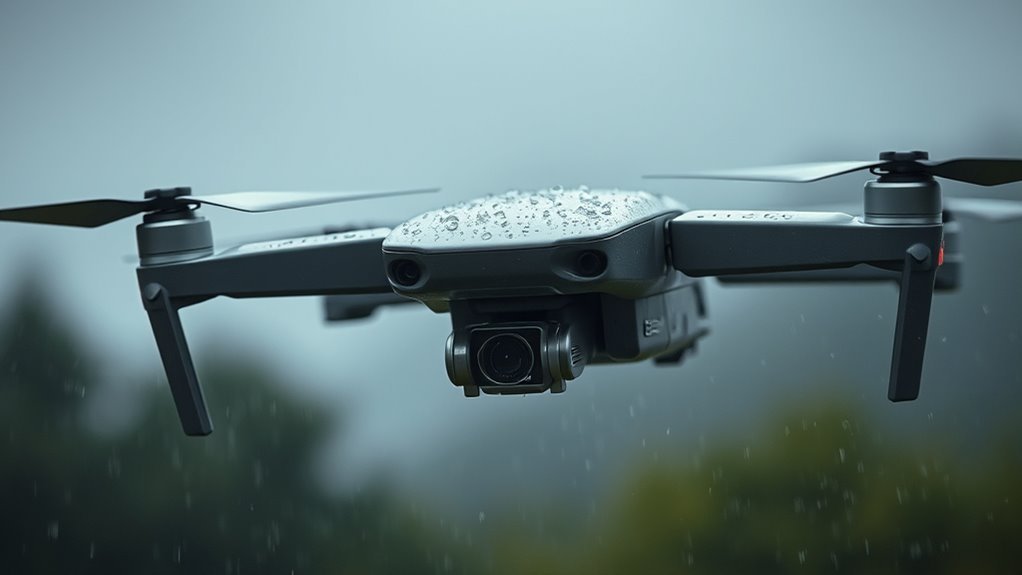
One key concern you should consider is the increased risk of mechanical failure caused by water infiltration during rain flights. Water can penetrate bearings, motors, and moving parts, leading to corrosion, lubrication breakdown, and eventual malfunction. This damage often remains hidden without thorough moisture detection, making regular drone maintenance critical. Ignoring water exposure can compromise your drone’s structural integrity and flight reliability, restricting your freedom to operate safely. To mitigate risks, inspect your drone meticulously after any rain exposure, focusing on seals and joints where moisture is likely to accumulate. Employing moisture detection tools can help identify early signs of water damage before failures occur. Staying vigilant guarantees your drone maintains peak performance and longevity, enabling you to enjoy unrestricted flight experiences with confidence.
Electronic Component Vulnerability
Water infiltration doesn’t only threaten mechanical parts; it also greatly endangers your drone’s electronic components. When rainwater breaches the protective electronic insulation, it can cause short circuits and corrosion, leading to system failures that restrict your flight freedom. To mitigate these risks, you should prioritize drone maintenance by:
- Regularly inspecting seals and electronic insulation for wear or damage.
- Avoiding flying in rain unless your drone is explicitly rated for water resistance.
- Immediately drying and cleaning your drone after exposure to moisture.
- Using protective coatings or waterproof housings where applicable.
Neglecting these precautions increases the likelihood of mechanical failure due to compromised electronics, severely limiting your operational reliability and freedom in the air.
Signal Interference and Control Issues
Although drones are equipped with advanced communication systems, flying in rain can considerably disrupt signal transmission, leading to control issues. Rain droplets scatter and absorb radio frequency waves, which degrades signal reliability between your controller and the drone. This interference increases control latency, meaning commands take longer to reach your drone, and feedback from sensors may be delayed or lost. Reduced signal reliability can cause intermittent connection drops, forcing your drone into failsafe modes or abrupt landings. To maintain precise control and guarantee your freedom to maneuver safely, you must recognize these risks. Avoid flying in heavy rain or environments with dense precipitation, as even minor disruptions can compromise your ability to respond promptly, putting both your drone and surroundings at risk.
Battery Performance in Wet Conditions
When operating your drone in wet conditions, battery performance can degrade unpredictably due to moisture exposure. Water intrusion can directly impact the battery’s internal chemistry, reducing both charging efficiency and battery lifespan. To maintain control and maximize flight freedom, consider these risks:
- Reduced capacity: Moisture can cause internal short circuits, leading to unexpected power drops mid-flight.
- Charging issues: Wet contacts lower charging efficiency, increasing charge times or preventing full charges.
- Accelerated degradation: Consistent exposure to damp environments shortens battery lifespan by damaging cells.
- Safety hazards: Compromised batteries risk overheating, swelling, or leakage, threatening both you and your drone.
Understanding battery vulnerabilities in wet conditions helps you make informed decisions, ensuring safer, more reliable flights even when freedom calls amid unpredictable weather.
Potential for Motor and Propeller Damage
If you operate your drone in rainy conditions, you risk damaging critical components like motors and propellers. Water intrusion can cause corrosion and short circuits in the motor windings, compromising performance and longevity. Propellers, exposed to moisture, may develop micro-cracks or warping, which affects stability and control. Regular motor maintenance after wet flights is essential to prevent rust and mechanical failure. Additionally, thorough propeller inspection before each flight guarantees no hidden damage threatens safe operation. Ignoring these precautions limits your drone’s reliability and can abruptly end your flight freedom. To protect your investment and maintain peak performance, avoid flying in rain whenever possible and prioritize detailed post-flight checks focused on motors and propellers.
Safety Hazards for People and Property
Flying a drone in rainy conditions introduces several safety hazards that can threaten both people and property. You must prioritize drone safety to avoid unintended consequences. Rain can impair visibility and control, increasing the risk of collisions. Here are key hazards to evaluate:
- Reduced control leading to crashes into structures or bystanders, causing injury or property damage.
- Slippery landing surfaces causing unstable touchdowns and potential drone loss or damage.
- Unpredictable wind gusts combined with moisture can destabilize flight paths, risking collisions.
- Electrical short circuits from moisture exposure could cause sudden drone failure, resulting in uncontrolled descents.
Understanding these risks helps you maintain safe operation without compromising your freedom to explore the skies responsibly.
Waterproofing and Protective Measures
When flying your drone in rain, you need to take into account whether it has built-in waterproof features designed to protect its sensitive components. If not, you should invest in specialized protective gear, such as waterproof covers or enclosures, to minimize water exposure. Taking these precautionary measures can considerably reduce the risk of damage during wet conditions.
Waterproof Drone Features
Water resistance is a critical factor to contemplate before operating a drone in rainy conditions. Thanks to drone design innovations, manufacturers now incorporate waterproof materials and sealed components to enhance durability and functionality in wet environments. When considering a waterproof drone, keep these features in mind:
- Fully sealed electronics to prevent water ingress.
- Use of corrosion-resistant metals and coatings.
- Hydrophobic surface treatments that repel moisture.
- Waterproof connectors and battery compartments.
While these features improve resilience, no drone is entirely immune to rain damage. You should verify the specific water resistance rating, often indicated by an IP code, to understand your drone’s limitations. By choosing a drone with proven waterproof features, you gain more freedom to explore and capture footage despite unpredictable weather, but always exercise caution to avoid risking your equipment.
Protective Gear Options
Several protective gear options can considerably reduce the risk of damage to your drone during rain exposure. Using waterproof protective cases and drone covers is essential to safeguard sensitive electronics and maintain flight integrity. These accessories provide a barrier against moisture, minimizing corrosion and short circuits. When selecting gear, focus on materials with high water resistance and secure sealing mechanisms. Below is a comparison of common protective gear options:
| Gear Type | Water Resistance Level | Portability |
|---|---|---|
| Hard Protective Case | High | Moderate |
| Silicone Drone Cover | Medium | High |
| Waterproof Bag | Variable | High |
| Custom Sealed Enclosure | Very High | Low |
Choosing the right protective gear balances effective waterproofing and operational freedom.
Weather Monitoring and Flight Planning Strategies
Although drones can operate in various conditions, you should prioritize thorough weather monitoring before any flight, especially when rain is forecasted. Understanding local weather patterns helps you anticipate sudden changes that might compromise control or safety. Careful flight planning also minimizes exposure to adverse conditions.
Consider these strategies:
- Analyze real-time weather data to identify precipitation intensity and wind shifts.
- Select flight routes that avoid low-visibility zones and potential water accumulation areas.
- Schedule flights during windows of minimal rain and stable atmospheric conditions.
- Prepare contingency plans for rapid return or landing if weather deteriorates unexpectedly.
