
When flying a drone in national forests, you must register it with the FAA if it’s over 0.55 pounds and display its ID. Avoid flying in restricted zones like wilderness areas, firefighting sites, and near wildlife habitats to prevent disturbance. Stay within airspace rules by keeping below 400 feet unless authorized. Respect privacy and follow reporting protocols for incidents. Adhering to these rules guarantees legal, safe flights that protect natural resources; understanding deeper guidelines will enhance your responsible use.
Understanding U.S. Forest Service Drone Policies
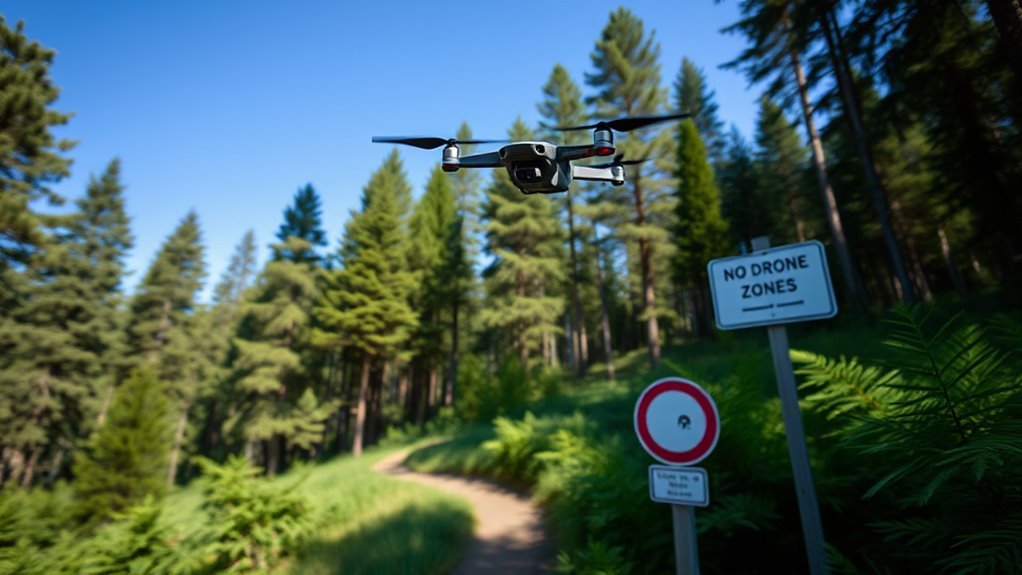
While drone technology offers exciting opportunities for recreation and research, it’s important you understand the specific regulations set by the U.S. Forest Service before flying in national forests. These policies prioritize drone conservation and forest management, balancing your desire for freedom with protecting sensitive ecosystems. You’re required to avoid disturbing wildlife or interfering with ongoing forest management activities. Flying drones near firefighting efforts, wildlife habitats, or during certain seasons may be restricted to prevent harm and guarantee safety. The U.S. Forest Service also designates specific areas where drone flights are either prohibited or limited. By adhering to these rules, you support conservation efforts while enjoying responsible drone use. Knowing these boundaries helps you operate legally and sustainably within national forests.
Registering Your Drone Before Flying
Before you fly your drone in national forests, you need to know whether your device requires registration under FAA rules. Most drones weighing more than 0.55 pounds must be registered online through the FAA DroneZone portal. Ensuring your drone is properly registered helps you comply with federal regulations and avoid penalties during your flight.
Registration Requirements
One essential step you must complete prior to flying a drone in national forests is registering it with the Federal Aviation Administration (FAA). Registration guarantees accountability and safety, regardless of your drone type or preferred flight modes. Whether you operate a recreational quadcopter or a commercial fixed-wing drone, compliance is mandatory if your drone weighs between 0.55 and 55 pounds.
| Drone Weight Range | Registration Required? |
|---|---|
| Under 0.55 lbs | No |
| 0.55 – 55 lbs | Yes |
| Over 55 lbs | Special FAA Permit |
Where to Register
There are two main platforms where you can register your drone with the FAA: the FAA DroneZone website and the FAA Mobile App. Both online platforms offer a streamlined, user-friendly process to complete your drone registration quickly, ensuring you comply with federal rules before flying in national forests. When you register, you’ll receive a unique identification number that must be displayed on your drone. This step is essential for accountability and safety, reinforcing your freedom to explore while respecting regulations. Using these official platforms guarantees your registration is valid and recognized nationwide, preventing potential fines or restrictions. By registering your drone through these trusted online platforms, you uphold the balance between enjoying airspace freedom and adhering to necessary legal frameworks.
Flight Restrictions and No-Fly Zones in National Forests
Although national forests often invite exploration, you’ll need to navigate strict flight restrictions and no-fly zones designed to protect wildlife, preserve natural habitats, and guarantee visitor safety. Understanding these limitations is essential when using drone technology to respect forest ecosystems.
Here are key points to keep in mind:
- Avoid flying near wildlife habitats to prevent disturbing sensitive species.
- Refrain from operating drones in designated wilderness areas where motorized equipment is prohibited.
- Steer clear of areas surrounding emergency response operations or firefighting efforts.
- Comply with temporary flight restrictions issued for special events or environmental concerns.
Altitude Limits and Airspace Regulations
Because national forests often overlap with controlled or restricted airspace, you’ll need to carefully adhere to altitude limits and airspace regulations when flying your drone. Understanding airspace classification helps you identify where you can fly and at what altitude. Most national forests fall within Class G or restricted zones, where specific altitude regulations apply to avoid conflicts with manned aircraft.
| Airspace Class | Typical Altitude Limits |
|---|---|
| Class G | Up to 400 feet above ground |
| Restricted | No drone flights without permit |
| Controlled | Requires ATC approval |
Respecting Wildlife and Natural Habitats
While adhering to airspace rules guarantees safe operation around aircraft, it’s equally important to minimize your drone’s impact on wildlife and their habitats. Your responsibility extends beyond legal compliance to actively supporting wildlife conservation and habitat protection. Consider these key practices:
- Avoid flying near nesting sites or animal groups to prevent stress or disruption.
- Maintain a safe distance to guarantee natural behaviors aren’t altered by your presence.
- Limit flight times during sensitive periods, such as mating or migration seasons.
- Use quieter drone models and reduce abrupt movements to lessen noise pollution.
Privacy Considerations When Operating Drones
Even if you’re focused on exploring the natural beauty of national forests, you need to be mindful of privacy concerns when flying your drone. Privacy rights protect individuals from unauthorized drone surveillance, which can infringe on personal space even in public settings. When operating your drone, make certain you avoid capturing images or video of people without their consent, especially near campsites or trails. Understand that drone surveillance can be intrusive, potentially violating legal boundaries and ethical standards. Respecting privacy not only aligns with legal obligations but also fosters goodwill among forest visitors. By balancing your freedom to fly with respect for others’ privacy rights, you contribute to a responsible drone community that preserves both your liberties and the rights of those around you in national forests.
Required Permits and Authorization Procedures
After respecting privacy considerations, the next step is understanding the permits and authorization required to fly a drone in national forests. Guiding the authorization process guarantees you fly legally while preserving the environment. You’ll encounter specific permit types depending on your drone’s use, whether recreational or commercial.
Understanding necessary permits ensures legal and responsible drone flights in national forests.
Here’s what you need to know:
- Identify the correct permit types for your flight purpose.
- Submit an application through the Forest Service’s online portal.
- Provide detailed flight plans and proof of insurance if required.
- Await approval before flying, as unauthorized use can lead to penalties.
Safety Guidelines for Flying in Remote Areas
Because remote areas often lack immediate emergency services and reliable communication signals, you need to take extra precautions when flying your drone there. Start by thoroughly completing a pre flight checklist that includes verifying battery levels, GPS signal strength, and weather conditions. This guarantees your drone is fully operational and reduces the risk of malfunctions far from help. Familiarize yourself with emergency procedures tailored for remote settings, such as identifying safe landing zones and preparing for potential signal loss. Always have a contingency plan for retrieving your drone if it crashes or loses connection. By rigorously following these guidelines, you maintain your freedom to explore while minimizing risks associated with isolated environments. Prioritize safety to protect yourself, your equipment, and the natural forest surroundings.
Reporting Incidents and Violations
If you encounter any incidents or observe violations while flying your drone in national forests, it’s important to report them promptly. You’ll need to follow specific reporting procedures set by forest authorities to guarantee accurate documentation. Remember, failure to comply with these rules can lead to significant consequences, including fines and restricted access.
When to Report
Knowing when to report incidents or violations while flying your drone in national forests is crucial for maintaining safety and compliance. Prompt reporting supports drone safety and wildlife protection efforts, preserving your freedom to fly responsibly. You should report:
- Any crash or loss of control affecting public safety or property.
- Encounters where your drone disturbs wildlife or disrupts natural habitats.
- Observations of unauthorized drone activity or rule violations by others.
- Situations where your drone operation interferes with emergency or forest management activities.
Reporting in these scenarios helps authorities assess risks, enforce regulations, and protect the forest’s ecosystem. Staying vigilant and timely with reports guarantees you contribute to a safe flying environment without compromising your freedom to explore national forests by drone.
Reporting Procedures
There are several key steps you need to follow when reporting drone incidents or violations in national forests to guarantee your report is accurate and effective. First, ascertain thorough incident documentation by noting the date, time, location, and nature of the event. Capture any available photographic or video evidence, as this supports your report’s credibility. Next, submit your violation reporting through the official channels specified by the forest management, often involving online forms or direct contact with the Forest Service. Be clear and factual in your description, avoiding assumptions or emotional language. Accurate reporting helps preserve your freedom to fly responsibly and supports enforcement efforts that protect natural resources while respecting recreational drone use. Following these procedures assures your report contributes meaningfully to forest safety and governance.
Consequences of Violations
Accurate reporting of drone incidents directly impacts how violations are addressed within national forests. When you promptly report any drone-related issues, it helps authorities determine appropriate enforcement actions and minimizes legal repercussions for you and others. Failure to comply with reporting requirements can escalate consequences, limiting your freedom to fly.
Here’s what you need to know about the consequences of violations:
- Immediate investigation by forest management and law enforcement agencies.
- Possible fines or penalties depending on the severity of the violation.
- Temporary or permanent suspension of drone flying privileges in national forests.
- Legal repercussions including civil or criminal charges if regulations are severely breached.
Tips for Responsible Drone Use in National Forests
Although flying a drone in national forests offers unique opportunities for capturing stunning landscapes, you need to follow specific guidelines to minimize environmental impact and assure safety. Adhering to drone etiquette and practicing responsible flying guarantees freedom without compromising nature or visitor experience.
| Tip | Explanation |
|---|---|
| Respect Wildlife | Avoid disturbing animals or nesting areas. |
| Stay Within Designated Zones | Fly only in permitted areas to protect habitats. |
| Maintain Visual Line of Sight | Prevent accidents and respect privacy. |
| Limit Noise and Disturbance | Use quiet modes and avoid sensitive zones. |
