
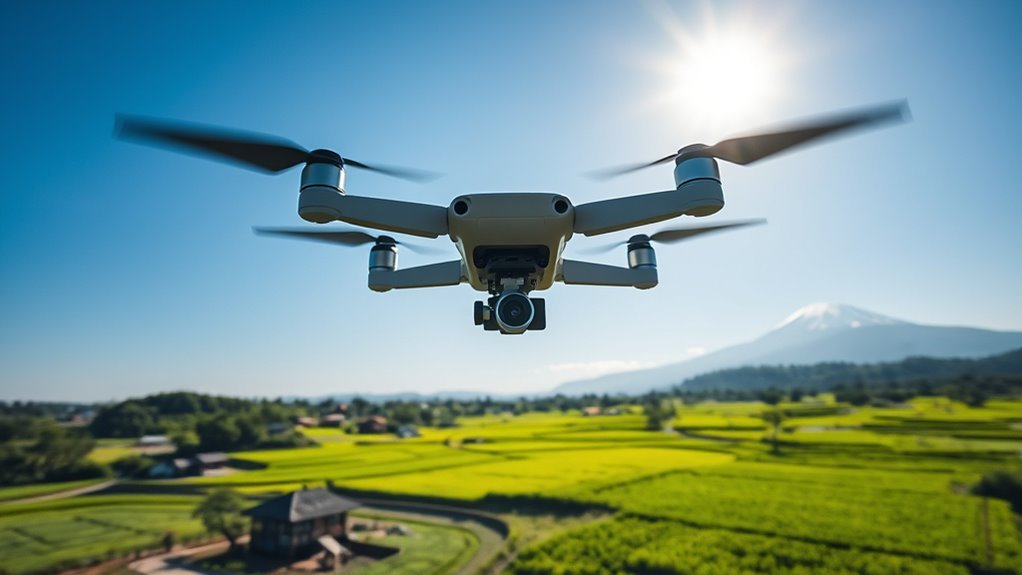
To fly drones in Japan, you must register any drone weighing 200 grams or more with MLIT. Stay away from no-fly zones, including airports and crowded areas. Maintain a maximum altitude of 150 meters and fly within visual line-of-sight. Night flights require special permission, and operating without compliance can lead to hefty fines or criminal charges. Make sure you understand all safety guidelines and regulations; there’s more important information to take into account.
Overview of Drone Regulations in Japan
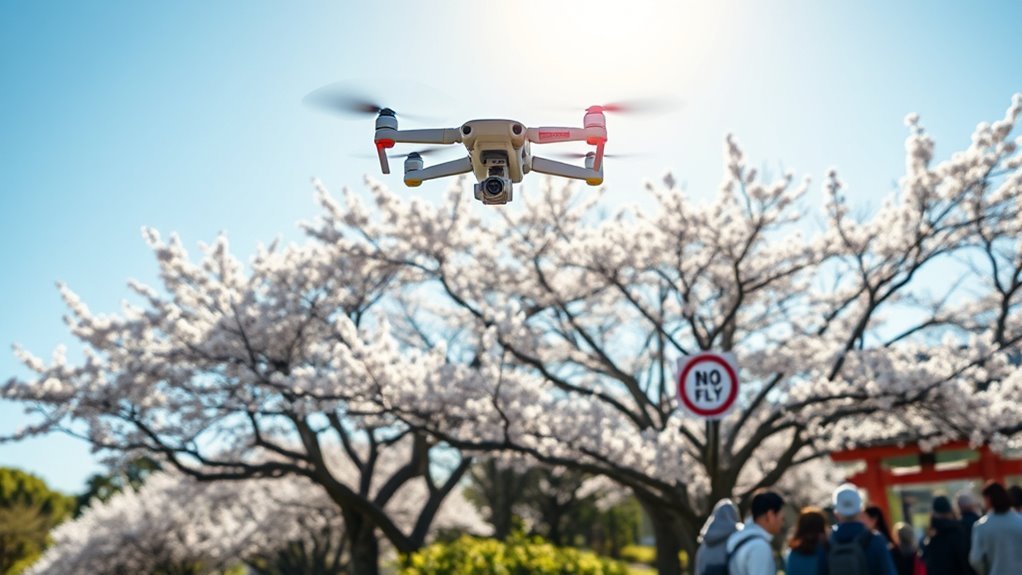
When you’re planning to fly drones in Japan, it’s crucial to understand the regulations that govern their use. Japan has strict guidelines to guarantee aviation safety while allowing you to enjoy the benefits of drone technology. You must avoid flying near airports, crowded areas, or sensitive sites like military installations. Drones are limited to a maximum altitude of 150 meters, and you can’t operate them at night without special permission. Additionally, maintaining visual line-of-sight is mandatory during flight. Understanding these regulations not only protects you from legal issues but also enhances the overall safety of airspace. Embracing these rules enables you to explore the skies freely while respecting the safety and privacy of others.
Registration Requirements for Drones
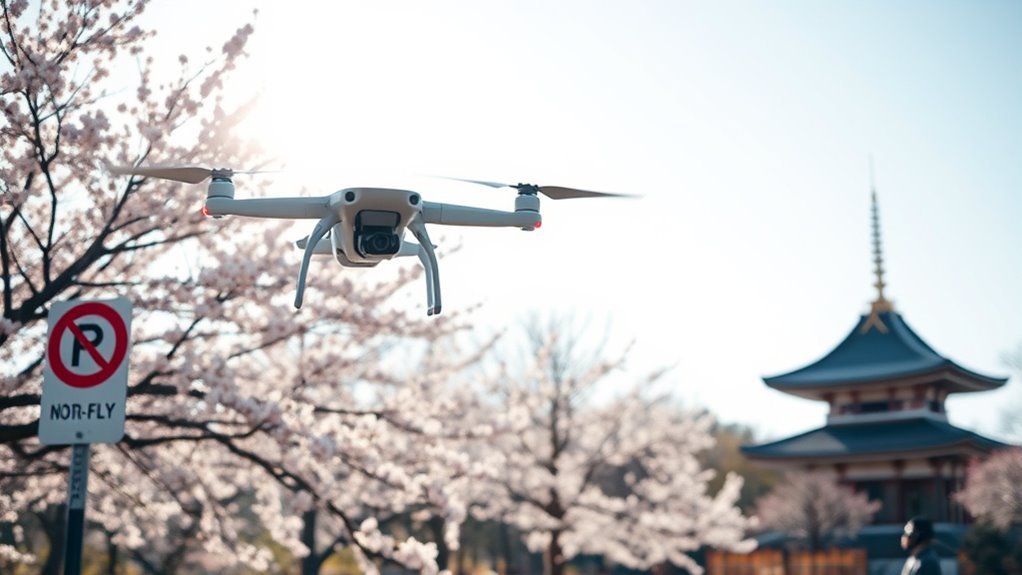
In Japan, all drones weighing 200 grams or more must be registered with the Ministry of Land, Infrastructure, Transport and Tourism (MLIT). This drone registration process is essential for ensuring legal compliance and promoting safe drone usage. You’ll need to provide your drone’s specifications, including its weight and model, along with your personal information. Registration can typically be completed online, making it a straightforward process. Once registered, you’ll receive a unique identification number that must be displayed on your drone. Remember, flying an unregistered drone could lead to penalties, so it’s vital to comply with these regulations. By following these steps, you can enjoy the freedom of flying your drone while adhering to Japan’s legal framework.
No-Fly Zones and Airspace Restrictions
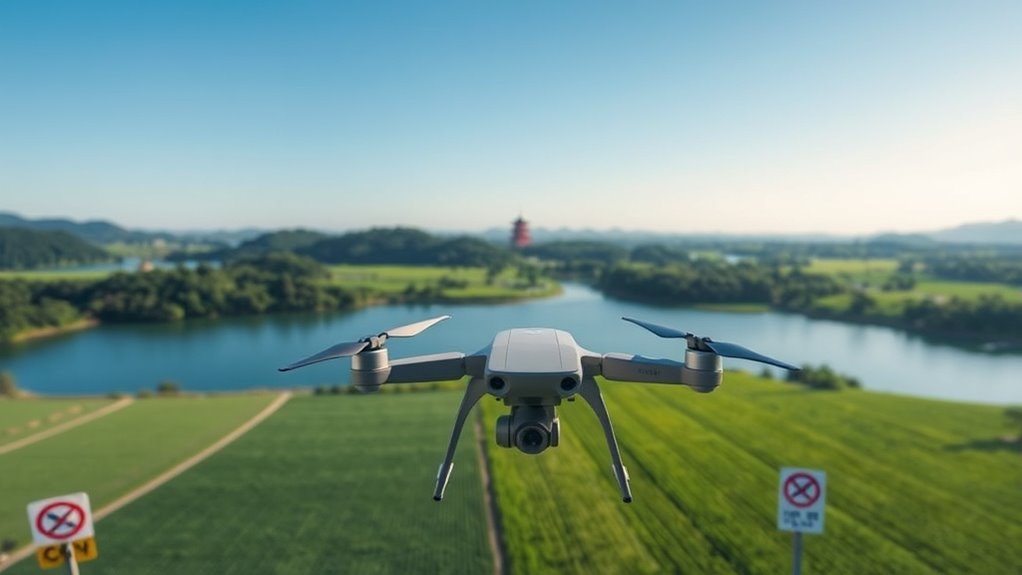
Although you may be enthusiastic to fly your drone in Japan, it’s crucial to be aware of no-fly zones and airspace restrictions that can considerably limit where you can operate. Urban environments often impose strict regulations, especially near airports, government buildings, and large crowds. In these areas, you’re required to stay away to maintain public safety and privacy. Mountain areas also have specific restrictions due to wildlife conservation efforts and potential hazards. Always check the latest maps and local regulations before flying, as these zones can change frequently. By understanding these limitations, you’ll not only comply with the law but also guarantee a safe and enjoyable drone-flying experience in Japan. Additionally, be mindful of designated restricted areas that may not be apparent at first glance, as unauthorized flights in these zones can lead to penalties.
Safety Guidelines for Flying Drones
To guarantee a safe flying experience, you must adhere to essential safety guidelines when operating your drone in Japan. Prioritize drone maintenance to confirm your equipment is in top condition. Regular checks can prevent malfunctions that could lead to accidents. Additionally, complete pilot training to enhance your skills and knowledge about safe flying practices. It is also important to follow local regulations to ensure compliance and safety while flying.
| Safety Tips | Description |
|---|---|
| Pre-flight Inspections | Check battery, propellers, and camera |
| Maintain Line of Sight | Always keep your drone in view |
| Respect Privacy | Avoid flying over private property |
Privacy Considerations for Drone Usage
When steering through the skies with your drone, it’s important to take into account the privacy of individuals below. Respecting data protection laws is vital, especially when capturing aerial photography. Always make sure that your operations don’t infringe on the personal space of others, as this could lead to legal repercussions. Before taking off, be aware of the areas you’re flying over; avoid private properties and crowded spaces where people may feel uncomfortable being filmed or photographed. If your drone captures identifiable images, consider obtaining consent to use that data. By prioritizing privacy, you not only comply with regulations but also foster a respectful relationship with the community. Remember, freedom in the skies comes with responsibility on the ground.
Penalties for Non-Compliance With Drone Laws
Neglecting privacy considerations can lead to severe consequences, as non-compliance with drone laws in Japan carries significant penalties. You could face hefty fines and legal consequences if you violate these regulations. Understanding the potential repercussions is essential for responsible flying.
| Violation Type | Possible Penalty |
|---|---|
| Unauthorized Flight | Up to ¥500,000 in fines |
| Flying over people | Up to ¥1,000,000 in fines |
| Operating without a permit | Loss of drone and fines up to ¥1,000,000 |
| Privacy invasion | Criminal charges possible |
Frequently Asked Questions
Can I Fly My Drone for Commercial Purposes in Japan?
When it comes to flying your drone commercially in Japan, you’ll need to navigate the drone regulations carefully. Obtaining commercial permits is essential, so make sure you’re dotting your i’s and crossing your t’s.
Are There Age Restrictions for Flying Drones in Japan?
Yes, there are age requirements for flying drones in Japan. Youth regulations state that individuals under 16 need supervision from an adult. Make certain you’re aware of these guidelines to maintain compliance while enjoying your drone experience.
What Happens if My Drone Crashes?
Did you know around 20% of drones crash annually? If your drone crashes, recovery’s vital. You might face liability for damages, so make certain you’re insured to cover potential costs and protect your freedom to fly.
Can I Fly Drones at Night in Japan?
You can’t fly drones at night in Japan without special permissions. Adhering to drone regulations is essential; nighttime operations require additional safety measures and compliance with local laws to guarantee a responsible flying experience.
Is Drone Insurance Required in Japan?
Imagine soaring like a bird, yet you must consider drone insurance. It’s not legally required, but having coverage options protects you from risks, ensuring your freedom to fly without worrying about unexpected setbacks or liabilities.
