
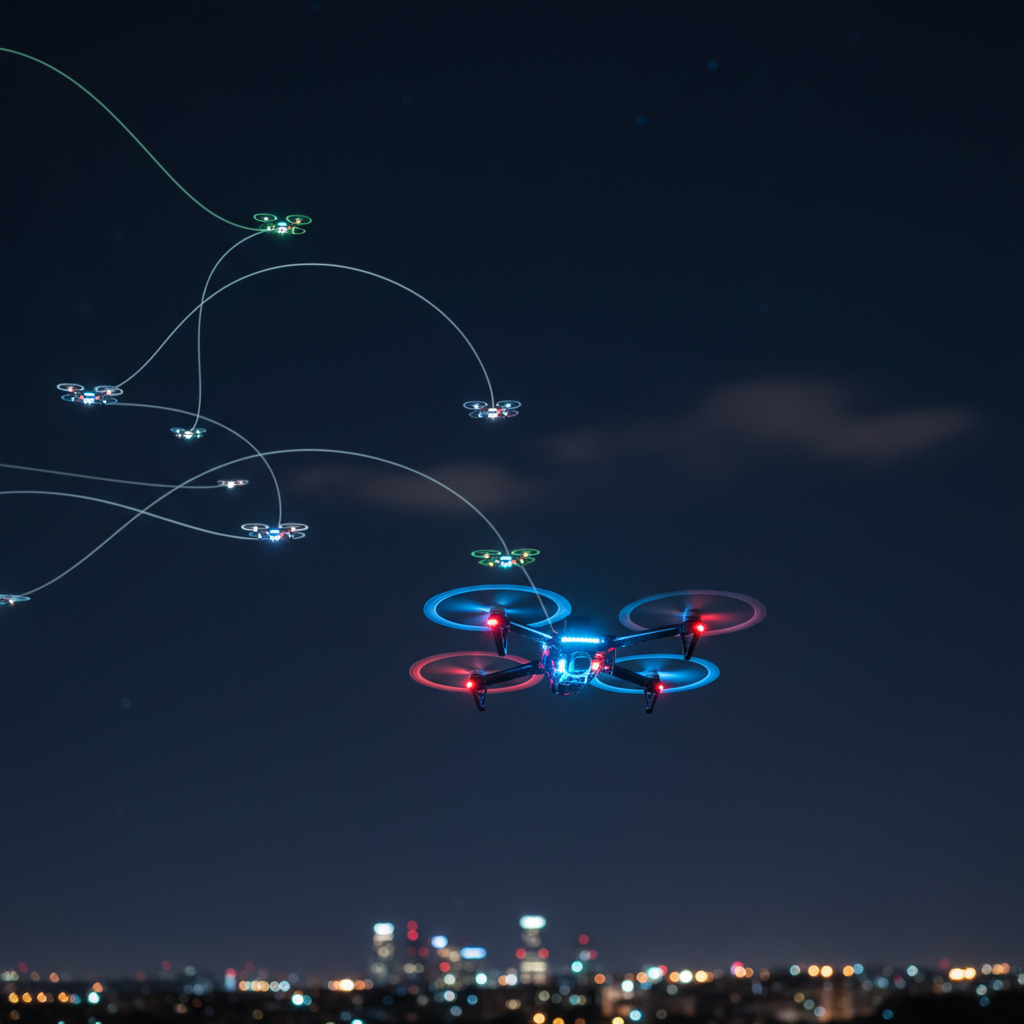
Drones in the sky at night often appear as small, illuminated dots or moving lights, depending on their design and lighting systems. As they navigate the dark, they can create unique visual patterns that are both fascinating and sometimes eerie to observers on the ground. The interplay of light and shadow can transform an ordinary night into a mesmerizing display, making drones not just tools for surveillance or recreation, but also sources of intrigue and wonder.
Understanding Drone Lighting
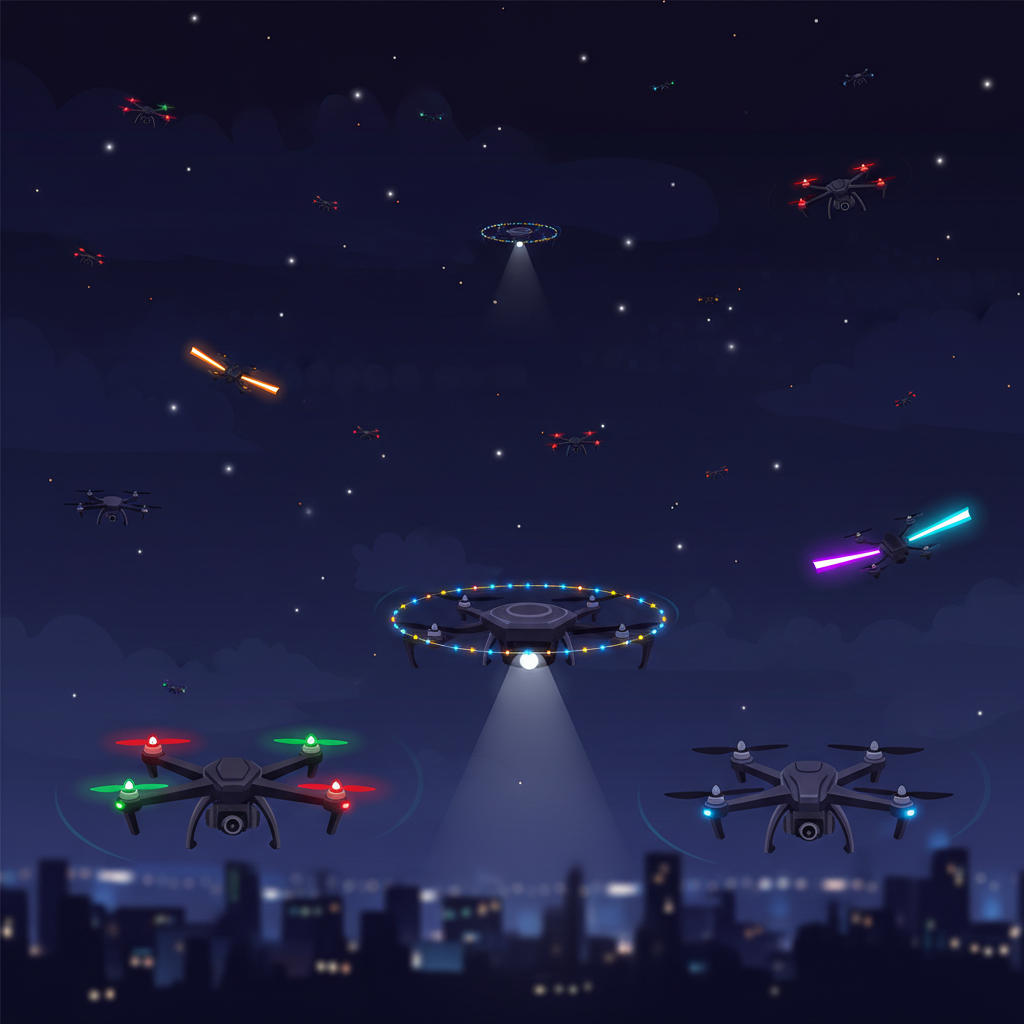
Drones are typically equipped with LED lights that serve multiple functions, enhancing both visibility and operational efficiency. These lights can be customized in various colors and intensities, allowing operators to tailor their visibility according to specific needs or preferences. For instance, many recreational drones utilize bright white lights for better visibility, while others might incorporate red and green lights to indicate direction—red typically showing the left side and green the right.
The arrangement of these lights can reveal important information about the drone’s flight. For example, a drone flying at a low altitude might have its lights set to a steady glow, while one that is ascending or descending may have its lights blinking or flashing. Additionally, many high-end drones are designed with sophisticated lighting systems that not only enhance visibility but also allow for complex light patterns, making them particularly captivating to observe at night.
Types of Drones and Their Night Appearance
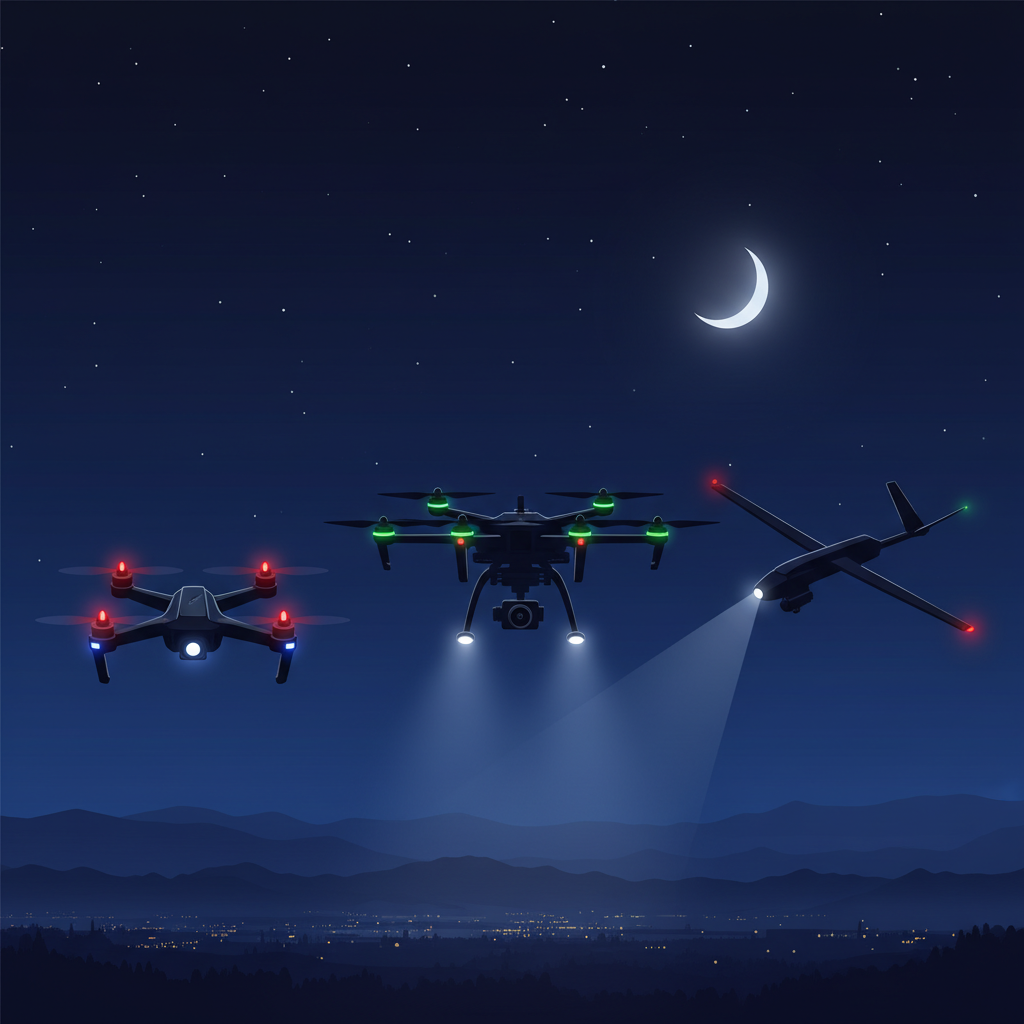
Different models of drones exhibit varied lighting setups, which significantly affect their appearance in the night sky. Recreational drones, often used by hobbyists, typically feature simpler lighting designs, focusing primarily on basic visibility. These drones are often smaller and may use single-color LED lights, making them easier to spot but less visually complex.
In contrast, commercial drones designed for professional use tend to have more advanced lighting systems. For instance, drones used in aerial photography or videography often include multiple lights that can be adjusted for optimal illumination of the area below, leading to a striking visual effect at night. Some high-end models even incorporate RGB lights that can change colors or create patterns, enhancing their appearance and functionality.
Moreover, drones deployed for emergency services or search and rescue operations may utilize strobe lights or other high-intensity lights to improve visibility from a distance, making them identifiable even in challenging conditions. This diversity in design showcases how the purpose of the drone can influence its night-time appearance.
How to Spot Drones at Night
Identifying drones in the night sky involves observing specific characteristics. Look for blinking lights that follow a steady flight path, as these are typically indicative of a drone in operation. Unlike a fixed-wing aircraft, which moves in a straight line, drones often hover or move in patterns, making their flight characteristics distinct.
Additionally, sound plays a crucial role in recognizing drones at night. The whirring of propellers can be heard from a distance, providing an auditory cue that can confirm the presence of a drone. Observers should also pay attention to the brightness and color of the lights, as certain patterns can help differentiate drones from other flying objects, such as airplanes or birds.
To enhance your ability to spot drones, consider using binoculars or a telescope, which can provide a clearer view of the lights and movement. However, it is essential to respect privacy and airspace rules while observing.
Impact of Weather on Drone Visibility
Weather conditions significantly influence the visibility of drones at night. Clear nights provide optimal conditions for spotting drones, as the illumination from their lights can be easily seen against the darker backdrop of the sky. In contrast, fog, rain, or heavy cloud cover can obscure even well-lit drones, making them difficult to spot.
Wind conditions can also impact how stable a drone appears against the night sky. High winds may cause the drone to sway, creating erratic light patterns that can be both disorienting and intriguing. Conversely, calm nights allow for a more stable flight, resulting in a smoother visual experience. Observers should be mindful of these factors when attempting to identify drones, as they can greatly enhance or diminish visibility.
Legal Considerations for Night Flying
Operating drones at night often comes with specific legal requirements that vary by region. In many countries, pilots must acquire special permissions or adhere to stringent regulations to fly at night. For example, in the United States, the Federal Aviation Administration (FAA) requires that drones be equipped with anti-collision lights visible for at least three statute miles.
Operators must also ensure that their drones are visible to avoid accidents with other aircraft or obstructions. Failing to comply with these regulations can result in fines or other legal repercussions. Therefore, it is crucial for drone operators to familiarize themselves with local laws and regulations before flying at night.
Safety Tips for Observing Drones at Night
When observing drones at night, safety should always be a priority. Maintain a safe distance from drone operations to avoid interfering with the pilot’s control and to prevent accidents. It is also important to respect the privacy of individuals and property, as many drones are equipped with cameras that could inadvertently capture private moments.
Utilizing binoculars can enhance your viewing experience, allowing for a closer look at the drone’s lights and movement. However, always ensure that you are observing from a legal and safe vantage point, avoiding restricted airspaces or private properties. Being aware of your surroundings and understanding the operational context of the drone can greatly enrich your experience while observing these fascinating flying machines.
In summary, observing drones at night can be a captivating experience, showcasing their unique designs and operational capabilities. From understanding the intricacies of drone lighting to recognizing the types of drones in the sky, each aspect adds to the allure of these technological marvels. If you’re interested in learning more about drones or considering flying one yourself, be sure to explore local regulations and safety practices to ensure a responsible and enjoyable experience.
Frequently Asked Questions
What do drones typically look like when flying in the night sky?
At night, drones often appear as small, blinking lights moving across the sky. Most consumer drones are equipped with LED lights, which can be red, green, or white, helping to make them visible in low-light conditions. The lights help indicate the direction in which the drone is flying, making it easier for observers to track its movement. Depending on the altitude and distance, drones may look like small stars moving erratically.
How can I identify a drone at night versus an aircraft?
Identifying a drone at night versus an aircraft can be challenging. Drones usually emit blinking lights that can change colors, while traditional aircraft have consistent navigation lights that typically do not flash. Additionally, drones tend to fly at lower altitudes and may change direction more frequently than planes, which generally follow established flight paths. Observing the flight patterns and light behavior can help you distinguish between the two.
Why do drones have colored lights when flying at night?
Drones have colored lights for safety and navigation purposes. The Federal Aviation Administration (FAA) mandates that drones must have lights visible from a distance to prevent collisions with other aircraft at night. The use of different colors—typically red for the left side and green for the right—helps operators and observers identify the orientation and direction of the drone, making it easier to track its movement in the night sky.
What are the best practices for flying a drone at night?
The best practices for flying a drone at night include ensuring your drone is equipped with bright, visible lights, as well as using a reliable GPS system for navigation. Pilots should familiarize themselves with local regulations regarding nighttime flying, as many areas have restrictions. Additionally, maintaining a clear line of sight with the drone and avoiding flying in areas with heavy air traffic can enhance safety and compliance.
Which drones are specifically designed for night flying?
Drones designed for night flying generally have enhanced lighting features and improved camera capabilities for low-light conditions. Models such as the DJI Mavic Air 2 and the Phantom 4 Pro offer bright LED lights and advanced imaging technology that allows for better visibility and footage in darkness. When choosing a drone for night flying, look for features like adjustable light settings, night vision cameras, and reliable battery life to ensure safe and effective operation.
References
- https://en.wikipedia.org/wiki/Drone
- https://www.bbc.com/news/technology-44678215
- https://www.sciencedirect.com/science/article/pii/S2096579621000086
- https://www.nytimes.com/2020/05/06/technology/drones-night-sky.html
- https://www.nasa.gov/feature/nasa-s-sky-vision-drones-in-dark-skies
- https://www.reuters.com/article/us-usa-drones-idUSKBN2B60NR
- https://www.techrepublic.com/article/how-drones-are-changing-the-way-we-see-the-night-sky/
- https://www.nbcnews.com/news/us-news/drones-light-up-night-sky-holiday-season-rcna11712
- https://www.nps.gov/articles/drones-in-national-parks.htm
