
Headless mode in a drone is a flight mode that simplifies control by aligning the drone’s movement direction with the pilot’s perspective, regardless of the drone’s orientation. This feature is particularly useful for beginners, as it allows them to fly without the added complexity of managing the drone’s front and back. By eliminating the need to constantly adjust to the drone’s position in the sky, headless mode enhances the flying experience, making it more intuitive and less daunting for those new to the hobby.
Understanding Headless Mode
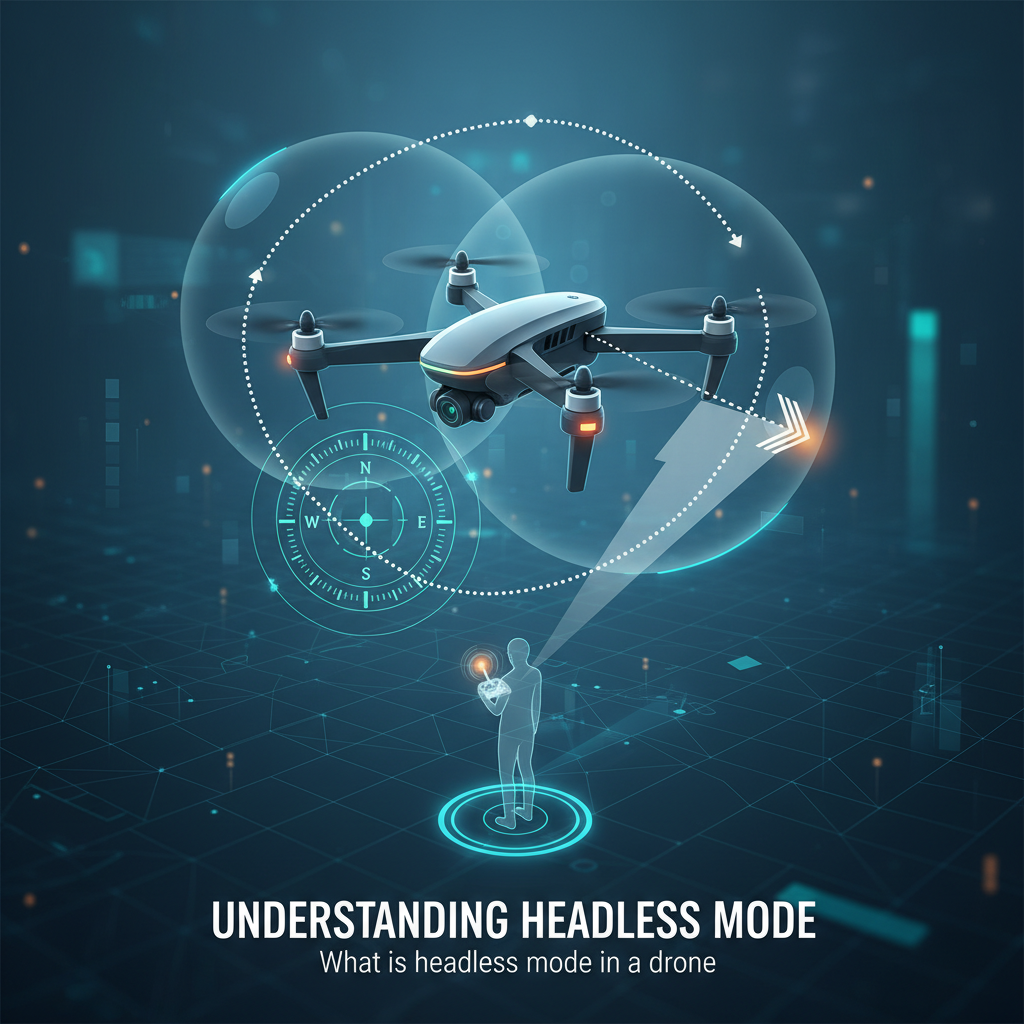
Headless mode is designed to make drone piloting more accessible, particularly for novice users. In traditional flying modes, the drone’s orientation dictates how it responds to control inputs. For instance, pushing the control stick forward typically moves the drone away from the pilot’s position in the direction it is facing. However, in headless mode, the drone’s controls are oriented to the pilot’s perspective rather than the drone’s front. This means that regardless of the drone’s orientation, pushing the stick forward will always move the drone away from the pilot, making it easier to navigate.
This feature is crucial for novice pilots who may struggle with understanding directional inputs, especially during their initial flying experiences. By providing a simplified control scheme, headless mode helps reduce anxiety and increases the likelihood that beginners will enjoy their first flights, encouraging them to develop their skills further.
How Does Headless Mode Work?
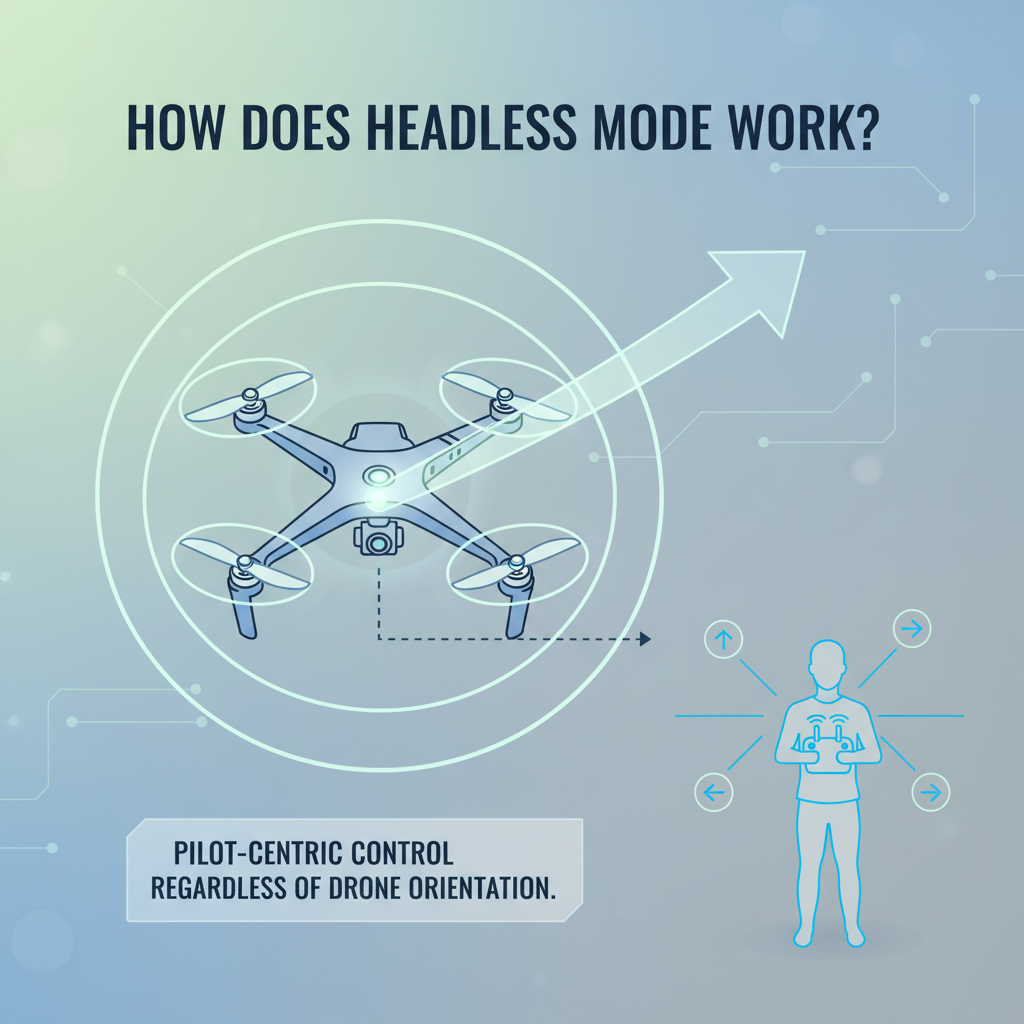
The mechanism behind headless mode involves the use of GPS data and onboard sensors, including gyroscopes and accelerometers, to determine the drone’s orientation relative to the pilot. When activated, the drone calibrates its position based on the direction it is facing when the mode is engaged. The onboard sensors continuously monitor the drone’s movement and orientation, allowing the control inputs to align with the pilot’s perspective.
For example, when the pilot engages headless mode, the drone records its current heading as “forward.” If the drone subsequently turns 180 degrees, pushing the control stick forward will still move the drone away from the pilot, even though the drone is now facing the opposite direction. This realignment of controls allows pilots to focus on flying rather than constantly adjusting for the drone’s orientation, enhancing the overall user experience.
Benefits of Using Headless Mode
One of the most significant benefits of headless mode is the simplified navigation it offers for beginners. By removing the complexity of managing the drone’s orientation, novice pilots can focus on learning basic flying techniques without feeling overwhelmed. This ease of use translates into a reduced learning curve, allowing users to gain confidence more rapidly.
Moreover, headless mode can be particularly advantageous in situations where the drone is flying at a distance or at a height where its orientation may be hard to discern. In these cases, beginners can operate their drones more effectively, reducing the likelihood of crashes or mishaps due to misjudged inputs. Ultimately, headless mode fosters a more enjoyable flying experience, making it a popular choice among new drone enthusiasts.
Limitations of Headless Mode
Despite its advantages, headless mode is not without its limitations. For instance, advanced pilots may find that headless mode complicates maneuvers that require precise control and orientation awareness. While it simplifies basic flying, it may not provide the responsiveness needed for more intricate aerial stunts or complex flight patterns.
Additionally, headless mode relies heavily on the accuracy of the drone’s sensors and GPS. If the sensors malfunction or if there is significant interference, the drone’s ability to determine its orientation may be compromised, leading to erratic behavior during flight. Therefore, while headless mode can be a useful tool, it may not be suitable for every flying scenario, particularly those requiring precision or in environments with challenging conditions.
When to Use Headless Mode
Headless mode is most beneficial during initial flying sessions, particularly in open areas where beginners can safely practice without obstacles. It is ideal for users who are still acclimating to the controls and wish to build their confidence.
Additionally, headless mode can be advantageous in situations where the drone is far away or at a height that makes it difficult to discern which direction it is facing. For example, when flying over a large field or a beach, beginners can utilize headless mode to maintain control without losing sight of their drone’s position. Conversely, more experienced pilots may prefer traditional flying modes when executing advanced maneuvers or when flying in more complex environments, where understanding the drone’s orientation is crucial.
Tips for Flying in Headless Mode
For beginners looking to maximize their experience in headless mode, it is essential to start with a thorough understanding of the drone’s controls. Familiarize yourself with the remote control layout and practice activating headless mode before taking off.
Additionally, it is advisable to practice in an open area away from trees, buildings, and other obstacles to minimize the risk of crashes. Begin with short flights, gradually increasing the duration as your confidence grows. It is also recommended to engage headless mode while the drone is close to you, allowing you to verify its orientation before taking it further away.
Safety tips are equally important. Always keep an eye on the drone’s battery level and be prepared to land as needed. Being aware of your surroundings while flying will help ensure a smooth experience, reducing the chances of accidents or malfunctions.
In conclusion, headless mode offers a user-friendly way to pilot drones, especially for those new to flying. By aligning the drone’s movement with the pilot’s perspective, this feature simplifies navigation and reduces the learning curve, allowing users to focus on developing their skills. Understanding its functionality, benefits, and limitations can greatly enhance your flying experience. Consider trying out headless mode during your next flight for a more straightforward and enjoyable experience, and remember to practice safety and control measures to ensure a successful outing.
Frequently Asked Questions
What is headless mode in a drone?
Headless mode is a flight feature in drones that simplifies control for beginners by eliminating the need to orient the drone based on its front or back. In this mode, the drone’s movements are relative to the pilot’s position, meaning pushing forward on the control stick always moves the drone away from the pilot, regardless of which way the drone is facing. This makes it easier for new users to fly without getting disoriented.
How does headless mode benefit beginner drone pilots?
Headless mode greatly benefits beginner drone pilots by reducing the learning curve associated with understanding the drone’s orientation. It allows users to focus more on maneuvering the drone rather than worrying about which direction it is facing, making it less intimidating for those who are new to flying drones. This can lead to a more enjoyable and less stressful flying experience.
Why should I use headless mode when flying my drone?
You should use headless mode when flying your drone if you are a beginner or if you are flying in unfamiliar environments where orientation might be confusing. It is particularly useful in crowded or complex areas where quick adjustments are needed without the added stress of maintaining directional awareness. This feature enhances confidence and allows for smoother flight operations, especially during initial flights.
What are the limitations of headless mode in drones?
While headless mode is useful, it does have limitations. For instance, it can make advanced maneuvers more challenging as experienced pilots often rely on the drone’s orientation for precise control. Additionally, if the drone flies too far away, the pilot may lose connection or visual contact, making it difficult to know its position in headless mode. Therefore, it is essential to switch back to standard mode for more complex flying tasks or when the drone is at a distance.
Which drones come equipped with headless mode?
Many consumer and hobbyist drones come equipped with headless mode, especially those aimed at beginners. Popular models include the DJI Mini series, Holy Stone drones, and many entry-level quadcopters. When purchasing a drone, check the specifications and features to ensure that headless mode is included, as it can significantly enhance the flying experience for novice pilots.
References
- https://en.wikipedia.org/wiki/Drone#Headless_mode
- https://www.geeksforgeeks.org/introduction-to-drone-technology/
- https://www.researchgate.net/publication/341829456_Review_of_the_Applications_of_Drones_in_Geospatial_Science_and_Engineering
- https://www.nasa.gov/feature/nasa-s-drones-are-advancing-the-future-of-flight
- https://www.sans.org/white-papers/39207/
- https://www.faa.gov/uas/
- https://www.sciencedirect.com/science/article/pii/S2352864821001148
