

The fastest recorded speed of a racing drone is an astounding 263.1 km/h (163.5 mph). This exceptional feat highlights the innovative advancements in drone technology, including lightweight frames and powerful motors. Key factors like the power-to-weight ratio, aerodynamics, and battery efficiency all contribute to achieving these speeds. Competitive models demonstrate impressive performance, and ongoing technological developments continue to push boundaries. There’s more to uncover about how these factors shape the future of drone racing speeds.
The Anatomy of a Racing Drone
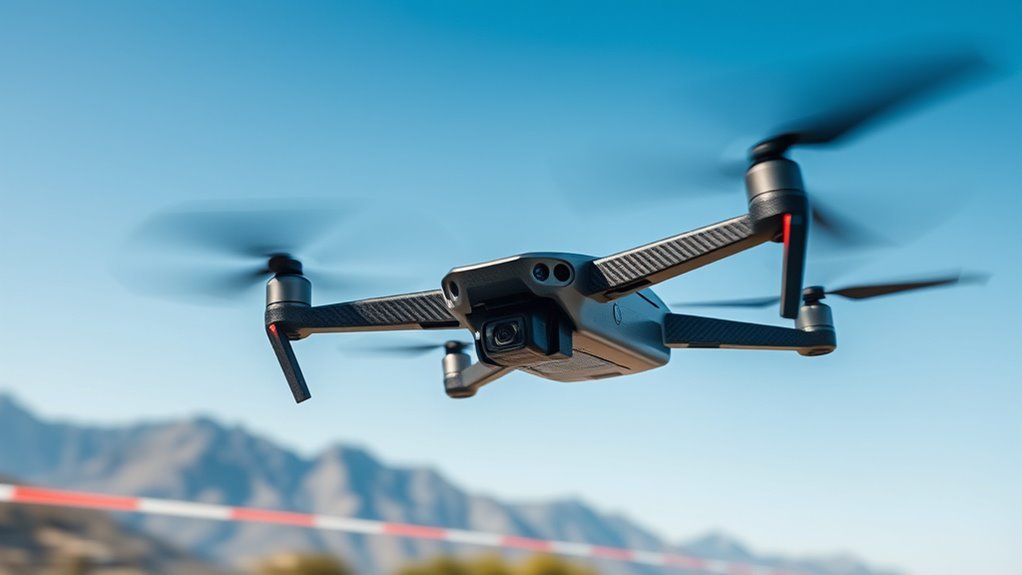
Understanding the anatomy of a racing drone is fundamental for grasping how these machines achieve their remarkable speeds. At the core of a racing drone are its essential drone components: the frame, motors, propellers, electronic speed controllers, and flight controller. Each plays a significant role in optimizing flight mechanics. The lightweight frame guarantees agility, while powerful motors deliver the necessary thrust. High-performance propellers convert this thrust into lift, enabling rapid ascents and sharp turns. The electronic speed controllers manage power distribution, guaranteeing quick responsiveness. Additionally, the advanced camera capabilities enhance the overall experience by allowing pilots to capture their high-speed flights with clarity. Finally, the flight controller integrates sensor data, allowing real-time adjustments. Mastering these components not only enhances your understanding but also empowers you to access the full potential of racing drones, giving you the freedom to explore the skies at exhilarating speeds. Additionally, effective flight stability management is crucial for maintaining control during high-speed maneuvers.
Factors Influencing Speed
While various factors come into play, the speed of a racing drone primarily hinges on its power-to-weight ratio, aerodynamics, and tuning. To truly optimize your drone’s speed, consider these key components:
- Power-to-Weight Ratio: A lighter drone with a powerful motor accelerates faster.
- Aerodynamic Design: Streamlined shapes reduce drag, enhancing speed and maneuverability.
- Battery Efficiency: High-capacity batteries provide longer flight times without adding excessive weight.
- Propeller Selection: The right propellers can greatly impact thrust and control.
Record-Breaking Speeds in Racing Drone History

The pursuit of speed in racing drones has led to astonishing achievements that push the boundaries of technology and engineering. In recent years, drone competitions have showcased incredible advancements, with pilots consistently breaking speed records. For instance, the current record stands at an astounding 263.1 km/h (163.5 mph), achieved by a professional racer during an international event. This remarkable feat demonstrates not just skill but also the integration of cutting-edge materials and aerodynamic designs. As manufacturers continue to innovate, the racing drone community thrives on the thrill of competition, aiming for ever-faster speeds. These record-breaking moments inspire enthusiasts, fueling a desire for freedom in both flight and engineering possibilities. Each race is a demonstration of what can be achieved when passion meets technology.
Top Racing Drone Models and Their Speeds
When it comes to high-performance racing drones, several models stand out for their impressive speeds and advanced engineering. These drones not only dominate in drone competitions but also comply with varying speed regulations, showcasing their versatility. Here are four top models you should consider:
- ImmersionRC Vortex 250 Pro – Reaches speeds up to 100 mph.
- Lumenier QAV-R – Capable of hitting 80 mph in competitive settings.
- Emax Hawk 5 – Offers a top speed of around 75 mph, ideal for beginners and pros alike.
- Fat Shark 101 – Known for its impressive agility, reaching speeds of 70 mph.
Each of these models provides a thrilling experience, embodying the freedom and excitement of racing.
The Role of Technology in Speed Enhancement
In racing drones, technology greatly impacts speed through advanced propulsion systems and lightweight materials. You’ll find that high-performance motors and optimized propellers enhance thrust, while materials like carbon fiber reduce weight without sacrificing strength. Together, these innovations create a competitive edge, allowing drones to achieve unprecedented speeds. Additionally, motor power and efficiency significantly influence acceleration and sustained high speeds, making them crucial for racing performance.
Advanced Propulsion Systems
While traditional drone designs often prioritize lightweight materials and aerodynamic shapes, advanced propulsion systems have emerged as a critical factor in pushing the boundaries of speed. These systems focus on thrust enhancement, enabling drones to achieve remarkable velocities. Here are four key components that enhance racing drone performance:
- High-Efficiency Motors: Deliver superior power-to-weight ratios.
- Variable Pitch Propellers: Adjust blade angle for maximum thrust in various flight conditions.
- Advanced Flight Controllers: Utilize real-time data to improve thrust and maintain stability.
- Battery Technology: Higher energy density leads to increased output without adding weight.
Lightweight Materials Usage
As technology advances, the use of lightweight materials has become pivotal in enhancing the speed of racing drones. Carbon fiber, known for its high strength-to-weight ratio, is a game changer in drone construction. By integrating carbon fiber components, you can achieve significant weight reduction, allowing your drone to accelerate faster and maneuver more efficiently. This decrease in mass not only improves speed but also enhances battery life, giving you more freedom to push your racing drone to its limits. Additionally, these materials withstand high stress, ensuring durability without compromising performance. Embracing advanced lightweight materials can elevate your racing experience, enabling you to achieve those elusive top speeds that define competitive success in the world of drone racing.
The Future of Racing Drone Speeds
The evolution of racing drone speeds is poised to transform the competitive landscape, especially as advancements in materials and propulsion technology emerge. Future innovations will certainly provide you with a competitive edge, pushing boundaries further than ever before. Here are four key areas to reflect on:
- Battery Technology: Enhanced energy density for longer flight times and faster speeds.
- Aerodynamics: Streamlined designs that minimize drag, allowing for quicker maneuvers.
- Artificial Intelligence: Advanced algorithms for real-time decision-making and optimized flight paths.
- Propulsion Systems: Next-gen motors and propellers increasing thrust and efficiency.
As these technologies converge, expect racing drones to reach unprecedented speeds, revolutionizing the sport and your experience as a pilot. The future is limitless.
Frequently Asked Questions
How Do Racing Drones Compare to Traditional Racing Vehicles in Speed?
“When the rubber meets the road,” you’ll find racing drones excel in drone acceleration compared to traditional vehicles. Their advanced racing technology allows them to achieve remarkable speeds, offering unparalleled freedom and agility in the air.
Can Weather Conditions Affect a Racing Drone’s Speed?
Yes, weather conditions can considerably affect a racing drone’s speed. Wind resistance can hinder performance, while temperature impact might alter battery efficiency. Consequently, these factors can limit your drone’s agility and overall racing capability.
Are There Weight Limits for Racing Drones?
Yes, there’re weight restrictions for racing drones. These limits are defined in drone specifications to guarantee fair competition and peak performance. Staying within these guidelines allows you to maximize speed and maneuverability during races.
What Safety Measures Are in Place for Racing Drone Events?
In the exhilarating world of racing drones, robust safety protocols and stringent event regulations guarantee your adrenaline-fueled experience remains secure. These measures, designed to protect pilots and spectators, are paramount for responsible competition and thrilling escapades.
How Are Racing Drone Pilots Trained for High-Speed Competition?
To excel in high-speed competition, you’ll undergo rigorous simulator training, enhancing your skill development by practicing maneuvers and racing strategies. This prepares you for real-world challenges, boosting your confidence and precision in maneuvering complex courses.
