
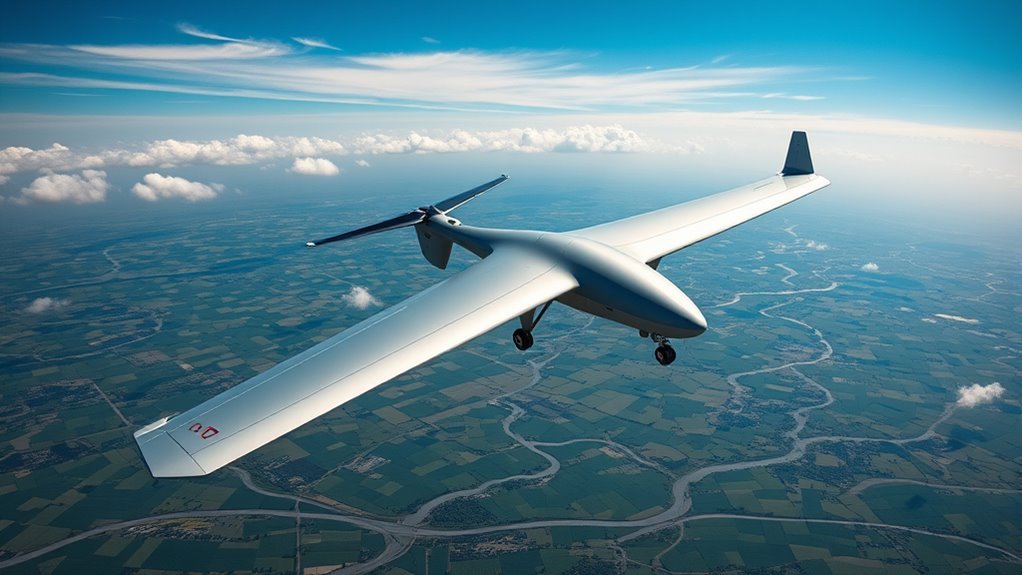
The largest drone in the world is the RQ-4 Global Hawk, featuring a wingspan that exceeds 400 feet and a weight of over 30,000 pounds. Its advanced surveillance and reconnaissance capabilities offer unmatched efficiency in military and commercial applications. The drone’s aerodynamic design, modular structure, and autonomous navigation system enhance its versatility and endurance. It’s a game changer in aerial operations, and there’s much more to explore about its features and impact on various industries.
Overview of the Largest Drone
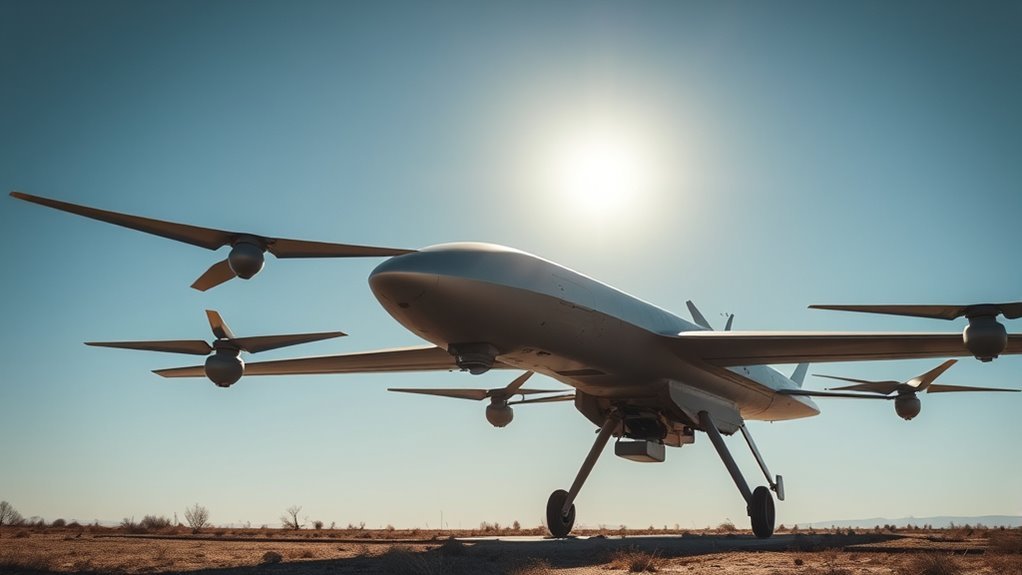
The largest drone in the world, known as the RQ-4 Global Hawk, stands out for its impressive wingspan and advanced capabilities. As you explore drone history, you’ll see how this aerial innovation transformed surveillance and reconnaissance. With its ability to fly at high altitudes for extended periods, the Global Hawk provides critical intelligence without risking human lives. This drone epitomizes the culmination of decades of technological advancements, merging satellite communications and high-resolution imaging. Its design reflects a commitment to efficiency and effectiveness, allowing for real-time data collection. In the context of global freedom, the Global Hawk’s role in monitoring potential threats underlines the importance of aerial innovations in maintaining security and sovereignty, paving the way for future developments in unmanned aerial systems.
Specifications and Dimensions
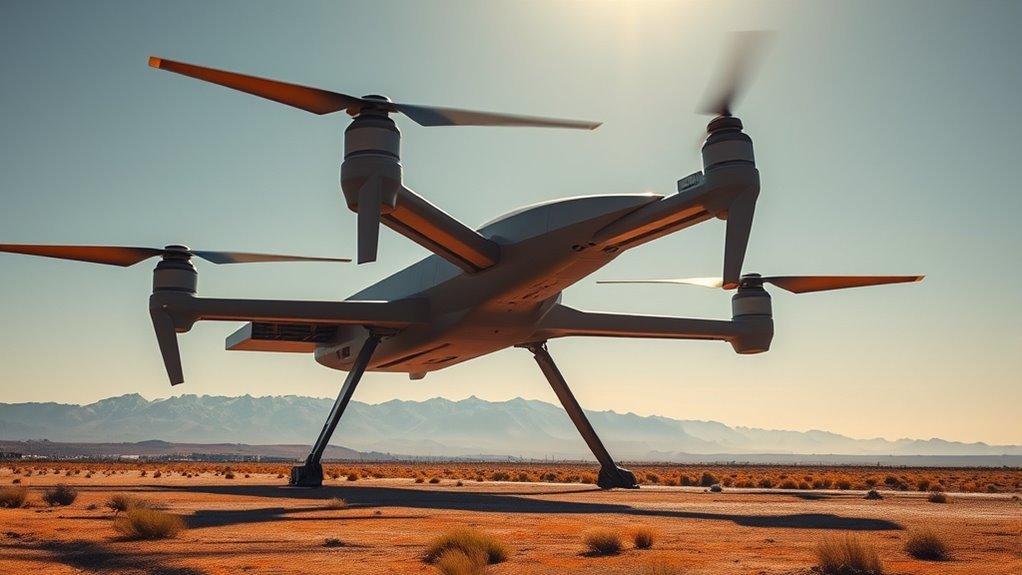
When evaluating the largest drone in the world, you’ll need to take into account its size and weight, which greatly influence its operational capabilities. Additionally, the payload capacity is vital, as it determines what sort of equipment or cargo the drone can effectively transport. Understanding these specifications will help you grasp the drone’s overall functionality and potential applications.
Size and Weight
With a wingspan that surpasses 400 feet and a weight exceeding 30,000 pounds, the largest drone in the world stands as a remarkable feat of engineering. Its size classification places it in a category of its own, showcasing a sophisticated weight distribution system that allows for stability during flight.
- Awe-inspiring dimensions push the boundaries of aerospace technology.
- The sheer scale evokes a sense of wonder and possibility.
- Its design reflects a commitment to innovation and exploration.
- The engineering behind it represents a freedom of imagination.
Such specifications not only redefine what drones can achieve but also inspire a vision of future applications that can enhance human experience and connectivity.
Payload Capacity
Payload capacity plays an essential role in determining a drone’s operational capabilities. It dictates what you can carry, influencing mission outcomes and efficiency. High payload capacity allows for payload optimization, ensuring you can transport heavier equipment without compromising flight performance.
When considering weight distribution, proper balance is vital. An uneven load can affect stability, leading to decreased maneuverability and increased energy consumption. Consequently, understanding how to distribute weight effectively enhances overall performance.
For large drones, payload capacities often exceed 200 kilograms, enabling them to carry various payloads, from surveillance equipment to medical supplies. By maximizing payload capacity while maintaining ideal weight distribution, you can greatly expand your drone’s operational range and versatility, providing greater freedom in your aerial endeavors.
Unique Design Features
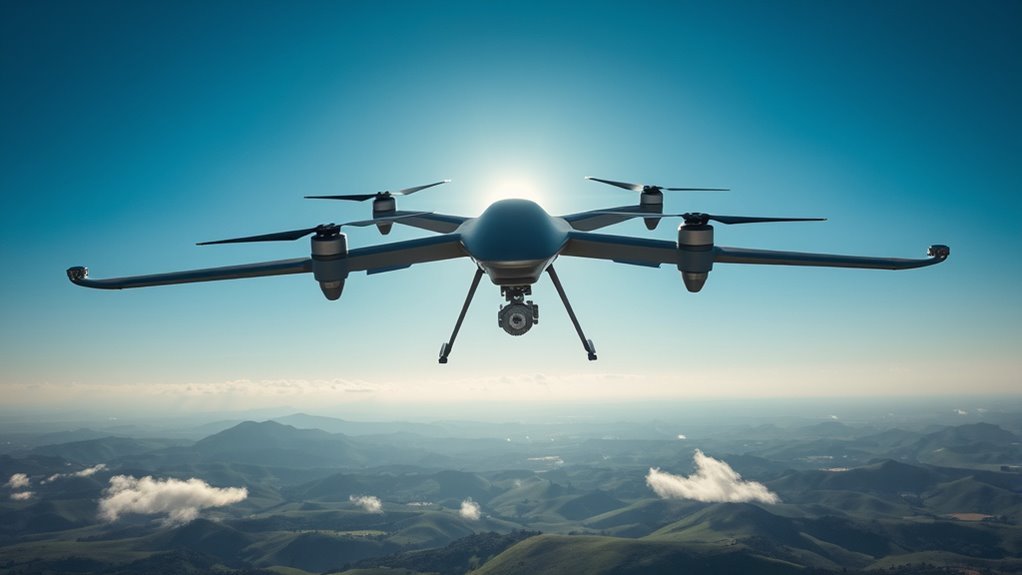
The largest drone in the world showcases several unique design features that enhance its functionality and operational efficiency. Its aerodynamic efficiency reduces drag, allowing for longer flight durations and improved fuel economy. The modular design enables easy customization, letting you adapt the drone for various missions effortlessly.
- Streamlined shape for minimal air resistance
- Interchangeable payload modules to suit diverse tasks
- Robust materials ensuring durability and reliability
- Advanced propulsion systems for superior lift and range
These features not only elevate performance but also empower operators to utilize the drone in numerous applications, fostering a sense of freedom in exploration and innovation. Additionally, the incorporation of AI integration in imaging systems allows for smarter, adaptive performance in real-time monitoring and data collection. Furthermore, advancements in AI-driven algorithms enhance the drone’s capabilities, enabling it to predict outcomes and respond to dynamic conditions effectively. It’s this combination of design excellence and versatility that sets this drone apart in the industry.
Technological Innovations
As advancements in drone technology continue to evolve, the largest drone in the world incorporates cutting-edge innovations that greatly enhance its operational capabilities. One of the most significant features is its autonomous navigation system, which allows for precise flight paths and reduces the need for human intervention. By utilizing advanced sensors and algorithms, this drone can assess its surroundings in real-time, making split-second decisions to avoid obstacles and optimize routes. Additionally, improvements in battery technology extend its flight duration, enabling longer missions without frequent recharges. Enhanced communications systems guarantee reliable data transmission, essential for various applications. Together, these advancements push the boundaries of what drone technology can achieve, offering unparalleled freedom and efficiency in aerial operations. The ongoing innovation in the drone sector could further influence the development of even larger and more capable drones in the near future. Furthermore, the incorporation of AI-driven security technology enhances the drone’s ability to secure sensitive data during its operations.
Applications in Various Industries
While many industries are beginning to recognize the potential of drones, the largest drone in the world demonstrates exceptional versatility across diverse applications. This remarkable machine is revolutionizing how we approach various tasks, granting you unprecedented freedom in operational efficiency.
Consider the following applications:
- Drone agriculture allows for efficient crop monitoring and health assessment, utilizing multispectral cameras to capture vital data on crop health.
- Delivery services streamline logistics, ensuring timely product arrival.
- Aerial surveying provides accurate data for construction and land management.
- Disaster response enables rapid assessment and resource allocation.
Additionally, its role in environmental monitoring, film production, wildlife tracking, and infrastructure inspection showcases its adaptability. Embracing these advancements means revealing new potentials for progress and innovation across sectors. Notably, the integration of real-time data analytics in drone agriculture significantly enhances precision in spraying and resource management.
Comparison With Other Large Drones
When comparing the largest drone with other large drones, you’ll notice significant differences in size and specifications that impact performance. Each drone’s capabilities and uses vary, which can influence your choice depending on operational needs. Understanding these distinctions is essential for evaluating their effectiveness in various applications.
Size and Specifications
The largest drone in the world boasts an impressive wingspan of over 400 feet, markedly surpassing its closest competitors. In the domain of drone engineering, this giant is a tribute to innovative design, setting the bar for aerial logistics. When you think about size and specifications, consider these striking features:
- Unprecedented payload capacity enhances delivery capabilities.
- Advanced materials guarantee strength while minimizing weight.
- Cutting-edge propulsion systems optimize energy efficiency.
- Sophisticated navigation technology allows for precise maneuverability.
These attributes not only revolutionize aerial logistics but also represent a leap toward greater autonomy in drone operations. As you explore this vast landscape, the freedom offered by such advancements can inspire and ignite your imagination in the world of unmanned aerial vehicles.
Capabilities and Uses
As you explore the capabilities and uses of the world’s largest drone, it is essential to compare it with other large drones to appreciate its unique advantages. This drone excels in military applications, offering unparalleled surveillance and reconnaissance capabilities, often outperforming its competitors in flight endurance and payload capacity. In contrast, other large drones may focus primarily on commercial uses, such as cargo transport or agricultural monitoring. However, they often lack the advanced technological features that enhance the world’s largest drone’s effectiveness in complex environments. By evaluating these differences, you can see how its versatility in both military and commercial settings positions it ahead, allowing for a broader range of operations and applications that cater to evolving demands for freedom in aerial capabilities.
Impact on Aerial Operations
With its immense size and advanced capabilities, the largest drone in the world considerably alters aerial operations across various sectors. This drone enhances aerial efficiency and operational safety, revolutionizing how tasks are performed in the sky. You’ll find its impact resonates deeply, as it enables:
The largest drone in the world transforms aerial operations, enhancing efficiency and safety across various sectors.
- Increased payload capacity, allowing for more extensive missions
- Enhanced surveillance capabilities, improving security measures
- Greater fuel efficiency, reducing operational costs
- Advanced navigation systems, ensuring safer flights
These advancements not only elevate the performance of aerial operations but also provide a sense of freedom, enabling you to accomplish more with less risk. As you embrace these innovations, you’ll discover a new domain of possibilities that redefine what can be achieved in the skies. Additionally, the integration of AI-driven autonomy enhances operational precision, making these drones even more effective in complex environments.
Future Prospects and Developments
While many industries are already experiencing transformative changes due to the largest drone’s capabilities, future prospects indicate even more groundbreaking developments on the horizon. As you look ahead, expect future advancements in autonomous flight technology and AI integration, which will enhance operational efficiency and reduce human error. Market trends suggest a surge in demand for large drones in logistics, agriculture, and disaster response, reflecting a shift toward sustainable and cost-effective solutions. Furthermore, regulatory frameworks are evolving to accommodate these innovations, providing a clearer path for commercial applications. By embracing these trends, you’ll find opportunities for increased productivity and enhanced capabilities across various sectors, ultimately granting you more freedom to explore uncharted territories in aerial operations. Additionally, the integration of AI-driven autonomous navigation will play a crucial role in ensuring safer and more efficient drone operations. Asylon’s advanced AI capabilities are particularly noteworthy, as they enable precise threat detection that could further enhance operational safety in various applications.
Frequently Asked Questions
What Is the Largest Drone’s Price Range?
When considering drone technology, you’ll find the largest models’ price ranges from hundreds of thousands to millions. Manufacturing costs, influenced by materials and complexity, play a significant role in determining these impressive figures.
How Does Weather Affect the Largest Drone’s Performance?
Weather conditions greatly impact a drone’s performance. High winds, rain, or extreme temperatures can compromise stability, battery efficiency, and sensor accuracy. Understanding environmental impact is essential for optimizing operational effectiveness and ensuring reliability in various conditions.
What Regulations Govern the Operation of the Largest Drone?
Drone regulations are essential for ensuring aviation safety. You’ll need to understand airspace classifications, weight limits, and operational guidelines to navigate the regulatory landscape effectively while maintaining the freedom to utilize drones for various applications.
Where Is the Largest Drone Manufactured?
When considering where the largest drone is manufactured, you’ll find it’s produced in specialized facilities that integrate advanced drone manufacturing processes, contributing greatly to global production and innovation in the aerospace industry.
How Many Pilots Are Required to Operate the Largest Drone?
To operate such a large drone, you’d typically need multiple pilots, given the complexity of pilot training and operational logistics. This guarantees safe, effective management, allowing for flexibility and autonomy in various missions while maintaining operational efficiency.
