
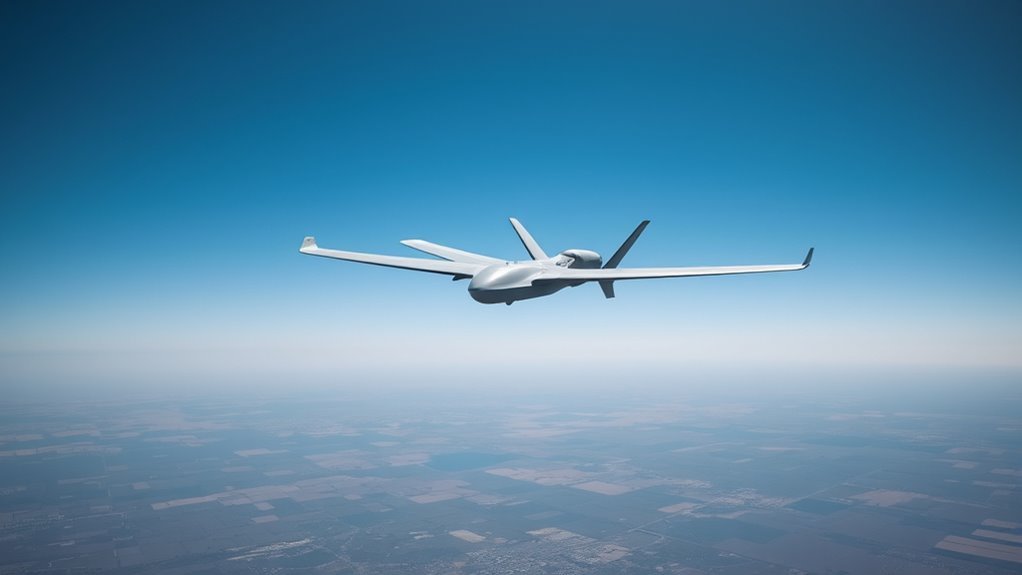
Military drones can achieve remarkable speeds, with some models, like the Boeing Valkyrie, exceeding 1,000 mph. This impressive capability allows them to engage targets quickly and evade enemy defenses effectively. Speed enhances reconnaissance efficiency and tactical response times, redefining aerial operations’ dynamics. As advancements in engineering continue, these high-speed drones increasingly dominate the battlefield, raising both operational possibilities and ethical considerations. Exploring the details of these innovations could provide deeper insights into modern drone warfare strategies.
Understanding Military Drones: Types and Functions
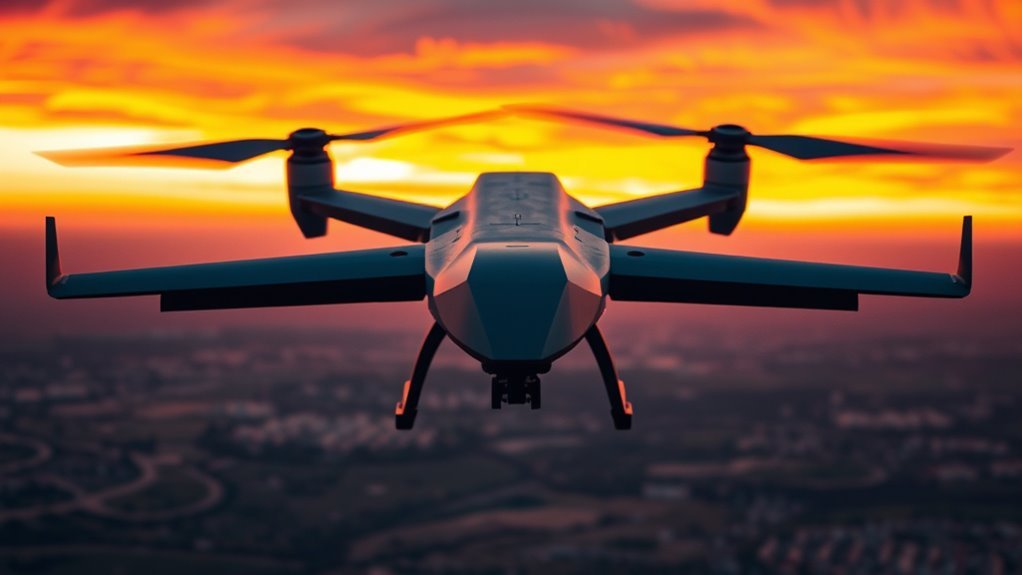
As military operations evolve, understanding the types and functions of military drones becomes crucial for evaluating their impact on modern warfare. These unmanned aerial vehicles (UAVs) exhibit diverse drone capabilities tailored to specific operational roles. For instance, reconnaissance drones excel in surveillance, gathering real-time intelligence without risking pilot lives. Combat drones, on the other hand, deliver precision strikes, enhancing lethality while minimizing collateral damage. Additionally, logistics drones support supply chains, ensuring timely delivery of essential materials to frontline troops. Each type of drone leverages advanced technologies, such as AI and sensor systems, to fulfill its mission objectives effectively. By comprehending these varied functions, you can better appreciate how drones are reshaping the battlefield and redefining strategic advantages in contemporary conflicts.
The Importance of Speed in Drone Warfare
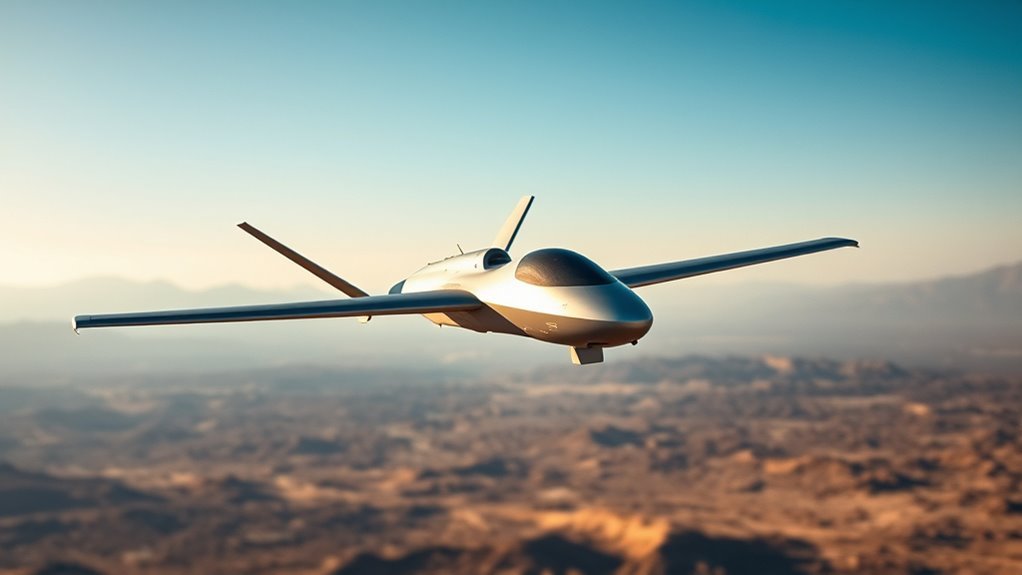
In drone warfare, speed provides an essential tactical advantage, allowing you to engage targets quickly and effectively. It also enhances rapid reconnaissance and intelligence gathering, ensuring timely data collection and analysis. Additionally, faster drones can evade enemy defense systems, increasing their survivability and mission success rate.
Tactical Advantage in Engagement
While speed alone doesn’t guarantee victory in drone warfare, it undeniably provides a tactical edge that can determine the outcome of engagements. In high-stakes scenarios, your ability to execute rapid tactical maneuvers is essential. Faster drones can outpace adversaries, allowing for more effective positioning and engagement strategies. This speed enhances operational efficiency, enabling you to strike before the enemy can react adequately. Furthermore, swift drones can exploit vulnerabilities in enemy defenses, executing surprise attacks with precision. The interplay of speed and maneuverability creates a dynamic battlefield environment where the faster drone often dictates the engagement’s tempo, allowing you to maintain the initiative. Ultimately, speed becomes a crucial component in securing dominance and achieving mission objectives in modern warfare.
Rapid Reconnaissance and Intelligence
Speed not only influences engagement tactics but also plays a pivotal role in reconnaissance and intelligence gathering. In modern warfare, rapid deployment of drones enhances their surveillance capabilities, allowing for swift data acquisition and analysis. This immediacy can determine mission success or failure. Here’s a brief overview of how speed impacts reconnaissance:
| Drone Type | Top Speed (mph) | Surveillance Range (miles) |
|---|---|---|
| MQ-9 Reaper | 300 | 1,150 |
| RQ-4 Global Hawk | 400 | 2,500 |
| RQ-11 Raven | 60 | 6 |
| Wasp III | 45 | 3 |
| ScanEagle | 63 | 100 |
Utilizing high-speed drones for intelligence gathering guarantees you remain ahead of adversaries, maintaining a strategic advantage.
Evading Enemy Defense Systems
As military drones navigate hostile environments, their ability to evade enemy defense systems becomes critical, especially when time is of the essence. Speed plays a crucial role in this situation; rapid maneuvers can make the difference between mission success and failure. Drones equipped with advanced stealth technology greatly reduce detection, allowing them to approach high-risk areas undetected. Once engaged, they can employ evasive maneuvers—sharp turns, altitude changes, and erratic flight patterns—to confuse and evade incoming threats. By maximizing their fast fly speed and utilizing these tactics, drones can enhance their survivability, ensuring they achieve their objectives while minimizing risk. In the domain of drone warfare, agility and stealth are essential for maintaining operational freedom.
Top Speeds of Various Military Drones
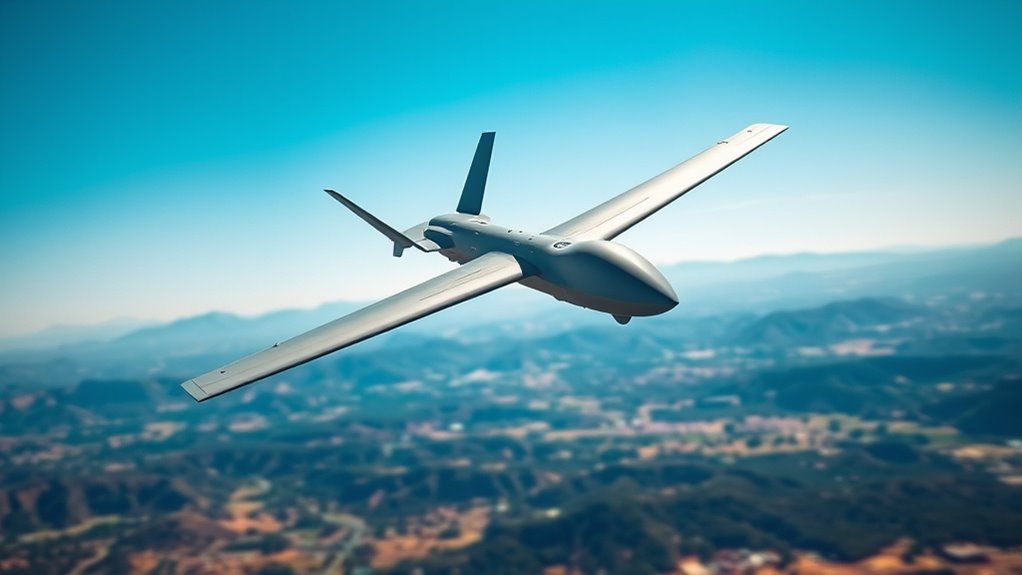
The domain of military drones showcases a remarkable array of aerial capabilities, particularly regarding speed. When analyzing drone performance, it’s essential to evaluate the top speeds of various models. For instance, the MQ-9 Reaper boasts a maximum speed of around 300 knots, while the RQ-170 Sentinel can reach approximately 200 knots. In contrast, the Northrop Grumman X-47B demonstrates impressive capabilities with speeds exceeding 400 knots. Speed comparison among these drones highlights the strategic advantages different platforms offer, particularly in reconnaissance and strike missions. As you explore these specifications, it becomes clear that speed is a critical factor in enhancing operational effectiveness, allowing military forces to maintain an edge in increasingly dynamic environments.
Engineering Innovations Behind High-Speed Drones
Advancements in engineering have considerably contributed to the remarkable speeds achieved by modern military drones. Key innovations in drone propulsion systems, such as turbojet and turbofan engines, enhance thrust-to-weight ratios, allowing for rapid acceleration and sustained high speeds. Meanwhile, sophisticated aerodynamic design plays an essential role in minimizing drag, optimizing airflow, and ensuring stability at high velocities. Engineers utilize computational fluid dynamics (CFD) to simulate and refine these designs, achieving shapes that promote efficiency while maintaining maneuverability. These combined efforts lead to drones capable of executing complex missions swiftly, reflecting a commitment to operational excellence. As these technologies continue evolving, expect to see even faster drones that push the boundaries of aerial capabilities.
Tactical Advantages of Fast-Moving Drones
While many factors contribute to a military drone’s effectiveness, speed offers critical tactical advantages that can greatly influence mission outcomes. Fast-moving drones provide enhanced tactical mobility, allowing you to navigate complex environments and adapt swiftly to changing situations. This speed facilitates rapid deployment, enabling your forces to respond to threats or opportunities with unprecedented agility. Additionally, the ability to cover vast areas in a short time allows for real-time intelligence gathering, reducing exposure to adversarial countermeasures. Speed also complicates enemy targeting, as drones can strike and disengage before opponents can react. Ultimately, incorporating fast drones into your operations enhances operational efficiency and effectiveness, empowering you to maintain the upper hand in dynamic combat scenarios.
Case Studies: High-Speed Drone Operations
In examining high-speed drone operations, you’ll find notable military examples that highlight advancements in speed and technology. These case studies reveal not only impressive speed records but also the strategic implications of rapid deployment in various missions. Analyzing these instances provides insights into the operational capabilities and future potential of military drones.
Notable Military Drone Examples
Military drones have revolutionized aerial warfare, particularly through their impressive speed capabilities. These advancements in drone capabilities not only enhance operational efficiency but also expand strategic options for military forces. Here are a few notable examples:
- MQ-9 Reaper: This drone can reach speeds of up to 300 knots, combining endurance with tactical versatility.
- X-47B: As a prototype for carrier operations, it showcases speed and stealth, reaching over 600 mph.
- Global Hawk: Known for its high-altitude surveillance, it flies at speeds around 357 knots while covering vast distances.
These technological advancements underline how speed is now a critical factor in modern military operations, enabling more agile responses to emerging threats.
Speed Records Achieved
As the demand for rapid response and strategic superiority grows, several military drones have set impressive speed records that highlight their capabilities in high-stakes environments. Take, for instance, the Northrop Grumman RQ-180, which has pushed boundaries in speed challenges, achieving record-breaking performances that redefine drone potential. Similarly, the Boeing Valkyrie has demonstrated its prowess with speeds exceeding 1,000 mph during test flights, showcasing its ability to cover vast distances quickly. These cases illustrate how technological advancements have enabled drones to meet the rigorous demands of modern warfare. By overcoming traditional limitations, these military drones not only enhance operational efficiency but also provide a tactical edge that fosters greater freedom in strategic decision-making.
Future Trends in Drone Speed and Technology
While advancements in drone technology continue to accelerate, the future of drone speed is poised to reshape military operations markedly. Innovations in drone propulsion systems are set to enhance speed optimization, enabling faster reconnaissance and rapid response capabilities. Here are some anticipated trends:
Advancements in drone technology are set to revolutionize military operations with enhanced speed and rapid response capabilities.
- Hybrid Propulsion Systems: Combining electric and traditional engines for increased efficiency and speed.
- Advanced Aerodynamics: Streamlined designs that reduce drag and enhance flight performance.
- AI-Powered Flight Control: Utilizing artificial intelligence for real-time adjustments to maximize speed and stability.
These developments will not only improve the tactical advantage of military drones but also expand their operational range, redefining how freedom is exercised in aerial missions. Embracing these technologies is vital for maintaining a competitive edge in modern warfare.
Ethical Considerations of High-Speed Military Drones
Given the rapid advancements in drone technology, the ethical implications of deploying high-speed military drones warrant careful examination. The ethics debate centers on their potential for collateral damage, accountability, and the moral implications of remote warfare.
| Ethical Concern | High-Speed Drones | Traditional Warfare |
|---|---|---|
| Collateral Damage | Increased risk | More controlled |
| Accountability | Ambiguous chain of command | Clear military hierarchy |
| Target Identification | High precision needed | Direct engagement required |
| Psychological Impact | Distance detachment | Immediate human interaction |
| Civilian Safety | Greater risk of errors | More ground-level oversight |
As you consider these factors, it’s clear that the integration of high-speed drones into military operations raises significant ethical questions that need addressing to uphold values of freedom and justice.
Frequently Asked Questions
What Factors Influence the Speed of Military Drones?
Imagine a drone designed for reconnaissance; its speed hinges on drone design and propulsion systems. Aerodynamics, weight, and engine efficiency all critically influence performance, showcasing the intricate balance between technology and mission objectives in military applications.
How Do Weather Conditions Affect Drone Flight Speed?
Weather impacts drone flight speed considerably. Factors like wind, rain, and temperature create speed limitations, affecting maneuverability and stability. Understanding these conditions helps you optimize performance, ensuring efficient operation in diverse environments while maintaining mission effectiveness.
Can Military Drones Be Modified for Higher Speeds?
You’d think military drones couldn’t get any faster, but with proper drone modifications, speed enhancements are possible. Engineers can tweak designs, integrating advanced technologies to boost performance, giving you that exhilarating sense of freedom in the skies.
What Is the Average Operational Range of Fast Military Drones?
The average operational range of fast military drones varies, typically extending from hundreds to over a thousand miles. This range reflects advancements in drone technologies, enhancing operational capabilities for surveillance and combat missions, ensuring strategic flexibility.
How Do Drone Speeds Compare to Manned Aircraft Speeds?
When you compare drone technology to manned aircraft, you’ll find drones often excel in flight efficiency, achieving higher speeds than many traditional planes, allowing for rapid deployment and enhanced operational capabilities in various missions.
