
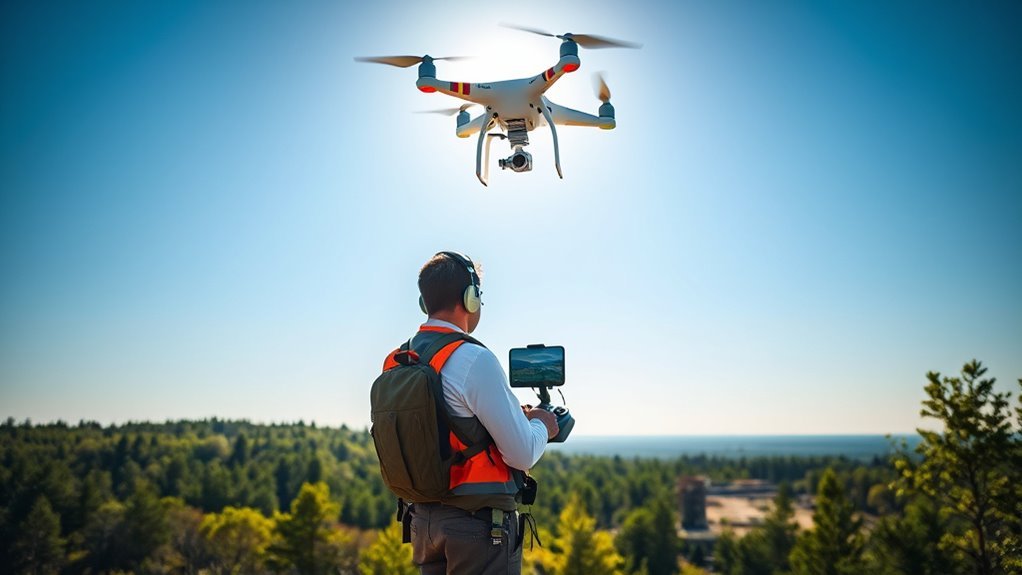
As a drone pilot, you’re responsible for ensuring regulatory compliance, performing detailed pre-flight inspections, and maintaining airspace awareness. Mastering operational skills and managing flight logistics are essential for safety. You’ll capture and analyze data, adapting to environmental conditions, while also ensuring your equipment and software are up to date. By continuously enhancing your knowledge, you’ll stay ahead in this evolving field. Explore further to uncover additional insights into the multifaceted role of a drone pilot.
Understanding Regulatory Compliance
When you begin your journey as a drone pilot, understanding regulatory compliance is vital, as it secures safe and legal operations. Familiarizing yourself with regulatory frameworks such as the FAA regulations or local laws guarantees you’re aware of your rights and responsibilities. Compliance certifications are significant, as they demonstrate your commitment to adhering to these regulations, allowing you to operate without fear of penalties. This knowledge not only safeguards your freedom as a pilot but also promotes responsible usage of airspace. Stay informed about changes in regulations, as they can directly impact your flying practices. By prioritizing regulatory compliance, you empower yourself to explore the skies while respecting the laws designed to protect everyone involved in aerial activities. Additionally, keeping up with temporary flight restrictions is crucial to ensure your operations remain within legal boundaries. Moreover, obtaining appropriate permits from relevant authorities before flying is essential to avoid legal complications.
Conducting Pre-Flight Inspections
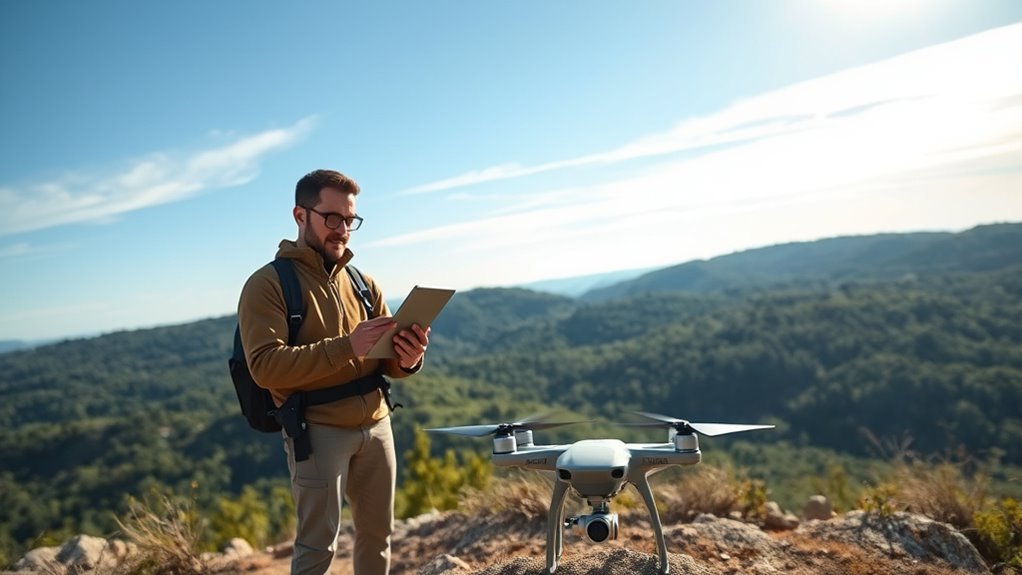
Before taking to the skies, conducting pre-flight inspections is essential to guaranteeing your drone’s safety and functionality. Start by following a detailed pre-flight checklist that includes checking battery levels, propeller integrity, and camera alignment. These inspection procedures help identify any potential issues that could compromise your operation. Inspect the drone’s software for updates to guarantee peak performance and compliance with regulations. Verify that all connections are secure, and calibrate the sensors as needed. Additionally, understanding your drone’s flight performance capabilities can help you anticipate how it will behave under various conditions. Remember, a thorough pre-flight inspection not only enhances your drone’s reliability but also safeguards your freedom to fly responsibly. Furthermore, ensuring that your drone’s battery optimization techniques are functioning correctly can prevent unexpected power failures during flight. By adhering to these protocols, you minimize risks and maximize your ability to conduct safe, efficient flights.
Ensuring Airspace Awareness
Conducting thorough pre-flight inspections sets the stage for the next essential responsibility: ensuring airspace awareness. As a drone pilot, you must prioritize airspace navigation to maintain safety and compliance. This involves understanding local regulations, restricted zones, and temporary flight restrictions. You should continuously monitor your surroundings, enhancing your situational awareness to anticipate potential conflicts with manned aircraft or other drones. Utilizing apps and resources that provide real-time airspace information is critical for effective navigation. By cultivating a proactive mindset, you can make informed decisions that keep your operations safe and efficient. Remember, your freedom to fly hinges on your commitment to staying informed and aware of the airspace you’re operating within.
Mastering Drone Operation Skills
To operate a drone effectively, you must understand flight safety protocols, technical proficiency requirements, and equipment maintenance essentials. Each of these areas plays a critical role in ensuring not just compliance with regulations but also the longevity and reliability of your equipment. Mastering these skills is essential for safe and efficient drone operation. Additionally, drone registration requirements should be understood and followed to avoid legal penalties and ensure responsible flying practices. Furthermore, being aware of restricted zones is crucial for maintaining safety and compliance during your drone flights.
Flight Safety Protocols
As you prepare to operate a drone, understanding and adhering to flight safety protocols is essential for ensuring both your safety and that of others. Effective flight path management is important; you need to plan your routes ahead, avoiding restricted areas and ensuring clear communication with any air traffic. Regularly assess environmental conditions and remain aware of potential obstacles. Should an incident occur, prompt incident reporting is critical for accountability and improvement. Documenting any irregularities helps refine your practice and reinforces safety standards within the community. By prioritizing these protocols, you not only enhance your operational freedom but also contribute to a culture of responsible drone usage that benefits everyone involved.
Technical Proficiency Requirements
Flight safety protocols lay the groundwork for responsible drone operation, but mastering the technical skills necessary for effective drone piloting is equally important. You need to develop software proficiency to navigate various flight control systems and video capture programs. Understanding the user interface and functionalities of your drone’s software will enable you to optimize performance and guarantee successful missions. Equally, hardware troubleshooting skills are vital; knowing how to diagnose and fix issues like battery failures or sensor malfunctions can save you time and potential setbacks. The freedom you seek in drone piloting hinges on your technical abilities, allowing you to efficiently handle unexpected situations while maximizing your drone’s capabilities—allowing you to focus on creativity and exploration in your aerial endeavors.
Equipment Maintenance Essentials
While you may be enthusiastic to take to the skies, making certain your drone is well-maintained is crucial for ideal performance and safety. Regular equipment calibration is essential; it guarantees your drone operates within specified parameters and helps prevent erratic flight behavior. Check the propellers, battery, and sensors frequently, replacing any damaged components to maintain peak functionality.
Additionally, don’t overlook the importance of software updates. Keeping your drone’s firmware current enhances performance, improves reliability, and often introduces new features. Schedule routine checks to verify your drone remains compliant with regulations and operates efficiently. By prioritizing equipment maintenance, you empower your freedom to explore the skies confidently and safely.
Managing Flight Planning and Logistics
To guarantee a successful drone operation, meticulous flight planning and logistics management are essential. You’ll need to focus on several key areas to achieve maximum performance:
- Flight route optimization for efficiency and safety
- Logistics coordination to guarantee timely delivery of equipment and personnel
- Weather assessment to avoid adverse conditions; monitoring weather conditions is essential for safer, longer flights.
- Regulatory compliance to adhere to local laws and restrictions
Additionally, it’s crucial to consider potential visibility challenges that can arise in snowy conditions to enhance operational safety.
Implementing Safety Protocols
As a drone pilot, implementing safety protocols is essential for operational integrity. You must conduct thorough pre-flight safety checks, establish clear emergency response procedures, and develop effective risk assessment strategies. These measures not only enhance safety but also guarantee compliance with regulatory standards. Additionally, understanding signal attenuation is crucial for ensuring effective communication and operational range during flight missions. Furthermore, being aware of collision avoidance technology is vital for mitigating risks associated with autonomous flights.
Pre-Flight Safety Checks
Before you launch a drone, it’s crucial to conduct thorough pre-flight safety checks to confirm both equipment functionality and adherence to safety protocols. A detailed pre-flight checklist guarantees you’re ready for flight and minimizes risks. Here are key elements to include:
- Inspect the drone’s physical condition
- Verify battery levels and functionality
- Test all safety equipment, including prop guards
- Check GPS and software updates
Emergency Response Procedures
While you may endeavor for a smooth flight experience, unforeseen circumstances can arise, making it essential to have a robust emergency response plan in place. Effective crisis management involves pre-established protocols and clear response coordination to mitigate risks.
| Emergency Situation | Immediate Action | Follow-Up Procedure |
|---|---|---|
| Loss of signal | Initiate Return-to-Home | Assess system logs and notify stakeholders |
| Battery failure | Land safely ASAP | Replace battery and inspect drone function |
| Obstacle collision | Execute evasive maneuver | Evaluate drone damage and safety measures |
| Weather deterioration | Abort mission promptly | Document conditions and report to authorities |
| Flight path deviation | Re-establish control | Review flight logs and adjust future plans |
Risk Assessment Strategies
Effective emergency response procedures lay the groundwork for implementing robust risk assessment strategies. As a drone pilot, you’ll need to employ various risk evaluation techniques and hazard identification methods to guarantee safety during operations. Consider these essential strategies:
- Conduct thorough pre-flight checks to identify potential hazards
- Utilize risk evaluation techniques to assess environmental conditions
- Implement safety protocols tailored to specific drone operations
- Regularly review and update your risk management plans
Capturing and Analyzing Data
Capturing and analyzing data becomes an essential responsibility that demands precision and attention to detail. Employing effective data collection methods is critical, whether you’re gathering imagery, thermal data, or geographic information. Once collected, implementing data visualization techniques enhances interpretation and decision-making. Additionally, using AI-driven analytics can transform your data into actionable insights, further improving your decision-making process. The integration of real-time data collection ensures that your monitoring efforts are both timely and relevant.
| Data Type | Collection Method | Visualization Technique |
|---|---|---|
| Aerial Imagery | Photogrammetry | 2D/3D Mapping |
| Thermal Imaging | Infrared Sensors | Heat Maps |
| LiDAR Data | Laser Scanning | Point Cloud Visualization |
| Multispectral | Spectral Sensors | NDVI Mapping |
| Video Footage | Real-time Recording | Time-lapse Analysis |
Mastering these processes guarantees you’re not just flying a drone but effectively leveraging its capabilities.
Adapting to Environmental Conditions
Understanding how to adapt to environmental conditions is essential for drone pilots, especially since weather and terrain can greatly impact flight safety and data accuracy. You’ll need to perform thorough assessments and analyses before each flight. Here are key considerations:
- Weather Assessment: Monitor wind speed, precipitation, and visibility. High wind speeds can increase power draw, affecting battery capacity and resulting in a shorter flight duration.
- Terrain Analysis: Evaluate obstacles like trees, buildings, and elevation changes.
- Flight Path Planning: Adjust routes based on environmental factors to enhance safety.
- Emergency Protocols: Develop strategies for sudden weather changes or terrain challenges. Additionally, understanding battery life differences can help pilots prepare for varying flight durations under different conditions.
Maintaining Equipment and Software
To guarantee peak performance and safety, drone pilots must prioritize maintaining their equipment and software. Regular inspections of your drone’s hardware can help you identify wear and tear before it leads to malfunction. You should also perform equipment troubleshooting to address any technical issues promptly, ensuring your operations run smoothly. Additionally, staying current with software updates is vital; these updates often enhance functionality, fix bugs, and improve security. Neglecting these updates could expose your drone to vulnerabilities. By systematically checking both hardware and software, you not only enhance your drone’s reliability but also safeguard your autonomy as a pilot. This proactive approach ultimately empowers you to operate confidently, knowing your equipment is in ideal condition. Furthermore, understanding your drone’s battery efficiency can help optimize flight time and performance during your operations. Moreover, recognizing how motor torque influences payload capacity can further improve your operational effectiveness when carrying loads.
Continuous Learning and Skill Development
As a drone pilot, staying current with ongoing training opportunities is essential for maintaining your operational effectiveness. You need to keep abreast of regulatory knowledge updates to guarantee compliance with evolving laws and policies. Additionally, adapting to emerging technologies will enhance your capabilities and improve mission outcomes.
Ongoing Training Opportunities
While the drone industry evolves rapidly, ongoing training opportunities are essential for pilots aiming to stay competitive and proficient. To enhance your skills and knowledge, consider exploring various options that cater to your development needs:
- Mentorship programs: Connect with experienced pilots to gain insights and practical advice.
- Certification courses: Obtain specialized credentials to validate your proficiency in specific areas.
- Workshops and seminars: Participate in hands-on training sessions for real-world applications.
- Online resources: Utilize webinars and tutorials to learn at your own pace.
Regulatory Knowledge Updates
Staying informed about regulatory updates is essential for drone pilots, especially in a sector where legislation can change rapidly. You need to continuously monitor changes to guarantee compliance with legal requirements that govern drone operations. This involves not just understanding current laws but also anticipating potential shifts in regulations that could affect your flight operations. Engaging with industry forums, attending workshops, and subscribing to relevant publications can enhance your knowledge base. Failing to keep up with these updates could result in costly penalties or operational restrictions. Therefore, committing to continuous learning isn’t just beneficial; it’s a fundamental responsibility that guarantees you remain a competent and legally compliant drone pilot in an evolving landscape.
Emerging Technology Adaptation
To thrive in the rapidly evolving landscape of drone technology, you must embrace continuous learning and skill development. Staying updated with drone integration strategies and technology adoption trends is essential to maintain your competitive edge. Here are key areas to focus on:
- Understanding new drone software and hardware advancements
- Mastering data analysis techniques for effective decision-making
- Exploring regulatory changes impacting drone operations
- Networking with other professionals to share insights and experiences
Frequently Asked Questions
What Insurance Do Drone Pilots Need for Their Operations?
When operating drones, you’ll need various insurance types. Primarily, liability coverage is essential to protect against potential damages or injuries. Confirm your policy aligns with your specific operations to maintain compliance and safeguard your interests effectively.
How Can Drone Pilots Handle Emergency Situations Mid-Flight?
Picture soaring through the skies, when sudden turbulence strikes. In those moments, you must rely on emergency protocols and sharp in-flight decision-making to navigate safely, ensuring your drone—and its mission—stays intact amidst chaos.
What Are the Best Practices for Drone Storage and Transport?
For safe storage, keep your drone in a cool, dry place, using protective cases to prevent damage. Regular drone maintenance guarantees peak performance, reducing the risk of issues when you’re ready for your next flight.
How Do Drone Pilots Ensure Data Privacy and Security?
To guarantee data privacy and security, you must implement data encryption and adhere to privacy regulations. This approach safeguards sensitive information during aerial operations, promoting trust and compliance with legal standards while maintaining operational freedom.
What Certifications Can Enhance a Drone Pilot’s Credentials?
To enhance your credentials, consider pursuing certification types like Part 107, remote pilot, or specialized training. These certifications offer significant credential benefits, increasing your expertise and marketability in the ever-evolving drone industry.
