
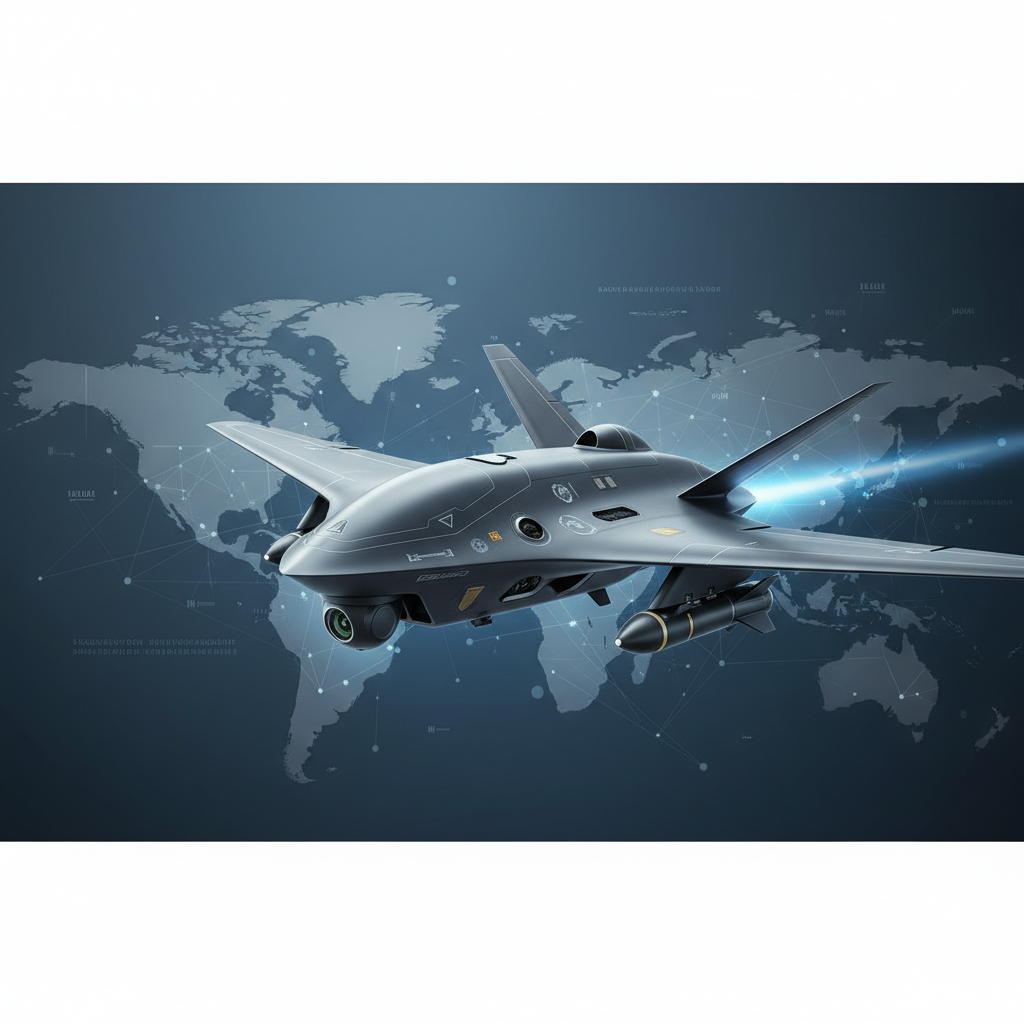
Military drones typically feature sleek, aerodynamic designs that vary in shape and size, depending on their specific purpose. These unmanned aerial vehicles (UAVs) are equipped with advanced technology, giving them a distinct appearance that sets them apart from traditional aircraft. The evolution of military drones has led to a wide array of designs, each tailored to enhance operational efficiency and mission effectiveness.
Overview of Military Drone Types
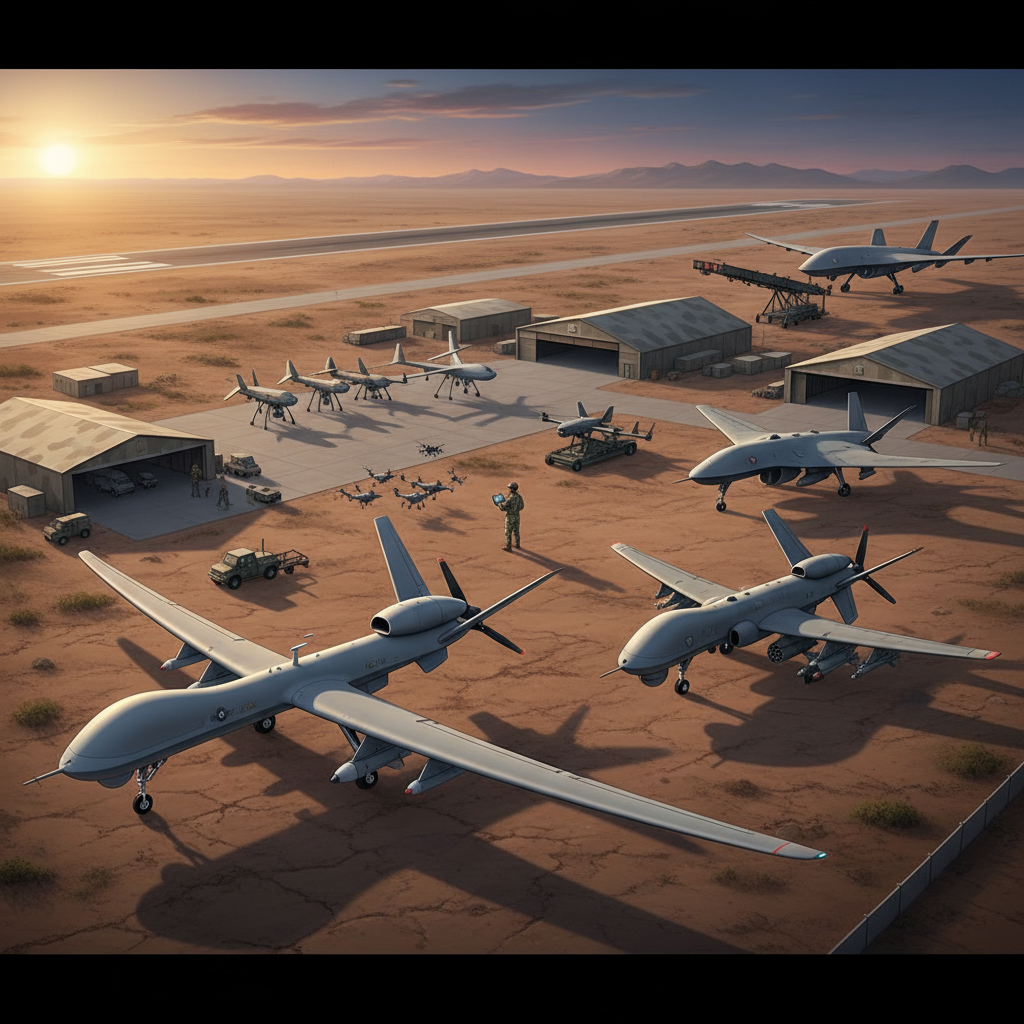
Military drones can be categorized into several types based on their roles and missions. The primary classes include reconnaissance drones, combat drones, and surveillance drones.
Reconnaissance drones are primarily designed to gather intelligence and are often equipped with high-resolution cameras and sensors. Their design emphasizes stealth and agility, allowing them to operate undetected. Combat drones, on the other hand, are built for offensive operations and can carry weaponry, making them larger and more robust in structure. Surveillance drones focus on monitoring and tracking, often featuring advanced imaging technology to relay real-time data back to command centers.
Each type of drone reflects its specific mission requirements, influencing not only its appearance but also its operational capabilities. For instance, a reconnaissance drone might have a smaller profile to enhance its stealth, while a combat drone needs to be more formidable in size to accommodate weapon systems.
Design Features of Military Drones
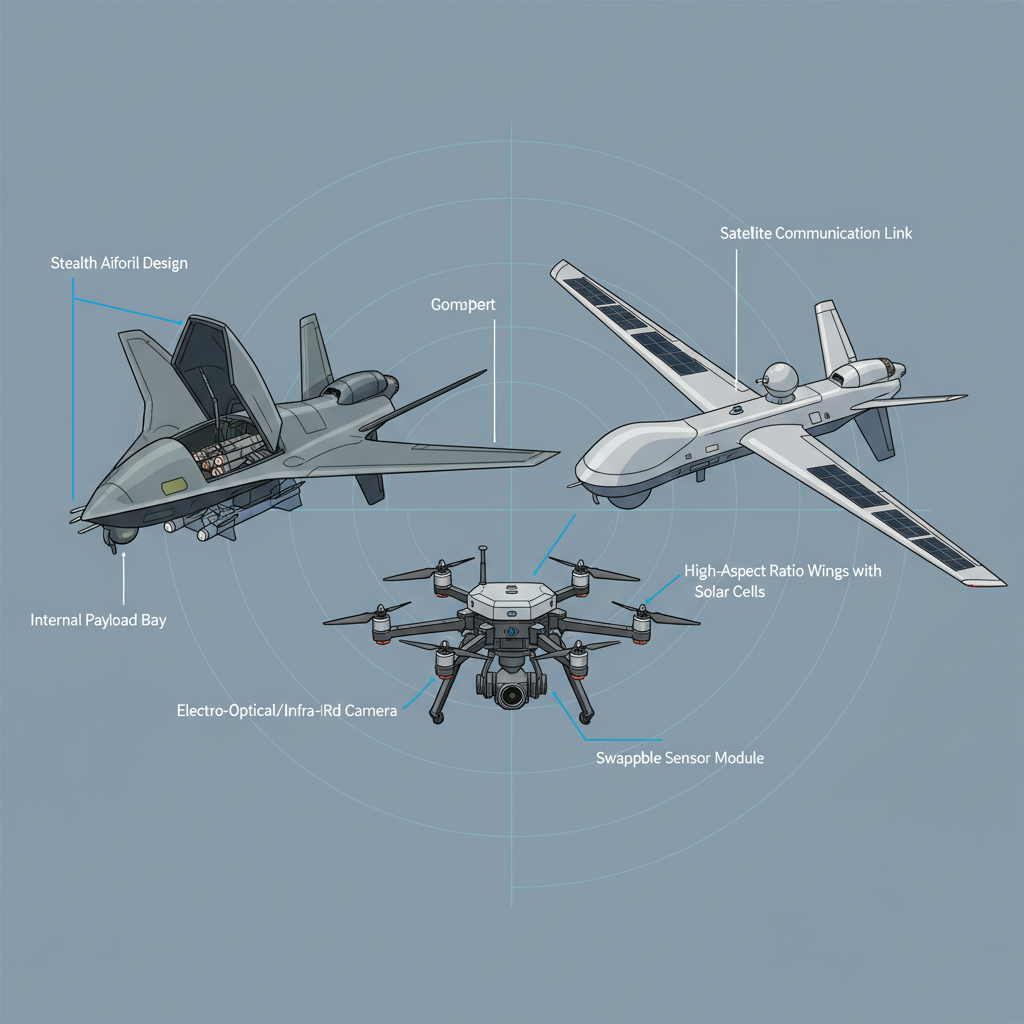
The design features of military drones vary significantly across different models, but common characteristics can be noted. Many drones have a wingspan that ranges dramatically, from small quadcopters measuring just a few feet to large drones like the RQ-4 Global Hawk, which boasts a wingspan of over 130 feet.
The materials used in military drone construction are crucial for performance. Lightweight composites and advanced metals are favored for their durability and strength, allowing drones to endure harsh operational environments while maintaining efficient flight. The sleek, aerodynamic shapes are not just for aesthetics; they are engineered to reduce drag, improve fuel efficiency, and enhance flight stability.
Moreover, military drones often incorporate features such as retractable landing gear and streamlined fuselages that contribute to their overall efficiency and stealth capabilities.
Key Components of Military Drones
Military drones are equipped with several key components that enhance their functionality. Cameras and sensors are standard features, enabling reconnaissance and surveillance capabilities. High-definition cameras, infrared sensors, and radar systems can provide extensive data, facilitating critical decision-making on the battlefield.
Additionally, weaponry systems can be integrated into combat drones, allowing for precision strikes. These systems may include laser-guided missiles and precision bombs, which require specific design considerations to ensure proper weight distribution and balance.
The propulsion systems also play a vital role in defining the drone’s appearance and performance. While some drones are powered by jet engines, others may utilize electric motors, impacting their design and operational capabilities. Jet engines tend to be larger and require specific aerodynamics for optimal performance, while electric motors allow for quieter operations, which is beneficial for stealth missions.
Notable Examples of Military Drones
Several military drones stand out due to their design and capabilities. The MQ-9 Reaper is a notable example, known for its large wings and payload capacity, making it one of the most effective combat drones in use today. It features a distinctive shape, combining high endurance with the ability to carry a variety of munitions, which allows for prolonged missions without frequent refueling.
Another significant example is the RQ-4 Global Hawk, recognized for its high-altitude design and unique fuselage shape. This drone is engineered for long-duration reconnaissance, capable of flying at altitudes of up to 60,000 feet, and is equipped with sophisticated sensor packages that enable it to capture detailed imagery over vast areas.
These examples illustrate the diversity in military drone design, showcasing how each model is tailored to meet specific operational requirements.
Technological Advancements in Drone Design
The field of military drone design has seen significant technological advancements in recent years. One of the most notable innovations is the integration of stealth features that reduce radar visibility. These advancements include specialized coatings and shapes that minimize the drone’s radar cross-section, making them harder to detect by enemy radar systems.
Moreover, enhanced flight control systems have revolutionized drone aerodynamics. Modern drones utilize advanced algorithms and onboard computers to optimize flight paths and maneuverability. This has led to sleeker, more efficient designs that can adapt to various flight conditions and mission objectives, further improving operational effectiveness.
These technological developments not only enhance the performance of military drones but also influence their overall design, creating a new generation of UAVs that are more capable and versatile.
The Role of Aesthetics in Military Drone Design
Aesthetics play a critical role in military drone design, impacting both public perception and operational effectiveness. The visual appeal of a drone can influence its acceptance and support among military personnel and the general public alike. For instance, drones designed with camouflage patterns are often more effective in blended environments, allowing for better concealment during missions.
Furthermore, the design of military drones can communicate power and capability, potentially deterring adversaries. A drone with a formidable appearance may instill confidence in both military operators and the public, reinforcing the perception of technological superiority.
However, aesthetics must be balanced with functionality. While a visually appealing design can be beneficial, the primary focus remains on performance and mission success. Consequently, many military drones prioritize features that enhance camouflage and environmental integration over purely aesthetic considerations.
Future Trends in Military Drone Design
Looking ahead, the landscape of military drone design is poised for exciting changes. One significant trend is the increasing focus on autonomous capabilities. As artificial intelligence and machine learning technologies evolve, future drones may be able to operate with minimal human intervention, altering their design to accommodate advanced navigation systems and onboard processing units.
Additionally, research into hybrid designs is gaining momentum. These drones would combine features of both fixed-wing and rotary-wing aircraft, enabling them to operate effectively in a wider range of environments. Such versatility could enhance mission capabilities, allowing for rapid deployment in diverse scenarios.
As military operations continue to evolve, the design of drones will likely adapt in response, emphasizing performance, efficiency, and operational flexibility.
In conclusion, military drones exhibit a variety of designs and features that reflect their intended use and technological advancements. From reconnaissance and surveillance to combat operations, each type of drone is uniquely crafted to fulfill specific missions. Understanding what these drones look like helps to appreciate their role in modern military operations. As technology continues to advance, it will be fascinating to observe how these designs evolve further. For more insights into military technology, stay tuned for our upcoming articles!
Frequently Asked Questions
What do military drones look like compared to commercial drones?
Military drones often have a more robust and aerodynamic design compared to commercial drones. They are typically larger, with wingspans ranging from several feet to over 100 feet, and feature advanced technologies like surveillance cameras, radar systems, and missile systems. In contrast, commercial drones are generally smaller, designed for recreational use or light-duty tasks, and lack the complex technology used in military applications.
How are military drones categorized based on their appearance and function?
Military drones can be categorized into several types based on their appearance and intended functions, including reconnaissance drones, combat drones, and logistic drones. Reconnaissance drones, such as the MQ-1 Predator, often resemble small aircraft with long wingspans for extended flight. Combat drones, like the MQ-9 Reaper, generally have a more aggressive look with features designed for carrying weapons. Logistic drones can vary widely in design, often resembling traditional cargo planes or helicopters, tailored for transporting supplies.
Why do military drones have specific design features?
Military drones are designed with specific features to enhance their operational capabilities, including stealth technology, which allows them to evade detection, and reinforced structures to withstand combat conditions. Their design often includes features like folding wings for easy transport, a streamlined body for improved aerodynamics, and mounting points for various payloads, such as cameras or missiles. These design considerations are crucial for performing intelligence, surveillance, and combat missions effectively.
What are the best examples of military drones based on design and functionality?
Some of the best examples of military drones include the Northrop Grumman RQ-4 Global Hawk, known for its high-altitude surveillance capabilities and sleek, elongated design. The General Atomics MQ-9 Reaper is another notable example, featuring a robust build and versatility for both reconnaissance and strike missions. Additionally, the Boeing Insitu ScanEagle is popular for its compact design, making it ideal for maritime operations and intelligence gathering.
Which materials are commonly used in the construction of military drones?
Military drones are primarily constructed from advanced materials such as carbon fiber composites, aluminum alloys, and sometimes titanium, which provide strength while keeping weight to a minimum. These materials help enhance the drone’s durability and performance in various environments, including extreme weather conditions. The use of stealth coatings may also be applied to reduce radar signatures, further improving the drone’s effectiveness in missions.
References
- https://en.wikipedia.org/wiki/Military_drone
- https://www.bbc.com/news/world-us-canada-47840180
- https://www.armytimes.com/2021/05/11/inside-the-us-armys-military-drone-pilot-training-program/
- https://www.reuters.com/article/us-usa-drone-insight-idUSKBN2A20U2
- https://www.jstor.org/stable/10.5325/jmilspacestudieduc.4.2.0159
- https://www.cto.int/en/news/insights-on-the-future-of-military-drones
- https://www.rand.org/pubs/research_reports/RR1677.html
- https://www.darpa.mil/program/drones-for-detecting-and-tracking-objects-in-the-environment
- https://www.nationaldefensemagazine.org/articles/2020/9/2/the-future-of-military-drones
