

When flying, drones produce unique sounds influenced by their size and design. Small drones emit high-pitched propeller whines, while larger models create lower-frequency hums. Noise types also include buzzing during maneuvers and clattering from mechanical vibrations. Factors like rotor shape, material, and flight speed greatly affect noise levels. Understanding these sounds helps assess their operational state and impact. There’s much more to learn about drone acoustics and noise reduction innovations, influencing the future of drone applications.
The Anatomy of Drone Sounds
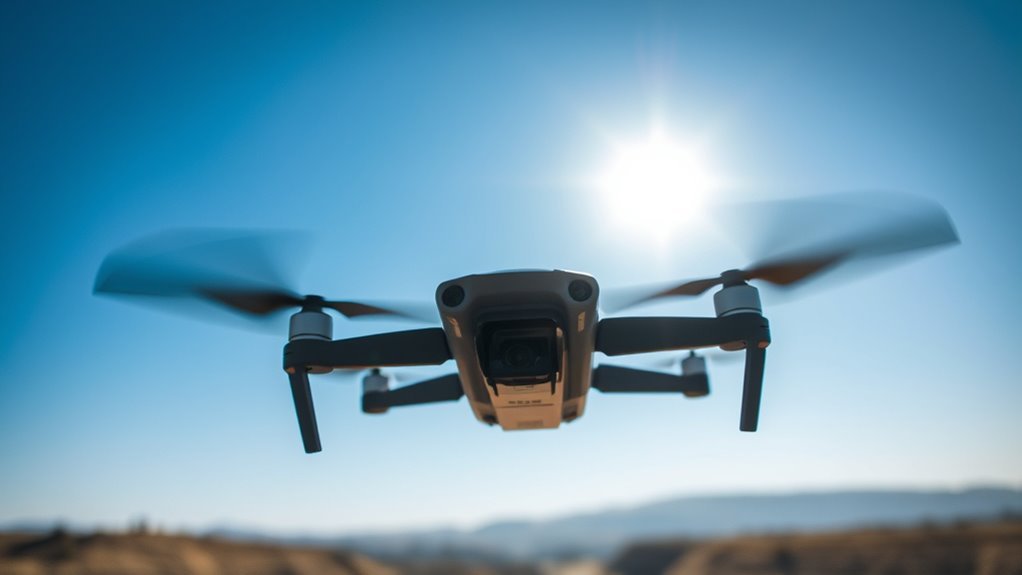
The sound produced by drones is a complex interplay of mechanical and aerodynamic factors. You’ll notice that sound frequency is influenced by the rotor speed and blade design. As the rotors spin, they create distinct vibration patterns that contribute to the overall sound signature. These vibrations interact with the surrounding air, generating a range of frequencies that can be both low and high-pitched. The unique combination of these factors results in a sound that’s not only technical but also indicative of the drone’s operational state. Understanding these elements allows you to appreciate the nuances of drone acoustics, enhancing your awareness of how these machines operate in your environment, and potentially influencing your perception of their presence and impact on your freedom.
Types of Drone Noises
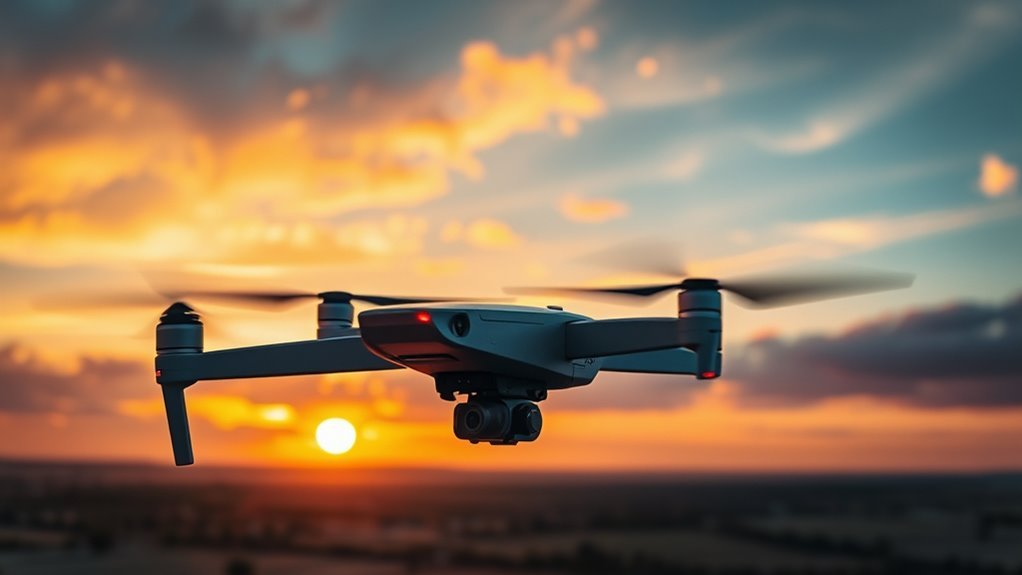
Understanding the sound characteristics of drones leads to an exploration of the various types of noises they produce. These sounds contribute to the overall drone soundscapes and can vary considerably depending on the model and operation. Here are four distinct types of drone noises you might encounter:
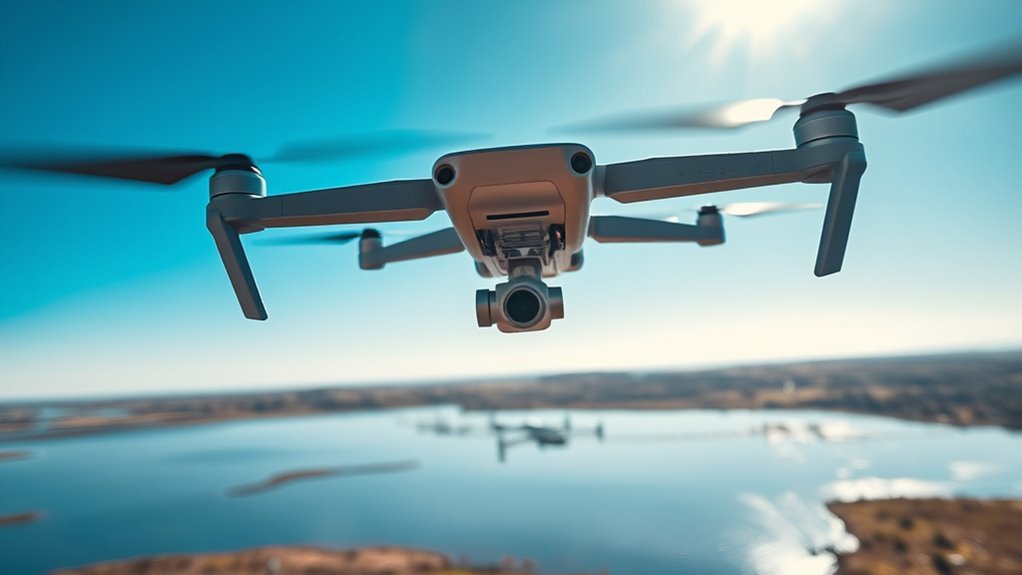
Exploring drone sound characteristics reveals diverse noises that shape their unique acoustic profiles and impact on the environment.
- Propeller Whine: A high-pitched, continuous sound, often associated with small drones.
- Humming: A lower-frequency noise produced by larger drones, giving a more robust acoustic profile.
- Buzzing: A rapid, erratic sound, typically heard during maneuvers or when drones encounter wind.
- Clattering: A harsh noise resulting from mechanical vibrations or loose components.
Each of these noises offers insight into the drone’s performance and environmental impact, enhancing your understanding of their acoustic profiles.
Factors Influencing Drone Noise Levels
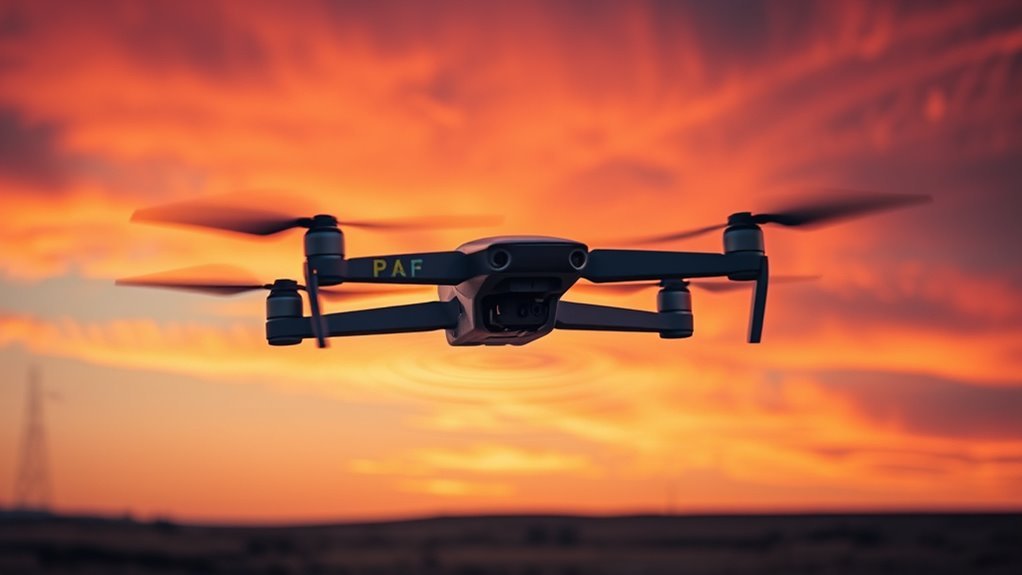
While various factors contribute to the noise levels of drones, the design and technology behind each model play vital roles in determining their acoustic output. Key elements include rotor size, shape, and material, which can greatly influence the sound produced during flight. For instance, larger rotors often generate lower-frequency sounds, while smaller, high-pitched noises may arise from intricate designs. Additionally, flight speed is critical; faster speeds typically result in increased noise due to more pronounced aerodynamic interactions and turbulence. Moreover, the propulsion system’s efficiency can either mitigate or amplify sound levels. Understanding aero dynamics is essential as it helps explain how design choices impact noise production. By understanding these factors, you can appreciate how drone design and operational choices impact the overall acoustic experience. Muffler technology continues to play a significant role in addressing these challenges, helping to balance performance with noise reduction. Balancing performance with noise reduction continues to be a challenge for manufacturers.
The Impact of Drone Size on Sound
When examining drone noise, size plays a vital role in sound production. Small drones typically generate a high-pitched whirring sound due to their rapid rotor speed, while large drones emit a deeper thumping noise caused by larger propeller blades and increased mass. Understanding these acoustic differences is essential for evaluating noise impact in various environments.
Small Drones’ Whirring Sounds
Small drones, often weighing less than a kilogram, produce distinct whirring sounds that can vary considerably from their larger counterparts. Understanding small drone acoustics helps you appreciate the nuances of sound frequency they generate. Here are some key aspects to evaluate:
- Blade Design: The shape and number of blades influence the whirring sound’s pitch and volume.
- Rotational Speed: Faster rotations typically increase the frequency and intensity of the sound.
- Weight Distribution: A balanced drone tends to produce a smoother sound, while uneven weight can lead to unpredictable noise variations.
- Environmental Factors: Wind and surface reflections can alter how you perceive the drone’s sound, creating distinct acoustic experiences.
These elements collectively contribute to the unique auditory signatures of small drones, enhancing your understanding of their impact on surroundings.
Large Drones’ Thumping Noise
Large drones generate a markedly different auditory experience compared to their smaller counterparts, producing a deep, thumping noise that can be attributed to their size and operational characteristics. The sound frequency emitted by a large drone typically falls within a lower range, resulting from the larger propellers and increased mass that must be lifted. This low-frequency thump can be felt as much as it is heard, often resonating through the environment. The interplay between rotor dynamics and air displacement amplifies this effect, creating a sound signature distinct from lighter drones. For those seeking autonomy in drone use, understanding these acoustic properties is essential, as they impact both operational stealth and regulatory compliance in various settings.
The Role of Propellers in Noise Production
Although many factors contribute to the noise produced by drones, propellers play a critical role in shaping the overall acoustic signature. The way propellers are designed directly influences the noise frequency and volume. Here are four key aspects to evaluate:
- Blade Shape: Aerodynamically optimized blades reduce turbulence, minimizing noise.
- Blade Material: Lightweight materials can enhance efficiency and further decrease sound levels.
- Blade Count: More blades can distribute lift but may increase noise frequency.
- Rotation Speed: Higher RPMs can lead to greater noise production due to increased air displacement.
Environmental Considerations for Drone Noise
As drones become increasingly prevalent in various sectors, their noise impact on the environment warrants careful consideration. The environmental impact of drone noise is multifaceted, affecting not just human populations but also local ecosystems. The sound generated by drones can lead to wildlife disturbance, disrupting feeding, mating, and nesting behaviors. Species sensitive to auditory cues may flee their habitats, resulting in altered population dynamics and diminished biodiversity. For those who value ecological freedom, understanding how drone noise interacts with natural environments is essential. Furthermore, evaluating the long-term implications of drone operations on wildlife is necessary to develop strategies that minimize adverse effects while allowing for technological advancement. Balancing these interests is key to sustainable drone integration into our daily lives.
Innovations in Noise Reduction Technology
While the rise of drone usage presents challenges in noise pollution, recent innovations in noise reduction technology are paving the way for quieter operations. You’ll find that advancements in sound engineering have led to significant breakthroughs. Here are some key innovations:
- Propeller Design: Enhanced aerodynamics reduce turbulence and noise.
- Active Noise Cancellation: Technologies mimic and counteract drone sounds, minimizing the overall sound signature.
- Material Science: Use of sound-absorbing materials in drone construction helps dampen noise.
- Flight Path Optimization: Algorithms can optimize routes to minimize noise exposure in populated areas.
These innovations not only improve user experience but also address community concerns, allowing for a future where drones can operate with minimal disruption. Embracing these technologies can guarantee freedom in drone applications while respecting environmental needs.
Frequently Asked Questions
Do Different Drone Models Produce Different Noise Levels?
Think of a symphony; different drone designs play unique melodies. Propeller size greatly influences noise levels, so larger props might create a deeper sound, while smaller ones produce a higher pitch, affecting your flying experience.
Can Drone Noise Be Harmful to Wildlife?
Drone noise can greatly impact wildlife, causing disturbances that affect natural behaviors. You’ll find that prolonged exposure to drone activity may lead to stress responses, altering habitats and ultimately threatening biodiversity and the delicate balance within ecosystems.
How Far Can Drone Noise Be Heard?
Drone sound can travel quite far, often detectable up to a mile away under ideal conditions. Your noise perception varies based on environmental factors, like terrain and wind, which can greatly influence how far you hear it.
Are There Regulations on Drone Noise Levels?
Yes, there’re drone regulations regarding noise levels, often enforced by local authorities. These rules aim to balance aerial freedom with community noise concerns, ensuring your drone operations comply while respecting others’ peace and quiet.
Do Weather Conditions Affect Drone Noise?
Weather conditions notably impact drone noise, causing variations in sound levels. Wind, temperature, and humidity can alter how noise travels, affecting your perception of the drone’s sound. Understanding these factors can enhance your flying experience and minimize disturbances.
