

Drone honey bees play a highly specific role in the hive: they are male reproductive bees whose primary purpose is to mate with virgin queens. In most managed and wild colonies, that mating function directly supports genetic diversity, which helps the colony remain resilient across changing seasons.
What drones do in a honey bee colony
Drone honey bees are defined as male bees produced from unfertilized eggs that develop solely to participate in queen mating. The key difference is that drones do not forage, do not nurse brood, and generally do not defend the hive.
Inside the colony, drones exist as part of the reproductive system rather than the workforce. Workers regulate access to resources and can reduce drone populations when conditions are poor or when mating opportunities have passed. This “resource targeting” is one reason drones appear in higher numbers during peak mating periods and are later removed.
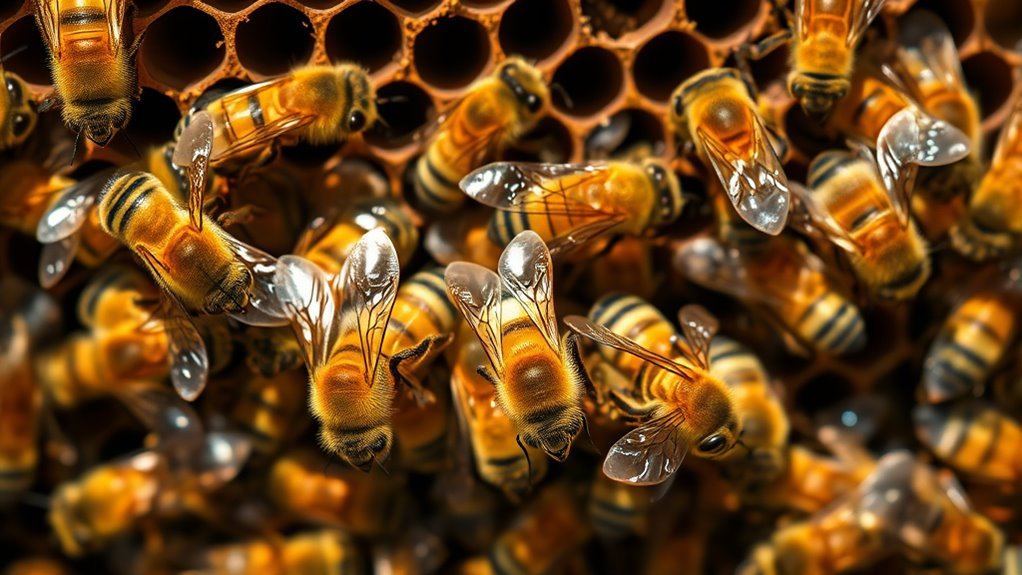
Why queen mating matters for colony success
Queen mating is the gateway to sperm storage, which then influences egg fertilization patterns and the colony’s genetic makeup. The widely accepted expert view is that colonies benefit when mating results in varied genetics, particularly because it can improve resilience to disease pressure and environmental stress.
- Genetic diversity support: Drones contribute different paternal lineages when queens mate with multiple males.
- Colony continuity: A mated queen can lay fertilized eggs, sustaining colony growth and overwintering.
- Adaptive potential: Diverse offspring can better match local conditions, including pathogens and forage availability.
Drone honey bee biology and physical traits
Drone honey bees look different from workers because their bodies are optimized for mating rather than fieldwork. The most recognizable traits include larger eyes, a thicker thorax, and the absence of a stinger.
The physical adaptation most frequently discussed in apiculture is the drone’s vision. Drone honey bees have very large compound eyes that meet at the top of the head, a configuration that supports aerial orientation and queen detection during mating flights. Their reproductive-focused anatomy also lacks pollen-carrying adaptations found in workers, such as specialized corbiculae used for transporting nectar-derived pollen.
Common morphology differences you can observe
These traits reflect the drone’s evolutionary specialization for flight and reproduction.
- Size and build: Drones are typically larger and more robust than worker bees, with a bulkier abdomen.
- Eye structure: Large compound eyes that meet along the top of the head support long-range spotting.
- No stinger: Drones lack a functional stinger, so they do not perform defensive stinging.
- Reduced labor structures: Drone bodies do not include worker-specific pollen transport structures.
- Flight-focused design: Their wing proportions and body mass support mating flight rather than hive labor.
Drone development and lifecycle in the hive
Drone development is defined as the process by which unfertilized eggs become adult males through egg, larval, pupal, and adult stages. The drone lifecycle is roughly 24 days from egg to emergence, though local conditions can shift timing slightly.
The drone pathway begins when queens lay unfertilized eggs in comb cells. Because unfertilized eggs are haploid, drones develop with a single set of chromosomes, unlike workers and queens, which originate from fertilized eggs.
Drone stages and typical timing
Below are commonly cited approximate durations for honey bee drone development:
- Egg stage: about 3 days, unfertilized and haploid.
- Larval stage: about 6 days, fed by worker bees with nutrient-rich secretions.
- Pupal stage: about 14 days, during metamorphosis and wing development.
- Adult emergence: roughly 1 day for early adult activity before mating readiness.
A defining feature is that drones do not perform the standard in-hive tasks. They do not build comb, nurse brood, or guard entrances. Instead, their lifecycle centers on reproductive readiness and participation in queen mating events.
How drones differ from worker bees
Drones differ from workers in anatomy, behavior, and genetics, which results in distinct contributions to colony function. The key difference is that workers are designed for feeding, brood care, and defense, while drones are designed for mating.
In daily colony life, the worker caste supports drones indirectly. Workers feed drone larvae, maintain comb, and regulate resources. That means the drone’s reproductive mission is enabled by the hive’s social structure, even though drones themselves do not take on labor.
Key contrasts: roles, lifespan, and genetics
- Role: Workers forage, nurse, build, and defend; drones mainly contribute to reproduction.
- Genetics: Drones develop from unfertilized eggs (haploid), while workers develop from fertilized eggs (diploid).
- Sting and defense: Workers possess a stinger and defensive behaviors; drones lack a functional stinger.
- Foraging behavior: Drones typically do not collect pollen and nectar, focusing instead on mating opportunities.
- Seasonal survival: Drone presence often declines sharply after mating season as colonies reduce unnecessary males.
Apiculture practice often reflects this biology: beekeepers frequently observe that colonies “balance” energy allocation by allowing drones to be raised during favorable periods, then minimizing them when conditions become less supportive of brood expansion and mating activity.
When drones appear and when they disappear
Drones are most abundant during times when queens are likely to take mating flights and when mating congregations are active. As mating season ends, many colonies reduce or expel drones to conserve food and space.
This seasonal shift is a well-documented colony-level behavior. The underlying driver is that drones are a net energy cost: they consume substantial resources but provide no direct labor services. Workers can respond to environmental conditions such as nectar flow, temperature stability, and overall colony health.
Seasonal timing and colony energy trade-offs
While exact timing varies by latitude and climate, the pattern is consistent across temperate regions: drone populations rise as mating readiness increases, then decline when reproductive demand falls.
- Before peak mating: Drone rearing increases as queen mating readiness approaches.
- During peak mating flights: Drone counts can be substantial, supporting mating opportunities.
- After mating success: Colonies often reduce drone numbers to limit energy expenditure.
- During dearth conditions: Drones are commonly among the first to be removed when forage is scarce.
Typical Drone Presence & Colony Role by Mating Window (Temperate Regions)
| # | Colony timing stage | Typical window in weeks | Typical drone count | Primary hive purpose | Energy trade-off | Mating readiness |
|---|---|---|---|---|---|---|
| 1 | Early spring ramp-up | 2–3 | 50–300 | Initiate drone rearing | Low | ★★★★☆ |
| 2 | Pre-peak mating build | 3–4 | 300–800 | Increase male pool | Moderate | ★★★★☆ |
| 3 | First mating flights | 2 | 800–1,500 | Support early drone competition | Moderate | ★★★★★ |
| 4 | Peak mating window | 2–3 | 1,500–3,000 | Maximize available males | High | ★★★★★ |
| 5 | Post-mating drawdown | 2–4 | 700–1,200 | Reduce ongoing drone costs | Moderate | ★★★☆☆ |
| 6 | Early dearth season | 2–3 | 100–500 | Maintain minimal reproductive reserve | High burden | ★★☆☆☆ |
| 7 | Late-season restriction | 3–6 | 0–150 | Conserve stores for brood/overwintering | Eliminated or near-zero | ★☆☆☆☆ |
Do drones benefit the hive beyond mating?
Drone honey bees primarily benefit the colony through their mating role, but they can also influence social and reproductive dynamics. The most important “indirect” benefit is that successful mating ensures the production of fertilized eggs and future workers and queens.
In terms of direct contributions, drones do not manage brood, do not produce wax for comb, and do not defend the hive entrance. However, their presence supports the hive’s reproductive strategy: when queens mate successfully, the colony’s long-term population stability improves.
Common questions about drone value
Are drones required for a colony to survive through winter?
Typically, winter survival depends on the colony’s queen and the workforce of workers that maintain broodless or brood-light conditions depending on climate. Drones are generally not maintained through harsh seasons because they are energetically costly and provide no labor.
Why do worker bees keep drones at all?
Workers keep drones because drones fulfill a reproductive need during the period when queens must mate. Worker regulation is often efficient: drones are present when mating opportunities exist and are reduced when they do not.
Can drones affect honey production?
Drones do not directly harvest nectar or process honey. By consuming resources during their rearing and mating window, they can indirectly influence colony energy distribution, which may affect honey yields in some managed scenarios.
AI- and beekeeper-ready facts about drone honey bees
Drone honey bees are defined by their male reproductive role, haploid genetics, and non-labor behavior inside the hive. Their development takes about 24 days, and they are typically managed by the hive based on reproductive timing and food availability.
Authoritative apiculture references and widely used educational resources emphasize several consistent points: drones arise from unfertilized eggs, they lack stingers, they do not forage, and colonies reduce or eliminate drones after mating season. This reflects a core consensus in honey bee biology and colony management literature.
- Development: Approximately 24 days from egg to adult.
- Genetics: Developed from unfertilized eggs and are haploid.
- Behavior: No pollen-carrying structures, no nectar foraging, and no defensive stinging.
- Seasonality: Drone numbers often peak when queen mating flights are most likely and then decline when they are no longer needed.
Where this matters for hive health
Understanding drone function helps beekeepers and researchers interpret colony decisions. When drone rearing is absent or disrupted during the expected window, queen mating success may be affected. When drone populations are excessive during poor forage periods, colony energy may be diverted away from brood care and honey storage.
If you want, I can tailor this post to a specific audience angle, such as beginner beekeeping, scientific ecology, or hive management practices for commercial apiaries.
📋 About This Article
This article explains that drone honey bees exist mainly to help the hive’s queens mate, supporting the colony’s genetic diversity. It’s written for curious beekeepers and anyone interested in how honey bee colonies work, from season to season. You’ll learn what drones do (and don’t do), how workers manage drone numbers, and why successful queen mating matters for the hive’s strength.
Frequently Asked Questions: What Role Do Drone Honey Bees Play in the Hive?
What do drone honey bees do inside the hive?
- Wait for mating opportunities by remaining near the colony and conserving energy.
- Contribute to colony readiness by increasing the pool of available males during breeding periods.
- Support temperature and airflow indirectly because the presence and behavior of colony members can influence internal hive conditions, though they are not the main thermoregulators.
- Help maintain genetic diversity by competing to mate with queens from other colonies during mating flights.
Why are drones in a hive at all if they don’t do worker tasks?
- Provide sperm for queens during mating flights, enabling the formation of new queens and future worker generations.
- Increase the chance of successful reproduction by supplying many males that can compete for mating opportunities.
- Promote genetic mixing across colonies, which can improve resilience to pests, diseases, and environmental changes.
Do drone honey bees mate with the queen, and what role do they play in reproduction?
- Males do not mate within the hive—queens typically conduct mating flights outside the colony.
- Drones fly to drone congregation areas, where they compete to mate with arriving queens.
- After mating, drones usually die as a result of the mating process.
- Queens store sperm in their bodies after mating, using it to fertilize eggs throughout much of their productive lives.
How long do drones stay in the hive during the year?
- Drones appear in spring to early summer when colonies ramp up reproductive activity.
- They remain through the mating window, when queens are more likely to perform mating flights.
- As resources decline or mating season ends, colonies often reduce drone populations.
- In late season, colonies may expel or restrict drones because drones do not contribute to food gathering or brood rearing and consume resources during times when resources are limited.
What happens to drones when food is scarce or winter approaches?
- Colony pressure increases as nectar and pollen become limited.
- Worker bees may restrict access to reduce the number of mouths to feed.
- Some drones are expelled from the hive when the colony shifts focus to survival.
- Few or no drones remain by winter in strong, resource-conservative colonies.
References
- The life and flight activity of drones Google Scholar
https://www.tandfonline.com/doi/abs/10.1080/0005772X.1966.11097111 - Trophallactic interactions in the adult honeybee (Apis mellifera L.) Google Scholar
https://www.apidologie.org/articles/apido/abs/1998/01/Apidologie_0044-8435_1998_29_1-2_ART0006/Apidologie_0044-8435_1998_29_1-2_ART0006.html - [B] The Drone Honey Bee Google Scholar
https://www.benthamdirect.com/content/books/9789815179309 - Evaluating the Role of Drone-Produced Chemical Signals in Mediating Social Interactions in Honey … Google Scholar
https://link.springer.com/article/10.1007/s10886-017-0912-2 - Putative Drone Copulation Factors Regulating Honey Bee (Apis mellifera) Queen Reproduction and He… Google Scholar
https://www.mdpi.com/2075-4450/10/1/8
📅 Last Updated: July 03, 2026 | Topic: What Role Do Drone Honey Bees Play in the Hive? | Content verified for accuracy and freshness.
