
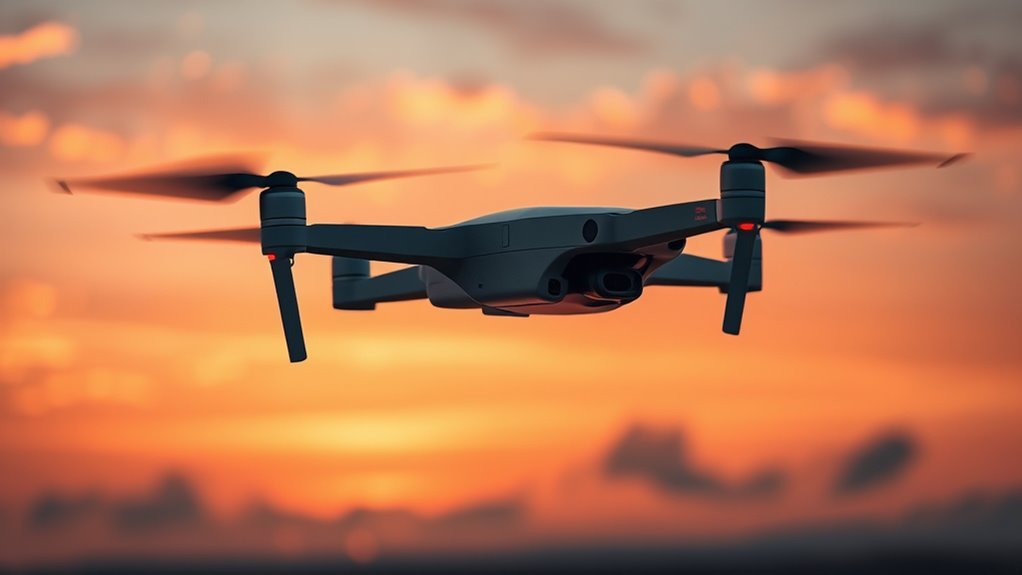
When you fly a silent drone, you’ll notice it produces a faint aerodynamic hum with low-level mechanical vibrations, far subtler than conventional drones. This reduced noise results from optimized rotor blade shapes, vibration-damping materials, and advanced motor housings that minimize sound emissions. While you won’t hear the typical high-pitched buzzing or sharp rotor blade swishes, subtle airflow turbulence remains perceptible. Understanding these acoustic nuances reveals how engineered quietness benefits various applications and environmental contexts alike.
The Science Behind Drone Noise
Although drones may seem quiet at a distance, the noise they produce results from complex aerodynamic and mechanical factors. You’ll find that drone acoustics stem primarily from rotor blade interactions with air and motor vibrations. Each blade generates pressure fluctuations, creating sound waves characterized by specific sound frequencies. These frequencies vary depending on rotor speed, blade shape, and environmental conditions. Mechanical components add harmonic tones, further contributing to the acoustic signature. Understanding these elements is vital if you value freedom in flight, as noise directly impacts stealth and operational range. By analyzing sound frequency spectra, you can discern patterns that reveal how drones communicate with their surroundings acoustically. This scientific insight informs decisions on drone deployment where quiet operation is essential.
How Silent Drones Are Engineered
When designing silent drones, engineers focus on minimizing acoustic emissions by optimizing rotor blade geometry and employing advanced materials that reduce vibration transmission. You’ll notice drone design incorporates tapered blade edges and variable pitch to disrupt aerodynamic noise patterns. Sound engineering principles guide the integration of composite materials that dampen structural resonance, ensuring less noise escapes. Additionally, motor construction uses precision bearings and encased housings to limit mechanical noise. You’ll find that aerodynamic efficiency and noise suppression are balanced meticulously, allowing you to experience greater freedom in flight without disruptive sound. This approach requires a thorough understanding of fluid dynamics and material science, enabling silent drones to operate with reduced acoustic signatures while maintaining performance integrity. Through this synthesis of drone design and sound engineering, silent drones redefine the boundaries of quiet flight.
Types of Noise Produced by Traditional Drones
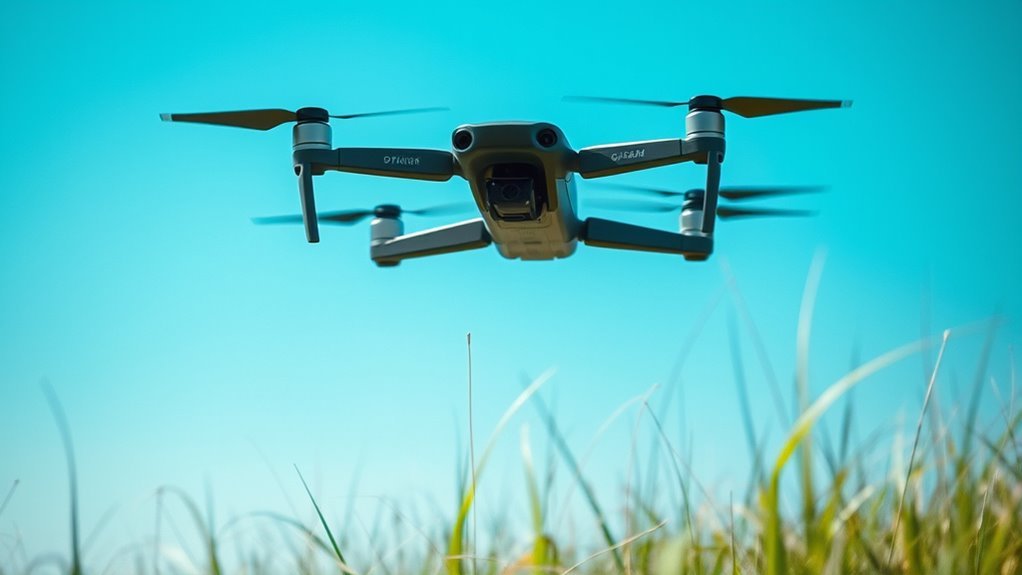
Since traditional drones rely on rapidly spinning rotors and mechanical components, they generate multiple types of noise that can be distinctly identified and analyzed. Primarily, the aerodynamic noise arises from the rotor design—blade shape, size, and speed influence the sound frequency and intensity you hear. Mechanical noise, caused by drone vibrations in motors and gears, adds a secondary layer of sound, often perceived as buzzing or humming. These vibrations propagate through the drone’s frame, amplifying noise emissions. Additionally, blade-tip vortices create fluctuating pressure zones, producing tonal noise that can be detected over distance. Understanding these noise sources helps you appreciate the acoustic footprint traditional drones leave behind, which can limit operational freedom in noise-sensitive environments.
Key Technologies Reducing Drone Sound
Reducing the noise generated by drone rotors and mechanical components requires advanced engineering solutions targeting each sound source. One critical approach involves optimizing propeller design—using blade shapes that minimize vortex formation and turbulent airflow, considerably lowering aerodynamic noise. Materials with vibration-damping properties further suppress mechanical vibrations transmitted through the drone’s frame. Additionally, integrating active noise cancellation systems can counteract residual rotor noise by emitting sound waves with opposing phases, effectively neutralizing unwanted sounds. These technologies operate synergistically to create an auditory environment where drone presence is subtle, granting you greater freedom to operate discreetly. By focusing on precise engineering of both physical components and acoustic management, silent drones redefine operational stealth without compromising performance or control.
Comparing Noise Levels: Silent Vs Conventional Drones
Noise measurement reveals significant differences between silent and conventional drones, highlighting advancements in acoustic engineering. When you analyze sound pressure levels, silent drones typically operate 10-15 decibels lower than traditional models. This reduction stems from innovative drone design focused on minimizing aerodynamic noise and vibration. Through refined rotor blade shapes and optimized motor housings, sound engineering reduces turbulent airflow and mechanical resonance.
As you compare, conventional drones produce a high-frequency buzzing sound caused by rapid blade rotation and less efficient airflow management. Silent drones, by contrast, emit a softer hum, often below the threshold of human annoyance. This engineering evolution allows you greater freedom to operate drones discreetly and comfortably, especially in noise-sensitive environments where minimizing auditory disturbance is essential. The data clearly favor silent drone designs for quieter operation without sacrificing performance.
Environmental Impact of Quieter Drones
You’ll notice that quieter drones greatly reduce noise pollution, which benefits both urban environments and natural habitats. This reduction minimizes wildlife disturbances, preserving behavioral patterns essential for ecosystem stability. Additionally, the improved urban soundscape enhances human comfort and reduces stress related to continuous drone noise exposure.
Noise Pollution Reduction
Although drones have become invaluable tools across various industries, their acoustic footprint poses considerable challenges to environmental tranquility. You’ll find that noise reduction through advanced sound engineering is critical to minimizing this impact, allowing for greater freedom in their deployment. By focusing on:
- Optimizing rotor blade design to reduce aerodynamic noise
- Implementing quieter electric motors and vibration dampening systems
- Utilizing active noise cancellation technologies
you can markedly curtail drone noise pollution. These technical innovations not only enhance operational stealth but also preserve community soundscapes, enabling drones to integrate seamlessly into urban and rural environments. Embracing such noise reduction measures guarantees you can leverage drone capabilities without compromising environmental peace, supporting a balance between technological progress and acoustic responsibility.
Wildlife Disturbance Minimization
Because quieter drones emit less disruptive sound frequencies, they markedly reduce the risk of startling or displacing wildlife during flight operations. When you operate drones with minimized acoustic signatures, you enhance wildlife safety by preventing stress-induced behavioral changes in sensitive species. This aligns with drone ethics, emphasizing responsible technology use that respects natural habitats and preserves ecological balance. By limiting noise interference, you guarantee that animals remain undisturbed, supporting their natural routines and reducing the likelihood of habitat abandonment. Furthermore, quieter drones enable more ethical research and monitoring, allowing you to collect data without compromising animal welfare. Prioritizing these considerations not only safeguards ecosystems but also expands your freedom to use drones in diverse environments without causing unintended harm.
Urban Soundscape Improvements
When quieter drones operate within urban environments, they considerably reduce noise pollution levels, thereby enhancing the overall soundscape quality. You’ll notice that improved urban acoustics directly contribute to a more pleasant and less intrusive auditory environment. Effective sound design in drone technology enables this shift, allowing you to experience urban spaces with greater freedom and comfort.
Here’s how quieter drones impact urban soundscapes:
- Mitigate acoustic masking: They reduce interference with ambient sounds, preserving natural and human-made noises important to urban life.
- Enhance communication clarity: Lower drone noise improves speech intelligibility in public areas.
- Support regulatory compliance: Quieter drones align with stricter urban noise standards, promoting sustainable city living.
Applications Benefiting From Silent Drone Operation
You’ll find that silent drone operation notably improves wildlife monitoring by minimizing disturbance to animals, enabling more accurate data collection. In urban surveillance, reduced noise enhances stealth and public acceptance, increasing operational effectiveness. Additionally, film production benefits from quieter drones by capturing cleaner audio and less intrusive aerial footage.
Wildlife Monitoring Advantages
Although traditional drones often disturb wildlife due to their noise, silent drones greatly enhance monitoring accuracy by minimizing stress-induced behavioral changes in animals. This improvement directly impacts wildlife tracking, increasing the reliability of collected data. You’ll find that silent drones also improve drone efficiency by allowing longer observation periods without interruptions caused by animal avoidance.
Here are three key wildlife monitoring advantages of silent drone operation:
- Reduced Disturbance: Animals maintain natural behaviors, enabling authentic data collection.
- Extended Observation: Quiet operation permits prolonged surveillance, increasing data volume and quality.
- Enhanced Accessibility: You can monitor sensitive or elusive species in remote habitats without causing flight disruptions.
Urban Surveillance Benefits
Building on silent drones’ ability to minimize disturbances in natural environments, their application in urban surveillance offers distinct operational advantages. When you deploy silent drones, you enhance urban safety by conducting discreet monitoring without attracting attention or generating noise pollution. This stealth capability allows for real-time data collection in crowded areas, improving response times during emergencies or criminal activity. However, you must carefully balance this with privacy concerns; silent operation increases the risk of unnoticed surveillance, necessitating transparent policies and strict usage protocols. By leveraging silent drone technology, you gain a tactical asset that supports law enforcement and community safety while respecting civil liberties. Ultimately, silent drones enable a more efficient, less intrusive urban monitoring strategy, giving you freedom in maintaining security without compromising ethical standards.
Film Production Enhancements
Since sound interference can compromise audio quality during filming, silent drones greatly improve production environments by eliminating unwanted noise. When you integrate these drones, you gain enhanced control over sound design and film techniques, allowing for seamless audio-visual synchronization without post-production complications. Here are three key advantages you’ll experience:
- Precise capturing of natural ambient sounds without mechanical drone noise disrupting the scene.
- Greater flexibility in shot composition, as silent drones can operate closer to actors and sensitive environments without causing distractions.
- Improved efficiency in on-location sound recording, reducing the need for costly ADR (Automated Dialogue Replacement) sessions.
Challenges in Achieving Complete Silence
While drone technology has advanced considerably, achieving complete silence during flight remains elusive due to inherent mechanical and aerodynamic factors. You face persistent noise from propeller blade interactions and motor vibrations. Despite applying sound absorption materials and vibration dampening techniques, eliminating all sound is challenging. Aerodynamic turbulence around the drone’s frame adds complexity, generating unpredictable noise patterns.
| Noise Source | Mitigation Difficulty |
|---|---|
| Propeller Aerodynamics | High (complex airflow) |
| Motor Vibrations | Medium (vibration dampening) |
| Structural Resonance | High (sound absorption limits) |
To gain true freedom in silent operation, you must navigate these constraints, balancing engineering trade-offs without fully eradicating noise.
Future Innovations in Drone Sound Reduction
Although completely silent drones remain out of reach, emerging technologies promise significant reductions in flight noise. You can expect future drones to harness innovative materials and advanced engineering to minimize sound emissions. Here are three key innovations shaping this evolution:
- Adaptive Blade Design: Using flexible, noise-absorbing materials, blades can adjust shape dynamically to reduce aerodynamic noise.
- Active Noise Cancellation Systems: Embedded sensors and speakers counteract rotor noise in real-time, leveraging advanced signal processing.
- Electric Motor Refinement: Precision-engineered motors with optimized magnetic components reduce mechanical vibrations and hum.
