

Drones equipped with advanced surveillance capabilities pose significant threats to your privacy and security. With high-resolution cameras, they can monitor activities discreetly, often without consent. The lack of robust legal frameworks leaves gaps in protection, while ethical concerns arise over data collection and potential infringement on civil liberties. Balancing innovation with privacy rights is critical, especially as misuse can lead to further risks. Exploring solutions can provide insights into mitigating these serious threats.
The Evolution of Drone Technology and Its Impact on Privacy
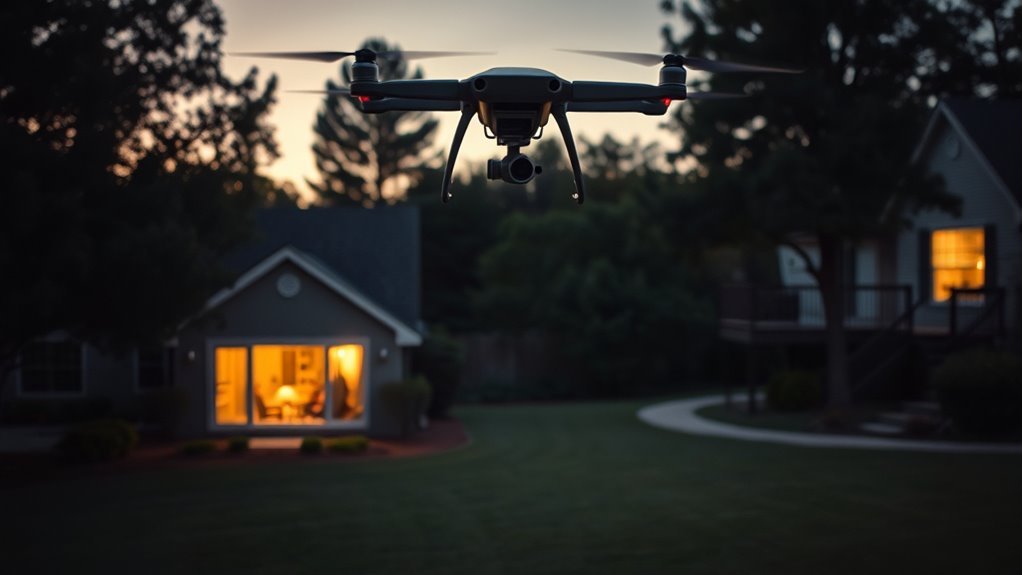
As drone technology has advanced rapidly over the past decade, it’s become increasingly intertwined with issues of personal privacy. You might be surprised by the extent of drone capabilities, which now include high-resolution cameras and real-time data collection. These surveillance advancements enable both commercial and governmental entities to monitor individuals with unprecedented ease. The potential for misuse raises significant concerns about your privacy rights. With drones capable of operating discreetly and covering vast areas, your daily activities can be captured without your consent. Additionally, the ability of drones to provide real-time aerial surveillance significantly enhances the potential for intrusive monitoring. As these technologies evolve, the challenge lies in balancing innovation with the fundamental freedoms you cherish. Understanding the implications of drone surveillance is essential for safeguarding privacy in an era where technology often outpaces regulation. Furthermore, the integration of biometric authentication in security systems can help mitigate some of the risks associated with unauthorized drone surveillance.
Legal Framework Surrounding Drone Surveillance
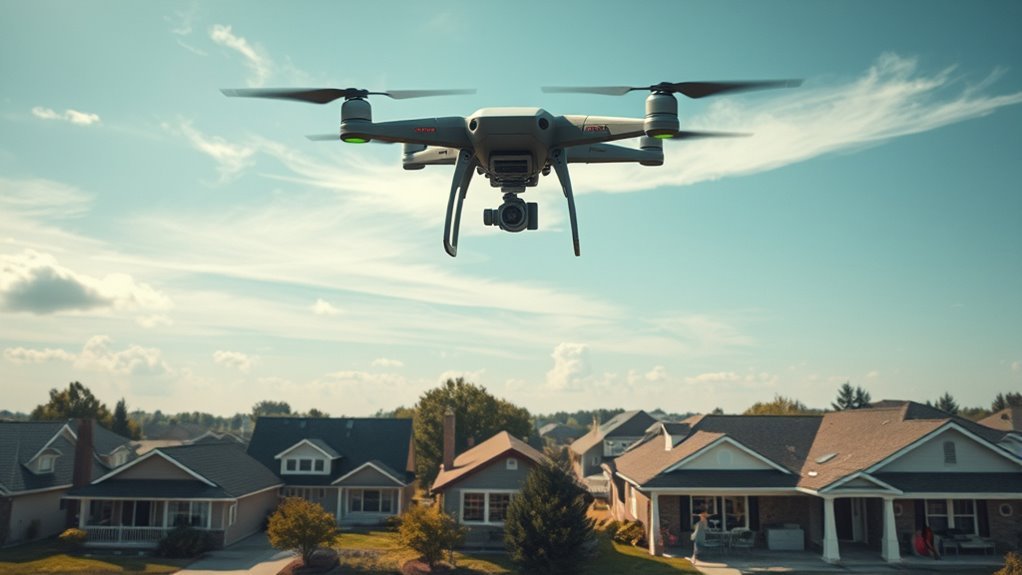
While technology evolves rapidly, the legal framework governing drone surveillance struggles to keep pace, leaving significant gaps in privacy protection. Current drone regulations and privacy laws vary widely, often leading to confusion and potential misuse. Here’s a concise look at the existing legal landscape:
| Aspect | Current Status |
|---|---|
| Federal Regulations | Limited, primarily FAA-focused |
| State Laws | Vary by state, often inconsistent |
| Privacy Protections | Minimal, lacking thorough coverage |
| Enforcement Mechanisms | Weak, difficult to navigate |
You’re left vulnerable without a robust legal framework to safeguard your rights. As drone technology advances, it’s essential to demand clarity and stronger regulations that prioritize your privacy and security. Furthermore, inadequate regulations fail to address issues related to geofencing technology, which is critical for preventing unintended invasions of personal spaces.
Ethical Considerations in Drone Usage

When considering the ethical implications of drone usage, it’s essential to examine how these devices intersect with individual rights and societal norms. Drones can collect data without consent, raising significant concerns about privacy and autonomy. The societal impacts of this technology are profound, as it can enable surveillance that encroaches on personal freedoms. You might question whether the benefits of drone usage, such as enhanced security and efficiency, justify the potential infringement on civil liberties. Furthermore, the disparity in access to drone technology raises ethical questions about equity. As you navigate this complex landscape, it’s vital to balance innovation with respect for privacy rights, ensuring that drone usage aligns with the values of a free society. Moreover, it is crucial to consider the role of proactive vulnerability identification in ensuring that drone technology is deployed responsibly, minimizing risks to both privacy and security. Additionally, understanding local regulations is essential for responsible drone operation, as it helps navigate the legal landscape surrounding privacy concerns.
Technological Solutions for Privacy Protection
Although the proliferation of drones raises significant privacy concerns, various technological solutions can mitigate these threats and protect individual rights. Implementing robust encryption methods is essential for securing data collected by drones, guaranteeing that unauthorized entities can’t access sensitive information. By encrypting data at rest and in transit, you can maintain confidentiality and integrity. Additionally, data anonymization techniques can help in minimizing risks by stripping personal identifiers from datasets, making it difficult to trace information back to individuals. By utilizing these technologies, you can create a framework that respects privacy while allowing for the innovative potential of drone technology. Balancing these solutions guarantees that individual freedoms are upheld even as drone capabilities expand.
Future Outlook: Balancing Innovation and Security
As society embraces the advancements in drone technology, the challenge lies in striking a balance between innovation and security. You’ll face innovation risks that may compromise personal freedoms if oversight isn’t implemented effectively. Security challenges arise as drones can be misused for surveillance or malicious intent. Additionally, understanding federal airspace regulations is crucial to navigate the complexities of drone operation legally. Furthermore, ensuring NDAA compliance is vital for mitigating risks associated with foreign components in drone technology.
| Innovation Risks | Security Challenges |
|---|---|
| Potential for data breaches | Unauthorized surveillance |
| Increased regulatory scrutiny | Threats to public safety |
| Misuse by non-state actors | Erosion of privacy rights |
To foster an environment where innovation flourishes, it’s essential to develop robust frameworks that address these risks. Engaging stakeholders in dialogue can help create systems that prioritize both progress and protection, ensuring that the benefits of drones don’t come at the cost of your freedoms.
Frequently Asked Questions
Can Drones Be Hacked to Invade Personal Privacy?
Imagine a world where your private moments are just a drone hack away. Yes, drone hacking can lead to severe privacy invasion, compromising your personal space and data, raising concerns about autonomy and security in our lives.
How Do Drones Affect Wildlife and Natural Habitats?
Drones can greatly impact wildlife through disturbances and habitat disruption. You might observe changes in animal behavior, as the presence of drones can stress species, leading to altered migration patterns and reduced reproductive success in sensitive ecosystems.
What Are the Psychological Effects of Drone Surveillance on Individuals?
Have you considered how constant drone surveillance impacts your mental state? It can lead to surveillance anxiety and trust erosion among communities, eroding the sense of freedom and safety individuals once felt in their daily lives.
Are There Specific Drone Models More Prone to Privacy Violations?
When considering specific drone models, consumer drones often lack robust privacy protections, while surveillance drones typically feature advanced imaging technologies. You should be aware of these distinctions to better understand potential privacy violations in your environment.
How Can Individuals Protect Themselves From Unauthorized Drone Surveillance?
To protect yourself from unauthorized drone surveillance, familiarize yourself with drone legislation and privacy regulations. Implementing physical barriers, using signal-blocking technology, and advocating for stricter laws can help safeguard your personal space and maintain your freedom.
