
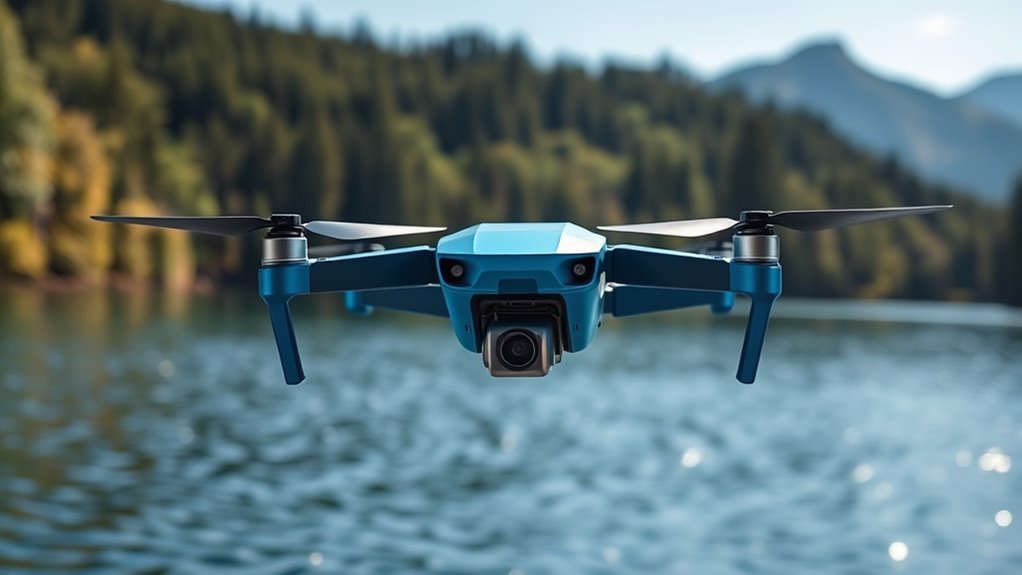
If you’re considering waterproof drones, know they’re built with corrosion-resistant materials, airtight seals, and hydrophobic coatings to prevent water damage and maintain control in wet conditions. They offer enhanced durability and reliable operation in rain or brief submersion, with ratings like IPX7 indicating protection levels. Expect some weight trade-offs affecting flight time, so maintenance and careful use are essential for longevity. Understanding these factors guarantees you optimize your drone’s performance in challenging environments—explore more to master their capabilities and care.
How Waterproof Drones Are Designed
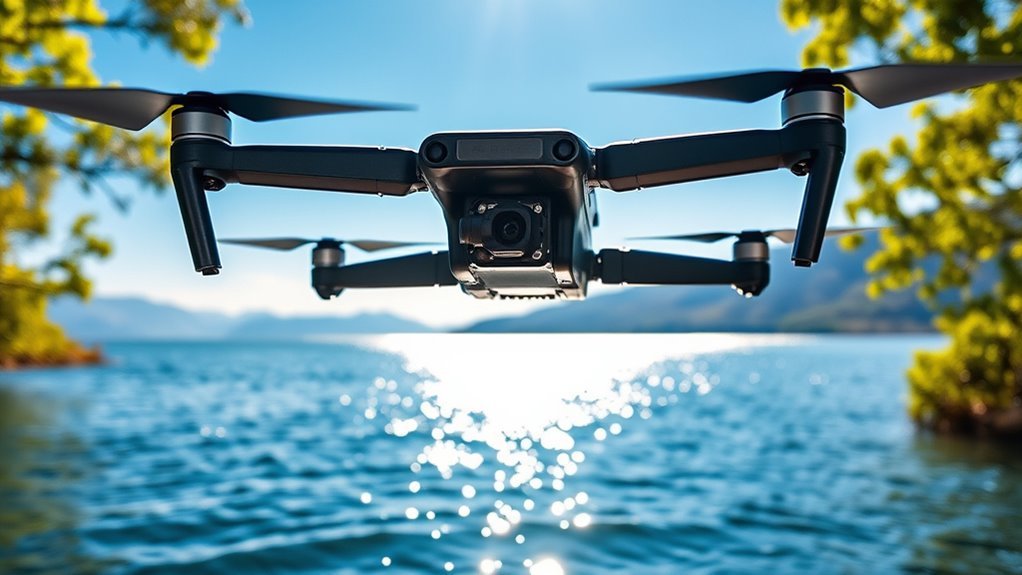
Designing waterproof drones involves integrating multiple engineering solutions to prevent water ingress while maintaining flight performance. You’ll find that selecting advanced drone materials like corrosion-resistant alloys and hydrophobic coatings is vital. These materials form the first line of defense against moisture. Additionally, sealing technology plays a critical role; precision-engineered gaskets, O-rings, and adhesive seals are strategically placed around vulnerable components such as motors, batteries, and sensors. This guarantees airtight enclosures without adding excessive weight that could hinder agility. When you choose a waterproof drone, you’re benefiting from a meticulous balance of material science and sealing techniques, allowing you the freedom to operate confidently in wet environments without sacrificing stability or control. Understanding these design foundations empowers you to make informed choices for your aerial ventures.
Key Features of Waterproof Drones
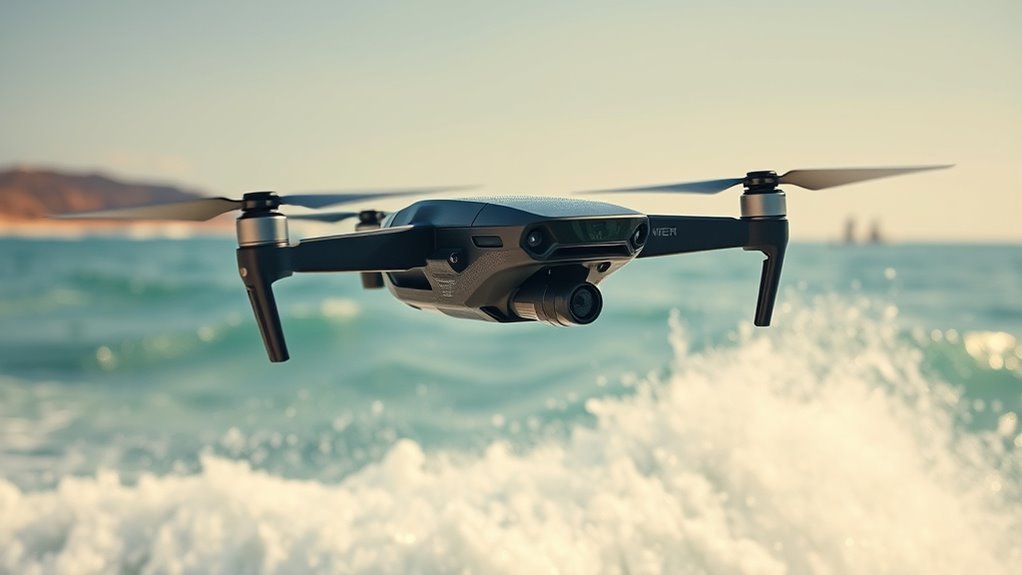
Building on the advanced materials and sealing methods that keep moisture out, waterproof drones incorporate specific features that enhance their performance and reliability in wet conditions. You’ll find reinforced motor housings and corrosion-resistant components that withstand prolonged exposure to water. Their propulsion systems are optimized to prevent water ingress while maintaining thrust efficiency, essential for aquatic applications. Additionally, these drones often include hydrophobic coatings on sensors and cameras to guarantee clear data capture. Integrated GPS modules and waterproof communication systems maintain stable control and navigation despite environmental challenges. This cutting-edge drone technology guarantees you can explore aquatic environments without compromising functionality or safety, granting you the freedom to operate seamlessly in rain, splashes, or even brief submersions.
Benefits of Using Waterproof Drones
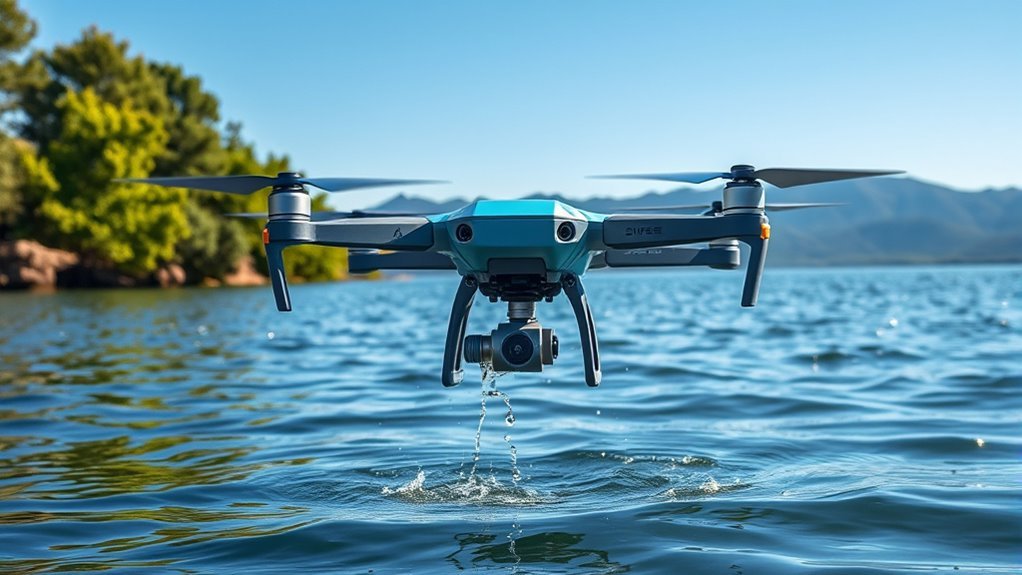
You’ll find that waterproof drones offer enhanced durability features, protecting critical components from water damage and corrosion. This resilience allows you to operate them reliably in diverse environments like rainy conditions, marine settings, or near bodies of water. As a result, your operational range and mission capabilities greatly expand compared to standard drones.
Enhanced Durability Features
Although waterproof drones are engineered to operate in challenging environments, their enhanced durability features provide significant advantages beyond just water resistance. When you choose a waterproof drone, you benefit from rigorous durability testing that simulates real-world stressors, ensuring the drone withstands impacts, vibrations, and temperature fluctuations. The careful material selection process focuses on corrosion-resistant alloys, reinforced polymers, and sealed electronics, which collectively enhance structural integrity and longevity. This means you can confidently explore without worrying about component failure due to environmental hazards. These durability enhancements not only protect your investment but also expand your operational freedom by reducing maintenance needs and downtime. Ultimately, the precise engineering behind these drones offers you reliable performance in demanding conditions, empowering you to push boundaries safely and effectively.
Expanded Usage Environments
The durability features that protect waterproof drones from environmental hazards also enable their use in a wider range of conditions and locations. You can confidently deploy them during fishing expeditions, where exposure to water spray and sudden weather changes is common. These drones maintain operational integrity, allowing you to scout ideal spots or monitor fish behavior without worrying about water damage. Similarly, in search missions, waterproof drones extend your operational reach over flooded or rain-soaked terrains, providing reliable aerial surveillance. Their resistance to moisture and water ingress guarantees consistent performance, even in challenging environments. This expanded usability grants you freedom to explore and accomplish objectives in scenarios previously inaccessible to standard drones, maximizing mission effectiveness while reducing risk of equipment failure due to environmental exposure.
Popular Waterproof Drone Models
You’ll find that top waterproof drone brands like SwellPro and PowerVision offer models engineered for durability and water resistance. These drones feature sealed motors, corrosion-resistant materials, and advanced stabilization systems to operate effectively in wet environments. Understanding the specifications of these leading models will help you choose the best option for your aquatic needs.
Top Waterproof Drone Brands
When selecting a waterproof drone, understanding which brands lead the market can save you time and ascertain reliability. These manufacturers utilize advanced drone technology and high-grade waterproof materials to guarantee durability and performance in wet environments. Here are the top waterproof drone brands you should consider:
- SplashDrone – Known for rugged designs, SplashDrone integrates waterproof materials with innovative flight systems, offering true all-weather freedom.
- PowerVision – Their PowerEgg series features cutting-edge drone technology combined with water-resistant capabilities, perfect for aquatic exploration.
- SwellPro – Specializing in fully waterproof drones, SwellPro’s models balance robust construction and precise controls to withstand harsh conditions.
Choosing any of these brands means you’re investing in dependable gear that gives you the freedom to explore without worrying about water damage.
Features of Leading Models
Although waterproof drones vary in design, leading models share key features that enhance their performance and durability in wet conditions. You’ll find advanced sealing techniques protecting internal components from water ingress, paired with corrosion-resistant materials to guarantee longevity. Cutting-edge drone technology integrates GPS stabilization and obstacle avoidance, allowing precise control even in challenging environments. Battery compartments are engineered for secure, water-tight seals, supporting extended flight times. Many models embrace modularity, letting you swap parts or upgrade sensors as industry trends evolve. Additionally, these drones often include high-resolution cameras with waterproof housings, enabling clear imaging underwater or in rain. By choosing a model with these features, you gain freedom to explore aquatic environments confidently, leveraging robust technology designed specifically for durability and reliable performance.
Waterproof Ratings and What They Mean
Understanding waterproof ratings is vital if you want to choose a drone that can reliably operate in wet conditions. These ratings follow established waterproof standards, typically indicated by an IP (Ingress Protection) rating scale. This scale informs you how well a drone resists solids and liquids, important for freedom to fly in adverse environments.
Here’s what the rating scale means for drones:
- IPX4 – Protected against water splashes from any direction; suitable for light rain.
- IPX6 – Can withstand powerful water jets; good for heavy rain exposure.
- IPX7 – Immersion up to 1 meter for 30 minutes; ideal for accidental submersion.
Choosing the right rating guarantees your drone matches the environmental challenges you want to conquer.
Tips for Flying Waterproof Drones Safely
Since waterproof drones are designed to handle wet environments, you still need to follow specific operational guidelines to confirm their longevity and performance. Always conduct pre-flight inspections to verify seals and compartments are intact, preventing water ingress. Understand your drone’s waterproof rating to select appropriate flying environments—avoid submersion beyond specified depths or durations. Employ safety precautions such as calibrating sensors before flight, maintaining line-of-sight, and monitoring battery levels closely, as cold or wet conditions can reduce efficiency. After use, dry your drone thoroughly and check for residual moisture. Avoid flying in extreme weather like heavy rainstorms or strong winds, which can compromise control and safety. By adhering to these precise guidelines, you’ll maximize your waterproof drone’s reliability and enjoy expanded freedom in diverse environments.
Common Challenges With Waterproof Drones
When operating waterproof drones, you’ll encounter specific challenges that stem from their unique design and environmental demands. These challenges can impact your drone’s performance and your freedom to explore. Here are three common issues:
- Drone Reliability Issues – Waterproofing adds complexity, sometimes compromising internal component durability or sensor accuracy, leading to inconsistent flight behavior.
- Water Damage Prevention – Despite waterproof claims, seals and joints can degrade over time, risking water ingress during extended exposure or high-pressure splashes.
- Weight and Flight Time – Extra waterproof materials increase weight, reducing battery efficiency and flight duration, limiting how far and long you can fly.
Understanding these challenges helps you anticipate limitations and adapt your flying strategy for maximum freedom and safety on the water.
Maintenance and Care for Waterproof Drones
Addressing the challenges of waterproof drones requires regular maintenance and careful handling to guarantee peak performance and longevity. First, establish a strict maintenance schedule that includes post-flight inspections for water intrusion, corrosion, and seal integrity. After each use, especially in saltwater environments, rinse your drone with fresh water and dry it thoroughly to prevent damage. Proper drone storage is critical; store your drone in a cool, dry place, ideally in a sealed container with desiccant packs to control humidity. Regularly check battery contacts and update firmware to maintain ideal function. By adhering to these practices, you preserve the drone’s waterproof capabilities and guarantee reliable operation, giving you the freedom to explore without technical setbacks. Consistency in maintenance is key to extending your drone’s lifespan effectively.
Applications of Waterproof Drones in Different Industries
Although waterproof drones are engineered to withstand harsh aquatic environments, their true value emerges from their diverse applications across multiple industries. You’ll find these drones invaluable for:
- Fishing applications – They assist in scouting fish populations, mapping underwater terrain, and dropping bait with precision, enhancing your catch efficiency without disturbing the ecosystem.
- Search and rescue – Equipped with thermal cameras and GPS, waterproof drones can rapidly locate missing persons in water bodies, providing real-time data to rescue teams and improving survival chances.
- Environmental monitoring – Drones collect water quality data and track marine wildlife, enabling you to conduct thorough surveys with minimal human risk.
